Categories
Technology

Perplexity launches PC AI that works 24/7 on Mac

Perplexity AI has introduced Personal Computer, a new system that transforms a Mac mini into an always-on AI assistant. Unlike conventional AI tools that respond only when prompted, this system works 24/7, handling tasks, accessing files, and running apps even while the user is away.

The AI combines local device resources with Perplexity’s cloud platform, allowing secure access to documents, emails, and apps. It can draft messages, generate reports, research topics, and break complex tasks into manageable steps, automating repetitive work to boost productivity.

The software includes approval prompts, activity audits, and a kill switch to stop unwanted operations. At launch, Personal Computer is available through a waitlist, initially targeting higher-tier subscribers, with the Mac mini as the primary supported device.

This launch highlights a trend toward AI that actively works in the background, suggesting a future where computers operate as always-on digital collaborators.

Also Read: Oil tops $100 after tanker attacks in Iraqi waters

Categories
Corporate

Adani Total Gas rises 33% on gas supply push

Shares of Adani Total Gas have surged sharply over the past few days, rising about 33% in three days and nearly 37% in two days at one point. Investors are reacting to the government’s decision to prioritize gas distribution for households, CNG vehicles, and essential industries amid ongoing supply shortages and rising energy costs.

The move comes as global oil prices remain high and domestic natural gas supply faces pressure. By giving priority to key sectors, authorities aim to ensure that essential users continue receiving gas despite tight supply conditions.

Adani Total Gas operates city gas distribution networks across several Indian states and is benefiting from expectations of higher gas sales and improved profit margins. Its strong network and growing demand for piped natural gas (PNG) and compressed natural gas (CNG) make it a preferred choice for investors during the current supply squeeze.

Other companies in the sector, such as Gujarat Gas and Petronet LNG, also saw gains, though their rise was smaller compared to Adani Total Gas. Traders said the entire gas sector is gaining attention as traditional energy markets remain uncertain due to global supply chain disruptions and high crude oil prices.

Also Read: India’s GAIL buys Oman LNG cargo

Categories
Corporate

Sensex falls nearly 1,000 points, Nifty drops below 19,000

Stock markets fell sharply on March 12, 2026, as rising oil prices and global tensions shook investor confidence. The BSE Sensex dropped nearly 1,000 points, while the Nifty50 fell below 19,000, hitting key support levels.

Some stocks still gained, with HCL Tech and Reliance Industries showing small rises. However, major companies including Adani Enterprises, Indigo Airlines, Bajaj Auto, and Maruti Suzuki were among the top losers, reflecting heavy selling in transport, industrial, and consumer goods sectors.

The market decline was triggered by worries over the Middle East conflict between the U.S. and Iran, which has raised fears of disruptions in global oil supply. Brent crude oil rose above $100 per barrel, prompting concerns about higher costs for businesses and rising inflation for consumers.

Investor sentiment was further affected by foreign investors selling shares and weak cues from global markets. The India VIX, a measure of market fear, jumped more than 6%, showing increased nervousness among traders. Small- and mid-cap stocks also fell, indicating cautious behavior across the board.

Experts said the markets could remain volatile as long as oil prices stay high and geopolitical tensions continue. Rising crude prices put pressure on energy, aviation, and manufacturing companies, while defensive stocks like HCL Tech and Reliance attracted some buying.

Also Read: Oil tops $100 after tanker attacks in Iraqi waters

Categories
Beyond

Oil tops $100 after tanker attacks in Iraqi waters

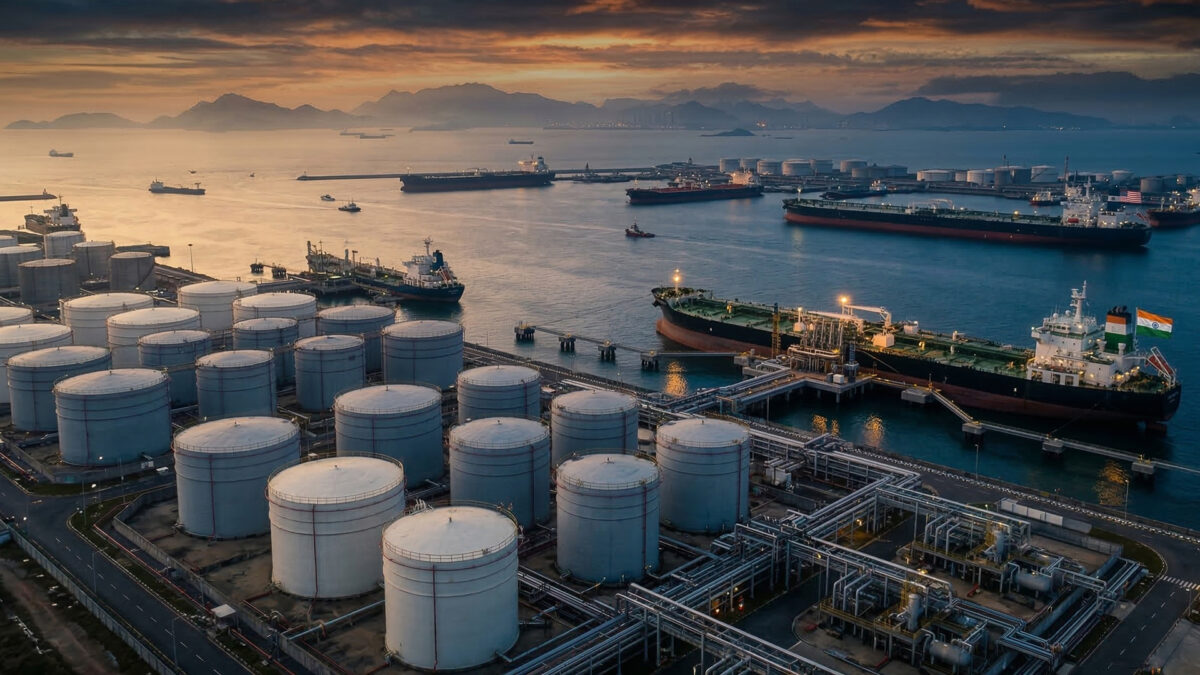
Global oil prices jumped sharply on Thursday after reports that two oil tankers were attacked in Iraqi waters near the Gulf of Hormuz, a key route for about one-fifth of the world’s oil shipments. The attacks stoked fears that ongoing Middle East conflicts could further disrupt crude supply and push prices even higher.

Brent crude briefly rose above $100 per barrel, while US West Texas Intermediate (WTI) oil also climbed significantly. Traders reacted to the news of port shutdowns and fires caused by the attacks, which forced temporary halts at some terminals.

The attacks come amid escalating tensions involving Iran, the United States, and Israel, heightening worries about shipping safety in the region. Analysts said that disruptions in the Gulf, especially around the Strait of Hormuz,  could severely affect global oil supply, since the area is critical for transporting crude to international markets.

Governments are trying to ease the pressure. The International Energy Agency (IEA) announced the release of 400 million barrels from global reserves, while the US released 172 million barrels from its strategic reserves to help stabilize prices. Despite these measures, uncertainty continues, and traders are factoring in the risk of more disruptions.

Experts warn that higher oil prices could increase costs for fuel, transportation, and goods worldwide, adding to inflation concerns already affecting many countries. The recent surge shows how sensitive global energy markets are to geopolitical tensions and how a single incident can ripple through economies.

Investors and policymakers are watching the situation closely. Any further escalation in the region or continued attacks on tankers could keep oil prices volatile, impacting businesses and consumers globally.

Also Read: India backs record IEA oil reserve release

Categories
1 Minute-Read

CBI arrests bitcoin scam accused trying to flee India

The Central Bureau of Investigation (CBI) has arrested Ayush Varshney, co-founder of Darwin Labs Pvt Ltd, while he attempted to leave for Sri Lanka.

He is the first major arrest in the GainBitcoin cryptocurrency scam, which allegedly defrauded thousands of investors of nearly ₹20,000 crore through promises of high returns via cloud-mining and MLM schemes.

Varshney was detained at Mumbai’s international airport after a Look Out Circular was issued, and the CBI continues to probe the case, tracing funds and pursuing other key suspects still at large.

Categories
Corporate

India’s GAIL buys Oman LNG cargo

India’s state-run gas giant GAIL (India) Ltd has taken decisive action to ensure the country’s gas needs are met by purchasing a cargo of liquefied natural gas (LNG) from Oman. The move comes as supply disruptions from its usual sources in the Middle East have created uncertainty for households, industries, and transport sectors that rely heavily on gas.

The cargo was secured through a European trader at a price estimated between $17 and $20 per million British thermal units (mmBtu). Shipping data shows the LNG, aboard the vessel Orion Hugo chartered by Shell, is expected to reach Indian shores by mid-March, offering a timely boost to supplies.

India imports nearly half of its 195 million standard cubic metres per day gas consumption, making it highly dependent on global suppliers. Recent disruptions were triggered by geopolitical tensions in the Middle East, including temporary closures near the Strait of Hormuz and a force majeure declared by QatarEnergy, one of India’s key LNG providers.

By securing the Oman cargo, GAIL aims to stabilize domestic supply, particularly for essential users. Authorities have also begun prioritizing gas distribution, ensuring households, transport (CNG), and critical industrial sectors receive uninterrupted service, while non-essential consumption is temporarily scaled back.

Experts note that this step underscores India’s reliance on Middle Eastern LNG and highlights the need for diversified sources to maintain energy security. “This purchase is not just about meeting demand; it’s about keeping homes warm, vehicles running, and factories operational during a turbulent period,” a senior industry analyst said.

While GAIL has not issued a formal statement, industry observers view the procurement as a pragmatic, quick-response measure in a challenging global energy landscape.

Also Read: Volkswagen plans 50,000 job cuts by 2030

Categories
Corporate

Volkswagen plans 50,000 job cuts by 2030

German auto giant Volkswagen has announced plans to cut about 50,000 jobs by 2030 as part of a major restructuring to reduce costs and stay competitive in the changing global car industry.

The job cuts are expected to affect several brands within the Volkswagen Group, including Audi and Porsche. Most of the reductions are likely to take place in Germany, where the company has a large workforce.

According to the company, the move comes as it deals with falling profits, rising production costs and strong competition in key markets. Volkswagen said the car industry is going through major changes, especially with the shift towards electric vehicles and new technologies.

Volkswagen recently reported a sharp drop in its profits. The company’s net profit fell by about 44% to €6.9 billion, making it one of its weakest financial performances in recent years. Slower vehicle sales and higher costs have added pressure on the company’s business.

Company executives said the restructuring is necessary to prepare Volkswagen for the future as it invests heavily in electric vehicles, digital technology and new software systems.

The automaker is also facing growing competition from Chinese electric vehicle manufacturers such as BYD and Geely. These companies have been expanding quickly, especially in China, which is the world’s largest car market.

To deal with these challenges, Volkswagen has launched a large cost-cutting programme aimed at improving efficiency and strengthening its position in the global market. The company said many of the job reductions will happen gradually through retirements and natural attrition rather than sudden layoffs.

Also Read: LPG fears spark rush for induction cooktops

Categories
Beyond

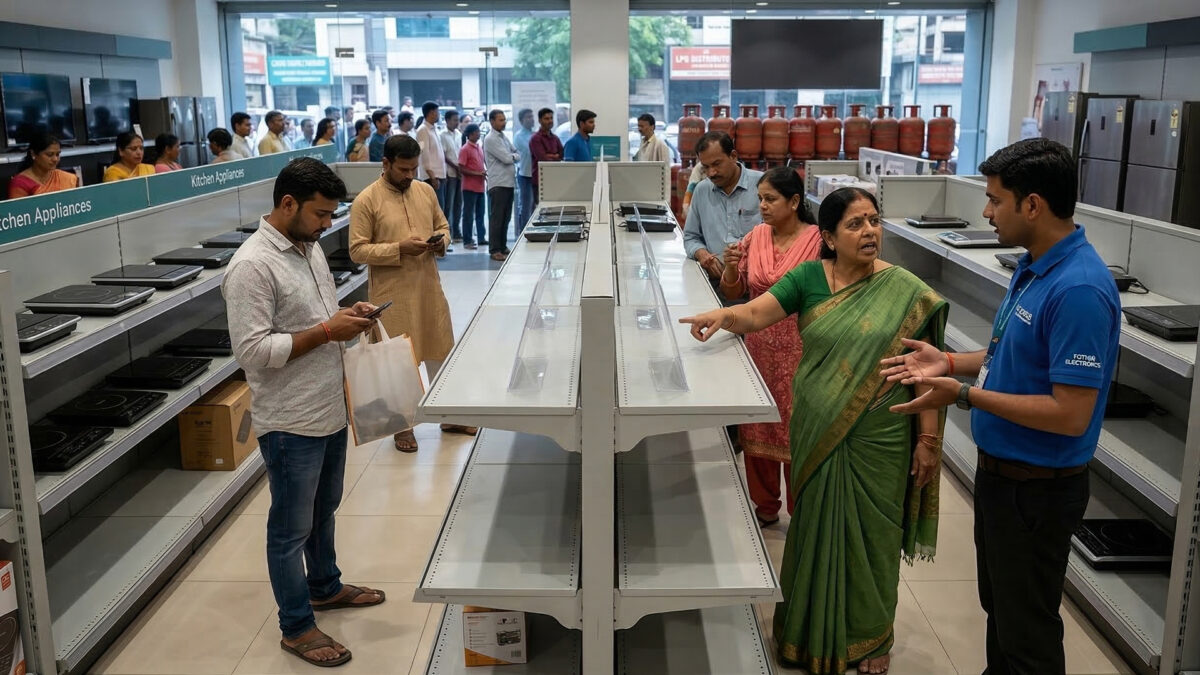
LPG fears spark rush for induction cooktops

Concerns about a possible LPG shortage in parts of India have triggered a rush for induction cooktops, with many models quickly selling out on online quick-commerce platforms. As worries about cooking gas availability spread, many households are buying electric cooktops as a backup option.

Several quick-delivery platforms, including Blinkit, Swiggy’s Instamart and Zepto, have reported a sharp increase in orders for induction stoves. In many cities, including Delhi, Mumbai, Bengaluru and Chennai, customers found that most induction cooktops were already out of stock or available only in limited numbers.

Retailers say the sudden demand began after news of LPG supply concerns began circulating. Many families rushed to buy induction stoves so they would have an alternative way to cook if gas cylinders became difficult to get.

Electronics store owners also reported a surge in walk-in customers looking for induction cooktops. Some shops said they sold several days’ worth of stock in just a few hours as people hurried to secure the appliances.

The surge in demand has not been limited to the cooktops themselves. Utensils designed for induction cooking, such as compatible steel pans and pots, have also seen a spike in sales and are running low in many stores.

The LPG supply concerns are linked to global energy market uncertainties and geopolitical tensions affecting fuel supply chains. These developments have raised fears that cooking gas availability could be affected if the situation worsens.

Restaurants and small food businesses have also been watching the situation closely. Some eateries have started exploring electric cooking equipment to avoid disruptions if LPG supply becomes limited.

Meanwhile, government officials have urged the public not to panic. Authorities say they are monitoring the situation and taking steps to ensure there is enough LPG supply in the country.

Also Read: Reliance silent after Trump’s $300bn refinery claim

Categories
Corporate

Amazon announces 90-day code safety reset

Amazon has announced a 90-day “code safety reset” after a series of technical issues disrupted its online platform. The move comes after some outages were linked to software changes created with the help of artificial intelligence tools.

According to reports, the problems affected Amazon’s systems that handle orders and deliveries, causing website errors and cancelled orders for some customers. The incidents prompted the company to review how its engineers write and release software updates.

As part of the reset, Amazon has introduced stricter rules for engineers working on its most critical systems. For the next 90 days, developers must follow additional safety checks before releasing new code. This includes getting at least two engineers to review the code and properly documenting any changes before they go live.

The new measures will apply to around 335 “Tier-1 systems”, which are Amazon’s most important services that directly affect customers. These systems include parts of the platform responsible for shopping, payments and order processing.

Reports suggest that some of the recent issues were connected to the growing use of AI-assisted coding tools, including Amazon’s own internal AI assistant called Q. These tools help engineers write code faster, but they can sometimes introduce errors if the code is not carefully checked.

By introducing stricter reviews and documentation requirements, Amazon hopes to reduce the chances of similar problems in the future. The company also wants engineers to slow down and focus more on stability when making changes to critical systems.

The safety reset will also involve closer monitoring of software updates and stronger approval processes before any changes are implemented.

Industry experts say the move highlights the challenges companies face as they increasingly rely on AI to speed up software development. While AI tools can improve productivity, they also require careful oversight to avoid unexpected errors.

Amazon said the 90-day period will give the company time to review its development practices and strengthen safeguards.

Also Read: India backs record IEA oil reserve release

Categories
Beyond

India backs record IEA oil reserve release

India has said it is ready to support global oil markets after the International Energy Agency (IEA) announced a record release of oil from emergency reserves to ease supply concerns and stabilise prices.

The IEA said its member countries would release around 400 million barrels of oil from their strategic petroleum reserves. The move is aimed at increasing supply in global markets and reducing pressure on oil prices, which have risen due to supply disruptions and geopolitical tensions.

The Government of India said it is closely monitoring developments in international energy markets and supports efforts to ensure stability in global oil supplies. Officials said India stands ready to take suitable steps if required to help maintain market balance, though no specific measures have been announced so far.

The emergency release comes as tensions in parts of the Middle East have raised concerns about disruptions to oil supply routes. These concerns have pushed up global crude prices and increased uncertainty in energy markets.

According to the IEA, the coordinated release of oil reserves is the largest in the organisation’s history. Member countries will release oil based on their individual capacities and national conditions to ensure markets receive additional supply in the coming months.

Although India is not a full member, it works closely with the IEA as an associate member and participates in discussions on global energy security. As one of the world’s largest oil importers, India is highly sensitive to changes in global oil prices and supply disruptions.

Officials said India continues to strengthen its own strategic petroleum reserves and diversify its sources of crude oil imports to improve energy security.

Experts believe the large reserve release could help calm markets in the short term by increasing available supply. However, they also note that long-term stability will depend on how geopolitical tensions evolve and whether key global oil supply routes remain stable.

Also Read: Reliance silent after Trump’s $300bn refinery claim