
Categories
Beyond

Iran to allow safe passage for Indian ships

Iran has assured India that its ships will be allowed safe passage through the Strait of Hormuz, a key maritime chokepoint for global energy supplies. The move comes amid rising tensions in West Asia that have disrupted shipping routes in the Gulf.

Iran’s Ambassador to India, Mohammad Fathali, said Indian vessels bound for the country would be granted “safe passage,” highlighting the longstanding friendship between the two nations. He emphasized that India is considered a friend and that operational details are expected to follow soon.

This assurance is significant for India, which relies heavily on energy imports from West Asia. A large portion of its crude oil and liquefied petroleum gas (LPG) passes through Hormuz, making uninterrupted maritime access a strategic priority.

In a practical demonstration of these arrangements, an Indian commercial ship carrying 40,000 metric tonnes of LPG recently exited the Strait of Hormuz with the protection of an Indian Navy escort. The operation reflects India’s proactive efforts to safeguard its energy shipments amid regional instability.

New Delhi has been in regular contact with Tehran to coordinate the safety of its vessels. Indian officials say that ensuring secure maritime routes is crucial to maintaining energy supply and trade continuity.

Analysts note that Iran’s assurances also signal an interest in maintaining stable bilateral relations with India, even as tensions with other countries in the region continue to escalate. For India, these diplomatic and security measures are part of broader efforts to mitigate risks to its energy imports and maritime trade.

With the first ship already escorted successfully, India’s energy supply chain is expected to remain largely uninterrupted. Further coordination between the two countries is likely to ensure smooth passage for more vessels in the coming weeks.

Also Read: Khamenei’s wife is alive, confirms Iran media

Categories
Technology

Anthropic Claude gets visual tools in chat

Anthropic’s AI assistant Claude just got a major upgrade. Users can now ask Claude to create interactive charts, graphs, and diagrams directly in chat, rather than just getting plain text answers. This new feature is currently in beta and is available to all users, including those on the free plan.

Sometimes, a visual explains things better than words. Whether it’s tracking trends over time, showing step-by-step processes, or illustrating complex concepts, Claude can now decide when a chart or diagram might help and generate it instantly in the conversation. Users can also specifically request visuals, like asking Claude to “draw a diagram” or “show a chart,” and the AI will respond with dynamic, interactive elements.

These visuals aren’t static images, they update in real time as you continue the conversation. This means you can explore data or concepts interactively without leaving the chat interface. For example, students can see a graph adjust as they tweak numbers, while professionals can visualize business trends on the fly.

This feature builds on Anthropic’s earlier experimental tool, “Imagine with Claude,” which let users create visual interfaces on a virtual desktop. Now, those capabilities are directly embedded in chats, so text explanations and visuals can work together seamlessly.

Anthropic says the update aims to make information more accessible and intuitive, whether you’re learning a new topic, analyzing data, or collaborating with colleagues. The visuals can also integrate with tools like Figma, Canva, and Slack, giving users more ways to bring AI-powered insights into their workflow.

Also Read: NSE appoints 20 banks, 8 law Firms for mega IPO

Categories
Corporate

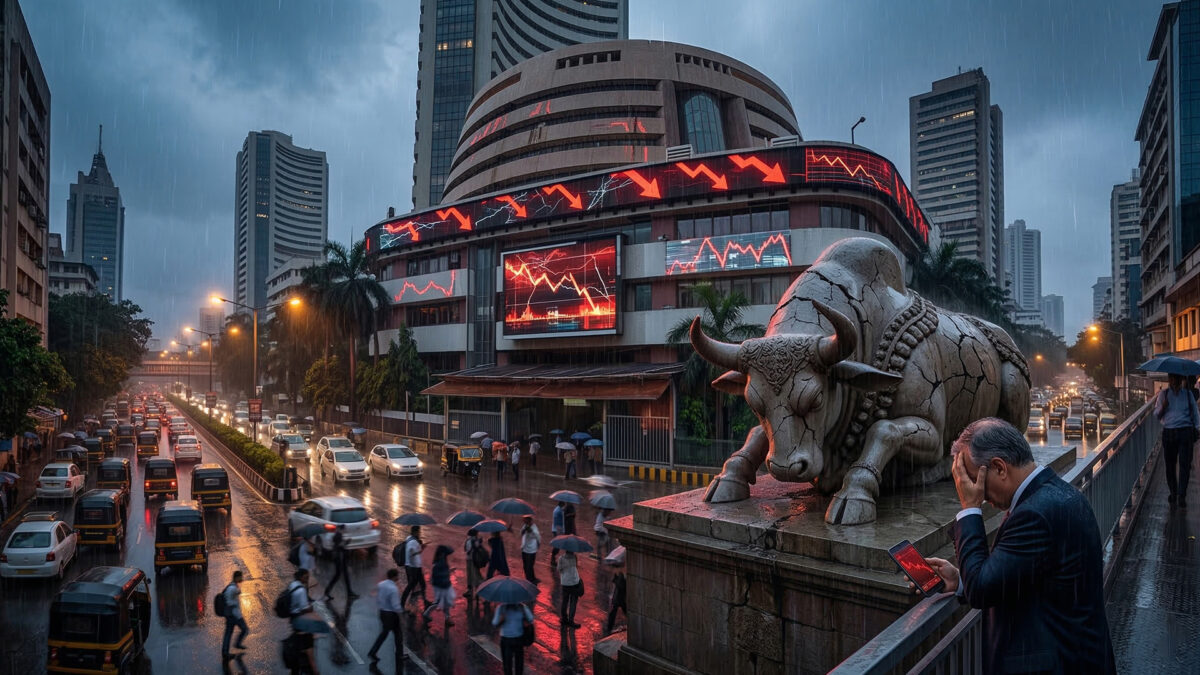
Sensex drops 1,470 points, Nifty falls below 23,200

Equity markets fell sharply for the third consecutive session on Friday, dragged down by global uncertainties and rising oil prices. The BSE Sensex closed at 74,564, down 1,470 points, while the Nifty50 ended at 23,151, shedding 488 points.

The sell-off was broad-based, with major losses in the auto, metals, and PSU banking sectors. Tata Steel fell nearly 5%, Tata Motors PV dropped 4.6%, and SBI slipped over 4%. Other heavyweights including M&M, Maruti Suzuki, Bajaj Finance, and UltraTech Cement also recorded sharp declines.

In contrast, a few defensive stocks managed to hold ground. Coal India, NTPC, and Power Grid were among the top gainers, while FMCG names such as Hindustan Unilever and Tata Consumer Products saw modest gains.

Analysts attributed the market weakness to escalating geopolitical tensions in the Middle East, which rattled investor sentiment, and the surge in Brent crude above $100 per barrel, raising concerns about rising inflation. Continuous foreign institutional selling further added to the downward pressure, while the Indian rupee slipped to ₹92.45/USD, impacting import-dependent sectors.

With markets now in correction territory, experts say volatility is likely to continue in the near term. Auto, metals, and PSU banking stocks remain under pressure, while defensive sectors may continue to attract cautious investors amid global uncertainties and rising energy costs.

Also Read: Sensex dives 900 points, Nifty near 23,330

Categories
Beyond

Inflation hits India by 3.21% in February

India’s retail inflation picked up in February, rising to 3.21% from 2.74% in January, marking a noticeable increase but still staying within a comfortable range for consumers and policymakers. The rise comes as prices of everyday items like vegetables, fruits, and personal care products went up, alongside sharper gains in precious metals such as gold and silver.

Food prices were the main driver, with vegetables like tomatoes seeing a steep jump compared to last year. Rural areas felt the pinch more, reflecting persistent price pressures outside urban centres. Analysts say this is partly due to base-year effects in the new CPI series, which uses 2024 as its reference point.

Even with the rise, the overall inflation rate remains within the Reserve Bank of India’s target range of 2–6%, signaling that price pressures are under control. Core inflation, which excludes volatile food and fuel prices, also remained moderate, showing that underlying inflation is stable.

The global oil price volatility and geopolitical tensions could push prices higher in the months ahead. For now, the central bank is expected to maintain a balanced approach, keeping an eye on inflation while supporting economic growth.

For households, this means slightly higher grocery bills and modest increases in everyday expenses, but nothing that signals a major disruption in spending power. Economists believe the current trend reflects temporary pressures rather than a long-term spike, offering some reassurance to consumers and businesses alike.

Also Read: India’s FDI relaxation supports US, EU funds


Categories
1 Minute-Read

India’s FDI relaxation supports US, EU funds

India has eased its foreign investment rules under Press Note 3 (PN3), allowing minority stakes of up to 10% from countries sharing land borders, without prior government approval.

The move benefits US and EU institutional funds that previously faced restrictions due to indirect Chinese ownership. Key sectors now see a 60‑day fast-track approval process, cutting delays for foreign capital.

This change could unlock stalled investments, boost startups, and accelerate growth in tech and manufacturing, while maintaining security checks. Analysts view it as a strategic step to attract global funds to India’s market.

Categories
Technology

Razorpay launches AI Agent Studio

Indian fintech company Razorpay has introduced Agent Studio, a new artificial intelligence (AI) platform designed to help businesses automate payment-related operations and financial workflows. The announcement was made at the company’s annual event, FTX 2026.


Categories
Beyond

CCI dismisses complaint against BookMyShow

The Competition Commission of India (CCI) has dismissed a complaint accusing BookMyShow of abusing its dominant position in the online movie ticket booking market, concluding that there was no violation of competition laws.

The complaint was filed by Showtyme, a smaller ticketing platform founded by Vijay Gopal. The complainant alleged that BookMyShow entered into exclusive agreements with cinemas and multiplex chains, preventing rival platforms from accessing theatres and limiting competition in the market.

According to the complaint, some theatres signed agreements requiring them to sell tickets only through BookMyShow for periods ranging from two to five years. Showtyme argued that such exclusivity arrangements created significant barriers for new entrants and reduced options for competing ticket booking platforms.

The complainant also raised concerns about the convenience fees charged by BookMyShow for online ticket bookings. It claimed that the platform shared a portion of these fees with theatre partners, which allegedly made it harder for competitors to build similar partnerships and offer comparable services.

After reviewing the case, the Competition Commission of India acknowledged that BookMyShow holds a strong position in the online movie ticketing market in India. However, the regulator said the available evidence did not show that the company had misused this position to restrict competition.

The commission observed that exclusivity agreements are common in many industries and can sometimes serve legitimate business purposes. It noted that such arrangements do not automatically violate competition laws unless they significantly harm competition or prevent new players from entering the market.

The regulator also pointed out that movie tickets in India can still be purchased through several channels, including theatre websites, box office counters, and other ticketing platforms. This, according to the CCI, suggests that competition in the market has not been completely restricted.

Based on these findings, the commission concluded that there was no evidence of abuse of dominance under India’s competition law and ordered the case to be closed.

The decision brings an end to the dispute and clears BookMyShow of allegations related to anti-competitive practices in India’s online movie ticketing sector.

Also Read: India plans $11 bn fund for domestic chip industry

Categories
Leaders

Adobe CEO Shantanu Narayen to step down

Adobe has announced that its chief executive officer, Shantanu Narayen, will step down from the position after leading the global software company for nearly two decades.

The company said Narayen will remain in the role until a new CEO is appointed. After the transition, he will continue as chairman of Adobe’s board and assist the incoming leader during the change in leadership.

Adobe’s board has started the process of finding a successor and has formed a special committee to oversee the search. The company said it will consider both internal and external candidates for the position.

Narayen has been serving as Adobe’s CEO since 2007 and is credited with playing a key role in transforming the company into one of the world’s leading software firms. During his tenure, Adobe moved away from selling traditional packaged software and shifted to a cloud-based subscription model for its popular products.

Under his leadership, services such as Creative Cloud and Document Cloud became central to Adobe’s business. These platforms include widely used tools like Photoshop, Illustrator and Acrobat.

The company also expanded into digital marketing and invested heavily in new technologies, including artificial intelligence, which are now being integrated into many of its products.

In a message to employees, Narayen said he would work closely with the board and leadership team to ensure a smooth transition. He added that the company is well positioned for its next phase of growth.

Following the announcement, several leaders in the technology industry praised Narayen’s contribution to the sector. Microsoft CEO Satya Nadella described his leadership as remarkable and highlighted the impact he had on Adobe’s growth and innovation.

Narayen joined Adobe in 1998 and later became the company’s president and chief operating officer before taking over as CEO.

During his leadership, Adobe grew significantly in market value and strengthened its position as a global leader in creative and digital document software.

Also Read: Rupee nears 93 due to West Asia conflict

Categories
Beyond

Rupee nears 93 due to West Asia conflict

The Indian rupee fell to a record intra-day low against the US dollar on Friday. In early trade, the rupee dropped about 12 paise to around ₹92.37 per dollar in the interbank foreign exchange market. The fall came as investors reacted to tensions in the Middle East, which have pushed crude oil prices higher and created volatility in global markets.

The rise in oil prices has put pressure on the Indian currency because the country imports a large share of its crude oil requirements. As oil becomes more expensive, India’s import bill increases, weakening the rupee and affecting the overall economy.

The fall in the rupee has also raised concerns about inflation. Recent data shows that retail inflation in India has reached a 10-month high. Economists say higher oil prices could increase transportation and production costs, which may lead to higher prices for many goods and services.

A weaker rupee also makes imports such as electronics, fertilisers and machinery more expensive. These higher import costs may eventually be passed on to consumers, increasing the cost of living.

Market experts say global uncertainty caused by the West Asia conflict has reduced investor confidence. During such periods, investors often shift funds to safer assets such as the US dollar, putting pressure on emerging market currencies like the rupee.

The Reserve Bank of India (RBI) is closely monitoring the situation and may step in to stabilise the currency if volatility increases.

Economists warn that if geopolitical tensions continue and oil prices remain high, the rupee could face further pressure. This could also add to inflation risks for the Indian economy.

Also Read: Gold at ₹1,62,210, Silver at ₹2,79,900

Categories
Beyond

Gold at ₹1,62,210, Silver at ₹2,79,900

Gold and silver prices in India recorded a marginal decline in early trading on Friday. In the domestic market, the price of 24-carat gold fell slightly by ₹10 to around ₹1,62,210 per 10 grams. Similarly, silver prices dropped by ₹100 and were trading near ₹2,79,900 per kilogram. Despite the minor fall, gold prices continue to remain close to record levels due to strong demand for safe-haven assets.

The price of 22-carat gold also saw a small dip, with 10 grams trading at approximately ₹1,48,690. Market analysts note that while prices have eased slightly, the overall trend in precious metals remains supported by global uncertainty and investor interest in safe assets.

Several international factors are currently influencing movements in the gold and silver markets. Ongoing geopolitical tensions in the Middle East have raised concerns among investors, leading many to seek protection through traditionally safe investments such as gold. Such developments typically increase volatility in precious metal prices.

At the same time, rising crude oil prices and expectations surrounding US monetary policy are also affecting market sentiment. Higher oil prices can increase inflation concerns, which in turn may influence decisions by the US Federal Reserve regarding interest rates. If interest rates remain high for longer, the upside potential for gold may remain limited.

Movements in the US dollar are another key factor shaping precious metal prices. A stronger dollar tends to make gold and silver more expensive for international buyers, which can reduce demand and weigh on prices.

On the Multi Commodity Exchange (MCX), gold and silver futures have also shown fluctuations in recent sessions, reflecting mixed global cues and profit-booking by traders. Market participants are closely watching international developments, including geopolitical events and economic indicators, for further direction.

Also Read: Sensex dives 900 points, Nifty near 23,330