Categories
1 Minute-Read

IDBI Bank sale hits roadblock

The government’s plan to privatise IDBI Bank has slowed after bids for its majority stake reportedly fell short of expectations. The Centre and Life Insurance Corporation of India aimed to sell about 60.7% stake in the lender as part of the country’s disinvestment programme.

However, the financial offers received were below the reserve price, leading authorities to pause the sale process. Reports said potential bidders included Fairfax Financial Holdings and Emirates NBD. Following the development, shares of IDBI Bank declined amid investor concerns.

Officials may revisit the privatisation plan later depending on market conditions and renewed investor interest.


Categories
1 Minute-Read

Oil chiefs warn Trump on Iran war risks

Top US oil executives have warned Donald Trump that the ongoing tensions involving Iran could disrupt global energy markets and drive oil prices higher.

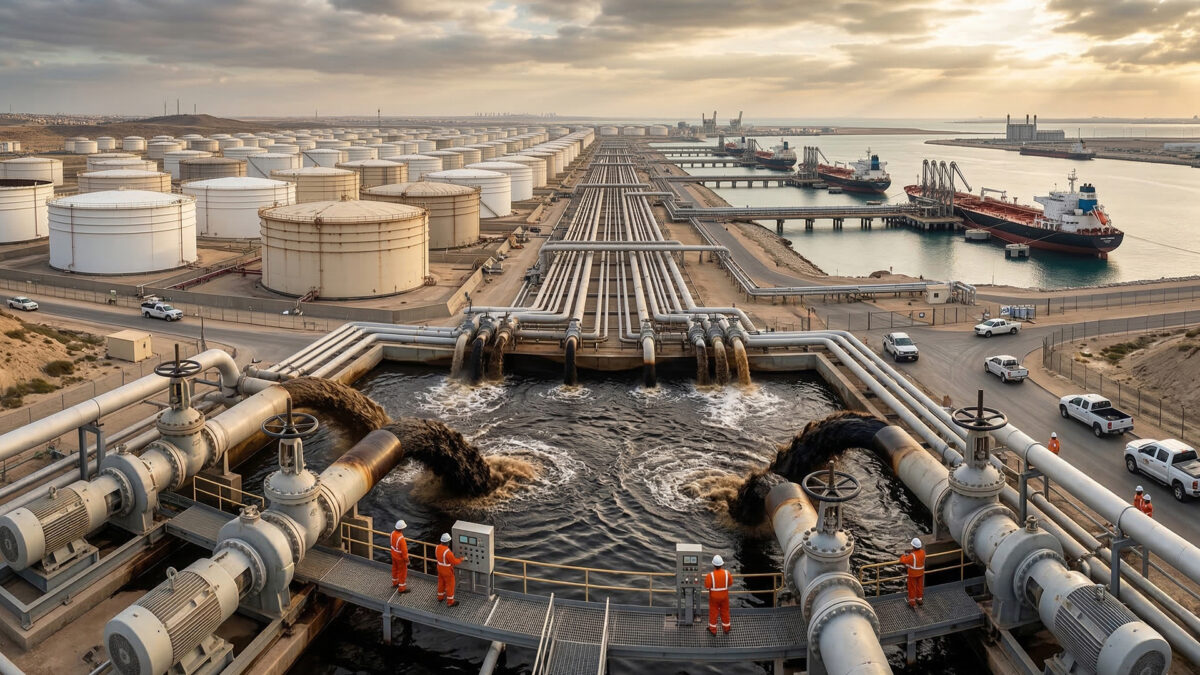
Industry leaders told US officials that the conflict may threaten tanker movement through the Strait of Hormuz, a critical route for global crude shipments. Any disruption in the waterway could tighten supplies and trigger prolonged volatility in energy markets. Crude prices have already surged amid fears of escalation.

Analysts say further instability in the Gulf region could worsen the supply outlook and push fuel costs higher worldwide, raising concerns over inflation and economic pressure for many oil-importing countries.

Categories
Beyond

IEA to release 400 mn barrels of oil

The International Energy Agency (IEA) has announced plans to release more than 400 million barrels of oil from emergency reserves into global markets in an effort to stabilise supplies and ease pressure on rising crude prices.

The decision comes at a time when the global oil market is facing significant uncertainty due to supply disruptions linked to escalating tensions in West Asia. These disruptions have particularly affected shipments through the Strait of Hormuz, one of the world’s most important oil transit routes through which a large share of global crude exports passes. Concerns over the safety of this route have pushed international oil prices sharply higher in recent weeks.

According to the Paris-based energy watchdog, IEA member countries have collectively committed about 411.9 million barrels of oil from their strategic reserves. Of this total, 271.7 million barrels will come from government-controlled reserves, while 116.6 million barrels will be supplied from industry stocks held under government obligations. Another 23.6 million barrels will be released from additional reserve sources.

The majority of the planned release, around 72 per cent, will consist of crude oil, while the remaining share will include refined petroleum products such as diesel and gasoline. The oil will be supplied in stages to ensure steady availability in the market.

The IEA stated that oil reserves from Asia and Oceania will begin entering the market immediately. Supplies from Europe and the Americas are expected to start flowing by the end of March, helping improve global availability of crude and fuel products.

IEA Executive Director Fatih Birol said the coordinated release is intended to counter one of the most serious disruptions to global oil supply in recent years. The move represents the largest emergency stock release coordinated by the IEA since the agency was established in 1974.

Energy analysts believe the additional supply could help calm volatile markets and moderate fuel prices in the short term. However, experts caution that the relief may be temporary if shipping disruptions in the Strait of Hormuz persist.

The IEA has previously coordinated similar emergency releases during major global crises, including the 1991 Gulf War, the 2011 Libya crisis, and the 2022 Russia-Ukraine conflict, when supply shocks threatened global energy stability.

Also Read: Gold at ₹1,59,650, Silver at ₹2,74,900

Categories
Beyond

Gold at ₹1,59,650, Silver at ₹2,74,900

Gold and silver prices in India saw a marginal decline on Monday, reflecting cautious sentiment in the bullion market amid global economic uncertainty. The slight drop comes as investors closely watch international developments, including movements in crude oil prices and expectations regarding interest rate decisions by the US Federal Reserve.

In the domestic market, the price of 24-carat gold slipped by ₹10 to ₹1,59,650 per 10 grams. Prices of 22-carat gold also registered a minor fall, mirroring the overall subdued trend in the precious metals segment. Despite the decline, the movement remained limited, suggesting a relatively stable market with only mild corrections.

Silver prices also followed a similar trend. The metal dropped by ₹100 to trade at ₹2,74,900 per kilogram in early trade. The small decline indicates that the silver market, like gold, is currently experiencing limited fluctuations rather than sharp price swings.

Market analysts say global factors are largely influencing the direction of bullion prices. Rising crude oil prices have raised concerns about inflation, which in turn affects expectations surrounding monetary policy in major economies. Investors are particularly focused on signals from the US Federal Reserve regarding future interest rate decisions.

When interest rates remain high, interest-bearing investments such as bonds become more attractive to investors. This typically reduces the appeal of non-yielding assets like gold, leading to pressure on prices in the short term.

At the same time, geopolitical tensions in the Middle East are adding uncertainty to global financial markets. Conflicts involving major global powers often increase demand for safe-haven assets like gold. However, the impact of such tensions is currently being balanced by concerns over interest rates and inflation.

Experts believe bullion prices may remain volatile in the coming days as global economic conditions continue to evolve. Investors are expected to monitor developments in international markets, energy prices, and central bank policies before making significant trading decisions.

Also Read: Sensex falls over 300 points, Nifty slips below 23,300

Categories
Corporate

Sensex falls over 300 points, Nifty slips below 23,300

Indian benchmark indices fell in early trade on Monday, with the BSE Sensex dropping more than 300 points and the NSE Nifty 50 slipping below the 23,300 mark, as rising crude oil prices and global uncertainties weighed on investor sentiment.

The Sensex declined around 300 points during morning trade, while the Nifty hovered near the 23,250–23,300 range. The cautious start came despite earlier indications of a positive opening from GIFT Nifty, which had signalled gains ahead of the session.

Investor sentiment remained fragile amid escalating geopolitical tensions in the Middle East and a sharp surge in global crude oil prices. Oil prices climbed above the $100-per-barrel level, raising concerns about inflation and India’s import bill, as the country imports a large share of its crude oil requirements.

Asian markets also traded lower during the session, reflecting a broader risk-off mood among investors. The cautious trend followed losses on Wall Street in the previous session, which added to volatility across global equity markets.

Heavy selling in banking, financial and metal stocks dragged the indices lower in early trade. Shares of Hindalco Industries were among the notable losers, reflecting weakness in the metal segment and cautious investor sentiment.

Foreign institutional investors (FIIs) also continued to offload Indian equities, putting additional pressure on domestic markets. Persistent outflows from overseas investors have remained a key factor affecting the momentum of Indian stocks in recent weeks.

However, some stocks managed to buck the broader market trend. Shares of Tata Motors and Adani Total Gas saw buying interest, helping limit deeper losses in the benchmark indices. Company-specific developments also kept stocks such as Waaree Energies and IDBI Bank in focus during the session.

Market analysts expect volatility to remain high in the coming days as investors closely track geopolitical developments, movements in global crude prices and trends in foreign investor flows.

Experts noted that a sustained rise in crude oil prices could increase inflationary pressures and affect India’s fiscal balance, prompting investors to remain cautious in the near term.

Also Read: Rising tensions in Middle East surges freight costs

Categories
Beyond

Rising tensions in Middle East surges freight costs

Rising tensions in the Middle East are disrupting global trade routes and pushing air freight costs sharply higher, as airlines and shipping companies adjust their operations to avoid conflict zones.

According to a report by Reuters, air cargo rates have surged on several international routes after airlines began rerouting flights away from risky airspace in the region. The changes have reduced available cargo capacity and increased the cost of transporting goods.

Some air freight routes, especially those connecting parts of Asia with Europe, have seen prices climb by up to 70%. Logistics companies say the sudden increase reflects both limited capacity and higher operating costs.

The conflict has also affected shipping lanes in the Middle East. Important maritime routes near the Strait of Hormuz, one of the world’s most critical oil and trade passages, have faced disruptions due to security concerns. Several shipping companies have slowed operations or diverted vessels to safer routes.

As a result, many businesses are increasingly turning to air transport to move goods quickly and avoid delays. However, air cargo is significantly more expensive than sea freight, sometimes costing several times more. Industries that rely on fast delivery, such as electronics, pharmaceuticals and fresh food, are among the most affected.

Higher fuel prices have also added to the rising freight costs. Jet fuel has become more expensive as oil prices rise amid the geopolitical tensions. Airlines are also flying longer routes to bypass dangerous airspace, which increases fuel consumption and reduces the amount of cargo they can carry.

The impact of the conflict is also being felt in financial markets. Rising oil prices have affected commodities such as gold. Although gold is usually considered a safe investment during global uncertainty, analysts say stronger oil prices could slow expectations of interest rate cuts in the United States, putting pressure on gold prices this week.

Also Read: Tim Cook’s message on Apple’s 50th anniversary

Categories
Leaders

Tim Cook’s message on Apple’s 50th anniversary

As Apple approaches its 50th anniversary, CEO Tim Cook has shared a message of gratitude, reflecting on the company’s remarkable journey and the people who helped shape it.

In a letter marking the milestone, Cook thanked Apple employees, developers and customers around the world for their role in building the company over the past five decades. The message comes as Apple prepares to celebrate its 50th year on April 1, 2026.

Cook noted that Apple began as a small venture started in a garage by Steve Jobs and Steve Wozniak in 1976. What started as an effort to make personal computers more accessible eventually grew into one of the world’s most influential technology companies.

Reflecting on the company’s early vision, Cook said Apple was founded on the belief that technology should be simple, personal and empowering. That philosophy, he said, continues to guide the company as it designs products and services for millions of users worldwide.

Over the years, Apple has introduced several products that changed the way people interact with technology. From the early Macintosh computers to devices such as the iPod, iPhone and iPad, the company has played a key role in shaping modern digital life. More recently, products like the Apple Watch and AirPods have expanded its ecosystem further.

Cook also pointed out that Apple’s influence now extends beyond hardware. Services such as the App Store, Apple Music and Apple Pay have become an important part of the company’s business and user experience.

Despite the technological breakthroughs, Cook emphasised that Apple’s success is ultimately driven by people. He said the company’s products are meaningful because of how they are used in everyday life, whether it is helping people stay connected, learn new skills or pursue creative ideas.

In his message, Cook expressed appreciation for Apple’s global teams and the developer community that continues to build apps and services on the company’s platforms. He also thanked customers for their trust and support over the years.

Also Read: Google Maps rolls out ‘Ask Maps’ in India

Categories
Technology

Google Maps rolls out ‘Ask Maps’ in India

Google has announced a major upgrade to Google Maps, adding artificial intelligence tools and enhanced navigation features to improve the overall user experience. The update introduces a conversational search feature called “Ask Maps,” powered by Google Gemini, which is now rolling out in India.

With “Ask Maps,” users can ask the app detailed questions rather than typing simple search terms. For example, travellers can ask for nearby attractions, restaurants along their travel route or recommendations for places to visit during a short trip. The AI processes the request and suggests relevant locations directly within the app.

The feature works by analysing data from millions of locations listed on Google Maps, including ratings, reviews and photos shared by users. This helps the system generate contextual suggestions and makes discovering new places easier.

Google has also introduced immersive navigation as part of the update. The feature offers a more detailed and realistic driving interface with 3D visualisations of roads, buildings and surroundings. This allows drivers to better understand routes and intersections before reaching them.

In addition, the navigation screen now highlights important road elements such as lanes, crosswalks and traffic lights, providing clearer guidance for drivers.

Google says the upgrade represents its largest improvement to Maps in more than ten years. By integrating Gemini AI, the company aims to turn the app into a more intelligent travel assistant capable of helping users plan journeys, discover places and navigate routes more efficiently.

Also Read: Microsoft executive VP Rajesh Jha to retire in July

Categories
Leaders

Microsoft executive VP Rajesh Jha to retire in July

Microsoft has announced that senior executive Rajesh Jha will retire in July 2026, ending a long career of more than three decades at the technology company. His departure will also lead to several leadership changes within the organisation.

Jha currently serves as Executive Vice President of Microsoft’s Experiences and Devices division. The unit manages some of the company’s most widely used products, including the Windows operating system, Microsoft 365 applications such as Word, Excel and Teams, and the Surface range of devices.

According to the company, Jha will step down from his role on July 1. After retiring, he is expected to stay on for a short period in an advisory role to help ensure a smooth leadership transition.

Jha joined Microsoft over 30 years ago and worked his way up through different roles in engineering and product development. During his time at the company, he played an important role in building and expanding several key products. He helped lead the development of enterprise tools such as Exchange and SharePoint and later worked on transforming the Office software suite into the cloud-based Microsoft 365 platform used by millions of people worldwide.

In recent years, Jha also helped drive the integration of artificial intelligence features into Microsoft’s productivity products, which has become a major focus for the company.

Following his retirement announcement, Microsoft said it will reorganise parts of its leadership structure. Instead of appointing a direct replacement for Jha, some senior executives will report directly to CEO Satya Nadella.

These include leaders responsible for Windows, Surface devices, LinkedIn, Microsoft 365 and other key products. The company has also promoted several executives to new roles as part of the restructuring.

Nadella praised Jha’s contributions, saying he played a major role in shaping Microsoft’s products and helping the company grow over the years.

Also Read: Accenture names new leaders for reinvention services

Categories
Beyond

UAE allows return for residents with expired visas

The United Arab Emirates has introduced a temporary measure allowing foreign residents whose visas expired while they were abroad to return to the country without paying overstay fines or applying for a new entry permit. The special provision will remain in effect until March 31.

The initiative was announced by the Federal Authority for Identity, Citizenship, Customs and Port Security (ICP), which said the move is intended to help expatriates who were unable to return to the UAE before their residency visas expired due to travel disruptions and regional instability.

Under the new rule, residents whose visas expired while they were outside the country can re-enter the UAE directly using their existing residency documents. Authorities have also waived any penalties normally imposed for overstaying in such situations during the grace period.

Officials said the temporary policy was introduced after many residents were stranded overseas because of flight disruptions and airspace restrictions in parts of the Middle East. Ongoing tensions involving Iran, the United States and Israel have affected travel routes and led to cancellations or delays for several international flights.

As a result, numerous expatriates working in the UAE were unable to return to the country before their visas expired. The government’s latest measure aims to ease their return and help them regularise their residency status once they arrive.

According to authorities, returning residents will be allowed to complete the necessary procedures to renew or update their residency permits after re-entering the country. Immigration service centres and airport authorities have also been instructed to facilitate the process and assist travellers during the temporary relief period.

The UAE hosts millions of expatriate workers from around the world, including a large number from South Asia. Flexible immigration measures such as this are often introduced during emergencies to support residents and minimise administrative complications caused by unexpected travel restrictions.

Also Read: Iran to allow safe passage for Indian ships