Categories
Corporate

Sensex surges nearly 600 points, Nifty above 23,500

On Tuesday, the markets extended their recovery for the second consecutive day, with the S&P BSE Sensex climbing about 600 points and the NSE Nifty50 closing above the key 23,500 level. Benchmark indices rallied despite ongoing global uncertainties and rising crude oil prices.

The Sensex ended the session at around 76,070, up nearly 0.75%, while the Nifty50 gained approximately 0.74%, finishing at close to 23,580. This marks a continuation of the recent rebound after steep losses in preceding sessions and reflects improving market sentiment.

Sector performance showed clear leadership from auto and metal stocks, which saw robust buying interest. Large‑cap names including Eternal Ltd, Tata Steel, Mahindra & Mahindra, Bharat Electronics, and Bharti Airtel were among the top gainers, with some advancing up to 5–6%.

In contrast, information technology and consumer staples segments lagged. Stocks such as Infosys, Bajaj Finance, ITC, TCS, and HCL Technologies ended lower, reflecting selective sector weakness within the broader uptrend.

Market analysts noted that volatility eased during the session, with the India VIX falling sharply, while mid‑cap and small‑cap indices also advanced modestly, suggesting broader participation in the rally.

Persistent headwinds remain, particularly from elevated crude prices and geopolitical tensions in the Middle East, which have weighed on investor appetite in recent weeks. Additionally, the Indian rupee saw pressure, dipping toward record lows against the U.S. dollar, underlining currency market stress that could influence future equity flows.

Also Read: Sensex rises 300+ points, Nifty nears 23,500

Categories
Leaders

Jensen Huang projects $1 trillion AI revenue by 2027

Jensen Huang has projected that the artificial intelligence (AI) computing market could generate up to $1 trillion in revenue by 2027, reflecting the rapid expansion of AI infrastructure worldwide.

Speaking at the company’s annual developer conference, Nvidia GTC in San Jose, Huang said the demand for AI chips and data-center systems is rising much faster than previously expected. The estimate is significantly higher than earlier projections and even exceeds the most optimistic forecasts from analysts.

Just last year, Nvidia had suggested that the market opportunity for AI data-center hardware could reach about $500 billion. However, Huang said accelerating investments by major technology companies and cloud providers have pushed the potential market size much higher.

Large technology firms are rapidly building AI infrastructure to train and deploy increasingly powerful AI models. This has led to strong demand for Nvidia’s advanced processors and integrated computing systems used in data centers around the world.

During his keynote address, Huang also introduced new AI platforms designed to support the next generation of computing workloads. These include systems based on Nvidia’s Blackwell architecture and future platforms such as Vera Rubin, aimed at powering large-scale AI data centers.

According to Huang, the AI industry is now entering a new phase focused on AI inference, the stage where trained models are deployed to perform real-time tasks. This includes applications such as digital assistants, automated software systems, robotics, and autonomous machines.

The shift toward inference computing is expected to significantly increase the demand for AI hardware and specialized data-center infrastructure. Nvidia believes this trend will drive the next wave of growth for the semiconductor industry.

Also Read: Chrome update brings bookmarks bar to Android

Categories
Corporate

Uncertain global markets force PhonePe to delay IPO

Digital payments platform PhonePe has postponed its plans to launch an initial public offering (IPO), citing unstable global markets and rising geopolitical tensions that have affected investor sentiment. The company said it will reconsider the listing once market conditions become more favourable.

The fintech major had been preparing for a public listing in India that was expected to raise about $1.3–$1.5 billion and value the company at roughly $15 billion. The proposed IPO was widely seen as one of the most significant upcoming listings in India’s fintech sector.

However, growing geopolitical tensions in parts of the world and fluctuations in global equity markets have created uncertainty for investors. Market experts say companies often delay large public offerings during such periods to avoid weak demand or lower-than-expected valuations.

According to reports, the decision was taken after the company carefully reviewed the prevailing market environment. PhonePe said it remains committed to going public in India but will wait until financial markets stabilise before proceeding with its IPO plans.

Analysts note that investor sentiment has recently been affected by global geopolitical developments, which have led to increased volatility in financial markets. Such conditions typically make it more challenging for companies to attract strong investor interest during public listings.

Industry sources also indicated that valuation expectations may have influenced the decision. Reports suggest that some potential investors were cautious about the company’s expected valuation, prompting PhonePe to reconsider the timing of its listing.

The postponement reflects a broader trend in India’s capital markets, where several firms are reassessing their IPO timelines amid global economic uncertainty. Experts believe more companies may choose to delay their listings until market conditions improve and investor confidence returns.

PhonePe is one of India’s largest digital payments platforms, serving hundreds of millions of users and millions of merchants across the country. The company has been expanding its services beyond payments into financial products such as insurance, lending and wealth management.

Also Read: Reliance, Samsung C&T sign $3 bn green ammonia deal

Categories
Technology

Chrome update brings bookmarks bar to Android

Google has begun rolling out a new update to its Chrome browser on Android that introduces a bookmarks bar for tablets and foldable devices, making it easier for users to access their favourite websites.

The feature, commonly used on desktop browsers, appears just below the address bar and displays saved websites for quick access. With a single tap, users can open frequently visited pages without navigating through the bookmarks menu.

Until now, Android users had to open the bookmarks section separately to reach saved links. The new bookmarks bar reduces that extra step, allowing quicker browsing and easier navigation—especially on devices with larger displays.

Users can also organise bookmarks into folders, helping them group websites based on categories such as work, news or entertainment. If the number of saved links exceeds the space available on the screen, an arrow icon appears at the end of the bar to show additional bookmarks.

The feature is available in the latest version of Chrome for Android and can be enabled in the browser’s settings. Users can turn it on by going to the “Appearance” section and selecting the option to show the bookmarks bar. However, the feature is mainly designed for tablets and foldable phones, meaning it may not appear on smaller smartphone screens.

As tablets and foldables become more common for productivity and multitasking, companies are increasingly adapting software to take advantage of bigger screens.

Also Read: upGrad to acquire Unacademy

Categories
Corporate

upGrad to acquire Unacademy

India’s edtech sector is set for a significant shake-up as upGrad has agreed to acquire rival platform Unacademy through a 100% share-swap transaction. The proposed deal reflects a broader consolidation trend within the industry as companies focus on sustainable growth and new technologies such as artificial intelligence.

Under the agreement, Unacademy will continue operating with its existing leadership team. Co-founder Gaurav Munjal is expected to remain CEO, overseeing the company’s operations and future product development. The combined entity aims to strengthen its presence across multiple education segments, including competitive exam preparation, professional courses and upskilling programs.

The financial terms of the transaction have not yet been disclosed. Company executives said the valuation and final details will become public after the deal is formally completed and required regulatory processes are finished.

The acquisition comes at a time when India’s once-booming edtech sector is undergoing major changes following the rapid expansion witnessed during the COVID-19 pandemic. Many companies are now prioritising profitability, operational efficiency and strategic partnerships to remain competitive in a more mature market.

Both upGrad and Unacademy are increasingly investing in artificial intelligence to improve their learning platforms. AI-powered tools are being developed to personalise courses, recommend learning paths for students and assist educators in creating interactive digital content. The companies believe these technologies could significantly enhance engagement and learning outcomes.

upGrad has been expanding its offerings in career-oriented education and professional upskilling, while Unacademy has built a strong presence in test preparation for competitive exams. By combining their resources, technology and learner communities, the two firms expect to accelerate innovation and broaden their reach across different learner groups.

Also Read: Reliance, Samsung C&T sign $3 bn green ammonia deal

Categories
Beyond

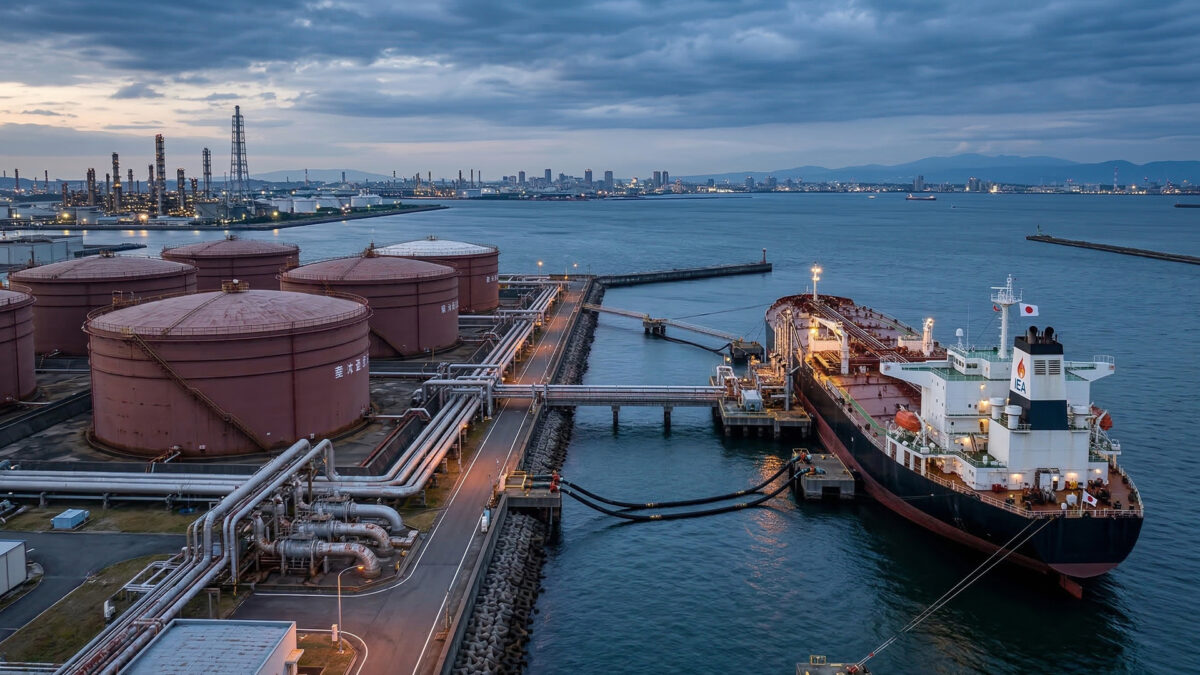
Japan releases emergency oil reserves

Japan has started releasing oil from its emergency reserves as rising tensions in the Middle East threaten global energy supplies. The decision comes amid fears that the ongoing war involving Iran could disrupt crude shipments and push fuel prices higher worldwide.

The Japanese government allowed oil refiners and trading companies to use part of their stockpiles after reducing the mandatory reserve requirement for private companies. The requirement was lowered from 70 days to 55 days, freeing up significant volumes of oil for immediate use.

Officials said the measure is intended to stabilise domestic fuel supplies and prevent shortages if imports are affected by the conflict. Japan relies heavily on imported oil, most of which comes from the Middle East.

The government is expected to release reserves in stages. Initially, part of the oil held by private companies will be made available to the market. Government-controlled reserves may also be released later if the supply situation worsens.

The move comes as concerns grow over disruptions to shipping routes in the region, particularly through the Strait of Hormuz. The narrow waterway is one of the world’s most important oil transit routes, with about one-fifth of global oil supply passing through it.

Any interruption to shipping in the strait could have serious consequences for global energy markets. Recent tensions and military activity in the region have already increased uncertainty about the safety of tanker movements.

Oil prices have surged amid the crisis, with markets reacting to fears of reduced supply. Several countries are closely monitoring the situation and considering measures to protect their energy security.

Energy experts say releasing strategic reserves can help reduce short-term supply pressure and calm markets. However, they warn that the step alone may not solve the problem if the conflict continues and transport routes remain unstable.

Japan maintains large emergency oil reserves specifically for situations such as natural disasters, supply disruptions or geopolitical crises. The current release is aimed at ensuring that industries, transport services and households continue to have stable access to fuel.

Also Read: Global oil prices jump over 2%

Categories
Beyond

Rupee settles at 92.42 against US dollar

Rupee declined against the US dollar in early trade on March 17 but later recovered some of the losses to end the day at 92.42 per dollar in the domestic foreign exchange market.

At the interbank forex market, the rupee opened around 92.35 against the US dollar and soon weakened further, falling 14 paise to 92.42 during the initial trading session. The early decline was mainly driven by global and domestic factors that continued to pressure the local currency.

Forex market participants said the fall in the rupee was influenced by rising global crude oil prices, which increase India’s import bill and often weaken the domestic currency. In addition, foreign institutional investors (FIIs) continued to pull funds out of Indian equities, adding further pressure on the rupee. A stronger US dollar in international markets also weighed on the Indian currency during the day’s trading.

Despite the early weakness, the rupee managed to recover some ground later in the session. The domestic currency eventually closed at 92.42 per dollar, about 4 paise stronger than the previous closing level of 92.46. Traders said the recovery helped limit the overall losses for the day.

Market experts noted that possible intervention by the Reserve Bank of India (RBI) through state-owned banks may have supported the rupee and prevented a sharper fall. The central bank often steps in to stabilise the currency when there is excessive volatility in the forex market.

Global developments also continue to influence the movement of the rupee. Geopolitical tensions in West Asia have pushed up crude oil prices in recent weeks, raising concerns for oil-importing countries like India. Higher oil prices typically increase demand for dollars, which can weaken the rupee.

Also Read: Gold at ₹1.57 lakh, Silver at ₹2.69 lakh

Categories
Corporate

Sensex rises 300+ points, Nifty nears 23,500
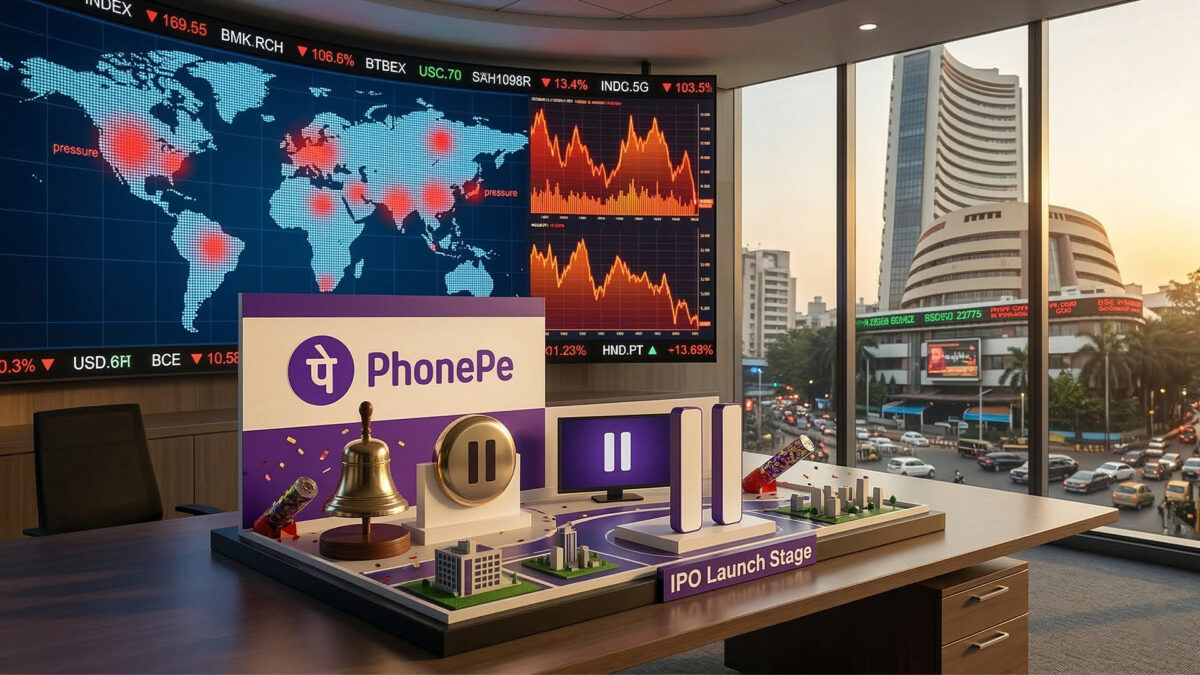
The markets rebounded on Tuesday, with key indices climbing after recent declines, driven by bargain buying and easing risk concerns. The BSE Sensex jumped over 300 points, while the Nifty50 approached the 23,500 mark, signaling renewed optimism among investors.

Investors were encouraged by hopes of the Strait of Hormuz reopening, a major oil shipping route whose closure had previously pushed crude prices higher and raised global risk concerns. With crude hovering around $103 a barrel, energy-linked stocks remained under pressure, but broader market sentiment improved as traders trimmed short positions and picked up beaten-down stocks.

Sector-wise, auto, metal, and midcap stocks led the gains, reflecting selective buying across these segments. In contrast, IT, PSU banks, and FMCG stocks lagged, keeping the overall rise in check. Analysts noted that while domestic sentiment improved, global uncertainties and elevated oil prices continue to weigh on market confidence.

Some individual stocks saw notable moves. Tata Motors and other commercial vehicle companies advanced after announcing price adjustments to offset rising costs. Meanwhile, companies with exposure to Middle East markets experienced volatility amid ongoing geopolitical tensions.

Market analysts highlighted that foreign portfolio investors remain cautious, contributing to uneven participation. Technical indicators suggest that both the Sensex and Nifty are still navigating key moving averages, making the market sensitive to further global or domestic triggers.

Despite the rebound, investors remain watchful of upcoming crude price trends, corporate earnings, and geopolitical developments. These factors are expected to influence market momentum in the near term, with cautious optimism prevailing among traders.

Also Read: Exicom opens ₹216 cr EV charger plant in Hyderabad

Categories
Corporate

Sensex Up 940 points, Nifty rises to 23,400

India’s equity markets bounced back sharply on Monday, ending a three-session losing streak. The BSE Sensex surged 939 points (1.26%) to close above 75,500, while the Nifty50 rose 1.1% to finish above 23,400. Heavyweight banking and private sector stocks drove the rally, reflecting renewed investor optimism.

Top gainers were HDFC Bank, ICICI Bank, and Reliance Industries, which saw strong buying interest. The auto sector also supported the rally, helping lift overall indices.

However, some mid-cap and financial stocks lagged. IDBI Bank fell sharply after news of a potential stake sale being shelved dampened sentiment in the mid-cap banking space.

While domestic markets recovered, global factors such as Brent crude holding above $100 per barrel and geopolitical tensions kept investors cautious. Foreign investor activity remained a key watchpoint for near-term market direction.

The session’s rebound offered relief to investors, but mixed sector performance and external risks indicate volatility may continue in the coming days.

Also Read: Airlines add fuel surcharge as oil prices rise

Categories
Beyond

Middle East tensions push aluminium prices higher

Escalating tensions in the Middle East have pushed global aluminium prices higher, raising concerns among manufacturers and traders about potential supply disruptions. The geopolitical situation has increased risks to key shipping routes and export channels, tightening the availability of the metal in international markets.

Aluminium prices on global exchanges have risen steadily in recent weeks. On the London Metal Exchange (LME), the metal is trading close to $3,450 per tonne, while prices in India have climbed past ₹340 per kilogram on the Multi Commodity Exchange (MCX). The price surge reflects a combination of supply worries and steady demand from sectors such as automobiles, construction, packaging and electronics.

The Middle East plays an important role in global aluminium production and exports. The region produces about 6.5 million tonnes of aluminium annually, much of which is shipped through strategic trade routes such as the Strait of Hormuz. Rising geopolitical tensions have raised fears that disruptions to these routes could affect shipments, with around 5 million tonnes of supply potentially exposed to risk if the situation worsens.

At the same time, global aluminium inventories have been shrinking. Stocks held in warehouses monitored by the London Metal Exchange have dropped to about 446,875 tonnes, marking one of the lowest levels in recent months. Limited expansion of smelting capacity and production constraints in major producing countries, including China, have also contributed to tighter supply.

Despite the recent spike linked to geopolitical tensions, aluminium prices had already been on an upward trend over the past year. Globally, prices have increased by roughly 25 per cent, while the Indian market has seen gains of more than 30 per cent. Since the beginning of the year, aluminium prices have risen by around 12 per cent, supported by improving industrial demand and broader strength in base metals.

Industry experts also highlight new technological developments that could further boost demand for aluminium in the long run. Researchers are exploring aluminium-based battery technologies, including aluminium-ion batteries, as potential alternatives for future energy storage systems.

Also Read: LPG crisis sparks illegal cylinder sales