Categories
Technology

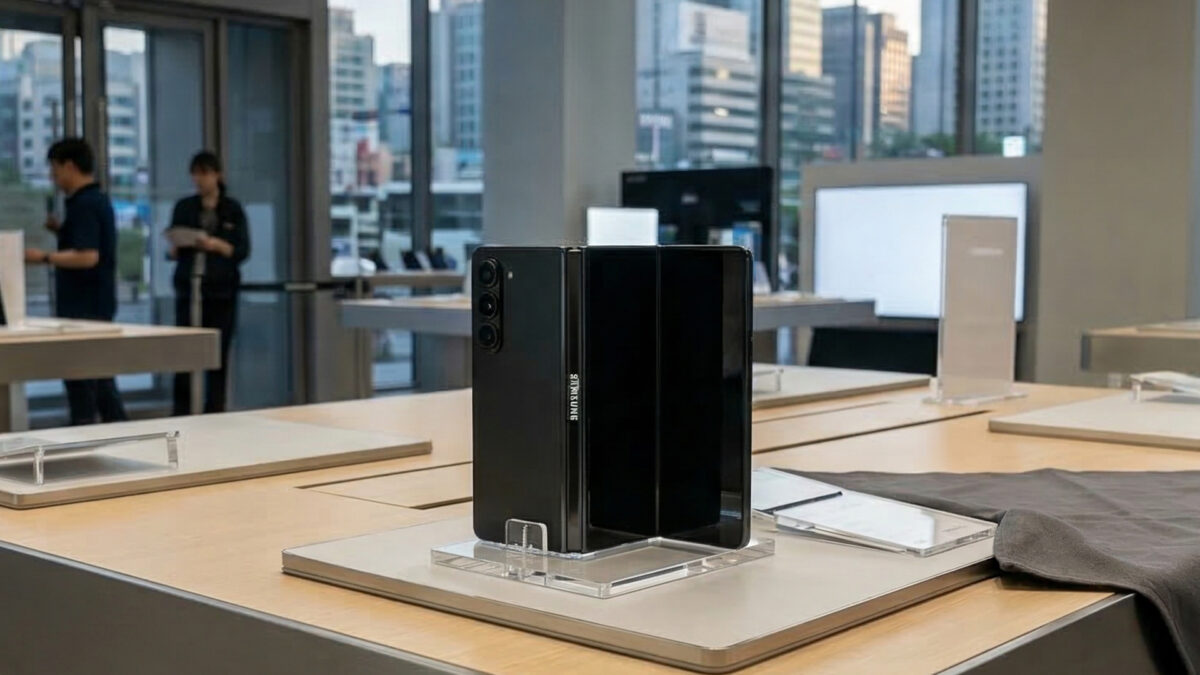
Samsung ends Galaxy Z TriFold sales

Samsung Electronics has confirmed that it will stop selling its premium Galaxy Z TriFold smartphone, only three months after its debut. Launched in December 2025 in South Korea and arriving in the U.S. in January 2026, the TriFold was Samsung’s first attempt at a tri-folding smartphone, featuring a 10-inch flexible display that unfolded into a tablet-like device.

With a steep price of $2,899 (around ₹2.65 lakh), the phone targeted early adopters and tech enthusiasts rather than mainstream buyers. Samsung’s official website now lists the device as “sold out”, signaling that sales will end immediately in South Korea, while remaining U.S. stock will be sold until depleted.

Industry experts note that the TriFold was never intended to be a high-volume product. Its complex design and expensive manufacturing made it difficult to achieve profitability, especially with limited retail and carrier distribution. While the phone received attention for its futuristic design, these factors contributed to Samsung’s decision to discontinue sales.

Despite its short run, the Galaxy Z TriFold is likely to become a collector’s item, with remaining units occasionally available in select Samsung Experience Stores across the U.S. Samsung has not announced a successor, suggesting the lessons learned from this device may influence future foldable smartphones rather than result in a direct replacement.

Analysts say the move reflects Samsung’s focus on balancing innovation with market feasibility. The company continues to invest in foldable technology, as seen in its Galaxy Z Fold and Galaxy Z Flip series, while also promoting more mainstream devices like the Galaxy S26 Ultra.

The Galaxy Z TriFold’s brief market life underscores the challenges of producing cutting-edge, high-cost foldables. While it offered a glimpse of the future of mobile design, its discontinuation highlights the need for practicality and affordability in new form factors.

Also Read: Apple acquires Polish visual effects firm MotionVFX

Categories
1 Minute-Read

Apple acquires Polish visual effects firm MotionVFX

Apple has bought Polish video‑editing software company MotionVFX, known for its plug‑ins, templates, and visual effects for Final Cut Pro. Founded in 2009 and based in Bielsko‑Biała, MotionVFX employs around 70 people. Financial terms were not disclosed.

The acquisition will integrate MotionVFX’s products and expertise into Apple’s creative software ecosystem, enhancing professional video editing tools and supporting its Creator Studio offerings.

The move also positions Apple to better compete with rivals like Adobe. MotionVFX expressed excitement about joining Apple and continuing to develop advanced visual‑effects solutions for video creators.

Categories
Corporate

Sensex surges over 600 points, Nifty near 23,800

Indian equity markets continued their upward march on 18 March 2026, with investors showing renewed optimism. The BSE Sensex climbed over 630 points, closing around 76,700, while the Nifty50 hovered above 23,750, marking a third consecutive day of gains.

The rally was broad-based, with sectors like banking, information technology, autos, media, telecom, and consumer durables seeing strong buying interest. Midcap and smallcap stocks also participated, suggesting confidence was returning across market segments.

Leading the charge were stocks such as Jio Financial, Tech Mahindra, Infosys, Eternal, and Mahindra & Mahindra, which saw noticeable gains and helped lift the indices. Banking stocks, in particular, drew attention as investors looked for value in solid performers.

However, not all counters joined the rally. Coal India, NTPC, Hindustan Unilever (HUL), Cipla, and Sun Pharma were among the notable laggards, reflecting profit-taking and selective investor caution in energy and FMCG stocks.

Crude oil prices eased slightly, easing inflation concerns, while global markets stabilized, giving domestic investors more confidence. Lower bond yields also encouraged buying, especially in cyclical and financial stocks.

Despite the positive sentiment, experts advise caution. Global economic trends, oil price movements, and central bank policies could influence market direction in the days ahead. Still, the latest session suggests that Indian markets are finding some footing after weeks of volatility.

Also Read: Rupee slips 3 paise to 92.43 against US dollar

Categories
Corporate

Jio may file draft IPO papers by end of March


Categories
Leaders

Nita Ambani receives KISS Humanitarian Award

Nita Ambani, founder and chairperson of Reliance Foundation, received the 2025 KISS Humanitarian Award at the campus of Kalinga Institute of Social Sciences (KISS) in Bhubaneswar, Odisha, in recognition of her contributions to social and humanitarian causes.

The award was presented by Nobel Laureate Mohan Munasinghe in the presence of Achyuta Samanta, founder of KIIT and KISS, along with other dignitaries and thousands of students.

Speaking at the event, Ambani encouraged students to dream big and work hard to achieve their goals. Addressing more than 40,000 students of the institute, she said their current achievements were just the beginning and urged them to remain focused and determined in pursuing their ambitions.

She also stressed the importance of equality in opportunities for both boys and girls, saying that everyone has the potential to succeed. Ambani advised the students to stay on the path of honesty and values while building their future.

During her speech, Ambani praised the work of KISS and KIIT, describing them as institutions that have transformed the lives of thousands of underprivileged children by providing free education and opportunities. She said the institutions have created a powerful model of inclusive education.

Expressing gratitude for the honour, Ambani said the award belongs to the entire team of Reliance Foundation that works across India in areas such as education, healthcare, rural development, sports and women’s empowerment. She also said meeting the students at KISS was inspiring and gave her confidence about the country’s future.

Ambani also appreciated the rich culture and traditions of Odisha and said she felt privileged to visit the land associated with Lord Jagannath.

Instituted in 2008, the KISS Humanitarian Award is the highest honour of the Kalinga Institute of Social Sciences and recognises individuals and organisations for outstanding service to humanity.

Also Read: NCLT clears Adani Enterprises plan to acquire Jaiprakash Associates

Categories
1 Minute-Read

Ecofy secures ₹380 crore funding to expand green lending

Ecofy, a climate-focused non-banking finance company (NBFC), has raised ₹380.5 crore in fresh equity funding to strengthen its retail green finance business in India.

The investment round included global development finance institutions such as British International Investment and Finnfund’s Digital Access Impact Fund, along with continued backing from Eversource Capital. The company plans to use the funds to expand loans for rooftop solar systems, electric vehicles and sustainable small-business solutions.

said the capital infusion will improve its capital adequacy ratio to about 50 per cent, supporting faster growth. The firm currently serves more than 1.2 lakh customers across various green asset segments nationwide.

Categories
Leaders

Nithin Kamath questions banking app permissions

Nithin Kamath, co-founder and CEO of Zerodha, has raised concerns over the permissions sought by several mobile banking applications, saying he does not use net banking apps because many of them request access to personal data that he considers unnecessary.

In a post on the social media platform X (Twitter), Kamath said many banking apps ask for permissions such as access to SMS messages, phone data and contact lists. He described these requirements as “invasive” and questioned why such access is needed for basic banking services.

Kamath said the demand for such permissions does not make sense and may pose privacy risks for users. According to him, financial apps should ideally follow global cybersecurity practices, where applications only request the minimum permissions required to function.

Because of these concerns, Kamath said he prefers not to install or use net banking apps on his smartphone. His comments highlight the growing debate around data privacy and how financial technology platforms handle sensitive user information.

He also pointed out that digital platforms should focus on protecting user privacy while still ensuring security. Kamath noted that unnecessary permissions could make users uncomfortable and reduce trust in financial apps.

Referring to his own company’s approach, Kamath said Zerodha’s trading platforms are designed to function without requesting unnecessary permissions from users’ devices. He said this approach is intended to ensure that user data remains protected while still offering secure services.

His remarks triggered discussions online, with many social media users sharing similar concerns about the level of access requested by banking and financial apps. Some users agreed that certain permissions appear excessive for basic transactions and account management.

At the same time, others noted that banks may request access to features like SMS to enable security measures such as transaction alerts, device verification or fraud detection.

Also Read: Roche expands AI computing with Nvidia chips

Categories
Corporate

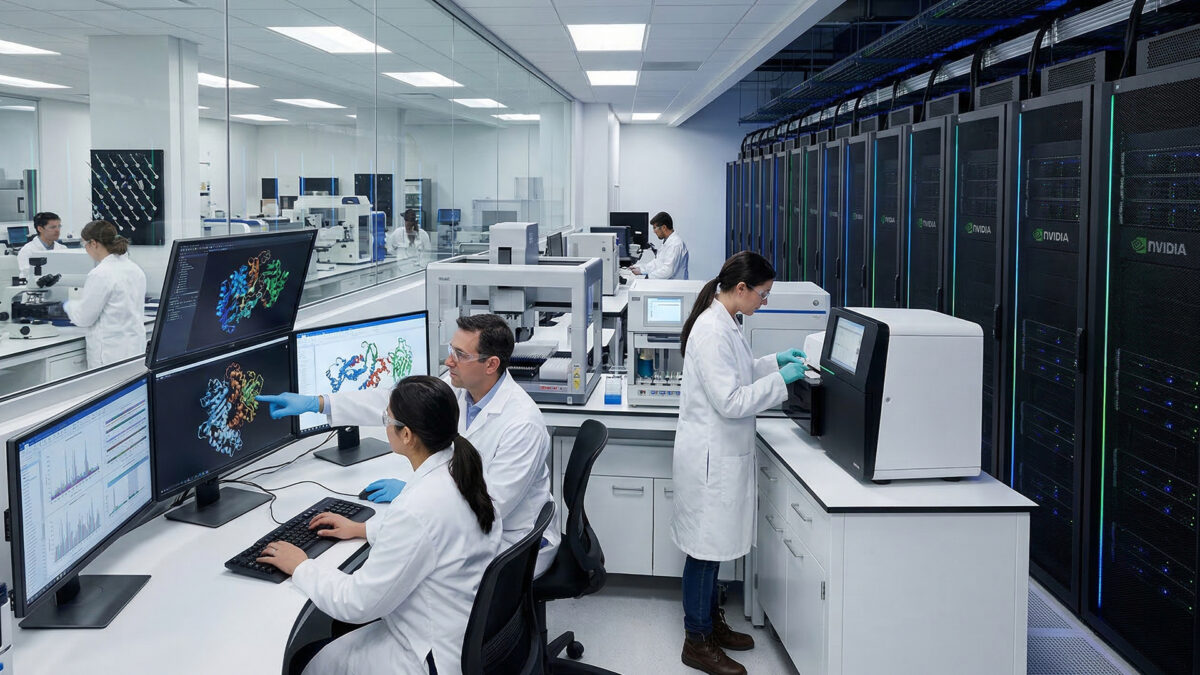
Roche expands AI computing with Nvidia chips

Swiss pharmaceutical company Roche has significantly expanded its artificial intelligence (AI) infrastructure by purchasing thousands of advanced chips from Nvidia, aiming to accelerate drug discovery and improve the efficiency of its research and development operations.

The company has installed more than 2,000 high-performance graphics processing units (GPUs) across its research centres in the United States and Europe. These chips provide the computing power required to process vast amounts of biomedical data and run complex simulations used in modern drug development.

By expanding its AI computing capacity, Roche plans to speed up several stages of the pharmaceutical research process. Scientists will be able to analyse large clinical and biological datasets faster, design potential drug molecules more efficiently and simulate how treatments may work in the human body before they enter clinical trials.

The investment is part of Roche’s ongoing collaboration with Nvidia to integrate advanced AI tools into pharmaceutical research. The enhanced computing platform will support the development of AI models capable of identifying promising drug targets, predicting outcomes in clinical trials and improving diagnostics.

According to Roche executives, faster computing power is becoming essential in the pharmaceutical industry as companies attempt to shorten the long timelines associated with drug development. Developing a new medicine can often take more than a decade and cost billions of dollars, making technologies that increase research productivity highly valuable.

With the latest deployment, Roche has built one of the largest AI-focused computing infrastructures in the pharmaceutical sector. The company expects the expanded system to help researchers run complex analyses in hours instead of days, allowing teams to test more hypotheses and accelerate scientific discovery.

Also Read: NCLT clears Adani Enterprises plan to acquire Jaiprakash Associates

Categories
Beyond

Rupee slips 3 paise to 92.43 against US dollar

Rupee weakened slightly on Wednesday morning, falling by 3 paise to 92.43 against the US dollar in early trade at the interbank foreign exchange market.

The rupee opened at 92.42 against the dollar and slipped marginally to 92.43 during the early session. Currency traders said the fall was mainly due to a stronger US dollar in global markets and continued outflows of foreign institutional investors (FIIs).

Market participants noted that foreign investors have been selling Indian equities in recent sessions, increasing demand for the US dollar. This has put pressure on the domestic currency. At the same time, global uncertainties and geopolitical tensions have also strengthened the dollar against several emerging market currencies, including the rupee.

Despite the weakness, the rupee’s decline was limited due to some supportive factors in the domestic market. Indian equity markets opened on a positive note, which helped prevent a sharper fall in the currency.

Another factor supporting the rupee was the slight easing of global crude oil prices. Since India imports a large portion of its oil requirements, lower crude prices reduce the country’s import bill and help support the domestic currency.

In the previous trading session, the rupee had settled at 92.40 against the US dollar after touching an intraday low of 92.47. The recent movement suggests that the currency is currently trading within a narrow range.

Also Read: Gold gains ₹1,58,090, silver trades at ₹2,75,100

Categories
Corporate

Sensex jumps to 76,300, Nifty rises above 23,700

The markets found fresh momentum on Wednesday, with investors embracing a broad-based rally that pushed both the BSE Sensex and Nifty 50 higher. The Sensex surged by around 550 points to 76,300, while the Nifty climbed past 23,700, extending gains for the third consecutive session.

The upbeat mood on Dalal Street was fueled by falling global crude oil prices and stability in international markets, which eased cost concerns and inflation worries. Analysts said this encouraged domestic investors to step back in after a period of cautious trading.

Among sectors, technology, banking, and automobiles led the gains. TCS, Infosys, Wipro, HCL Tech, and Tech Mahindra posted strong rises, with some IT stocks gaining as much as 4%. In banking, ICICI Bank and other private lenders supported the upward momentum, while Maruti Suzuki led auto shares higher with nearly 2% gains.

On the other hand, metals stocks underperformed despite some individual gains, with Tata Steel performing better than most peers. Analysts noted that stocks without fresh triggers lagged behind the broader rally.

Market breadth was positive, with more advancing stocks than declining ones, indicating that the buying interest was widespread across sectors, not just limited to large-cap stocks. Mid-cap and small-cap shares also participated in the rally, reflecting renewed investor confidence.

The rupee remained stable against the US dollar, and bond yields eased slightly, mirroring the risk-on sentiment across equity markets.

While the current rally is encouraging, analysts cautioned that geopolitical tensions and global economic developments could influence markets in the coming sessions. For now, the rebound shows that investors are increasingly willing to buy on dips, particularly in fundamentally strong sectors.

Also Read: Coal India’s CMPDI launches Rs 1,842 cr IPO, March 20