Categories
Corporate

Meta to pay $1,000–$3,000 per month to creators on Facebook

Meta, the company behind Facebook, has launched a new programme to pay social media creators for posting short videos, aiming to attract influencers from platforms like TikTok and YouTube Shorts. The initiative, called Creator Fast Track, offers $1,000 per month for three months to creators with at least 100,000 followers, while those with over one million followers can earn up to $3,000 per month.

The programme is designed to help creators grow their audience and earnings on Facebook, even if they are already popular on other platforms. Participants can share existing content or produce new Reels, and Meta promises a reach boost, meaning their videos are likely to be seen by more users.

Meta’s move comes as short-form video content dominates social media. Platforms like TikTok and YouTube Shorts have drawn younger audiences and top creators away from Facebook. By offering guaranteed payments, Meta hopes to bring creators back to its platform and increase engagement.

In 2025, Meta reportedly spent nearly $3 billion on creator payments, a 35% increase from the previous year. The company has been investing heavily in the creator economy to secure content and maintain its competitive edge.

Industry experts say the new payments could help Facebook attract talented influencers quickly, but they warn that long-term retention depends on offering more than just money. Creators may need additional tools, monetization options, and audience growth opportunities to stay active on Facebook beyond the initial payment period.

The programme reflects Meta’s broader strategy to compete in the crowded social media landscape, where multiple platforms vie for the same creators and audiences. By financially incentivizing content creation, Meta hopes to ensure Facebook remains relevant in the era of short-form video while giving creators clear rewards for posting regularly.

Also Read: Rupee slips below ₹93 as oil prices soar

Categories
Beyond

Rupee slips below ₹93 as oil prices soar

Rupee tumbled to a record low of ₹93 against the US dollar on Friday, leaving many investors and everyday citizens worried about rising costs. The slide comes as global oil prices continue to climb, and the dollar strengthens against most major currencies.

India imports most of its oil, so any surge in crude prices hits the economy hard. With Brent crude hovering near $110 per barrel, the country has to spend more dollars to fuel its industries, transport, and households. This rising demand for foreign currency naturally puts downward pressure on the rupee.

Foreign investors have also pulled money from Indian markets recently, adding pressure on the currency. March has seen notable outflows from equities, prompting concerns about market stability.

The Reserve Bank of India (RBI) has stepped in to support the rupee, selling dollars and using other monetary tools to limit the slide. But experts say the currency’s weakness could persist unless global oil prices stabilize or investor sentiment improves.

For the average Indian, a weaker rupee translates to more expensive imported goods, higher travel costs, and potential inflation, especially for essentials like fuel and cooking gas. Businesses dependent on imports also face rising costs, which could eventually filter down to consumers.

Also Read: Gold at ₹1,50,270, Silver at ₹2,59,900

Categories
Beyond

Gold at ₹1,50,270, Silver at ₹2,59,900

Gold and silver prices in India showed minor fluctuations on Friday, reflecting a mix of domestic caution and global optimism. 24‑carat gold traded at ₹1,50,270 per 10 grams, while 22‑carat gold was ₹1,37,740 per 10 grams. Silver also saw a slight dip, trading at ₹2,59,900 per kilogram. Cities including Mumbai, Bengaluru, Hyderabad, Chennai, and Kolkata reported similar trends.

Globally, gold and silver prices gained momentum, rising by around 3%, supported by easing tensions in West Asia and renewed investor confidence. On the Multi Commodity Exchange (MCX), April gold and May silver futures reflected these gains, showing optimism among traders.

For buyers and investors, the key takeaway is that short-term price swings are likely, even as gold and silver remain solid long-term stores of value. Watching both world events and domestic trends is essential for making informed buying decisions.

Market analysts note that domestic and global trends are sometimes at odds. While local prices are influenced by supply, demand, and the rupee’s strength, international bullion reacts strongly to geopolitical developments and safe-haven demand. Other factors, like a strong US dollar and inflation expectations, continue to keep the market volatile.

Also Read: Sensex drops 2,500 points, Nifty falls to 23,000

Categories
Corporate

Sensex dives 2,500 points, Nifty drops to 23,000

Indian markets witnessed a steep decline, erasing significant investor wealth. The BSE Sensex fell 2,497 points to 74,207, while the Nifty 50 dropped 770 points to 23,000, marking one of the largest single‑day falls in recent years. This downturn wiped out approximately ₹12 lakh crore from portfolios.

On the upside, some large-cap stocks offered relief. Reliance Industries, along with IT heavyweights TCS and Infosys, recorded modest gains, cushioning the overall market fall.

Financials were the biggest drag. HDFC Bank, Kotak Bank, and Manappuram Finance led losses amid leadership uncertainty and broader sectoral weakness. Midcaps and smallcaps also fell steeply as investors moved away from riskier assets.

Rising global crude prices added pressure. Brent crude surged to $116 per barrel, fueling inflation concerns in India, a major energy importer. Higher oil prices intensified worries over rising input costs and the rupee’s stability, impacting sentiment across commodity‑linked sectors.

External cues also weighed on markets. The U.S. Federal Reserve’s decision to maintain interest rates dampened hopes of near‑term cuts, prompting foreign portfolio investors (FPIs) to sell Indian equities. Global volatility and geopolitical tensions, especially in the Middle East, further contributed to the risk‑off sentiment.

Market breadth was weak, with nearly all sectoral indices in the red. Midcap and smallcap stocks faced heavy selling as investors exited riskier assets.

Also Read: DarkSword spyware threatens millions of iPhone users

Categories
Beyond

Iran hits the world’s largest LNG hub in Qatar

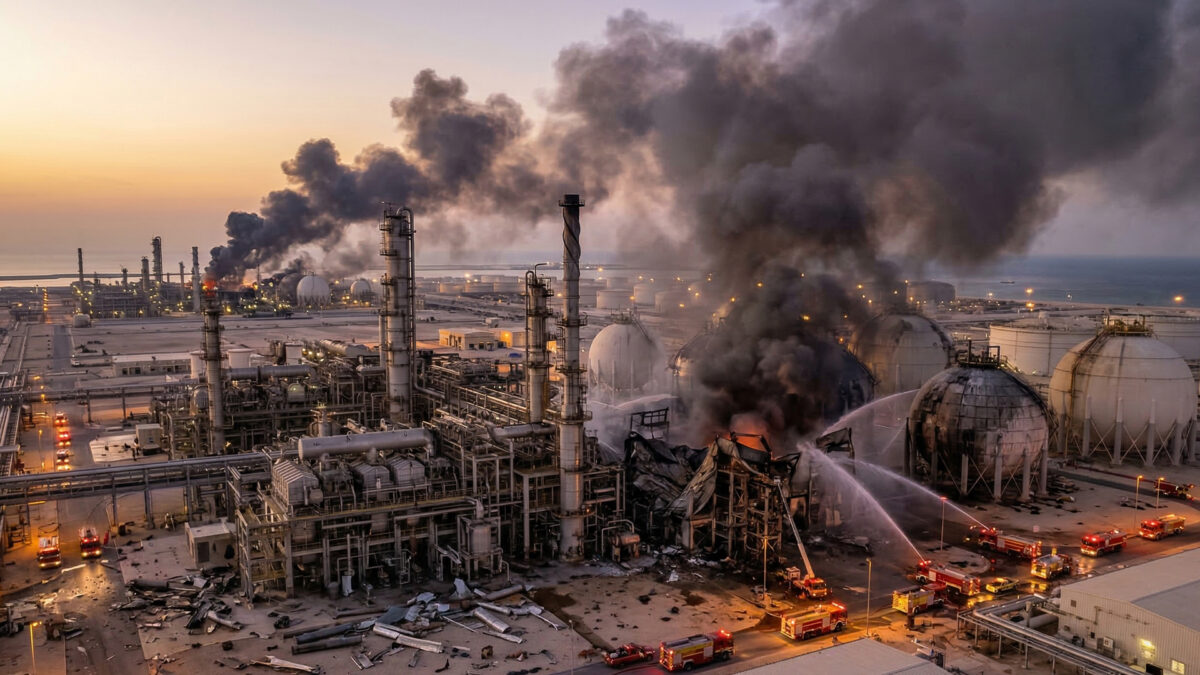
Qatar’s Ras Laffan Industrial City, the world’s largest liquefied natural gas (LNG) export complex, has suffered significant damage following a missile strike attributed to Iran, raising fresh concerns over global energy supply stability and price volatility.

Qatari authorities said air defense systems intercepted most incoming missiles, but at least one strike hit critical infrastructure within the LNG facility, causing fires and operational disruption. While the fires have been contained and no casualties reported, the extent of damage to processing and export capacity remains under assessment.

The development has immediate implications for global energy markets. Qatar is among the largest LNG exporters, supplying key markets across Europe and Asia. Any prolonged disruption at Ras Laffan could tighten global gas supply, particularly at a time when demand remains elevated and supply chains are already sensitive to geopolitical risks.

Market reaction was swift. Benchmark oil and natural gas prices rose following news of the strike, reflecting concerns about potential supply constraints. Analysts indicate that even partial outages at Ras Laffan could lead to short-term price spikes and increased volatility in LNG trading markets.

The strike marks an escalation in geopolitical tensions in the Gulf, with energy infrastructure emerging as a direct target. The attack is believed to be linked to broader regional hostilities involving Iran and Israel, increasing the risk premium across energy assets and shipping routes.

From a business perspective, the incident underscores the vulnerability of concentrated energy infrastructure to geopolitical shocks. Insurers, shipping firms, and energy companies are expected to reassess risk exposure in the region. There may also be implications for long-term LNG contracts, supply diversification strategies, and investment flows into alternative energy corridors.

Qatar has condemned the strike and is expected to pursue diplomatic and strategic responses, while also working to restore full operational capacity at the facility.

Also Read: US offers ₹2.4 lakh, free flights for voluntary exit

Categories
Beyond

US offers ₹2.4 lakh, free flights for voluntary exit

The United States government has started a new programme to encourage illegal immigrants to leave the country on their own. Under this plan, people who agree to return to their home country will get a free flight and $2,600 (about ₹2.4 lakh) as financial support.

The programme is being run by the Department of Homeland Security (DHS). It is aimed at reducing the need for forced deportations, which are expensive and take more time. Officials believe that offering money and travel support will make more people choose to leave voluntarily.

Migrants who join the scheme will not be arrested or detained. Instead, they can leave the country peacefully. To apply, they need to use the CBP Home mobile app, where they can register and request help for travel and payment.

As part of the campaign, the US government shared advertisements showing famous landmarks from different countries. One of the most talked-about images featured India’s Taj Mahal, encouraging Indian migrants to return home. The message highlighted the benefits of a “fresh start” with financial help and free travel.

The campaign has received mixed reactions. Some people support the idea, saying it is a more humane and cost-effective way to manage immigration. Others have criticised it, especially the use of cultural symbols like the Taj Mahal in promotional material.

According to officials, the programme is much cheaper than forced deportation. Deporting one person can cost over $18,000, while helping someone leave voluntarily costs much less.

The amount offered has also changed over time. It started at $1,000, later increased, and is now fixed at $2,600.

Also Read: Reliance Jio picks 17 banks for IPO, no fresh funds

Categories
Corporate

Reliance Jio picks 17 banks for IPO, no fresh funds

Reliance Jio, the telecom arm of Reliance Industries led by Mukesh Ambani, has appointed 17 banks to manage its upcoming initial public offering (IPO), according to reports.

The IPO will be structured as an offer-for-sale (OFS), meaning the company itself will not receive any fresh funds. Instead, current shareholders will sell part of their holdings to public investors.

This move is expected to allow major global investors, such as KKR, Silver Lake, General Atlantic and the Abu Dhabi Investment Authority, to partially cash out their stakes.

Top international and domestic banks, including Citigroup, JPMorgan, Goldman Sachs, Morgan Stanley, Axis Capital, ICICI Securities and Kotak Mahindra Capital, have been selected to handle the offering.

Reliance Jio is likely to file its draft IPO documents soon. The issue could raise over $4 billion, making it one of the largest public offerings in India.

With more than 500 million subscribers, Jio remains India’s largest telecom operator and has been expanding into digital platforms and artificial intelligence, strengthening its growth outlook.

The planned IPO comes amid strong momentum in India’s primary markets, despite mixed global economic conditions.

Also Read: Ahluwalia Contracts secures ₹393 crore airport project from AAI

Categories
Corporate

Ahluwalia Contracts secures ₹393 crore airport project from AAI

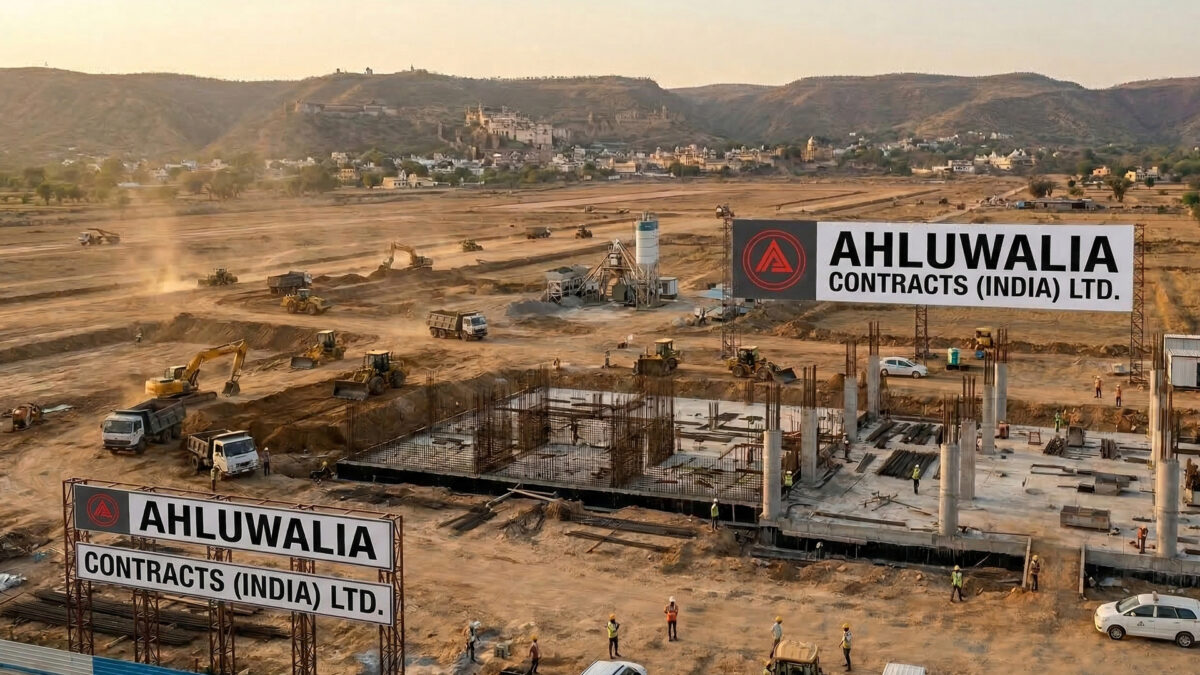
Ahluwalia Contracts (India) Ltd has won a ₹393 crore contract from the Airports Authority of India (AAI) to undertake construction work for a new greenfield airport in Bundi, Rajasthan. The project marks another addition to the company’s growing portfolio in the infrastructure sector.

The contract covers key building works for the upcoming airport, which will be developed from the ground up. Located in the Kota-Bundi region, the project is part of efforts to enhance air connectivity in Rajasthan, particularly in underserved areas. The company has stated that the execution timeline for the project is 18 months from the date of commencement.

A greenfield airport refers to a completely new development rather than an expansion of an existing facility. Once operational, the Bundi airport is expected to improve transportation access, support tourism, and facilitate business activity in the region. Improved connectivity is also likely to benefit nearby industrial and educational hubs, including Kota.

In its disclosure, Ahluwalia Contracts confirmed that the order is purely domestic and does not involve any related party transactions. The company also clarified that its promoters or group entities do not have any financial interest in AAI, ensuring transparency in the deal.

The latest win strengthens Ahluwalia Contracts’ position in the engineering, procurement, and construction (EPC) space. The company has a track record of executing large-scale institutional and infrastructure projects across India, including government-led developments.

This order comes amid a broader push by the Indian government to expand aviation infrastructure and improve regional connectivity under various development initiatives. Increasing the number of operational airports is seen as a key driver for economic growth, particularly in tier-2 and tier-3 cities.

With this contract, Ahluwalia Contracts is expected to further enhance its order book and revenue visibility. The project also reinforces the company’s credentials in delivering complex public infrastructure works, which could help it secure similar projects in the future.

Also Read: Nazara to buy 50% stake in Spain’s Bluetile, BestPlay

Categories
Corporate

Nazara to buy 50% stake in Spain’s Bluetile, BestPlay

Nazara Technologies has announced that it will acquire a 50% controlling stake in Spain-based companies Bluetile Games and BestPlay Systems in a deal worth $100.3 million (around ₹918 crore).

The acquisition will be made through Nazara’s UK subsidiary and is aimed at strengthening its presence in international gaming markets. Bluetile focuses on developing casual mobile games, while BestPlay operates a platform that uses rewards to attract and engage users.

Out of the total deal value, Nazara will pay $88.4 million for Bluetile and $11.9 million for BestPlay. In addition, there are earn-out payments of up to $98.2 million (about ₹898 crore), which will depend on the financial performance of the two companies between 2027 and 2029.

Bluetile currently has 17 live games, including popular titles like Yatzy and Mahjong Voyage. These games have together reached about 375 million downloads and have around 22 million monthly active users. BestPlay adds another 2.2 million monthly active users and helps generate nearly 1.2 million app installs every month through its engagement system.

Together, the two companies reported revenue of $153.6 million (around ₹1,405 crore) in 2025, with an EBITDA of $27.7 million.

Nazara said the deal will help it build a stronger global gaming platform by combining game development with user acquisition and engagement. The company also plans to use artificial intelligence to improve game design, distribution, and monetisation.

The agreement includes an option for Nazara to buy the remaining 50% stake by 2028, based on agreed terms and performance.

Also Read: RBI clears Bain entry into Manappuram

Categories
Corporate

Sensex crashes over 1,600 points, Nifty falls below 23,300

The markets suffered a sharp reversal on Thursday, with the BSE Sensex tumbling over 1,600 points to an intraday low of 74,685 and the Nifty 50 falling below 23,300, touching 23,180. The decline ended a three-day rally as investors reacted to surging crude oil prices and cautious global cues.

Markets opened sharply lower after Brent crude crossed $110 per barrel, stoking concerns over higher import bills and inflationary pressures. Weak global cues, including a hawkish signal from the U.S. Federal Reserve, added to the risk-off sentiment.

Banking and financial stocks bore the brunt, with heavyweights such as HDFC Bank, ICICI Bank, Axis Bank, and L&T registering steep losses. Defensive and commodity-linked stocks saw limited buying, with ONGC and Coal India emerging as the few gainers amid rising energy prices.

Market volatility spiked, reflected in a jump in the India VIX, as traders reassessed near-term risks. Other sectors, including auto, metals, and IT, also declined, while healthcare and FMCG stocks posted comparatively smaller losses.

Analysts attributed the sell-off to profit-booking after recent gains, foreign institutional investor outflows, and heightened sensitivity to global crude prices.

Also Read: Jio may file draft IPO papers by end of March