Categories
Beyond

Iran hits the world’s largest LNG hub in Qatar

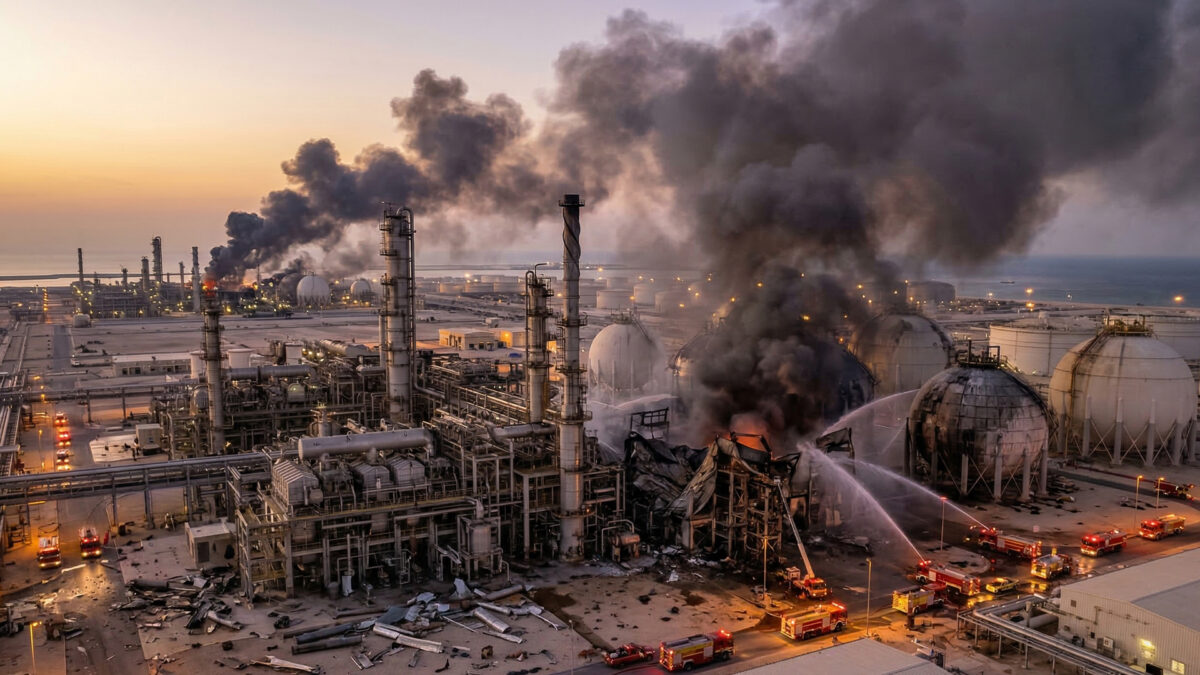
Qatar’s Ras Laffan Industrial City, the world’s largest liquefied natural gas (LNG) export complex, has suffered significant damage following a missile strike attributed to Iran, raising fresh concerns over global energy supply stability and price volatility.

Qatari authorities said air defense systems intercepted most incoming missiles, but at least one strike hit critical infrastructure within the LNG facility, causing fires and operational disruption. While the fires have been contained and no casualties reported, the extent of damage to processing and export capacity remains under assessment.

The development has immediate implications for global energy markets. Qatar is among the largest LNG exporters, supplying key markets across Europe and Asia. Any prolonged disruption at Ras Laffan could tighten global gas supply, particularly at a time when demand remains elevated and supply chains are already sensitive to geopolitical risks.

Market reaction was swift. Benchmark oil and natural gas prices rose following news of the strike, reflecting concerns about potential supply constraints. Analysts indicate that even partial outages at Ras Laffan could lead to short-term price spikes and increased volatility in LNG trading markets.

The strike marks an escalation in geopolitical tensions in the Gulf, with energy infrastructure emerging as a direct target. The attack is believed to be linked to broader regional hostilities involving Iran and Israel, increasing the risk premium across energy assets and shipping routes.

From a business perspective, the incident underscores the vulnerability of concentrated energy infrastructure to geopolitical shocks. Insurers, shipping firms, and energy companies are expected to reassess risk exposure in the region. There may also be implications for long-term LNG contracts, supply diversification strategies, and investment flows into alternative energy corridors.

Qatar has condemned the strike and is expected to pursue diplomatic and strategic responses, while also working to restore full operational capacity at the facility.

Also Read: US offers ₹2.4 lakh, free flights for voluntary exit

Categories
Beyond

Qatar flags risk to global oil, gas supplies

Qatar has warned that energy exports from the Gulf region could be disrupted within weeks if tensions between the United States and Iran continue to rise.

Speaking about the growing conflict in the Middle East, Qatar’s Energy Minister Saad al-Kaabi said the situation could threaten the movement of oil and natural gas from the region to the rest of the world. If the conflict escalates further, shipping routes and energy facilities may become unsafe, forcing Gulf countries to temporarily stop exports.

The Gulf region plays a crucial role in the global energy market. A large share of the world’s oil and liquefied natural gas (LNG) passes through the Strait of Hormuz, a narrow but extremely important shipping route. Any disruption in this area can quickly affect global energy supplies and prices.

Qatar is one of the world’s largest exporters of LNG and supplies natural gas to several countries across Asia and Europe. Officials say the ongoing conflict has already created uncertainty for energy shipments in the region.

Energy experts warn that if the situation worsens, it could lead to serious disruptions in global oil and gas markets. A long conflict could push fuel prices higher and affect transportation, electricity costs and industrial production in many countries.

Countries that depend heavily on imported fuel could feel the impact the most. Higher energy prices could also increase inflation and make daily living costs more expensive for people around the world.

The warning from Qatar comes at a time when tensions in the Middle East remain high due to military actions and threats of further attacks. Governments and global markets are closely watching developments in the region.

Also Read: ₹4,080 bet turns ₹55 cr in Sedemac IPO


Categories
Beyond

Qatar LNG halt raises gas supply concerns

India may face short-term concerns over natural gas supplies after Qatar temporarily halted production at one of its major liquefied natural gas (LNG) facilities. Experts say the move, linked to regional tensions in West Asia, has raised worries about possible disruptions in global energy markets.

Qatar is one of the world’s largest LNG exporters and a key supplier of natural gas to India. A large share of India’s LNG imports comes from the Gulf nation under long-term contracts, making any disruption closely watched by Indian energy companies.

Following the production halt, shares of several LNG-related firms declined between 5 and 10 percent amid fears that supply could tighten and prices could rise in the international market. Analysts said the situation could increase volatility in energy markets if the disruption continues for an extended period.

However, experts also noted that India’s long-term LNG agreements with Qatar may help cushion the immediate impact. They said the country may not face a severe shortage right away, but the situation highlights the risks associated with global geopolitical tensions and energy dependence.

Officials and market watchers are closely monitoring developments in the region. If the production halt is prolonged or escalates into a larger supply disruption, it could push up global gas prices and affect importing countries like India.

Also Read: Air India expands flights to Toronto, Frankfurt, Paris