
Categories
Corporate

Meta brings in Dreamer team to build smarter AI agents

Meta Platforms is doubling down on its AI ambitions by hiring the team behind ‘Dreamer’, a startup focused on creating intelligent digital assistants. The move is part of Meta’s growing push into “AI agents”, systems that can act on their own to help users with tasks like managing schedules, sending emails, or organizing information.

The Dreamer team includes its founders and key developers, many of whom previously worked at leading tech companies. They are now joining Meta’s Superintelligence Labs, the company’s hub for cutting-edge AI research. This addition is expected to accelerate Meta’s work in creating autonomous, agent-driven AI solutions.

Dreamer, which launched earlier this year, specialised in tools that let people design personal AI helpers. Meta has licensed its technology to integrate into its projects while Dreamer continues as a separate entity. Financial details of the deal remain undisclosed.

This comes on the heels of Meta’s acquisition of ‘Moltbook’, a social network built for AI agents to interact with each other. Together, these moves show that Meta is aiming for more than simple chatbots; the company wants AI systems that can think, act, and collaborate independently.

Meta’s Superintelligence Labs, led by Chief AI Officer Alexandr Wang, is rapidly expanding. With experienced developers from companies like Google and Stripe, the lab is positioning itself as a hub for next-generation AI innovations.

By bringing in the Dreamer team and leveraging Moltbook, Meta is betting on autonomous AI as a key part of its future. The company aims to make digital assistants smarter, more capable, and better integrated into daily life.

The strategy reflects a broader tech trend: companies racing to build AI that doesn’t just respond but proactively assists users. Agentic AI could transform how people interact with technology, automating everyday tasks and acting as intelligent partners in work and life.

Also Read: OnePlus India CEO Robin Liu resigns as sales slide
Categories
Leaders

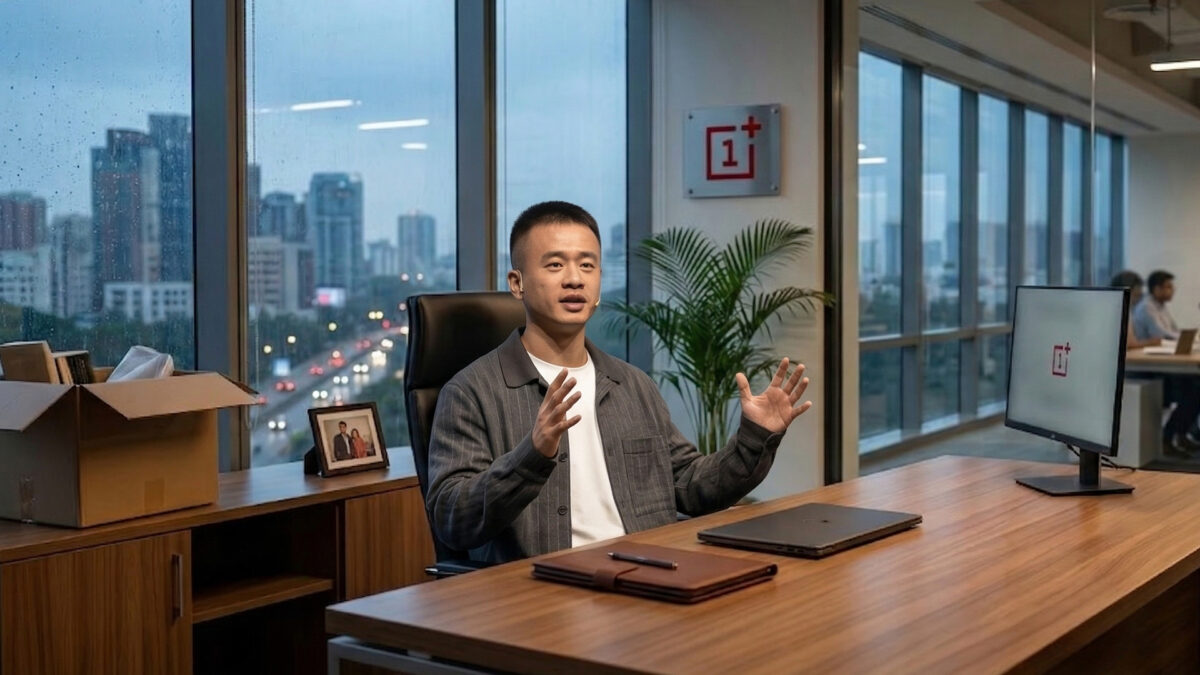
OnePlus India CEO Robin Liu resigns as sales slide

OnePlus India is facing a leadership change as its CEO, Robin Liu, has stepped down from his role. Liu, who has overseen the company’s operations in India for several years, will remain in charge until the end of March, while a replacement has not yet been announced.

The resignation comes at a difficult time for the brand. OnePlus has seen a sharp decline in smartphone shipments and a fall in its market share in India. The company has been struggling to keep pace with competitors, as other smartphone makers have aggressively expanded in the country.

During his tenure, Liu helped establish OnePlus as a recognized brand in India, but the recent performance downturn has put pressure on the company’s operations. The decision to step down reportedly reflects both personal considerations and the challenges of navigating a highly competitive market.

Despite the leadership change, OnePlus has reassured customers that its India operations will continue without disruption. The company is focusing on maintaining its product lineup, expanding retail availability, and keeping up with consumer demand in a challenging environment.

The departure of the CEO also comes amid wider strategic changes at the parent company, with some restructuring taking place to improve efficiency and align the business with evolving market dynamics.

For OnePlus India, the next few months will be crucial. The brand must stabilize its operations, rebuild customer confidence, and regain momentum to stay relevant in a market dominated by established competitors.

Also Read: Claude AI can now use computers like humans

Categories
Technology

Claude AI can now use computers like humans

AI company Anthropic has introduced a new feature for its chatbot Claude that allows it to use computers just like a human. This update is a big step forward in making AI more useful in everyday tasks.

With this new ability, Claude can open apps, browse the internet, type, click, and complete tasks on a computer. Instead of only giving answers or suggestions, the AI can now actually perform actions for the user. For example, it can fill out forms, gather information, or help manage files.

What makes this feature different is that Claude interacts directly with the computer screen, using virtual mouse clicks and keyboard inputs. This means it does not need special integrations or tools to work with different software, it can simply use them like a person would.

Right now, this feature is being tested and is mainly available for users on Mac computers. It also requires user permission before accessing files or performing any actions, which is important for safety and privacy.

However, the technology is still in early stages. Sometimes it may be slower or need multiple attempts to complete complex tasks. Anthropic says it will improve the system over time based on user feedback.

This update also increases competition in the AI industry, as companies race to build smarter and more capable digital assistants.

Experts say this marks a shift from basic chatbots to “agentic AI,” where AI systems can act more independently. Instead of waiting for step-by-step instructions, these systems can handle multi-step tasks on their own. For instance, a user could ask Claude to complete a task, and it could finish it even if the user is not actively involved.

Also Read: Drone activity disrupts Amazon AWS in Bahrain

Categories
Corporate

Sai Parenterals IPO subscribed 4% on day 1

The initial public offering (IPO) of Sai Parenterals began on a subdued note, with the issue receiving only about 4% subscription on the first day of bidding.

Data shows that the IPO attracted limited bids compared to the total shares on offer, reflecting cautious investor sentiment. The weak response comes at a time when market participants are increasingly selective in the primary market.

The ₹409 crore issue, which opened on March 24 and will close on March 27, includes both a fresh issue of shares and an offer for sale. The company has fixed a price band of ₹372 to ₹392 per share.

Market signals also indicate a lack of strong enthusiasm. The grey market premium (GMP), often seen as an indicator of listing gains, remains flat, suggesting expectations of a modest or neutral debut on the stock exchanges.

Analysts attribute the slow start to a combination of factors, including valuation concerns and overall market uncertainty. Investors are closely evaluating company fundamentals and growth potential before committing funds, particularly in mid-sized IPOs.

The pharmaceutical sector, while generally stable, has seen mixed interest in recent public issues, further contributing to the cautious approach among investors.

The company plans to use the funds raised for expansion, working capital needs and general corporate purposes. However, experts advise potential investors to review the firm’s financials and long-term outlook before making decisions.

Despite the muted opening, subscription levels could improve in the coming days, as institutional investors and retail participants often step in closer to the closing date.
Also Read: Oil prices drop on Iran negotiation talks

Categories
Beyond

Rupee falls 20 paise to 93.76 against US dollar

The Indian rupee continued its decline on Wednesday, falling by around 18–20 paise in early trade to hover near the 93.94–93.96 level against the US dollar. The drop brings the currency closer to the key 94 mark, extending its recent downward trend.

The rupee had already hit a record low in the previous session, reflecting sustained weakness amid global economic uncertainties. Market participants remain cautious as external pressures continue to weigh heavily on emerging market currencies.

A major factor behind the rupee’s fall is the strengthening of the US dollar. Investors are increasingly moving towards safer assets, boosting demand for the dollar and weakening currencies like the rupee.

Rising crude oil prices have added to the pressure. As India relies heavily on oil imports, higher prices increase demand for dollars, widening the trade deficit and dragging the rupee lower.

Global uncertainties, including geopolitical tensions and volatile financial markets, have further dampened investor sentiment. This has led to capital outflows from emerging markets, adding to the currency’s weakness.

The Reserve Bank of India has been monitoring the situation and is expected to step in when necessary to manage volatility. However, analysts believe that while such interventions may offer short-term relief, they may not fully counter the impact of global factors.

Also Read: Gold dips to ₹1.42 lakh, silver climbs to ₹2.35 lakh

Categories
Beyond

Gold dips to ₹1.42 lakh, silver climbs to ₹2.35 lakh

Gold prices slipped slightly while silver recorded modest gains on March 25, reflecting a mixed trend in the bullion market amid fluctuating global signals and domestic trading patterns.

On the Multi Commodity Exchange (MCX), gold futures fell by ₹10 to around ₹1,42,900 per 10 grams during early trade. The marginal decline indicates continued pressure on gold prices after recent fluctuations. In contrast, silver prices rose by ₹100 to trade near ₹2,35,100 per kilogram, supported by fresh buying and improved market sentiment.

The divergence between the two key precious metals highlights ongoing volatility in the commodities market. Gold has remained under pressure largely due to a firm US dollar and elevated bond yields, which tend to reduce the attractiveness of non-interest-bearing assets such as bullion.

However, silver showed relative strength, benefiting from its dual demand as both a precious and industrial metal. Market participants noted that short-covering and steady industrial demand contributed to the uptick in silver prices.

During the session, both metals also witnessed intraday swings. Gold saw limited recovery at higher levels, while silver extended gains briefly before stabilising. These movements underline the uncertainty currently influencing commodity markets.

Global factors continue to play a key role in determining price direction. Developments in international markets, including currency movements, interest rate expectations, and geopolitical conditions, have kept traders cautious. Any signals of easing global tensions or changes in monetary policy outlook are quickly reflected in bullion prices.

Across major Indian cities, gold and silver rates showed minor variations depending on local demand, taxes, and logistics. The overall trend, however, remained aligned with MCX movements.

Also Read: Sensex surges over 1,400 points, Nifty reclaims 23,300 levels

Categories
Corporate

Sensex surges over 1,400 points, Nifty reclaims 23,300 levels

The stock markets staged a strong recovery on Wednesday, after days of volatility, with benchmark indices rising sharply in early trade. The BSE Sensex jumped over 800 points in morning trade, while the Nifty 50 climbed past the 23,000 mark, reflecting broad buying across sectors.

Investor sentiment was boosted by signs of easing global geopolitical tensions and a stabilizing trend in crude oil prices, which supported risk‑taking. Futures on GIFT Nifty indicated a positive start, while broader Asian markets also showed gains.

Top gainers included Shriram Finance, Trent Ltd, and Adani Ports & SEZ, all posting healthy gains. Grasim Industries and Adani Enterprises also saw strong buying interest, driving sectoral momentum in financials, industrials, and consumer segments.

On the other hand, some stocks underperformed. Tech Mahindra, Coal India, and Sun Pharma were notable laggards, highlighting selective weakness in IT, energy, and pharmaceutical sectors amid broader market gains.

Market participants remain cautious despite the rebound, as global macroeconomic factors, including monetary policy directions and geopolitical developments, continue to influence short-term trends.

Also Read: Adani to split Jaypee assets post-takeover

Categories
Corporate

Adani to split Jaypee assets post-takeover

The National Company Law Tribunal (NCLT) has approved Adani Enterprises Ltd’s resolution plan to acquire Jaiprakash Associates Ltd (JAL), the flagship of the Jaypee Group, under India’s Insolvency and Bankruptcy Code (IBC). This marks a key step in completing one of the largest insolvency acquisitions in the country.

The approved plan, valued at around ₹14,535 crore, received strong support from the Committee of Creditors (CoC) because it offered faster payouts and a practical settlement approach, even though some rival bids, including from Vedanta Ltd, were higher in nominal terms. With the CoC backing, the NCLT granted its sanction, paving the way for Adani to take control.

JAL operates across multiple sectors, including cement, real estate, power, engineering and construction, hospitality, and infrastructure. The Adani Group is now preparing a strategic restructuring of these businesses, which could involve segmenting operations and aligning them with Adani’s specialized entities. This approach is aimed at improving efficiency, maximizing synergies, and enhancing asset utilization.

Despite the approval, the process faces legal scrutiny. Vedanta has appealed to the National Company Law Appellate Tribunal (NCLAT), challenging the NCLT’s decision and the selection of Adani’s plan. The outcome of this appeal may affect the timeline of the asset restructuring.

The acquisition of Jaiprakash Associates, a major infrastructure company burdened with debt, represents a significant expansion of the Adani Group’s presence in India’s industrial and construction sectors.

Also Read: Global energy supply at risk, IEA issues stark warning

Categories
1 Minute-Read

Fuel panic affects cities due to temporary shortages

Long queues formed at petrol pumps in Gujarat and Hyderabad on Tuesday as several outlets ran out of regular petrol, forcing motorists to buy premium fuel priced about ₹10 higher per litre. The rush was triggered by rumours of shortages on social media, not by actual supply issues.

Authorities, including the Gujarat government and oil companies, assured that fuel stocks at depots and terminals are sufficient. Officials blamed panic buying, delivery delays, and new payment rules for retailers for temporary gaps. Police monitored stations to manage crowds and urged motorists to avoid hoarding.

Categories
Corporate

Sensex rockets 1,370 points, Nifty crosses 22,900

India’s stock markets staged a strong comeback on Tuesday, recovering from sharp losses in the previous session. The BSE Sensex jumped around 1,372 points, closing at approximately 77,400, while the Nifty50 added nearly 400 points to end above 22,900.

Market sentiment was lifted as geopolitical tensions in the Middle East showed signs of easing, while crude oil prices stabilized after recent volatility. The Indian rupee strengthened modestly against the US dollar, adding to investor confidence. Analysts said that a combination of domestic and global factors contributed to the rebound, with relief rallies visible across multiple sectors.

Top gainers included major banking and financial companies, with auto and metal shares also showing strong buying interest. Financial stocks like HDFC Bank, ICICI Bank, and Kotak Mahindra Bank led the upside, while auto majors such as Maruti Suzuki and Tata Motors contributed to the broad rally. Metal stocks also witnessed positive momentum amid easing global commodity prices.

On the other hand, certain high-profile counters lagged behind. Titan Company, IndusInd Bank, Zomato, and Mahindra & Mahindra closed lower despite the overall market recovery. Analysts said these stocks faced profit booking and sector-specific headwinds, which limited their gains.

The rebound comes after the previous session saw markets plunge due to a combination of rising crude prices, global macroeconomic uncertainties, and geopolitical concerns. The sharp recovery on Tuesday reflected both bargain hunting and relief after fears of an extended market correction.

Broader market indicators showed that midcap and smallcap indices also participated in the rally, though with more volatility. Trading volumes were higher than the recent average, indicating renewed investor interest.

Despite the strong bounce, market experts advised caution, noting that global factors including crude oil prices, US interest rate expectations, and geopolitical developments could influence market direction in the coming days.

Also Read: Sensex surges 1,100 points, Nifty crosses 22,800