Categories
Corporate

Bharat Coking Coal IPO price set at ₹21–₹23

Bharat Coking Coal Limited (BCCL), a subsidiary of Coal India Limited, has fixed the price band for its initial public offering (IPO) at ₹21 to ₹23 per share. The company plans to raise about ₹1,071 crore through this issue, which will be entirely an offer-for-sale (OFS). This means Coal India will sell part of its stake, while BCCL itself will not receive any fresh funds from the IPO.

The IPO will open for public subscription on January 9 and close on January 13. Anchor investors will be able to bid a day earlier, on January 8. Shares are expected to be listed on the BSE and NSE on January 16, subject to final approvals.

The issue consists of up to 46.57 crore equity shares with a face value of ₹10 each. Retail investors can apply for a minimum of one lot of 600 shares. At the lower end of the price band, the minimum investment works out to about ₹12,600, while at the upper end it is around ₹13,800. Eligible employees will get a discount of ₹1 per share.

As per market rules, up to 50% of the issue is reserved for qualified institutional buyers (QIBs), 35% for retail investors, and 15% for non-institutional investors such as high-net-worth individuals. Separate reservations have also been made for eligible employees and existing Coal India shareholders.

Market interest in the IPO appears strong. In the grey market, BCCL shares are reportedly trading at a premium of around ₹16 per share, suggesting expectations of a healthy listing gain. However, investors are advised to note that grey market premiums are unofficial and can change quickly.

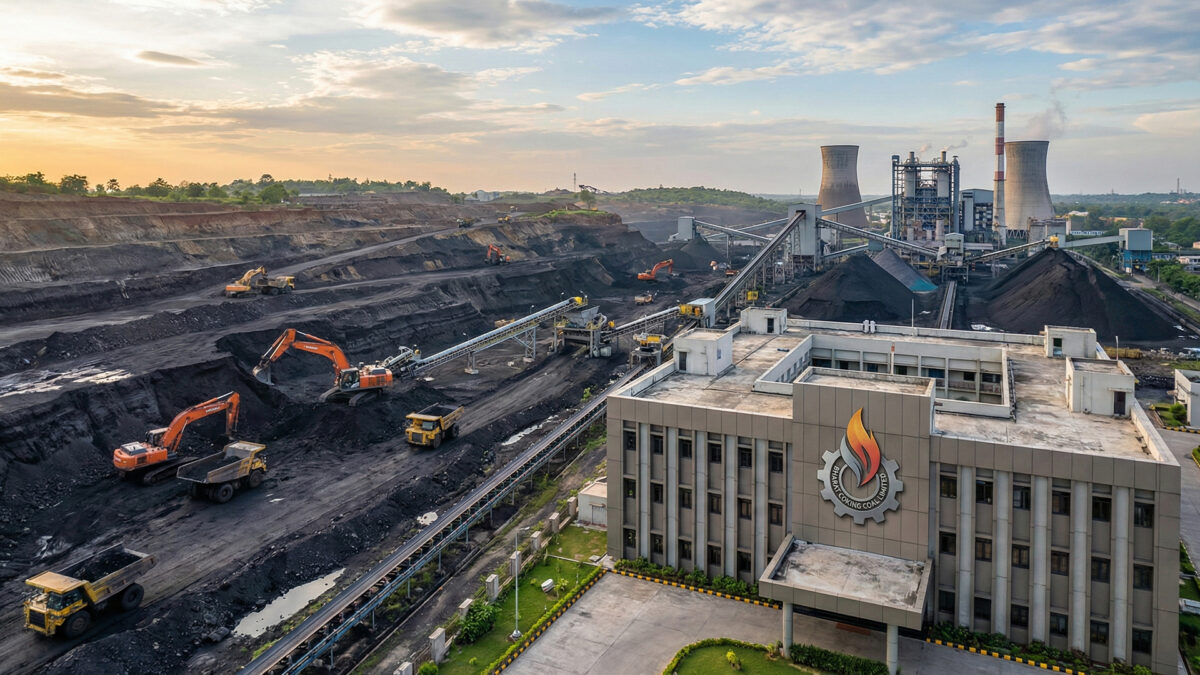
Bharat Coking Coal is one of India’s key producers of coking coal, which is mainly used in steel making. The company operates largely in Jharkhand and West Bengal, including the Jharia coalfields. Its listing is part of the government’s broader plan to unlock value from public sector subsidiaries and improve transparency through market participation.

Also Read: Air India seeks new CEO as leadership changes loom
Categories
Leaders

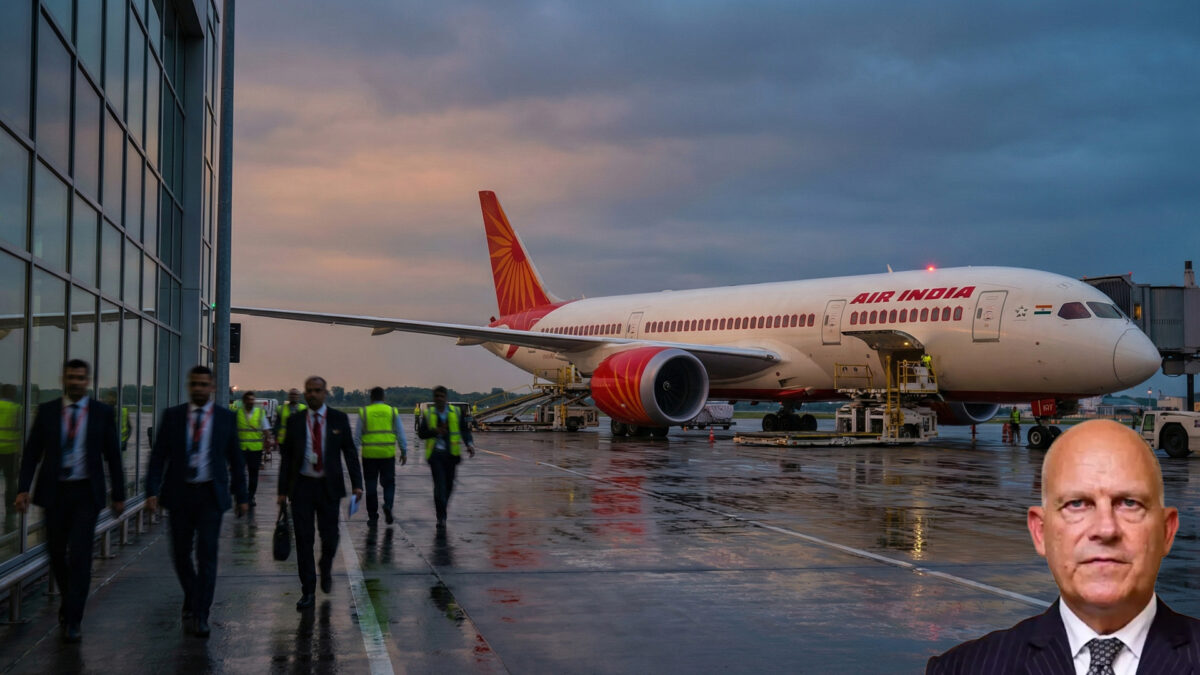
Air India seeks new CEO as leadership changes loom

Tata Sons has begun a global search for a new CEO to lead Air India, signaling a potential leadership change at the airline. Campbell Wilson, who joined as CEO in July 2022, still has a contract until June 2027, but the group is considering a transition sooner.

Chairman N. Chandrasekaran has reportedly spoken with executives from leading carriers in the UK and US as possible successors. The move is part of Tata Sons’ effort to strengthen Air India’s operations and improve overall performance.

Wilson has overseen major organisational changes, including the merger with Vistara and integration of other subsidiaries. However, sources indicate challenges remain, such as aircraft delivery delays, refurbishment slowdowns, and inconsistent service, particularly on long-haul routes.

Air India Express, the group’s low-cost carrier, is also under review, with leadership assessments ongoing across the airline group. Wilson’s exit from the Air India Express board in April 2025 hinted at early restructuring, although Tata Sons says no formal succession plan has yet been finalised.

The leadership search reflects Tata Sons’ focus on ensuring Air India not only grows but competes effectively on the global stage, building on investments made since privatisation while tackling lingering operational challenges.

Also Read: Trump flags tariff risk over India’s Russian oil imports

Categories
Beyond

Trump flags tariff risk over India’s Russian oil imports

US President Donald Trump has warned India that continuing to import oil from Russia could prompt the United States to raise tariffs on Indian goods. Speaking to reporters on Air Force One, Trump said the US could act “very quickly” if New Delhi does not address Washington’s concerns, signaling potential economic implications for bilateral trade.

Trump also praised Prime Minister Narendra Modi, calling him “a very good man” who had “tried to make me happy” regarding India’s Russian oil purchases. Despite the compliment, he stressed that the tariff threat remains a real possibility if India does not align more closely with US policy.

For businesses, the warning could affect Indian exporters, particularly in sectors sensitive to US tariffs. Any increase could raise costs and disrupt trade flows, potentially impacting markets that rely heavily on Indian products. Analysts note that industries such as textiles, pharmaceuticals, and IT services could face heightened risks if tariffs are applied.

The US‑India trade tension comes amid India’s reliance on Russian crude, purchased at discounted rates due to Western sanctions on Russia. While this helps Indian refiners manage energy costs, it has drawn criticism from the US, which sees these imports as undermining its geopolitical strategy. India maintains that its energy decisions are market-driven and focused on domestic energy security.

To address concerns, India has instructed refiners to submit weekly data on oil imports, aiming to maintain transparency and support ongoing trade negotiations. Experts say that how India balances energy needs with trade relations will be closely watched by investors and global markets.

Trump’s warning underscores the complex interplay between geopolitics and business. Companies in India and abroad are monitoring developments closely, as any tariff escalation could have ripple effects on trade, supply chains, and economic growth.

Also Read: Adani Enterprises buys 49% stake in road firm

Categories
Corporate

Adani Enterprises buys 49% stake in road firm

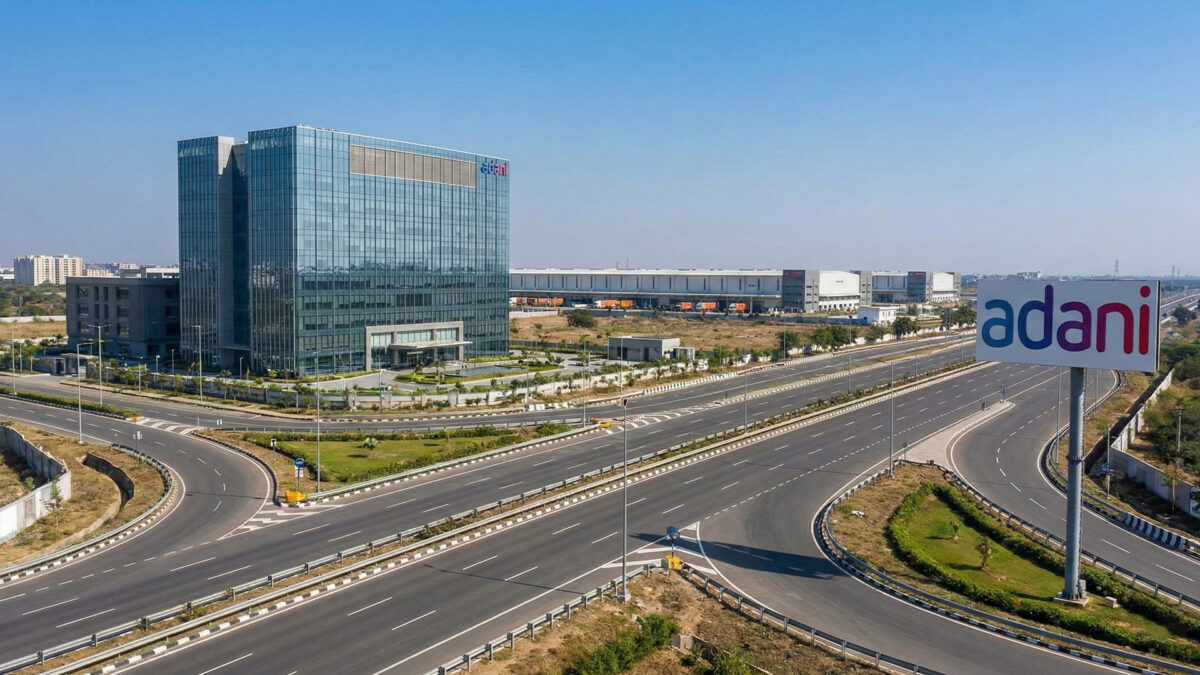
Adani Enterprises Ltd, the flagship of the Gautam Adani‑led conglomerate, was in the market spotlight on January 5 after announcing a strategic acquisition move via one of its subsidiaries. Shares of the diversified infrastructure and incubation company closed 1.01 percent higher at ₹2,280.50, with a market capitalisation of around ₹2.63 lakh crore, as investors reacted to the latest development.

In a regulatory filing, Adani Enterprises said its wholly owned unit, Adani Road Transport Limited (ARTL), has signed definitive agreements to acquire a 49 percent stake in Sree Vishwa Varadhi Private Limited (SVVPL). The transaction is structured as a subscription to newly issued securities of SVVPL. In addition to the initial stake acquisition, ARTL has secured an option to purchase additional shares from the existing shareholder, subject to receipt of regulatory approvals.

Under the terms of the deal, ARTL will gain rights including the ability to appoint two nominee directors to SVVPL’s board, enhancing its operational oversight in the acquired business. SVVPL and its affiliate VSEPL are not connected to the promoters or promoter group of Adani Enterprises, indicating this transaction involves third‑party infrastructure assets rather than internal group realignment.

The acquisition underscores Adani Enterprises’ ongoing strategy to expand and diversify its presence across key infrastructure sectors, particularly in transport and logistics, a core focus area for the group. The road assets segment has been a significant contributor to Adani’s infrastructure ecosystem, complementing other verticals such as airports, data centres, green energy, and utilities. This move aligns with broader industry trends where conglomerates seek to scale asset ownership via strategic partnerships and capital investments.

Market participants noted that while the stock rise was moderate on the acquisition news, the underlying transaction could support future revenue streams and strengthen the company’s asset base. Adani Enterprises has recently also been active in raising funds through bond markets and refining its portfolio mix to balance growth with financial resilience.

Also Read: Rupee drops to 90.24 paise on Venezuela crisis

Categories
Beyond

Rupee drops to 90.24 paise on Venezuela crisis

The Indian rupee extended its losses on Monday, slipping by 4 paise to trade at 90.24 per US dollar in early trade, as global uncertainty and geopolitical tensions weighed on market sentiment.

A key factor pressuring the rupee has been the escalating crisis in Venezuela, which has triggered risk aversion across global markets. Fears of further US action in the region have pushed investors towards safe-haven assets, strengthening the US dollar and putting emerging market currencies, including the rupee, under renewed stress.

The rupee’s move below the 90 level is seen as a significant psychological marker for traders. Strong dollar demand from importers and continued foreign portfolio investor outflows have further reduced support for the domestic currency. With global investors cutting exposure to riskier assets, capital inflows into emerging markets have remained weak.

Market participants expect the rupee to face a challenging week ahead as geopolitical developments unfold and global investors assess the broader impact of the Venezuela situation on energy markets, global trade and financial stability. Any escalation could keep the dollar firm and limit recovery in risk-sensitive currencies.

Attention is also focused on upcoming US economic data, which could shape expectations around interest rates and monetary policy. Strong data may reinforce dollar strength, adding to pressure on the rupee in the near term.

Domestically, traders are watching crude oil prices and equity market movements for cues. While softer oil prices and resilient equities can provide some cushion, they have so far been outweighed by global risk factors.

The Reserve Bank of India is expected to closely monitor currency movements and may intervene to smooth excessive volatility if required. Overall, the rupee’s early-week decline highlights the impact of global geopolitical risks, particularly the Venezuela crisis, on currency markets at the start of 2026.

Also Read: Gold slips to ₹1.35 lakh, Silver down to ₹2.41 lakh

Categories
Beyond

Gold slips to ₹1.35 lakh, Silver down to ₹2.41 lakh

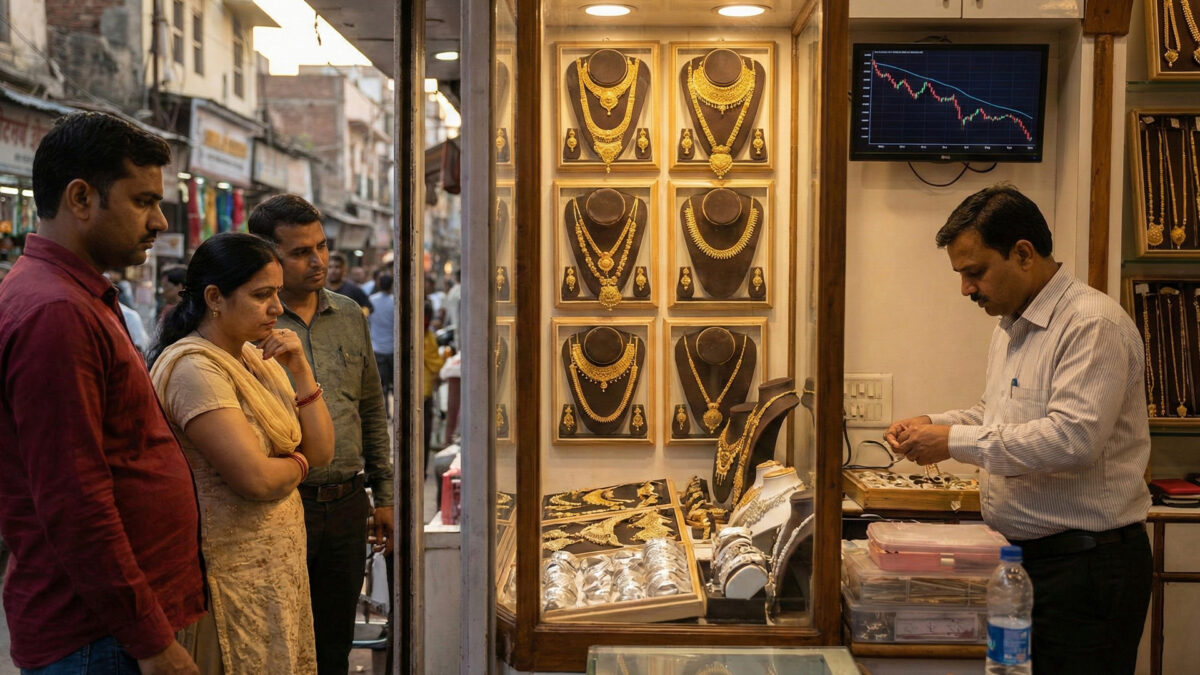
Gold prices in India edged lower at the start of the week, while silver also registered a modest decline. According to market data, the price of 24-carat gold fell by ₹10 to ₹1,35,810 per 10 grams on Monday. Silver prices dipped by ₹100, with one kilogram of the metal trading at ₹2,40,900.

The marginal fall reflects cautious sentiment in the precious metals market, as investors balance global economic signals with profit-taking after recent highs. Despite the dip, gold prices continue to remain elevated compared to historical levels, supported by sustained safe-haven demand and ongoing global uncertainty.

Across major cities, gold prices showed a similar trend. In Mumbai, Kolkata, Bengaluru and Hyderabad, 24-carat gold was priced at ₹1,35,810 per 10 grams. Delhi saw a slightly higher rate of ₹1,35,960, while Chennai continued to quote the highest price at ₹1,37,450 per 10 grams. For 22-carat gold, prices slipped by ₹10 to ₹1,24,490 per 10 grams in most cities, while Chennai reported ₹1,25,990.

Silver prices also softened across regions. In Delhi, Mumbai and Kolkata, silver was quoted at ₹2,40,900 per kilogram. Chennai again stood out with a higher rate of ₹2,56,900 per kilogram, reflecting local demand and supply dynamics.

Market participants say the small decline should be seen in the context of recent sharp movements in bullion prices. Gold and silver have witnessed strong gains over the past year, driven by geopolitical tensions, central bank buying, and expectations around interest rate changes globally. Periodic corrections, analysts note, are natural after such rallies.

For consumers, the slight dip may offer limited relief, though prices remain high overall. Investors, meanwhile, are closely tracking global cues, currency movements and upcoming economic data for clearer direction in precious metal prices in the days ahead.

Also Read: Sensex up 50 pts, Nifty holds above 26,350 in early trade

Categories
Corporate

Sensex up 50 pts, Nifty holds above 26,350 in early trade

The markets opened the week on a steady note on Monday, where the BSE Sensex rose over 50 points in early trade, while the Nifty 50 managed to stay above the key 26,350 mark, indicating cautious optimism among investors .

Buying interest was seen in select banking, FMCG and consumer stocks, which helped support the indices. Shares of some private banks and financial services companies moved higher as investors positioned themselves ahead of the ongoing December quarter earnings season. Consumer-focused stocks also saw gains following positive business updates and stable demand outlook.

On the downside, IT and metal stocks faced mild selling pressure. Technology shares slipped as investors remained cautious due to uncertainty around global growth and currency movements. Metal stocks also traded lower, tracking weak cues from international markets and concerns over demand.

Market sentiment remained fragile due to rising geopolitical tensions overseas, particularly after reports of US military action in Venezuela. These developments pushed investors to remain selective, leading to range-bound trade during the morning session. Crude oil prices and global market trends were closely monitored, given their potential impact on inflation and market volatility .

The broader market showed mixed performance, with mid-cap and small-cap stocks trading flat to slightly positive. The Indian rupee weakened marginally against the US dollar, adding to cautious sentiment.

Also Read: Instagram enters AI era, Mosseri tells creators

Categories
Beyond

Trump blocks Chinese‑linked chip deal

US President Donald Trump has blocked a Chinese‑linked semiconductor deal, saying it could threaten national security. An executive order issued on January 2 requires HieFo Corporation to sell certain Emcore Corp. assets within 180 days. The move reflects growing concern over foreign access to sensitive US technology.

The deal, completed in 2024, involved HieFo, a Delaware‑registered company, buying Emcore’s computer chip business and wafer fabrication operations for $2.9 million. Emcore, based in New Jersey, was a public aerospace and defense technology company before the sale.

Trump’s order said there is “credible evidence” that HieFo is controlled by a Chinese national and that the deal could harm US security. The order did not give full details but shows the government’s worry about foreign control of important technology.

The Committee on Foreign Investment in the United States (CFIUS) reviewed the transaction and identified risks. HieFo now has six months to divest all rights and assets globally unless CFIUS allows more time.

The assets include technology and facilities used for chip design and wafer production, which are important for both commercial and defense purposes. The move highlights the US effort to stop Chinese-linked companies from accessing advanced semiconductor technology amid global tech competition.

Neither HieFo nor Emcore has commented publicly yet.

Also Read: BYD surpasses Tesla as global EV leader in 2025

Categories
Corporate

BYD surpasses Tesla as global EV leader in 2025

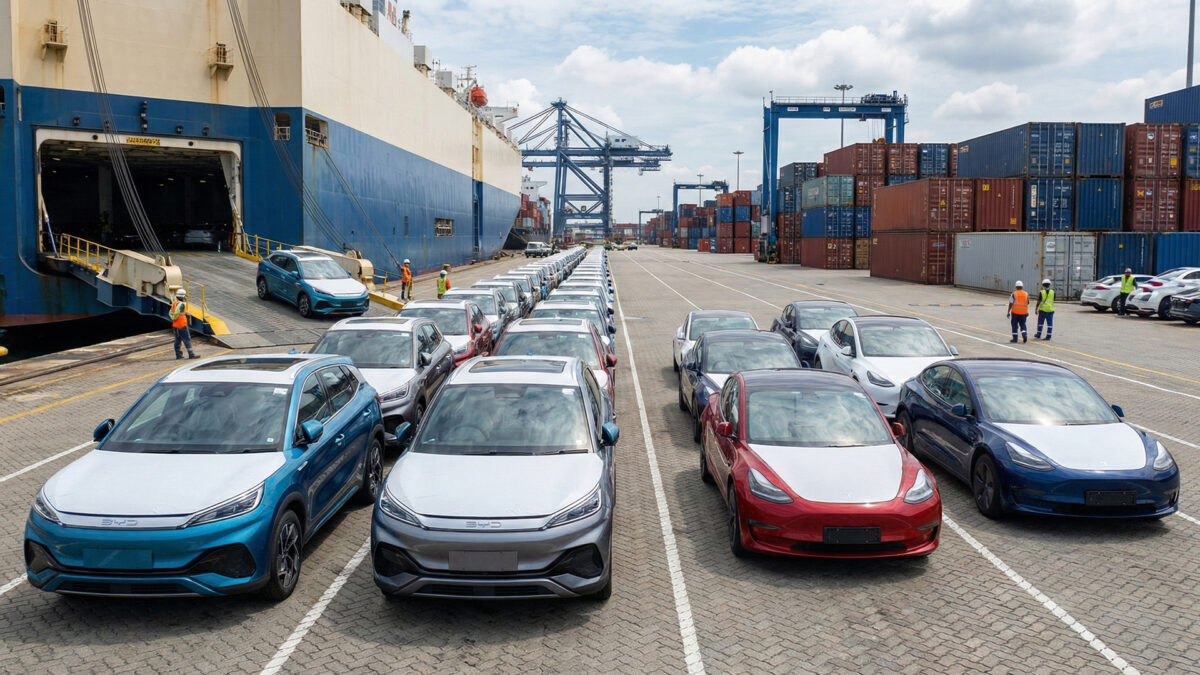
China’s BYD has overtaken Tesla to become the world’s largest electric vehicle (EV) seller in 2025, delivering 2.26 million battery electric cars compared with Tesla’s 1.63 million. BYD’s sales rose 28% year-on-year, while Tesla’s dropped 9%, marking the company’s second consecutive annual decline.

Industry analysts attribute Tesla’s slowdown to reduced US EV subsidies under President Donald Trump and mixed consumer sentiment over Elon Musk’s political positions. Meanwhile, BYD has expanded both domestically and internationally, leveraging competitive pricing, a diverse vehicle lineup, and advanced technology, including its “God’s Eye” autonomous driving system.

Founded in 1995 as a battery company by Wang Chuanfu, BYD has successfully scaled production to compete globally. Analysts note that the global EV market continues to expand, though pricing pressures and policy changes create challenges and opportunities for manufacturers. BYD’s milestone reflects both the rapid growth of Chinese EV makers and the shifting balance of power in the international automotive industry.

BYD’s rise signals the growing dominance of Chinese automakers, including SAIC and Chery, in the global EV market. The shift highlights China’s growing influence in electric mobility, challenging traditional leaders and reshaping the industry’s competitive landscape.

Despite falling sales, Tesla remains the world’s most valuable carmaker with a market capitalization of $1.4 trillion, supported by investor confidence in Musk’s technological innovations, including autonomous vehicles and AI-driven projects like robotaxis.

Also Read: 72 hour deadline for X to tackle AI abuse

Categories
1 Minute-Read

Coal India shares up 6% as e-auctions open to foreign buyers

Coal India Ltd shares jumped nearly 6 per cent, reaching a 52-week high after the company allowed direct participation by foreign buyers in its e-auctions.

From January 1, buyers from Bangladesh, Bhutan, and Nepal can bid directly through the Single Window Mode Agnostic (SWMA) platform, removing the need for domestic intermediaries.

The board approved changes to the auction system to widen market access, improve transparency, and support coal offtake amid soft domestic demand. Investors reacted positively, sending the Maharatna PSU’s stock sharply higher, reflecting confidence in growth prospects.