Categories
Corporate

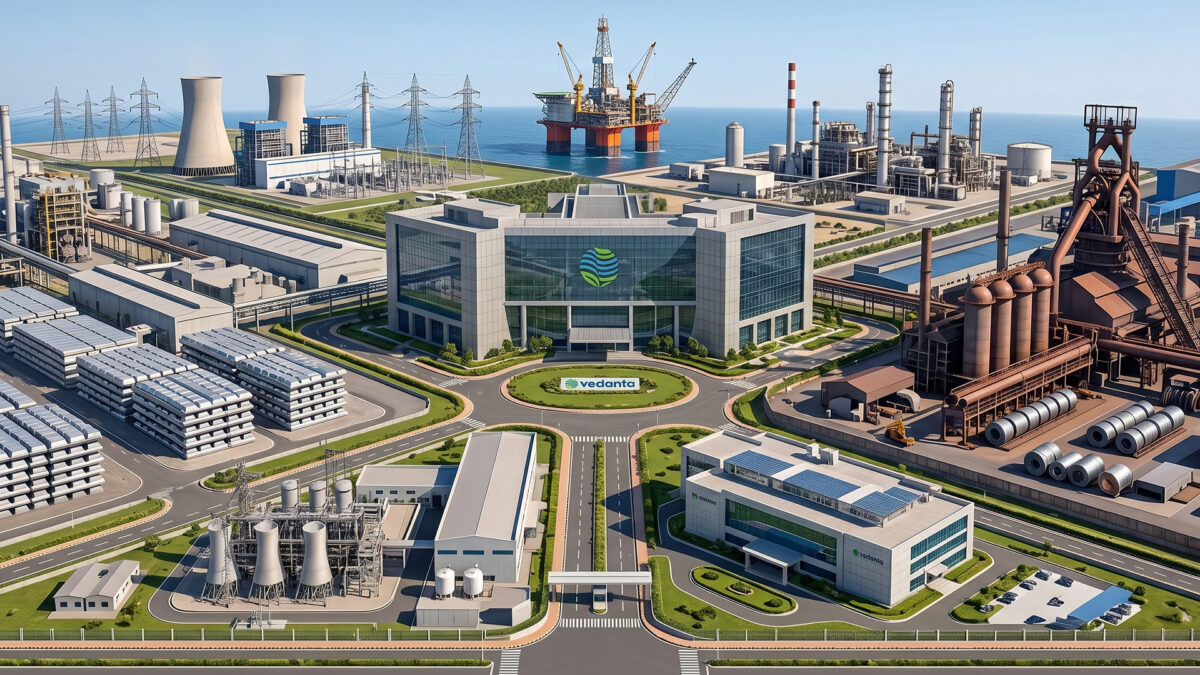
Vedanta Ltd demerger nears completion, shares to list by June

Vedanta Ltd is nearing the final phase of its long-awaited demerger, with shares of its newly created companies expected to be listed on stock exchanges by mid-June 2026.

The company has confirmed that most of the groundwork for the split is now complete. It is in the process of seeking final approvals, after which the new entities will begin trading separately in the market.

This demerger is a major restructuring move. Vedanta is breaking itself into multiple independent businesses so that each unit can focus on its own operations and growth. These businesses include areas like metals, oil and gas, power, and iron and steel.

For investors, the change will directly reflect in their portfolios. Shareholders will receive one share in each of the new companies for every one share they currently hold in Vedanta. In simple terms, this means investors will end up holding shares in several focused companies instead of a single diversified one.

The record date for eligibility has been set as May 1, 2026. Anyone holding Vedanta shares before this date will qualify to receive shares in the newly formed entities.

The idea behind the move is to unlock value. When different business segments operate separately, it becomes easier for investors to understand their performance and growth potential. This can also attract more focused investments into each sector.

However, market experts caution that there could be short-term volatility once the new shares start trading. Prices may fluctuate initially as investors assess the value of each individual business.

Still, over the long term, such restructuring is generally seen as positive. It gives each business more independence, sharper strategy, and better visibility in the market.

With listing expected in the coming weeks, investors will be closely watching how these new Vedanta companies perform once they start trading independently.

Also Read: Gold falls ₹1,50,430, Silver drops ₹2,54,900

Categories
Beyond

Gold falls ₹1,50,430, Silver drops ₹2,54,900

Gold and silver prices in India witnessed a slight correction on April 30, 2026, as investors opted for profit booking after recent gains in the bullion market.

Gold prices fell by around ₹10, with the metal trading near ₹1,50,430 levels in domestic markets. Silver also declined by about ₹100, and was quoted around ₹2,54,900 per kilogram. Despite this minor dip, both precious metals continue to trade at elevated levels compared to historical averages.

The softening in prices is largely attributed to short-term profit booking after a strong upward movement in recent sessions. Earlier gains were driven by global uncertainty, inflation concerns, and heightened geopolitical risks, which had increased demand for safe-haven assets like gold and silver.

Retail gold prices across major Indian cities such as Delhi, Mumbai, and Pune also reflected slight variation depending on local taxes and making charges. However, overall trends remained aligned with the national benchmark movement.

Silver prices, while also slipping marginally, continue to remain volatile due to dual demand factors. Apart from investment demand, silver is widely used in industrial sectors such as electronics, solar energy, and manufacturing, which keeps its price movements more sensitive to global economic conditions.

Also Read: Sensex falls 1,100+ points, Nifty dips below 23,800

Categories
Leaders

Anant Ambani offers to relocate Colombia hippos

Anant Ambani has offered to relocate 80 hippos from Colombia to Vantara, the wildlife rescue and rehabilitation centre in Jamnagar, Gujarat, and urged authorities there to halt plans to cull the animals.

The hippos are descendants of animals brought to Colombia in the 1980s by drug lord Pablo Escobar for his private estate. After his death, the animals were left behind and their population has grown rapidly over the years. Officials estimate there are now more than 200 hippos in the country.

Colombian authorities have said the animals pose a threat to the local environment and nearby communities. With no natural predators in the region, the hippos have multiplied quickly and are considered an invasive species. The government has therefore approved a plan to euthanise around 80 of them as part of population control efforts.

Ambani, who leads Vantara and is an executive director at Reliance Industries, has reportedly written to Colombian authorities offering a different solution. He said the animals should be given a humane alternative and proposed relocating them to India, where they could be cared for in a protected environment.

According to reports, Vantara has offered to handle the cost and logistics of the transfer. The facility says it has the space, veterinary support and specialised infrastructure needed to care for large animals such as hippos.

Vantara has gained international attention for its wildlife rescue and rehabilitation work, housing and treating animals from India and abroad. The proposed transfer of dozens of hippos, however, would be a highly complex operation involving international transport permissions, quarantine procedures and long-distance movement of large wild animals.

Also Read: UAE quits OPEC, shaking global oil alliance

Categories
Corporate

Sensex rises 600, Nifty closes at 24,200

Indian stock markets ended higher on Wednesday, recovering from the previous session’s weakness as investors returned to buying after fresh earnings updates and gains in heavyweight stocks. The BSE Sensex rose 609 points to close at 77,496, while the NSE Nifty 50 advanced 182 points to settle at 24,178.

The rebound was led by strong buying in auto, technology and consumer stocks. Market sentiment improved as investors reacted positively to quarterly results and picked quality stocks after Tuesday’s decline.

Among the top gainers were Maruti Suzuki, Reliance Industries, Tech Mahindra, ITC and Coal India. Maruti gained on positive demand expectations in the auto sector, while Reliance supported the benchmark with steady buying interest. IT shares, including Tech Mahindra, also moved higher as investors showed renewed interest in the sector.

On the losing side, InterGlobe Aviation (IndiGo), Dr Reddy’s Laboratories, NTPC, ICICI Bank and Bajaj Finserv were among the key laggards. Some stocks saw profit booking after recent gains, especially in banking and defensive sectors.

Sector-wise, auto stocks were among the strongest performers, followed by IT and FMCG counters. Broader markets were mixed, with select small-cap shares gaining while mid-cap stocks traded in a narrow range.

Rising oil prices continue to be watched closely, as they can increase India’s import costs and inflation pressures. Investors are also monitoring global central bank signals and foreign fund flows for further direction.

The rupee remained under some pressure, but the strong close in equities suggested that domestic sentiment remains resilient. Traders said investors are still using dips as buying opportunities.

Analysts said company earnings remained the main driver of market movement, with investors rewarding firms that delivered strong quarterly numbers. Domestic buying support also helped markets stay firm despite concerns over global uncertainty and high crude oil prices.

Also Read: ED attaches ₹3,034 cr Reliance Group assets

Categories
Beyond

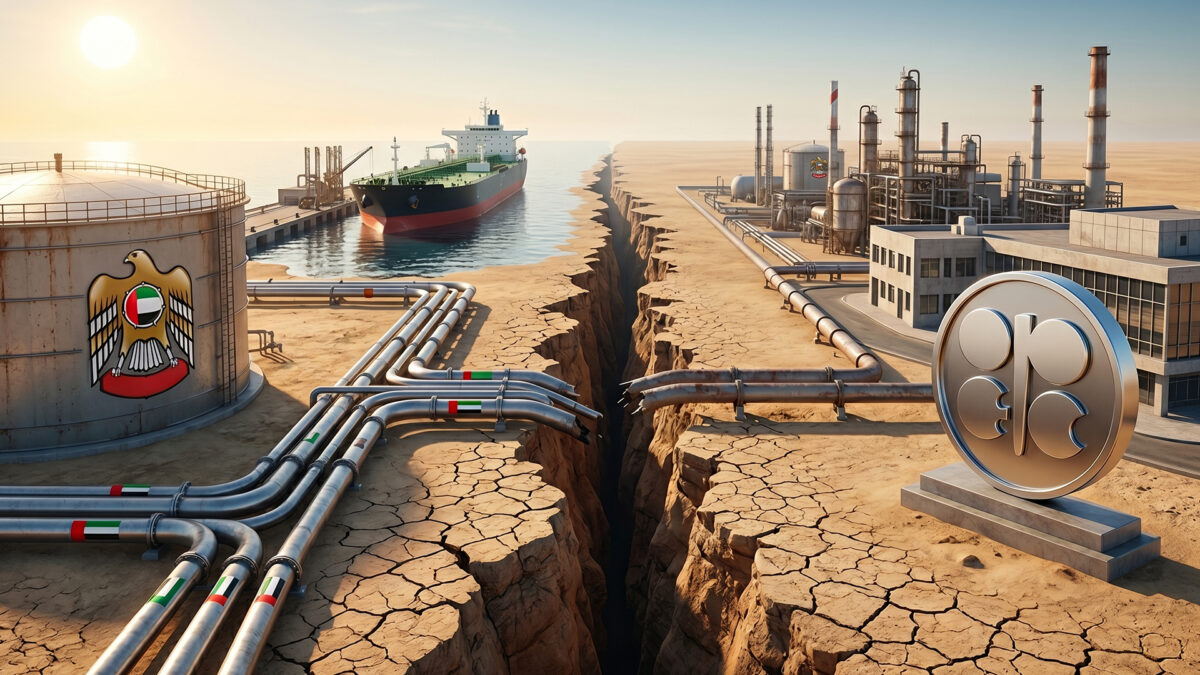
UAE quits OPEC, shaking global oil alliance

The United Arab Emirates (UAE) has announced its decision to leave the Organization of the Petroleum Exporting Countries (OPEC) and the broader OPEC+ alliance, marking a major shift in global energy politics. The exit will take effect from May 1, 2026.

According to official statements reported by multiple international outlets, the UAE described the move as part of a long-term strategic and economic realignment of its energy policy. The country said it intends to focus on national interests, expand domestic production capacity, and respond more flexibly to global energy demand.

The UAE, one of the largest oil producers within OPEC and a key Gulf member, has been part of the organization for decades. Its departure is being viewed as a significant blow to the group’s cohesion and its ability to influence global oil supply and pricing.

Reports indicate that the decision comes at a time of heightened global energy instability. The ongoing conflict involving Iran and disruptions in the Strait of Hormuz, a critical passage for global oil shipments, have already tightened supply routes and increased volatility in crude markets. The UAE’s exit adds further uncertainty to an already fragile situation.

Analysts suggest the move could allow the UAE greater freedom to adjust production levels outside OPEC quotas, potentially increasing output in response to market conditions. However, it also weakens coordinated supply management within the oil-exporting bloc traditionally led by Saudi Arabia.

The decision has also been linked in reports to growing policy differences between Gulf producers over production targets and long-term energy strategy. While some members favour tighter coordination to stabilize prices, others, including the UAE, appear to be prioritising production flexibility and investment expansion.

Also Read: Customers Bank CEO lets AI clone handle earnings call

Categories
Beyond

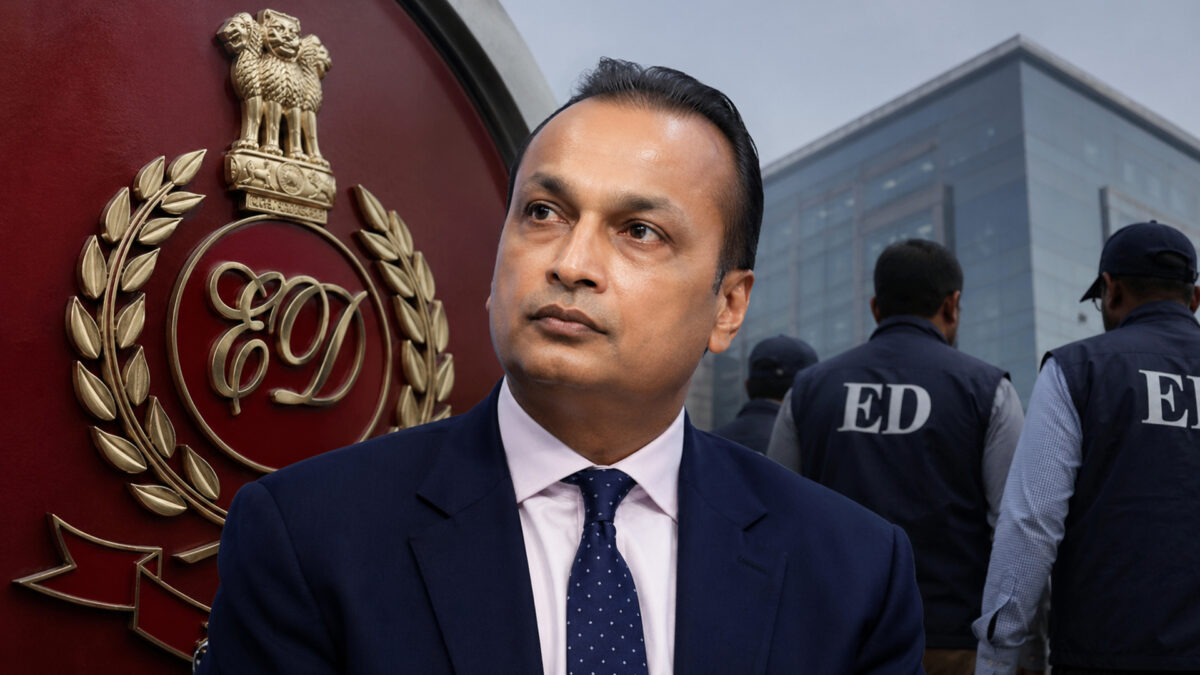
ED attaches ₹3,034 cr Reliance Group assets

The Enforcement Directorate (ED) has attached assets worth ₹3,034 crore in connection with its money laundering investigation into the Reliance Communications (RCom) bank fraud case. The assets are linked to companies associated with Anil Ambani-led Reliance Group.

According to officials, the properties attached include a high-value residential flat in Mumbai, a farmhouse in Khandala, land parcels in Gujarat and shares of Reliance Infrastructure. The action has been taken under the Prevention of Money Laundering Act (PMLA), which allows authorities to provisionally seize assets suspected to be linked to proceeds of crime.

The case is related to alleged irregularities in loans taken by Reliance Communications and connected entities from a consortium of banks. Investigators are examining whether funds were diverted and whether assets were acquired using money connected to the alleged fraud.

With the latest move, the total value of assets attached in matters involving the Reliance Anil Ambani Group has risen sharply over the course of the investigation. Officials said the probe is continuing and more findings may emerge as financial records and transactions are reviewed.

Reliance Communications was once one of India’s leading telecom companies but later faced mounting debt and financial stress. The company entered insolvency proceedings after failing to repay lenders, leading to wider scrutiny by banks and investigative agencies.

The ED’s action is a provisional step meant to prevent the sale, transfer or disposal of the assets while the investigation continues. The individuals or companies concerned have the right to challenge the attachment before legal authorities.

The development adds to the financial and legal challenges faced by the Anil Ambani group, which has been working through debt issues and legacy disputes in recent years.

Also Read: Eternal profit jumps 346% in Q4 to ₹174 cr

Categories
Beyond

Australia plans 2% big tech news levy

Australia has unveiled a new proposal that would require major technology companies to financially support local journalism or face a levy on their revenue. The plan targets large digital platforms such as Google, Meta and TikTok, which play a major role in how people access news online.

Under the proposal, eligible tech companies would have to either sign commercial agreements with Australian media organisations or pay a 2.25% levy on their local revenue. The government says the measure is designed to ensure journalism is fairly funded in the digital age.

Prime Minister Anthony Albanese said strong journalism is essential for democracy and local communities. He noted that many Australians now discover news through search engines and social media, making it reasonable for platforms benefiting from news content to contribute financially.

The new system is meant to encourage direct deals between tech firms and publishers rather than simply collect a tax. Companies that reach agreements with local media outlets could avoid paying the levy. Any money raised would be used to support Australia’s news industry.

Australia was one of the first countries to introduce rules requiring digital platforms to negotiate with publishers over payment for news content. Those laws led to several high-profile deals in recent years, but the government now says the system needs to be updated as the digital market has changed.

The latest move has received mixed reactions. Media organisations welcomed the proposal, saying it could help protect public-interest journalism and support newsroom jobs at a time when many outlets are under financial pressure.

Technology companies, however, have criticised the plan. Some argue that platforms already drive traffic to publishers and should not be forced to pay additional charges. They also warn that such measures could affect how news is shared online.

The proposal is expected to be debated in parliament before any final decision is taken. If passed, Australia could once again become a global test case for regulating the relationship between big technology firms and traditional news media.

Also Read: RBI brings new rules for bank loan losses

Categories
1 Minute-Read

Google tests YouTube AI search tool

Google is testing a new AI-powered feature called “Ask YouTube” that allows users to search using full questions instead of simple keywords.

The tool provides text summaries, suggested videos, Shorts and highlighted clips related to the query. Users can also ask follow-up questions, making search more conversational.

The feature is currently being tested with selected YouTube Premium users in the United States. Google has not announced a wider rollout date yet.

The move is part of its broader AI push and could change how users discover tutorials, reviews and educational content on YouTube.

Categories
Beyond

Airlines flag crisis over rising fuel prices

India’s leading airlines have warned of a serious financial crisis due to rising aviation turbine fuel (ATF) prices and have sought urgent government intervention to avoid operational disruption.

Air India, IndiGo, and SpiceJet, represented by the Federation of Indian Airlines (FIA), said the sector is under “extreme stress” as fuel costs continue to rise. They have urged the Centre to revise pricing policies and provide immediate relief measures.

ATF accounts for nearly 40% of airline operating expenses, making price volatility a major challenge. Airlines say global oil price swings and supply issues have further increased costs.

The carriers have also called for a uniform ATF pricing structure across domestic and international routes, saying current differences are adding to financial strain. They have suggested temporary tax relief on jet fuel to ease pressure.

The FIA warned that without timely intervention, airlines could be forced to cut flights or even suspend parts of their operations, affecting connectivity across the country.

While passenger demand remains strong, airlines say high costs are squeezing profitability. Industry observers note that the warning reflects growing financial stress in the aviation sector.

The government is expected to examine the demands as pressure builds to stabilize the industry and prevent possible disruption to air travel services.

Also Read: Amazon Now expands ultra-fast delivery to 100 cities

Categories
Beyond

Gold nears one lakh, Silver at ₹1.13 lakh

Gold and silver prices remained firm on April 29, 2026, as investors closely tracked the upcoming US Federal Reserve policy decision for signals on interest rates and inflation.

In the domestic market, gold traded near the ₹1 lakh per 10 grams level, while silver held above ₹1.13 lakh per kg. Precious metals stayed supported by global uncertainty, safe-haven demand and expectations that the US central bank may maintain current rates.

International markets moved cautiously as traders awaited comments from the Federal Reserve on future monetary policy. Gold typically benefits when interest rates remain low or when rate cuts are expected, as it does not generate fixed returns.

Meanwhile, India’s gold market witnessed a major shift in consumer behaviour during the January-March quarter. For the first time, investment demand for gold exceeded jewellery demand, showing that more Indians are now buying gold as a wealth-protection asset rather than only for ornaments.

According to industry estimates, India’s gold investment demand rose 52% year-on-year to 82 tonnes in the March quarter. Jewellery demand, however, fell nearly 20% to 66 tonnes as high prices reduced regular household purchases.

The rise in investment demand was driven by strong buying of gold bars, coins and exchange-traded funds (ETFs). Many retail and institutional investors turned to gold amid stock market volatility, inflation concerns and geopolitical tensions.

Despite the fall in jewellery purchases, India’s total gold consumption still increased by more than 10% during the quarter, reflecting continued interest in the precious metal.

Silver prices also remained steady, supported by industrial demand and global market caution. Analysts said silver may continue to track both precious metal sentiment and industrial growth expectations in coming months.

Also Read: Sensex rises 900+ points, Nifty reclaims 24,200