Categories
1 Minute-Read

IndiGo launches lite fare

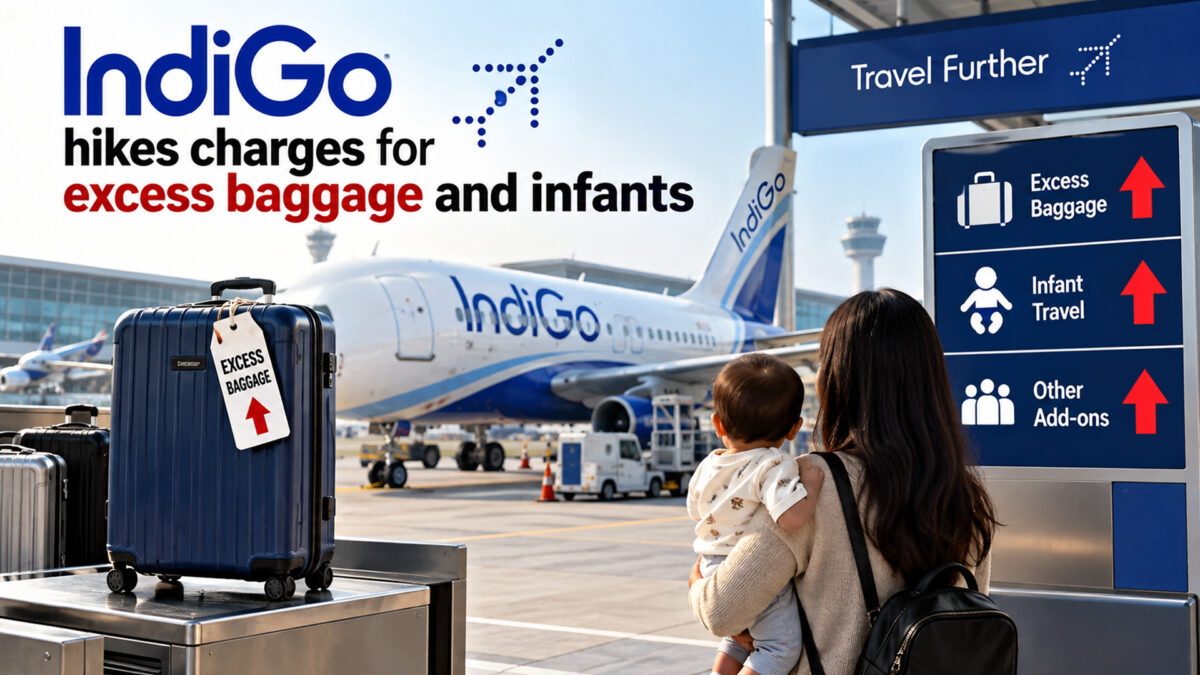
India’s largest airline, IndiGo, has introduced a new ‘Lite Fare’ for passengers travelling with only cabin baggage. The lower-priced option is aimed at flyers who do not need checked luggage, offering a more affordable travel choice on domestic and international routes.

Passengers booking the fare can carry only the standard cabin baggage allowance, while checked baggage can be added later for an additional fee.

The airline said the move is designed to provide greater flexibility and reduce travel costs, while also helping speed up airport check-in and baggage handling for eligible passengers.

Categories
1 Minute-Read

IndiGo clarifies refund dispute

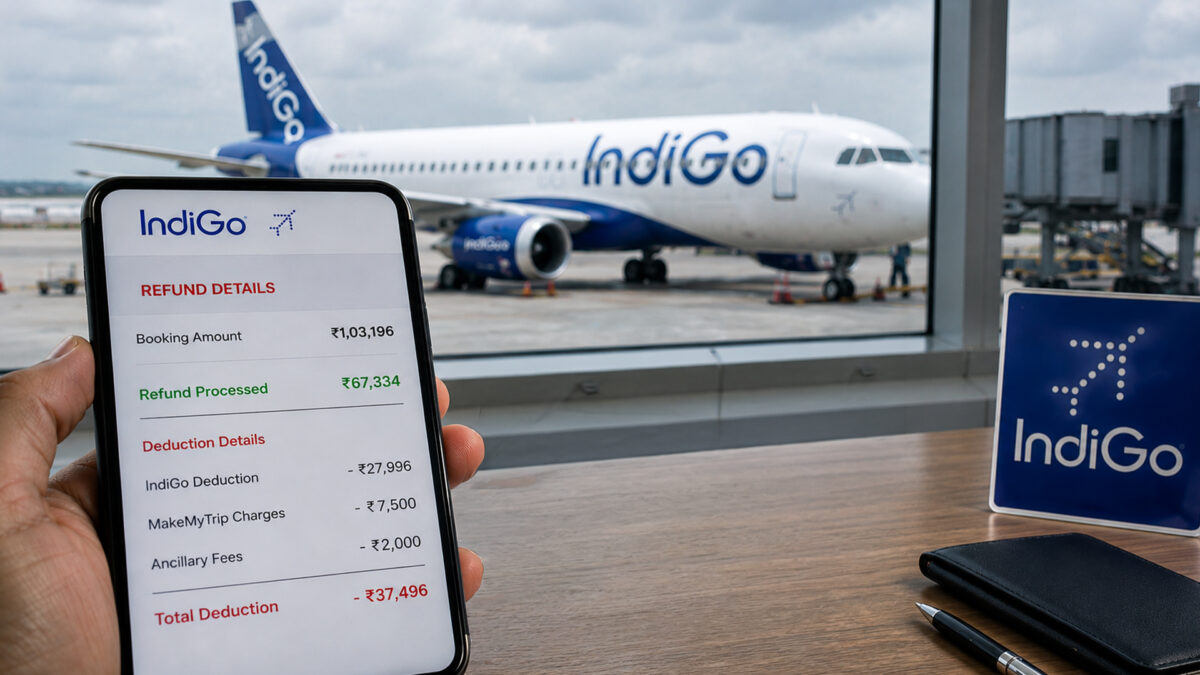
An IndiGo passenger has alleged that she lost nearly ₹40,000 after flight cancellations disrupted her family’s Bali trip. The traveller said she spent around ₹1 lakh on tickets and faced significant deductions during the refund and rebooking process.

The issue gained attention on social media, where she questioned the refund calculations. Responding to the claims, IndiGo said the deductions were due to fare rules, cancellation charges and ticket price differences linked to itinerary changes.

The airline stated that all transactions followed booking terms and conditions and that refund details had been shared with the customer. The incident has renewed debate over airline refund transparency.

Categories
Corporate

IndiGo shares jump 5% despite Q4 loss

Shares of IndiGo surged nearly 5 per cent after the airline reported its fourth-quarter results, with investors and analysts looking beyond a reported loss and focusing on the company’s long-term growth potential.

The stock gained around 4-5 per cent in early trade as several leading brokerages maintained positive views on the airline. Analysts said the quarterly loss was largely driven by temporary factors and did not alter the company’s strong position in the Indian aviation market.

IndiGo reported a loss for the March quarter, disappointing some investors. However, market participants appeared encouraged by management’s outlook, robust demand trends and expectations of improved profitability in the coming quarters.

Brokerage firms including Goldman Sachs, Jefferies and other market analysts highlighted that the airline continues to benefit from its dominant market share, expanding fleet and strong domestic travel demand. They noted that one-off costs and short-term operational challenges had affected quarterly earnings but were unlikely to significantly impact the company’s long-term performance.

Analysts also pointed to improving passenger traffic, healthy capacity expansion plans and a favourable demand environment for air travel. India’s aviation sector continues to experience strong growth, supported by rising incomes, increased connectivity and growing preference for air travel.

Investors appeared to focus on these structural growth drivers rather than the quarterly loss. The positive market reaction reflected confidence that the airline can overcome near-term pressures and return to stronger profitability.

Several brokerages retained their “buy” ratings on the stock and maintained optimistic target prices. They cited IndiGo’s leadership position in the domestic aviation market and its ability to benefit from sustained growth in passenger demand.

The strong rise in IndiGo shares following the results suggests that investors remain confident in the airline’s growth story. Analysts believe the company is well-positioned to capitalise on the continued expansion of India’s aviation sector, even as it navigates short-term challenges.

Experts noted that airline earnings can often be affected by temporary factors such as fuel price fluctuations, foreign exchange movements and operational expenses. As a result, investors frequently place greater emphasis on long-term business fundamentals and future earnings potential.

Also Read: Nvidia CEO Jensen Huang’s dance moves go viral

Categories
Beyond

Air India, IndiGo to slash domestic flights from June

India’s two largest airlines, Air India and IndiGo, are set to reduce more than 100 domestic flights each per day starting June, leading to changes in schedules across several routes.

The decision comes as airlines continue to deal with operational pressures, including restricted airspace availability, longer flying times and aircraft-related issues. The temporary cuts are expected to affect multiple domestic sectors, though both carriers have said efforts are being made to minimise inconvenience for passengers.

IndiGo, the country’s largest airline, will reduce around 165 daily flights from its domestic network. Air India is also expected to suspend or reduce over 100 daily services. The revised schedules are likely to remain in place at least until mid-July, according to reports.

A major reason behind the changes is the continued closure of parts of northern airspace following recent geopolitical tensions in the region. With some air routes unavailable, airlines are being forced to take longer paths for several flights, increasing travel time, fuel consumption and operational costs.

Apart from airspace restrictions, airlines are also facing aircraft shortages due to maintenance and engine-related problems. IndiGo has been dealing with grounded aircraft linked to Pratt & Whitney engine issues, while Air India has been adjusting operations as it continues fleet upgrades and maintenance work.

The reduced schedules are expected to impact flights on busy domestic routes connecting metro cities and tourist destinations. Airlines have advised passengers to check flight status before travelling and stay updated through official websites and apps.

Both carriers said affected passengers would be informed in advance and offered options including rescheduling or refunds wherever applicable.

Despite the temporary cuts, aviation experts believe domestic air travel demand in India remains strong. Airlines are expected to restore normal operations gradually once operational constraints ease and more aircraft return to service.

Also Read: Adani Green commissions giant 2.5 GWh battery system in Gujarat

Categories
Beyond

Airlines flag crisis over rising fuel prices

India’s leading airlines have warned of a serious financial crisis due to rising aviation turbine fuel (ATF) prices and have sought urgent government intervention to avoid operational disruption.

Air India, IndiGo, and SpiceJet, represented by the Federation of Indian Airlines (FIA), said the sector is under “extreme stress” as fuel costs continue to rise. They have urged the Centre to revise pricing policies and provide immediate relief measures.

ATF accounts for nearly 40% of airline operating expenses, making price volatility a major challenge. Airlines say global oil price swings and supply issues have further increased costs.

The carriers have also called for a uniform ATF pricing structure across domestic and international routes, saying current differences are adding to financial strain. They have suggested temporary tax relief on jet fuel to ease pressure.

The FIA warned that without timely intervention, airlines could be forced to cut flights or even suspend parts of their operations, affecting connectivity across the country.

While passenger demand remains strong, airlines say high costs are squeezing profitability. Industry observers note that the warning reflects growing financial stress in the aviation sector.

The government is expected to examine the demands as pressure builds to stabilize the industry and prevent possible disruption to air travel services.

Also Read: Amazon Now expands ultra-fast delivery to 100 cities

Categories
Corporate

IndiGo rises 11% on ceasefire, lower oil

Shares of IndiGo soared 11% this week, becoming one of the top gainers on India’s Nifty 50, after news of a two-week ceasefire in the Iran conflict and a fall in crude oil prices lifted investor sentiment. Lower fuel costs are particularly good news for airlines, as aviation turbine fuel accounts for a large portion of operating expenses.

The Indian government also stepped in with temporary relief, cutting landing and parking charges at major airports by 25% for three months. This move is designed to ease financial pressure on carriers navigating the ongoing disruptions in West Asia.

Despite the market optimism, airlines continue to face operational challenges. Safety concerns and airspace closures have forced Indian carriers to cancel thousands of flights to the Gulf and West Asia, reducing daily services from around 300–350 to 80–90. Longer routes are being rerouted, adding complexity and costs.

Passengers are feeling the impact too, with fewer flight options and rising fares on affected routes. Some airlines have imposed fuel surcharges and revised ticket prices to manage the volatility.

Domestic carriers like IndiGo and Air India are treading cautiously, gradually restoring operations only as airspace stabilizes.

Also Read: Adam Back denies claims of being Bitcoin creator

Categories
1 Minute-Read

IndiGo aircraft damaged by catering truck in Kolkata

A parked aircraft of IndiGo was damaged after being hit by an unmanned catering truck at Netaji Subhas Chandra Bose International Airport on April 7.

The aircraft was preparing for a Kolkata–Guwahati flight when the unattended vehicle rolled forward and struck its engine. No passengers were onboard, and no injuries were reported.

The airline has grounded the aircraft for inspection and repairs. An alternate plane was arranged to avoid disruption. Authorities have launched an investigation into the incident, focusing on possible lapses in ground handling and safety procedures by the third-party catering operator.

Categories
Corporate

IndiGo appoints ex-Air India Express head as CSO

India’s largest airline, IndiGo, has brought in seasoned aviation executive Aloke Singh as its new Chief Strategy Officer (CSO), as the carrier sharpens its focus on future growth and stability. Singh will take on the role from April 6, stepping into a key position at a time when the airline is navigating leadership changes and expansion plans.

Singh joins IndiGo after leading Air India Express, where he served as Managing Director and CEO for several years. During his tenure, he played a major role in strengthening the airline’s operations and guiding its integration with AirAsia India, helping build a more unified low-cost business within the Tata Group’s aviation portfolio.

At IndiGo, Singh’s role will revolve around shaping the airline’s long-term strategy. This includes identifying new growth opportunities, improving efficiency, and ensuring the airline remains competitive in an increasingly crowded aviation market. He will report to co-founder Rahul Bhatia for now, until a new chief executive officer is appointed.

The timing of the appointment is significant. IndiGo has been undergoing a transition phase, with changes in top leadership and an ambitious roadmap for expansion. The airline is looking to grow its international footprint, add more aircraft, including wide-body planes and strengthen its position in both domestic and global markets.

Singh brings with him over two decades of experience in aviation, having held leadership roles not just at Air India Express but also at Air India and Oman Air. His deep understanding of airline operations and strategy is expected to help IndiGo navigate its next phase of growth more smoothly.

With a dominant share of India’s aviation market, IndiGo is already the country’s leading carrier. However, increasing competition and evolving passenger expectations mean the airline must continuously adapt. Singh’s appointment signals a clear intent to stay ahead by focusing on long-term planning and strategic execution.

Also Read: Food delivery startup ‘Swish’ raises $38 mn

Categories
Beyond

Air India, IndiGo, SpiceJet oppose free seat mandate

India’s leading airlines, Air India, IndiGo, and SpiceJet, have expressed strong opposition to a new government rule requiring them to make 60% of flight seats free for selection. Airlines warn that this could force higher base airfares to compensate for lost revenue.

The DGCA, under the Ministry of Civil Aviation, introduced the directive to protect passengers from hidden charges and make booking more transparent. While passengers would benefit from free seat selection on most seats, airlines claim the mandate limits their ability to earn from optional services like preferred window, aisle, and extra-legroom seats.

The Federation of Indian Airlines (FIA) said seat selection fees are a critical source of ancillary revenue. Losing this income, they argue, would hurt airlines financially, especially as operational costs rise and competition remains stiff. According to industry data, charges for preferred seats currently range from ₹200 to ₹2,100 per passenger.

Airlines also raised concerns about government overreach, saying commercial decisions such as pricing and seat allocation should remain under their control. They warned that enforcing the 60% free seat mandate could distort fare structures, potentially impacting ticket pricing and service tiers.

While the government intends to benefit passengers, experts warn that airlines may adjust base fares upwards to recoup lost income. This could mean that, despite free seat selection, the overall cost of travel might rise.

The debate highlights a broader tension in India’s aviation sector: balancing consumer-friendly policies with the financial realities of airlines. Passengers may gain in terms of transparency, but the industry insists on sustainable revenue streams to maintain services and profitability.

Also Read: Snowflake unveils AI tool to automate workflows

Categories
Leaders

Pieter Elbers resigns as IndiGo CEO

IndiGo CEO Pieter Elbers has resigned from his position with immediate effect, the airline confirmed. The leadership change comes a few months after the carrier faced a major operational crisis that led to widespread flight disruptions.

The airline said its board has accepted Elbers’ resignation. Following his exit, Managing Director and co-founder Rahul Bhatia will temporarily oversee operations until a new chief executive is appointed.

Elbers reportedly stepped down citing personal reasons and requested that the company waive his notice period. In his message, he thanked the airline’s employees and said it had been a privilege to lead the company during his tenure.

His resignation comes around three months after the airline faced one of the biggest operational challenges in its history. In December 2025, thousands of flights were cancelled or delayed after changes in pilot duty and rest regulations disrupted scheduling across the airline’s network. The situation left many passengers stranded and drew criticism from travellers and regulators.

Despite the crisis, IndiGo remains India’s largest airline, with the biggest share of the domestic aviation market and an extensive network of flights across India and international destinations.

Also Read: AI enters the lab, transforming drug discovery