
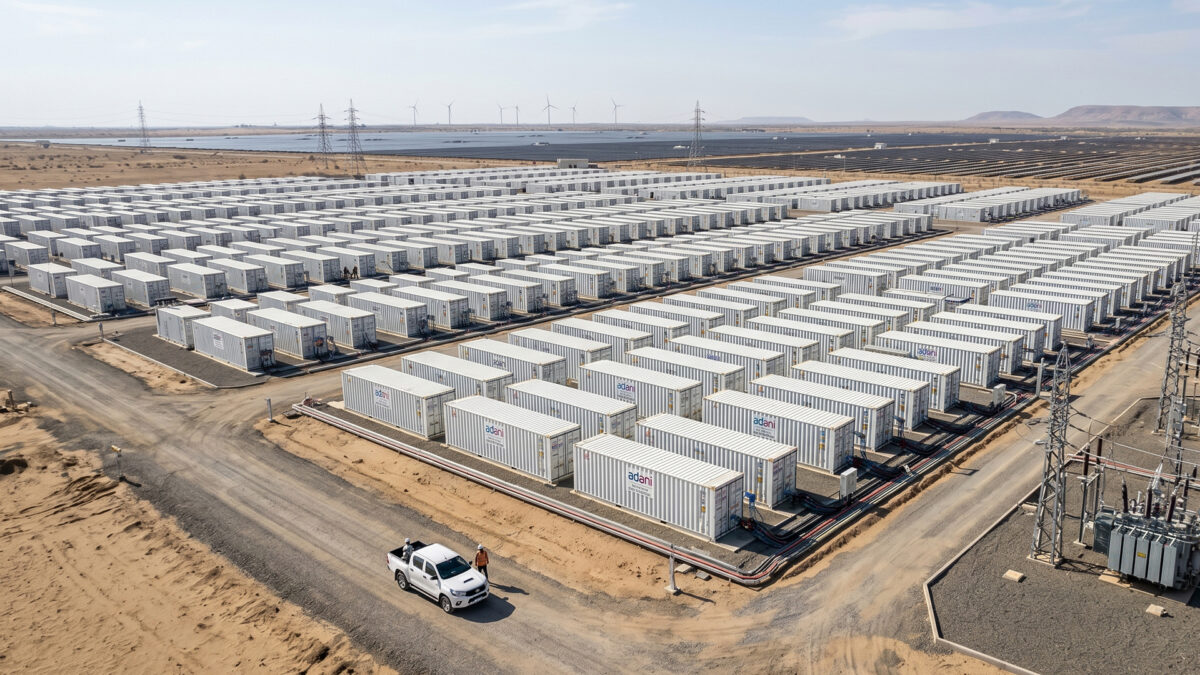
Adani Green Energy has commissioned a large-scale battery energy storage system in Gujarat’s Khavda region, marking a major expansion of India’s renewable energy infrastructure.
The project is designed with a capacity of around 1 GW of renewable energy integration and approximately 2.5 GWh of battery storage, making it one of the largest storage systems globally. It is intended to store surplus solar and wind energy generated during peak hours and supply electricity when demand rises or generation drops.
The facility plays a key role in enabling round-the-clock renewable power by addressing the intermittent nature of solar and wind energy. By storing excess electricity, it helps stabilise supply and improve grid reliability.
Located in the Khavda renewable energy zone, the project is part of a larger clean energy hub that is rapidly expanding with large-scale solar and wind installations. The addition of battery storage is seen as a crucial step in strengthening the region’s ability to deliver consistent green power.
The project is also aligned with India’s broader energy transition goals, including increasing renewable energy share in the national grid and reducing carbon emissions over time.
The commissioning of the Khavda battery storage system marks a significant milestone in integrating large-scale renewable generation with advanced storage technology, strengthening India’s position in global clean energy infrastructure development.
Officials said the development enhances the country’s capability to provide reliable clean energy even during peak consumption periods. It is also expected to improve overall efficiency in power distribution across the grid.