Categories
Corporate

Adani Green to invest ₹15,000 cr in battery storage push

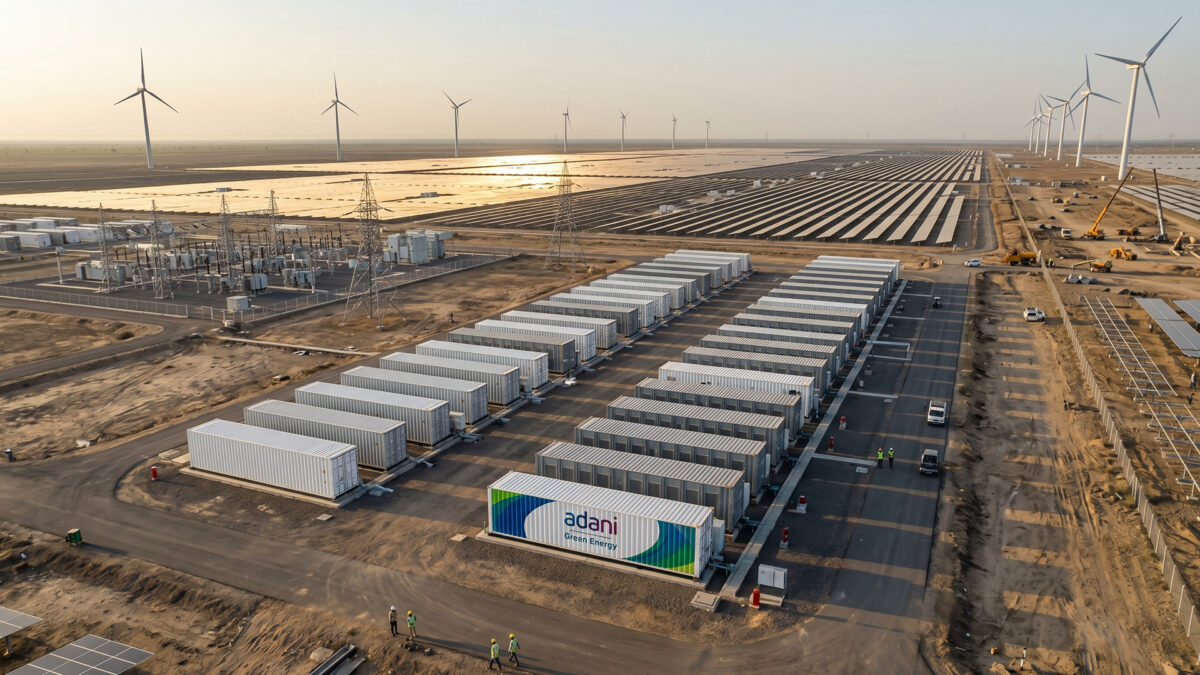
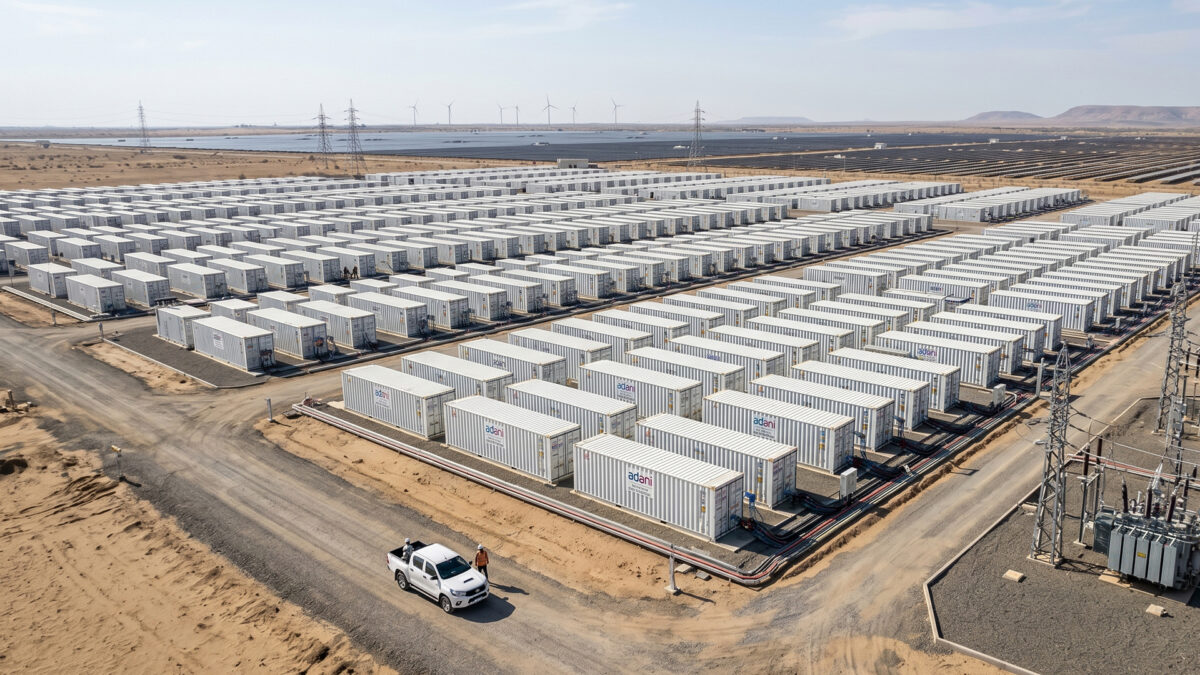
Adani Green Energy Ltd has announced a major investment of around ₹15,000 crore to build large-scale battery storage systems in India, aiming to make renewable energy more reliable and available throughout the day.

The company plans to add over 10 gigawatt-hours (GWh) of battery storage capacity by FY27. This technology stores excess electricity generated from solar and wind power and releases it when demand is high or when generation drops, such as in the evening.

This move is intended to address one of the biggest challenges of renewable energy, its inconsistency. Solar and wind power depend on weather conditions, which means supply can fluctuate. Battery storage helps smooth out these variations and ensures a steady flow of electricity to the grid.

Adani Green said the new storage capacity will be developed in phases and will build on its existing pipeline, including around 1.4 GWh expected to be operational in FY26 and nearly 3 GWh of additional capacity coming online soon.

A significant part of the project will be located in Khavda, Gujarat, where the company is developing one of the world’s largest renewable energy parks. The battery systems there will work alongside large solar and wind installations to improve grid stability and supply reliability.

The company explained that the goal is to deliver “dispatchable clean energy,” meaning renewable power that can be supplied on demand, similar to conventional thermal power plants.

Adani Green currently operates about 19.3 GW of renewable energy capacity and is working toward a long-term target of 50 GW by 2030. The addition of battery storage is seen as a key step in achieving that goal.

Also Read: US imposes 123% duty on Indian Solar imports

Categories
Corporate

Adani Green tops ESG rankings

Adani Green Energy Limited has emerged as the top-ranked Indian company on ESG (environmental, social, and governance) parameters, with a score of 87.3—the highest in the country.

The rating was given by CareEdge ESG Ratings Limited, which also assigned the company its top ‘ESG 1+’ grade. This reflects strong performance across areas like environmental impact, social responsibility, and corporate governance.

The company scored well for its efforts in managing climate risks, conserving water, reducing waste, and protecting biodiversity. It also stood out for maintaining transparency and strong internal systems to oversee operations.

ESG ratings have become increasingly important for investors, as they show how responsibly a company operates beyond just profits. A higher score often makes it easier for companies to attract global investment and access funding focused on sustainability.

For Adani Green, this recognition highlights its focus on clean energy and responsible growth. As one of India’s leading renewable energy companies, it has been expanding its projects while keeping sustainability at the centre of its strategy.

The achievement also reflects a broader shift towards more environmentally conscious business practices in India. Companies are now being evaluated not just on financial performance, but also on how they impact the environment and society.

Adani Green said the rating validates its long-term approach and ongoing efforts to build a sustainable business. The company has been working on improving efficiency, reducing environmental impact, and strengthening governance practices.

Also Read: Travel platform data breach exposes user details

Categories
Corporate

Adani Green Q3 profit down 99%

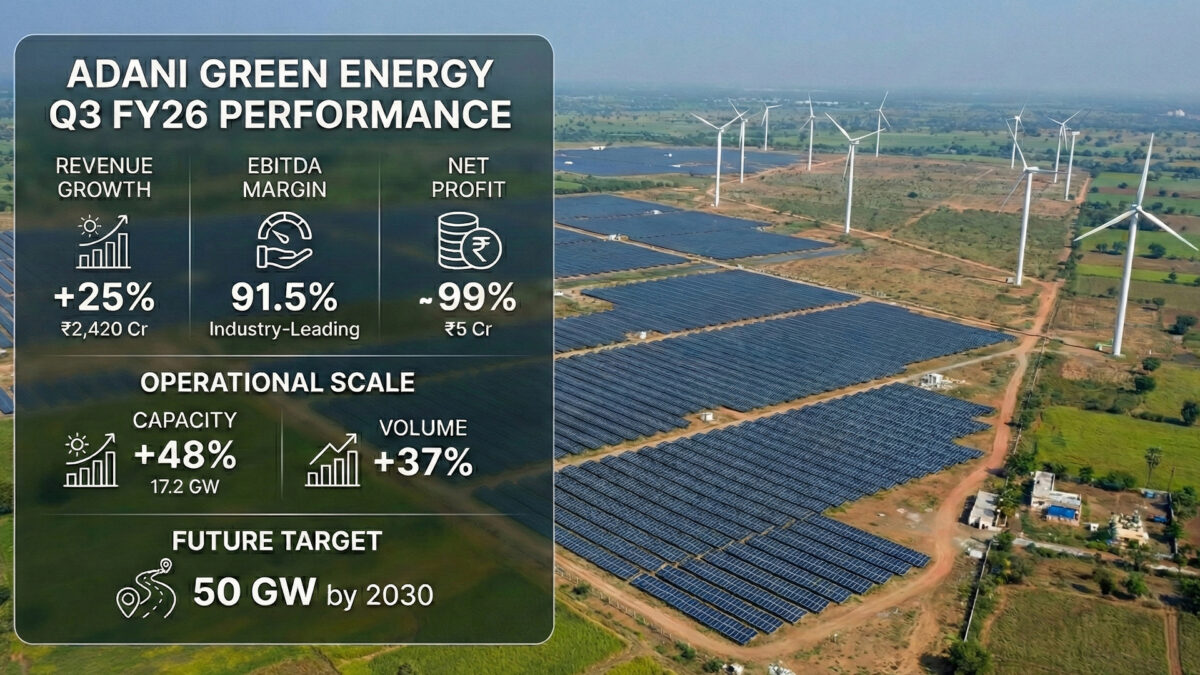
Adani Green Energy Ltd reported a mixed set of results for the third quarter of FY26, marked by strong revenue growth and operational expansion but a sharp decline in net profit due to rising costs.

During the December quarter, revenue from power supply grew 25 percent year-on-year to ₹2,420 crore, driven by a significant increase in generation. Energy sales volumes surged 37 percent compared to the same period last year, reflecting the commissioning of new renewable assets and improved utilisation. Consolidated revenue from operations rose about 12 percent year-on-year to ₹2,618 crore.

Operating performance remained robust. EBITDA from the power supply segment increased 23 percent year-on-year to ₹2,269 crore, underlining strong cash generation from core operations. The EBITDA margin stood at an industry-leading 91.5 percent, although it was marginally lower than the 92 percent recorded in the year-ago quarter, indicating some pressure from rising operating costs.

However, this strong top-line and operating performance did not translate into bottom-line growth. Consolidated net profit attributable to owners plunged by nearly 99 percent year-on-year to ₹5 crore. The sharp fall was primarily due to higher depreciation and interest expenses following aggressive capacity additions, along with the impact of one-off exceptional items during the quarter.

On the operational front, Adani Green continued to scale up rapidly. Its total operational renewable energy capacity expanded 48 percent year-on-year to 17.2 GW. A significant portion of the additions came from the Khavda renewable energy park in Gujarat, which is progressing as the world’s largest renewable energy installation and remains a key growth driver for the company.

Despite near-term pressure on profitability, the company reiterated confidence in its long-term growth strategy. Adani Green said it remains on track to achieve its target of 50 GW of renewable capacity by 2030, supported by a strong project pipeline and India’s accelerating transition towards clean energy.

Also Read: Adani Group fully acquires IANS

Categories
Corporate

SEBI clears Pranav Adani in Adani Green insider trading case

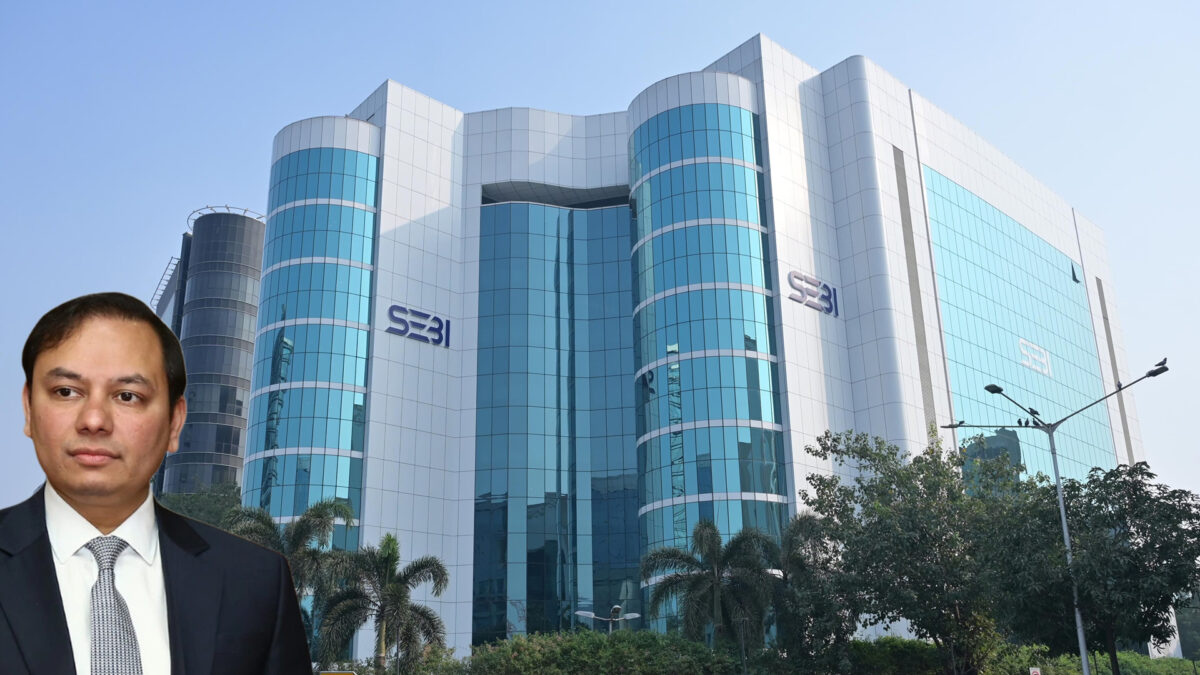
The Securities and Exchange Board of India (SEBI) has cleared Pranav Adani and two of his relatives of insider trading allegations linked to share transactions in Adani Green Energy Ltd (AGEL). The case pertained to trading activity that occurred ahead of AGEL’s acquisition of SB Energy in 2021.

Pranav Adani, a director in several Adani Group companies and the nephew of group chairman Gautam Adani, was accused of allegedly sharing unpublished price-sensitive information (UPSI) related to the SB Energy deal. SEBI had also examined whether his relatives, Kunal Dhanpalbhai Shah and Nrupal Dhanpalbhai Shah, traded AGEL shares using such confidential information.

In its final order, SEBI said it found no material evidence to substantiate the allegations. The regulator stated that there was nothing on record to indicate that Pranav Adani had communicated any non-public information to the two relatives. It also concluded that the trades carried out by the Shahs could not be linked to insider knowledge.

SEBI observed that key details of the SB Energy acquisition were already available in the public domain before the trades under scrutiny were executed. As such, the information did not qualify as unpublished price-sensitive information under insider trading norms.

The regulator further noted that the timing and pattern of the share transactions did not suggest any misuse of confidential information. Based on these findings, SEBI dismissed the show-cause notice issued in November 2023 and dropped all proceedings against the three individuals.

No penalties, restrictions, or further regulatory directions were imposed. The order effectively brings the insider trading investigation related to the Adani Green Energy–SB Energy transaction to a close.

The SB Energy acquisition was among the largest renewable energy deals in the country at the time and played a key role in expanding Adani Green Energy’s clean power portfolio. SEBI’s decision provides regulatory closure to the case and relief to Pranav Adani and his family members after months of regulatory scrutiny.

Also Read: Ozempic debuts in India for type 2 diabetes

Categories
Corporate

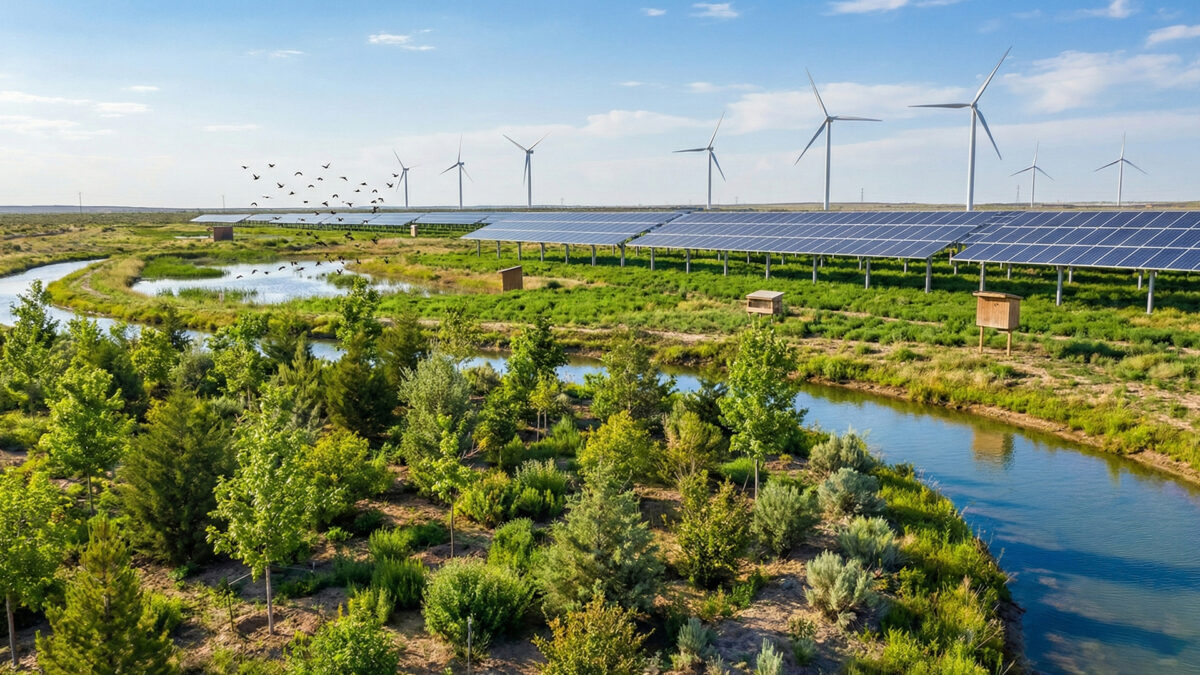
Adani Green champions nature-positive growth in renewable energy

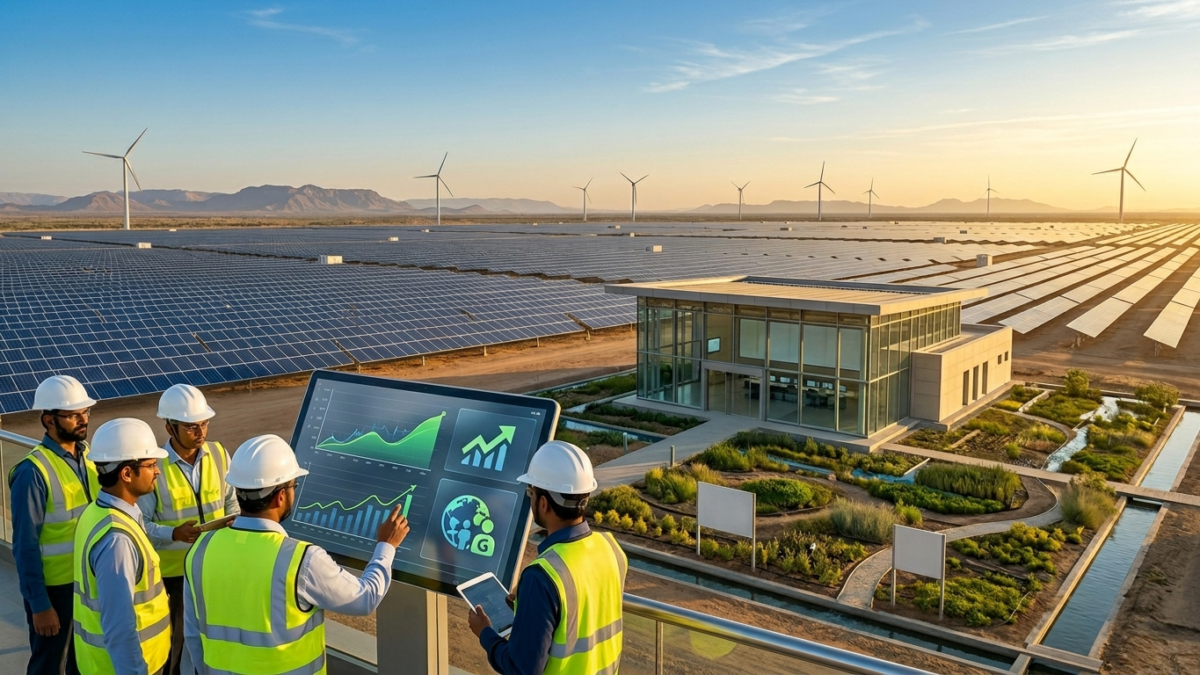
Adani Green Energy Ltd (AGEL), India’s largest renewable-energy producer, is taking a bold step to ensure its growth is in harmony with nature. The company has formally adopted the Taskforce on Nature-related Financial Disclosures (TNFD) framework, a global standard that helps businesses identify, manage, and reduce their impact on ecosystems and biodiversity.

Starting this year, AGEL has been assessing all its operational sites to understand how its projects interact with forests, water bodies, and local wildlife. The goal is not just to reduce environmental risks, but to actively create opportunities to support nature. CEO Ashish Khanna emphasised, “Nature is central to our growth story,” highlighting the company’s commitment to sustainable development.

AGEL has pledged to achieve “No Net Loss of Biodiversity” by 2030. This ambitious target includes planting 27.86 million trees across its solar and wind energy projects. Currently, the company operates more than 16.5 GW of renewable capacity in 12 states and aims to scale this to 50 GW by 2030, contributing significantly to India’s clean-energy transition.

Beyond energy generation, AGEL has already implemented sustainable practices across its projects, including being water-positive, single-use plastic-free, and zero waste-to-landfill. By integrating the TNFD framework, the company moves beyond standard ESG compliance, adopting a science-backed approach to measure and manage its ecological footprint.

This initiative sends a strong message to the renewable-energy sector: infrastructure growth and environmental stewardship can go hand in hand. By embedding nature-positive principles into its expansion plans, AGEL is setting a new benchmark for responsible clean-energy development in India and globally.

As India ramps up its renewable-energy ambitions, AGEL’s approach shows that development doesn’t have to come at the cost of nature. Instead, with thoughtful planning and commitment, it is possible to power the future while protecting the planet we rely on.

Also Read: DGCA gives IndiGo final 24‑hour response deadline