Categories
Corporate

Sensex rises 900+ points, Nifty reclaims 24,200

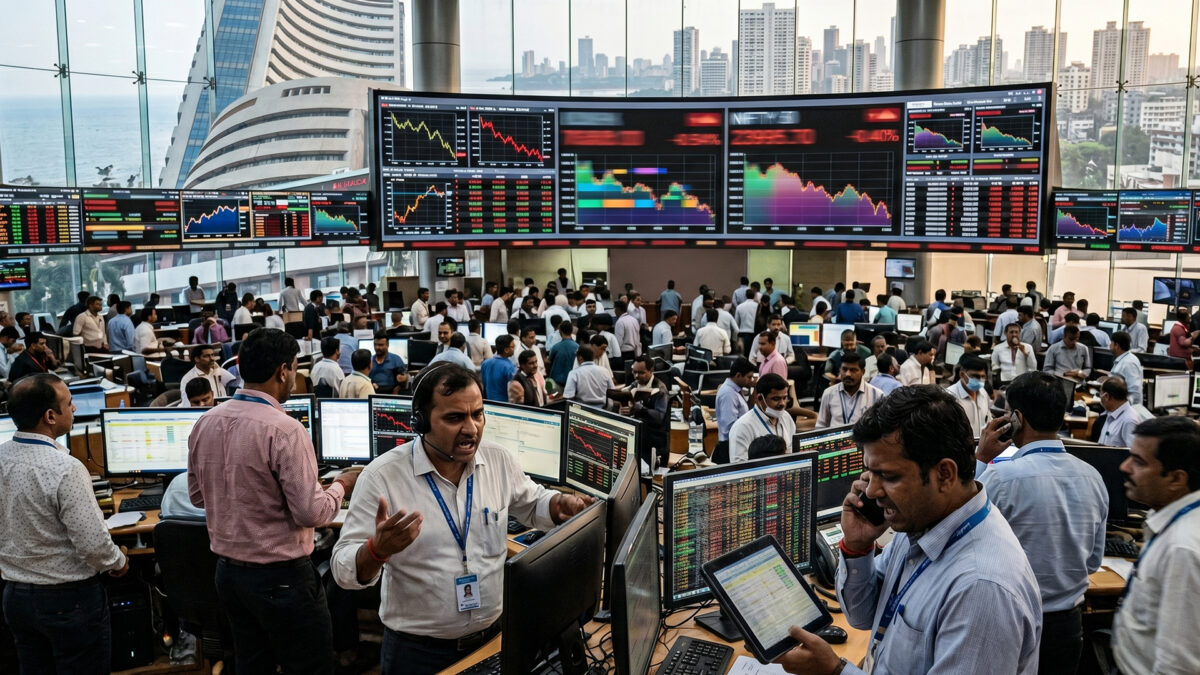
Indian equity markets witnessed a strong upward rally on April 29, 2026, with benchmark indices extending gains on the back of better-than-expected corporate earnings and improved investor sentiment.

The BSE Sensex surged by more than 900 points during the session, while the NSE Nifty50 reclaimed levels above 24,200, reflecting broad-based buying across sectors. Market strength was largely driven by optimism around quarterly earnings, which have shown resilience in key sectors such as automobiles, banking, healthcare, and select consumer stocks.

According to market updates, around 14 of the 16 major sectoral indices traded in the green, with auto stocks leading gains, rising over 2%. Strong performances from companies like Maruti Suzuki, which rebounded sharply after recent profit concerns, helped boost overall market confidence.

However, gains were partially capped by global concerns, especially rising crude oil prices, which continue to fuel inflation fears and impact import costs. Brent crude remained elevated, keeping investors cautious about the broader macroeconomic outlook.

Foreign Institutional Investor (FII) outflows also continued to weigh on sentiment. Persistent selling by overseas investors, estimated at billions of dollars in recent months, has added pressure on both equity markets and the Indian rupee, which has recently weakened against the US dollar.

Geopolitical uncertainty, particularly related to US-Iran negotiations and tensions in the Middle East, also influenced market direction. Investors remained watchful of developments that could impact global energy supply and financial stability.

Also Read: Axis Bank drops 5% on Q4 concerns

Categories
1 Minute-Read

Axis Bank drops 5% on Q4 concerns
Axis Bank shares fell around 3–5% after its Q4 results, becoming one of the top losers on the Nifty 50. The decline came as higher provisions for potential risks overshadowed steady operational performance.

Net profit was impacted due to increased provisioning and cautious outlook on credit costs. While loan and deposit growth remained stable, brokerages flagged a mixed set of numbers.

Analysts said asset quality remains manageable, but elevated provisions weighed on near-term earnings visibility. Broader weakness in banking stocks also added pressure. Investors are now watching future guidance on credit costs and margins closely.

Categories
Corporate

Sensex falls 400 points, Nifty slips below 24,000

Indian stock markets closed lower on Tuesday as rising crude oil prices, weak banking shares and cautious global cues hurt investor sentiment after the previous session’s rally.

The BSE Sensex dropped 417 points to close at 76,887, while the Nifty 50 fell 97 points to end at 23,996, slipping below the important 24,000 mark.

Markets opened weak and remained under pressure through most of the session, with traders turning cautious amid renewed concerns over the impact of higher oil prices on inflation and economic growth.

Brent crude prices remained elevated above $110 per barrel, raising worries for India, which imports a large share of its energy needs. Higher crude prices can increase fuel costs, pressure the rupee and affect corporate margins.

Banking stocks were among the biggest drags on the indices. Investors booked profits in lenders after recent gains and remained selective ahead of more earnings announcements.

Among the top losers were Axis Bank, which declined sharply, followed by HCL Tech, ICICI Bank and Kotak Mahindra Bank. Weakness in financial and IT shares weighed heavily on benchmark indices.

On the other hand, energy and commodity stocks attracted buying interest. ONGC, Coal India, Oil India and NTPC were among the key gainers as investors bet that firmer commodity prices could support earnings in those sectors.

The broader market was relatively steady compared with benchmark indices. Several midcap and smallcap stocks ended with modest gains, showing that investors continue to buy selectively despite headline weakness.

Market analysts said the current mood remains mixed. Domestic corporate earnings have been supportive in some sectors, but global uncertainty and volatile crude prices are keeping traders on edge.

The rupee also traded weak against the US dollar, adding another layer of caution for foreign investors.

Also Read: Samsung launches EMI plans from ₹33 a day

Categories
Corporate

UltraTech posts strong Q4, announces ₹240 dividend

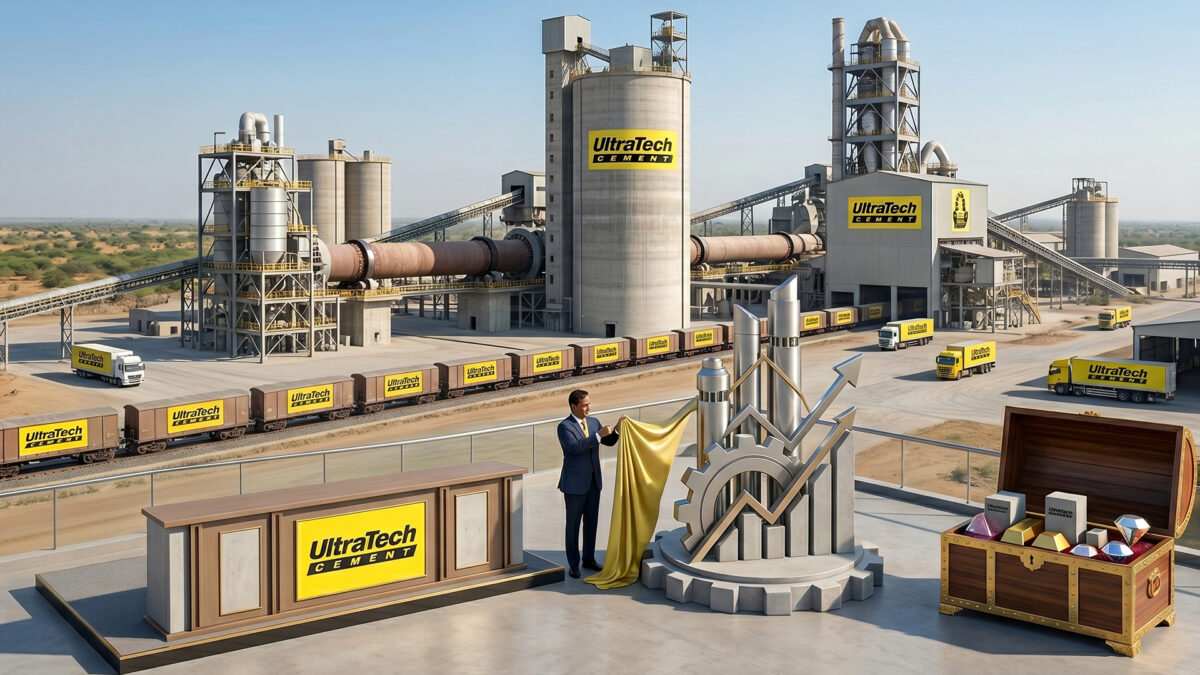
UltraTech Cement ended FY26 on a strong note, reporting a 20% rise in fourth-quarter net profit to ₹2,983 crore, helped by steady demand and improved operating performance.

The company had posted a profit of around ₹2,482 crore in the same quarter last year. Revenue from operations during the January-March quarter also increased to ₹25,799 crore, reflecting higher sales and continued momentum in construction activity.

The biggest takeaway for investors was the company’s generous shareholder reward. UltraTech’s board approved a ₹240 per share dividend for FY26, subject to shareholder approval at the annual meeting.

The results suggest cement demand remained healthy across housing, infrastructure and commercial projects during the quarter. Government spending on roads and urban development, along with ongoing real estate activity, continued to support volumes.

The company also benefited from better cost management. Improved efficiencies and easing energy costs helped margins, even as freight and raw material prices remained volatile.

UltraTech remains the clear leader in India’s cement sector and recently crossed the 200 million tonnes per annum capacity mark, strengthening its position further.

Despite the strong earnings, shares traded cautiously after the announcement as investors looked ahead to future input costs and pricing competition.

Also Read: City Union Bank Q4 profit jumps 25% to ₹360 cr

Categories
Corporate

City Union Bank Q4 profit jumps 25% to ₹360 cr

City Union Bank ended FY26 on a strong note, reporting a 25% jump in fourth-quarter net profit to ₹360 crore, helped by steady loan growth, improved income and better control over bad loans.

The private sector lender had posted a profit of around ₹288 crore in the same quarter last year. The latest numbers reflect continued stability in the bank’s core business and a gradual improvement in operating performance.

Adding to investor cheer, the bank’s board approved a 1:3 bonus share issue, which means shareholders will receive one extra share for every three shares held. It also recommended a ₹2 per share dividend, subject to shareholder approval.

In a symbolic milestone, City Union Bank also opened its 1,000th branch in Kumbakonam, Tamil Nadu, the town where the bank was founded more than a century ago. The move highlights the lender’s steady expansion strategy while staying rooted in its traditional strong markets.

For the full financial year FY26, the bank reported a net profit of ₹1,326 crore, supported by healthy growth in loans and deposits. Its total advances rose to ₹65,875 crore, while deposits climbed to ₹78,307 crore, indicating continued trust from customers and steady demand for credit.

Asset quality also improved during the year. Gross non-performing assets (GNPA) fell to 1.91%, while net NPA came down to 0.68%. Lower bad loans are a positive sign for banks, as they reduce stress on earnings and improve overall balance sheet strength.

The market reacted positively to the announcement, with City Union Bank shares gaining after the results were released. Investors appeared encouraged by the combination of profit growth, shareholder rewards and stable fundamentals.

Also Read: Rupee drops 24 paise to 94.39 against dollar

Categories
Corporate

Sensex rebounds by 250 points, Nifty reclaims 24,050

Equity markets witnessed a volatile session on tuesday where the Sensex rebounded nearly 250 points from its day’s low, while the Nifty50 moved back above the 24,050 level, supported by selective buying in key sectors.

The trading day began on a cautious note due to mixed global cues and early profit booking. Both indices slipped in initial trade, reflecting weak sentiment across global markets. However, buying interest gradually emerged in the second half of the session, helping indices recover losses and turn positive.

Sectorally, the recovery was led by auto, pharma, and select metal stocks, which attracted strong investor interest. Maruti Suzuki was among the top gainers, supported by sustained demand outlook in the auto sector. Eternal also saw strong buying momentum, contributing to index recovery. Other supportive stocks included Sun Pharma, JSW Steel, and Reliance Industries, which helped lift market sentiment.

Despite the rebound, weakness persisted in the banking and financial space. Select private banks and financial services companies faced selling pressure throughout the session, limiting broader market upside. Stocks such as Axis Bank and Shriram Finance were among the notable laggards.

By the close, the Sensex managed to erase a large portion of its intraday losses, while the Nifty50 held comfortably above the 24,050 mark, signalling resilience at lower levels.

Also Read: Crude oil tops $107 as Hormuz tensions soar

Categories
Corporate

Adani Green to invest ₹15,000 cr in battery storage push

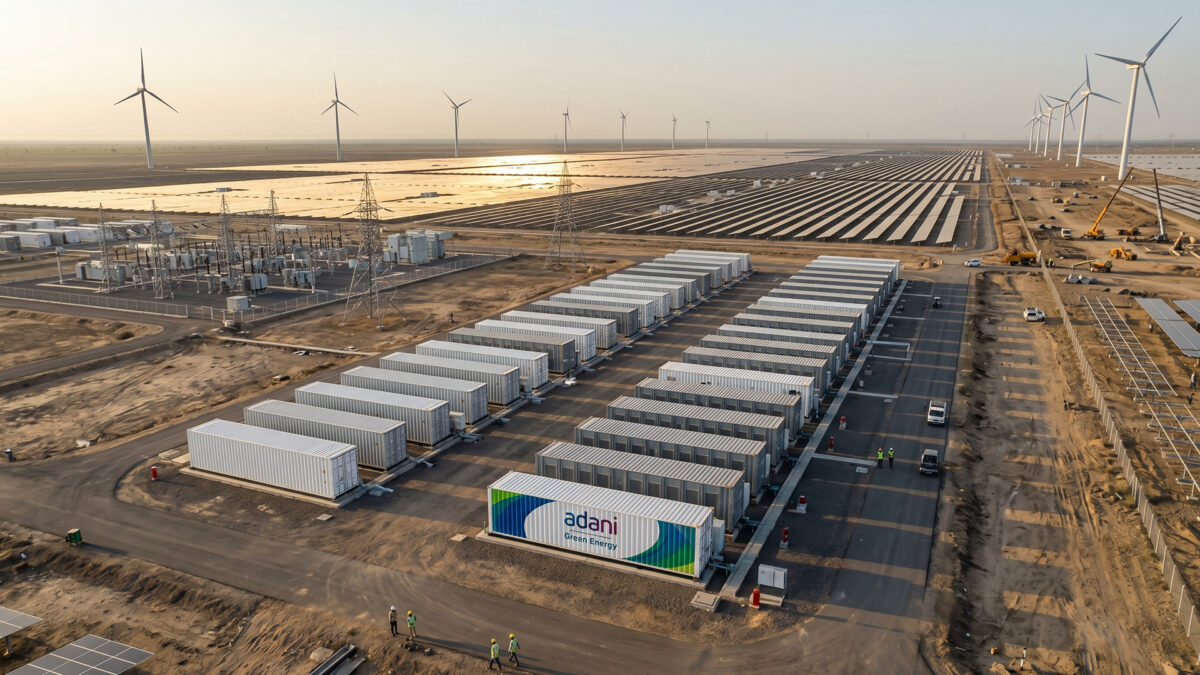
Adani Green Energy Ltd has announced a major investment of around ₹15,000 crore to build large-scale battery storage systems in India, aiming to make renewable energy more reliable and available throughout the day.

The company plans to add over 10 gigawatt-hours (GWh) of battery storage capacity by FY27. This technology stores excess electricity generated from solar and wind power and releases it when demand is high or when generation drops, such as in the evening.

This move is intended to address one of the biggest challenges of renewable energy, its inconsistency. Solar and wind power depend on weather conditions, which means supply can fluctuate. Battery storage helps smooth out these variations and ensures a steady flow of electricity to the grid.

Adani Green said the new storage capacity will be developed in phases and will build on its existing pipeline, including around 1.4 GWh expected to be operational in FY26 and nearly 3 GWh of additional capacity coming online soon.

A significant part of the project will be located in Khavda, Gujarat, where the company is developing one of the world’s largest renewable energy parks. The battery systems there will work alongside large solar and wind installations to improve grid stability and supply reliability.

The company explained that the goal is to deliver “dispatchable clean energy,” meaning renewable power that can be supplied on demand, similar to conventional thermal power plants.

Adani Green currently operates about 19.3 GW of renewable energy capacity and is working toward a long-term target of 50 GW by 2030. The addition of battery storage is seen as a key step in achieving that goal.

Also Read: US imposes 123% duty on Indian Solar imports

Categories
Beyond

NTPC plans ₹25,000 cr nuclear project in Bihar

State-run power company NTPC is planning a major nuclear energy project in Bihar’s Banka district. The company is currently studying the feasibility of setting up two nuclear power units, each with a capacity of 700 megawatts (MW), making a total proposed capacity of 1,400 MW.

The project, if approved, is expected to require an investment of around ₹25,000 crore. At this stage, NTPC has not made a final decision and is conducting technical and environmental assessments before preparing a detailed project report.

The proposed site in Banka is located about 250 km from Patna. Initial reports suggest that nearly 1,000 acres of land may be needed for the project. The Bihar government has expressed full support for the initiative and has assured assistance in providing land and ensuring adequate water supply, which is essential for nuclear power generation.

NTPC’s move is part of its broader plan to expand into nuclear energy and reduce dependence on fossil fuels like coal. The company is also looking to strengthen its presence in low-carbon and clean energy sources in line with India’s long-term energy goals.

If the project goes ahead, it would be one of the largest energy investments in Bihar and could significantly boost the state’s power infrastructure. It would also contribute to India’s broader strategy of increasing nuclear power capacity as part of its clean energy transition.

Also Read: Meta, Microsoft cut jobs in AI shift

Categories
1 Minute-Read

Meta, Microsoft cut jobs in AI shift

Meta and Microsoft have announced job cuts as they shift focus toward artificial intelligence and restructuring. Meta plans to reduce about 8,000 jobs, around 10% of its workforce, while also closing several unfilled roles to improve efficiency.

Microsoft is offering voluntary buyouts to nearly 7% of its US employees as part of internal restructuring, mainly targeting senior staff. Both companies are increasing spending on AI infrastructure, data centres and new technologies.

The decision reflects a wider trend in Big Tech, where firms are cutting costs while aggressively investing in AI development.

Categories
1 Minute-Read

US imposes 123% duty on Indian Solar imports

The United States has imposed a preliminary anti-dumping duty of up to 123% on solar cells and modules imported from India, citing unfair pricing concerns. The measure also applies to exporters from Indonesia and Laos.

The decision could make Indian solar products significantly costlier in the US market, affecting demand. The duty is still provisional, with final rates to be decided after further review, keeping the trade outlook uncertain for India’s solar industry.

However, industry players say the impact may be limited as exporters are diversifying to other regions.