Categories
Technology

ChatGPT image tool sees surge in India

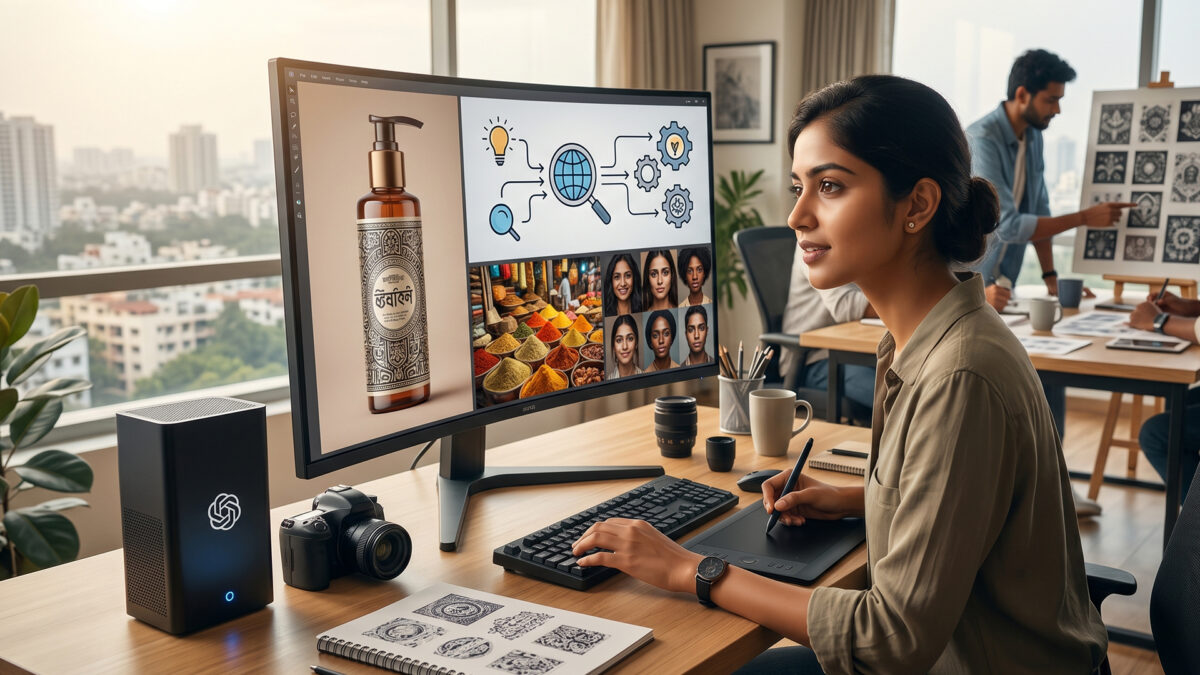
ChatGPT’s latest image tool is quickly catching on, especially in India, which has emerged as one of its fastest-growing markets. The updated version is drawing attention for fixing a long-standing problem in AI-generated images, messy, unreadable text,  while also making image editing much simpler for everyday users.

Earlier AI tools could create impressive visuals, but they often struggled when it came to adding text. Words would appear distorted or incorrect, making the images less useful for real-world needs like presentations, posters, or social media posts. The new version changes that by producing much cleaner and more accurate text within images.

What’s also driving its popularity is how easy it is to use. Users don’t need any design skills or specialised software. With just a simple prompt or a quick edit, they can improve photos, adjust backgrounds, or create entirely new visuals within seconds.

This has opened up a range of practical uses. From students making presentations to small business owners creating marketing content, the tool is helping people produce professional-looking visuals without much effort. It’s also being used for personal tasks like enhancing photos or creating better profile pictures.

Entrepreneur Anupam Mittal recently pointed out a relatable use case, professional headshots. Many people have plenty of photos on their phones, but very few that are suitable for platforms like LinkedIn. According to him, the new tool can quickly turn a casual photo into something more polished and work-ready.

India’s strong response to the tool reflects a broader trend. With more people creating content online and looking for quick, affordable solutions, AI tools like this are finding a ready audience. The combination of simplicity, speed, and improved quality is making them appealing to both individuals and businesses.

Also Read: Share.Market CEO Ujjwal Jain exits PhonePe
Categories
Leaders

Share.Market CEO Ujjwal Jain exits PhonePe
PhonePe’s stockbroking platform Share.Market is undergoing a leadership change, with its CEO Ujjwal Jain stepping down after spending about four years with the company.

Jain shared the news through a public post, where he described his exit as the close of one chapter and the start of another. Rather than calling it a farewell, he hinted that he is preparing to begin something new, possibly another venture in the financial technology space.

He joined PhonePe in 2022 after the company acquired his startups, WealthDesk and OpenQ. These platforms were focused on helping users invest using research-backed strategies and simplified tools. Following the acquisition, Jain took charge of building PhonePe’s presence in the investment and stockbroking segment.

Under his leadership, Share.Market was launched in 2023 as part of PhonePe’s effort to expand beyond digital payments into a broader financial services platform. The idea was to tap into India’s growing base of retail investors and offer them an integrated investing experience.

However, the online broking space in India is highly competitive. Established players like Zerodha, Groww, and Angel One already have a strong foothold, making it challenging for new entrants to scale quickly. Share.Market has so far remained a relatively smaller player in this crowded market.

In his message, Jain looked back on his journey of building investment-focused products, starting from his early ventures to leading Share.Market. He also expressed optimism about what lies ahead, suggesting that he wants to take on new and bigger challenges.

Jain’s departure comes at a time when PhonePe is continuing to diversify its offerings and strengthen its position in the fintech ecosystem. The company, backed by Walmart, has been expanding into areas such as lending, insurance, and wealth management as it prepares for its next phase of growth.

Also Read: GST hits record ₹2.43 lakh cr in April

Categories
Beyond

Government to sustain ₹12.2 lakh cr capex amid fiscal stress

The government has admitted that it is under growing fiscal pressure due to global uncertainties, especially disruptions linked to the ongoing situation in West Asia. Rising import costs, energy market volatility, and subsidy demands have added strain to the public finances. But despite this, officials say one thing will not change: infrastructure spending will stay on track.

Senior officials in the Finance Ministry have confirmed that India will stick to its planned capital expenditure of around ₹12.2 lakh crore this financial year. This money is earmarked for building and upgrading roads, railways, ports, airports, and urban infrastructure projects across the country.

Expenditure Secretary V. Vualnam said the fiscal situation is “tight but manageable,” adding that while the government is feeling the pressure, it does not intend to slow down investment spending that directly supports growth. In simple terms, the Centre is choosing to protect long-term development spending even if short-term costs rise.

One of the key pressure points is energy imports, especially LPG. India imports a large share of its LPG requirement, and much of it is transported through the Strait of Hormuz, a route affected by tensions in West Asia. This has raised shipping risks and increased costs, adding to the government’s subsidy burden.

Even with these challenges, officials say cutting back on capital expenditure is not an option. Infrastructure projects are seen as critical for job creation, economic activity, and private investment. As a result, the government has decided to prioritise capex over other types of spending.

At the same time, the Centre is keeping a close watch on overall fiscal management. While non-essential revenue spending may be adjusted if needed, the focus remains on ensuring that infrastructure projects do not slow down or face delays due to budget constraints.

Also Read: Gautam Adani launches employee initiative on anniversary

Categories
Corporate

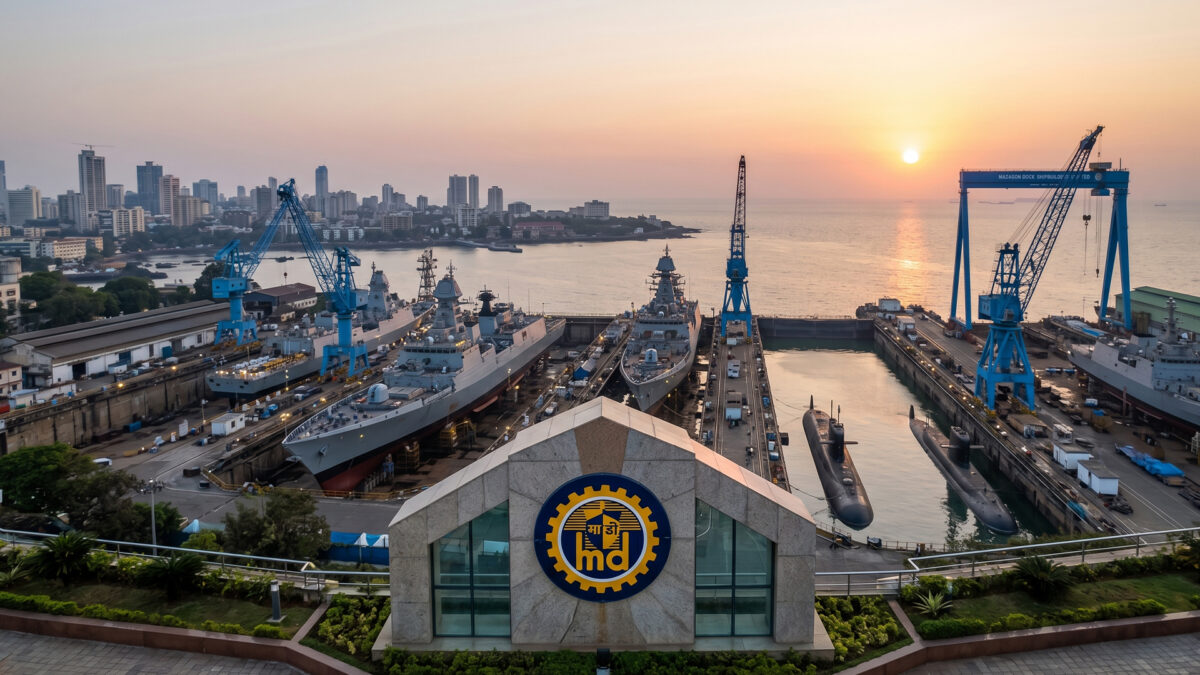
Mazagon Dock Q4 profit rises 42%, dividend announced

Mazagon Dock Shipbuilders reported a strong set of results for the fourth quarter, with profits rising sharply compared to last year.

The company posted a net profit of ₹464 crore for the January–March period, up 42% from ₹327 crore in the same quarter a year ago. The growth was mainly driven by better execution of shipbuilding and submarine projects.

Revenue also increased during the quarter, rising to ₹3,684 crore. This reflects steady progress on key defence contracts and higher activity levels.

Along with the results, the company announced a final dividend of ₹4.62 per share for the financial year 2025–26, signalling confidence in its financial performance and rewarding shareholders.

Mazagon Dock plays an important role in building warships and submarines for the Indian Navy. Its strong order book and consistent government support have helped maintain steady growth.

The results come at a time when India is focusing on strengthening its defence manufacturing capabilities. Companies like Mazagon Dock are expected to benefit from increased investment in the sector.

Experts say improved execution and timely delivery of projects have boosted profitability. Efficient operations have also helped the company maintain healthy margins.

Also Read: Pakistan opens six land routes to Iran

Categories
Corporate

Vodafone Idea gets ₹23,650 cr AGR relief

Vodafone Idea has received a major relief from the government after its long-pending AGR dues were reduced significantly.

The Department of Telecommunications has cut the company’s dues to ₹64,046 crore from around ₹87,695 crore earlier. This reduction of ₹23,649 crore, about 27%, comes as a big boost for the financially stressed telecom operator.

AGR dues have been a major burden for Vodafone Idea, which has been struggling with heavy debt and intense competition in the telecom sector. The latest move is expected to ease some of the pressure on its finances and improve its ability to raise funds.

The revision follows a fresh review of the dues after directions from the Supreme Court, which had asked authorities to look into the company’s concerns over how the amount was calculated.

Along with the reduction, the government has also allowed a structured repayment plan. The company will start repaying the dues at a later stage, beginning with smaller annual payments, and then clear the remaining amount over several years.

Also Read: India plans to relax FDI rules for China-linked firms

Categories
Beyond

India plans to relax FDI rules for China-linked firms

India is planning to ease foreign direct investment (FDI) rules for overseas companies that have a small exposure to Chinese firms, in a move aimed at attracting more global investments.

Under the proposed change, foreign companies with up to 10% stake from Chinese entities may face fewer restrictions when investing in India. The final notification is expected soon from the Department of Economic Affairs.

The move comes as India looks to speed up approvals and make it easier for global businesses to invest, especially in key sectors. Current rules, introduced in 2020, require stricter scrutiny of investments linked to countries sharing land borders with India, including China.

Officials say the new approach will help remove delays for companies where Chinese ownership is minimal, without compromising on security concerns.

At the same time, investments with higher Chinese stakes are likely to continue facing tighter checks.

The step is seen as an effort to strike a balance, encouraging foreign investment and economic growth, while still keeping a close watch on sensitive inflows.

Also Read: Reliance retail acquires Anomaly haircare brand

Categories
Corporate

Reliance retail acquires Anomaly haircare brand

Reliance Retail has acquired Anomaly, a haircare brand founded by Priyanka Chopra Jonas, as it looks to expand its presence in the beauty and personal care market.

Anomaly, launched in 2021, is known for its affordable, vegan and eco-friendly haircare products. The brand has already built a presence in global markets and is popular among younger consumers.

With this acquisition, Reliance Retail will take full control of the brand, including its intellectual property and digital assets. The company plans to use its wide retail network and online platforms to grow Anomaly further, especially in India.

The deal is part of Reliance’s broader push into the beauty segment, which is seeing strong demand. By adding a globally recognised brand like Anomaly, the company aims to attract more customers and strengthen its position in the market.

Priyanka Chopra Jonas is expected to remain involved with the brand in a creative role, helping shape its future products and direction.

Industry experts say the move will help Reliance tap into the fast-growing premium yet affordable beauty category, while also benefiting from its strong supply chain and store network.

Also Read: Adobe CEO sells $18.2 mn in company shares

Categories
Beyond

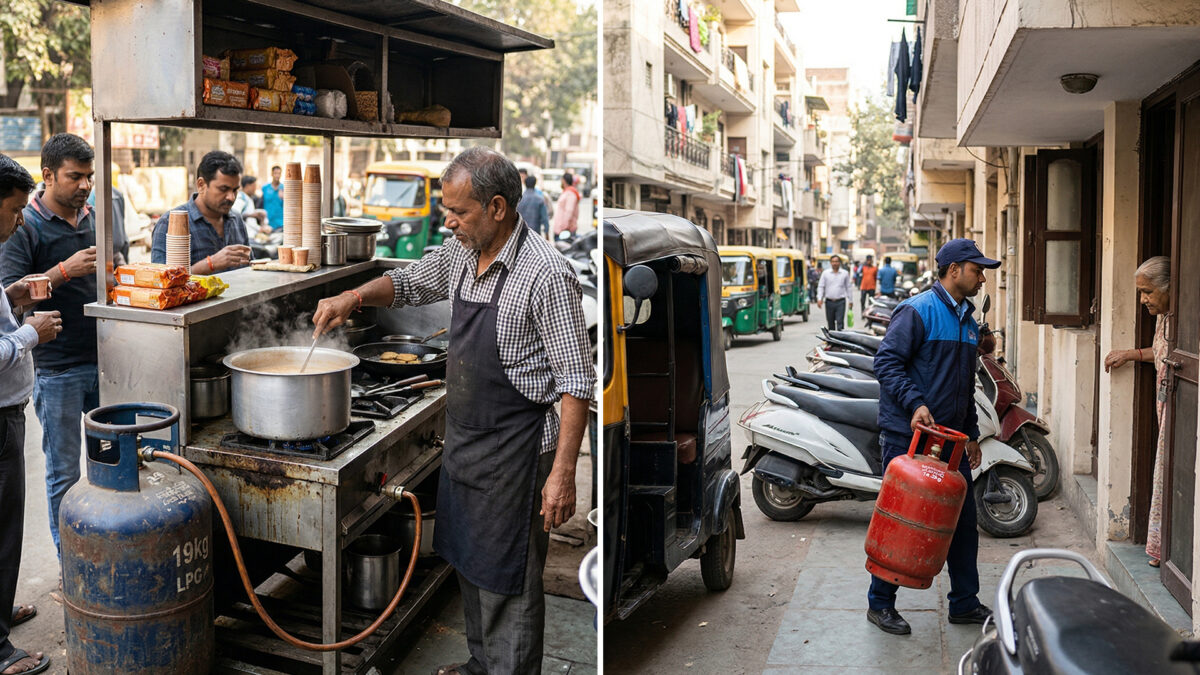
Commercial LPG price hiked by ₹993 to ₹3,071 in Delhi

The price of the 19-kg commercial LPG cylinder has been increased by ₹993 with effect from May 1, 2026, raising the cost in Delhi to ₹3,071.50. The revision marks a significant upward movement in fuel prices used by commercial establishments such as hotels, restaurants, bakeries, and small businesses.

Oil marketing companies implemented the hike across the country, with similar increases seen in other major cities. The sharp revision is expected to raise operating costs for businesses that depend heavily on LPG for cooking and heating purposes.

Despite the steep rise in commercial cylinder prices, there has been no change in domestic LPG rates. The 14.2-kg household cylinder continues to remain at its existing price level, offering relief to consumers amid volatile energy markets.

Officials and industry sources link the price hike to global energy disruptions and rising international fuel costs, influenced by ongoing geopolitical tensions. These factors have pushed up import prices for LPG, leading to higher retail rates in the commercial segment.

This is one of the most notable single-day increases in recent months and adds pressure on the hospitality and food service sectors, which may eventually pass on the higher costs to customers.

However, the government has kept domestic LPG prices unchanged in an effort to shield households from inflationary pressure, even as commercial fuel rates continue to fluctuate with global market trends.

Also Read: Musk–Altman OpenAI trial intensifies in court

Categories
1 Minute-Read

JPMorgan executive sued over sexual assault allegations

A senior JPMorgan Chase executive has been accused in a lawsuit of sexually assaulting and harassing a junior employee, according to reports.

The case has been filed in a New York court by a male employee who alleges repeated sexual coercion and workplace harassment beginning in 2024. He claims he was also subjected to threatening behaviour and racially charged remarks during the period.

The complaint further states that after he raised concerns internally, he faced retaliation, including restricted system access and eventual termination from his role.

The accused executive, Lorna Hajdini, has denied all allegations. JPMorgan has also rejected the claims, stating that an internal investigation did not find evidence supporting the complaint.

The matter remains under legal review, with proceedings ongoing and no judicial findings yet.

Categories
Beyond

Samsung family wealth doubles to $45 bn

The controlling family behind Samsung has seen its wealth nearly double in just one year, reaching around $45 billion, driven largely by a global boom in artificial intelligence and semiconductor demand.

According to the Bloomberg Billionaires Index, the combined wealth of the Lee family rose from about $20 billion last year to roughly $45.5 billion as of March this year. This sharp increase has pushed them up the ranks to become Asia’s third-richest family, moving from 10th place last year.

The surge in fortune is closely linked to Samsung Electronics’ strong performance in the chip industry. Demand for advanced memory chips, used in AI systems, cloud computing, and data centres, has pushed up valuations across the semiconductor sector.

The family’s financial recovery is especially notable given the challenges they faced after the death of Samsung patriarch Lee Kun-hee in 2020. The group had been dealing with one of the world’s largest inheritance tax burdens, along with legal and governance issues involving leadership transitions within the conglomerate.

Despite earlier concerns that these pressures could weaken family control over the company, the opposite has happened. The rise in Samsung’s business value has helped the family strengthen its financial position while continuing to maintain influence over the wider conglomerate.

Samsung remains South Korea’s largest chaebol (family-run business group), with major operations spanning electronics, semiconductors, and consumer technology. Its performance is seen as a key driver of the country’s economy.

Also Read: Musk–Altman OpenAI trial intensifies in court