Categories
Technology

OpenAI brings codex to ChatGPT mobile app

OpenAI has integrated its coding assistant Codex into the ChatGPT mobile app, allowing users to handle programming tasks remotely from their smartphones.

Codex is an AI-powered tool that helps developers generate code, fix errors, review changes and improve software projects. Earlier, it was mainly available on desktop platforms, but the new update extends its use to mobile devices.

With this rollout, developers can monitor ongoing coding tasks, approve changes, and track progress directly from the ChatGPT app. However, the actual processing and execution of code still takes place on connected systems such as cloud servers or computers, while the phone serves as a control interface.

The feature is being introduced in a phased manner for both Android and iOS users. It is aimed at making software development more flexible by allowing engineers to stay connected to their projects even when away from their workstations.

OpenAI said the update is part of its effort to improve productivity tools for developers as demand for AI-assisted coding continues to grow globally. The company is competing in a fast-expanding market for AI developer platforms.

Codex was initially launched as a desktop-focused tool to support coding assistance and automation. The mobile integration now allows users to interact with AI coding workflows in real time while on the move.

Also Read: Roche introduces 7-minute lung cancer shot in India

Categories
Technology

ChatGPT image tool sees surge in India

ChatGPT’s latest image tool is quickly catching on, especially in India, which has emerged as one of its fastest-growing markets. The updated version is drawing attention for fixing a long-standing problem in AI-generated images, messy, unreadable text,  while also making image editing much simpler for everyday users.

Earlier AI tools could create impressive visuals, but they often struggled when it came to adding text. Words would appear distorted or incorrect, making the images less useful for real-world needs like presentations, posters, or social media posts. The new version changes that by producing much cleaner and more accurate text within images.

What’s also driving its popularity is how easy it is to use. Users don’t need any design skills or specialised software. With just a simple prompt or a quick edit, they can improve photos, adjust backgrounds, or create entirely new visuals within seconds.

This has opened up a range of practical uses. From students making presentations to small business owners creating marketing content, the tool is helping people produce professional-looking visuals without much effort. It’s also being used for personal tasks like enhancing photos or creating better profile pictures.

Entrepreneur Anupam Mittal recently pointed out a relatable use case, professional headshots. Many people have plenty of photos on their phones, but very few that are suitable for platforms like LinkedIn. According to him, the new tool can quickly turn a casual photo into something more polished and work-ready.

India’s strong response to the tool reflects a broader trend. With more people creating content online and looking for quick, affordable solutions, AI tools like this are finding a ready audience. The combination of simplicity, speed, and improved quality is making them appealing to both individuals and businesses.

Also Read: Share.Market CEO Ujjwal Jain exits PhonePe

Categories
Technology

ChatGPT images 2.0 comes with realistic AI photos

OpenAI’s newly launched ChatGPT Images 2.0 is drawing major attention online, with users praising its ability to create realistic photos, posters and digital artwork from simple text prompts. The upgraded tool is now available inside ChatGPT and is being widely shared across social media.

One of the biggest improvements is its ability to generate clear and readable text inside images. Earlier AI image tools often struggled with spelling errors or distorted words, but users say the new version performs far better. Many have shared examples of menus, ads, product labels and magazine covers that look professionally designed.

The tool is also being praised for photorealistic results. Users have created portraits, travel scenes, fashion images and street photography that closely resemble real camera shots. Many say the level of detail, lighting and texture is a major step forward.

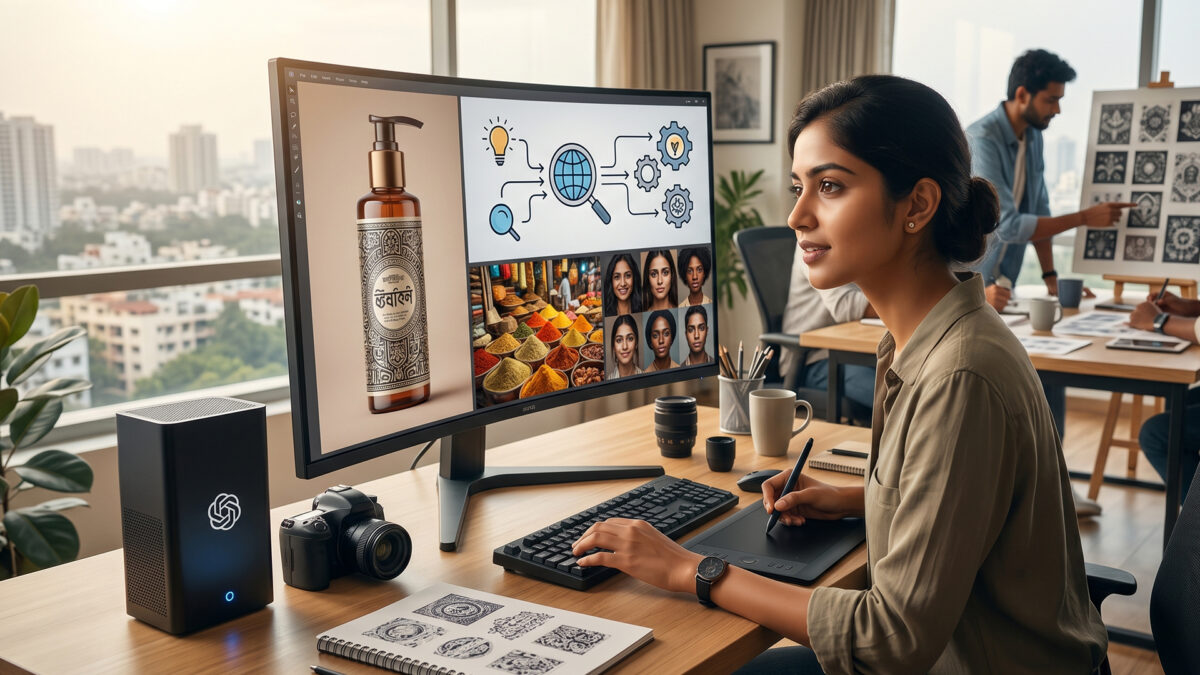
ChatGPT Images 2.0 can also create artwork in different styles such as anime, branding designs, packaging concepts and social media graphics. Experts say it could become useful for creators, marketers and small businesses looking for quick design solutions.

Also Read: Trent profit rises 30%, announces first bonus shares

Categories
Technology

ChatGPT now available on Apple CarPlay

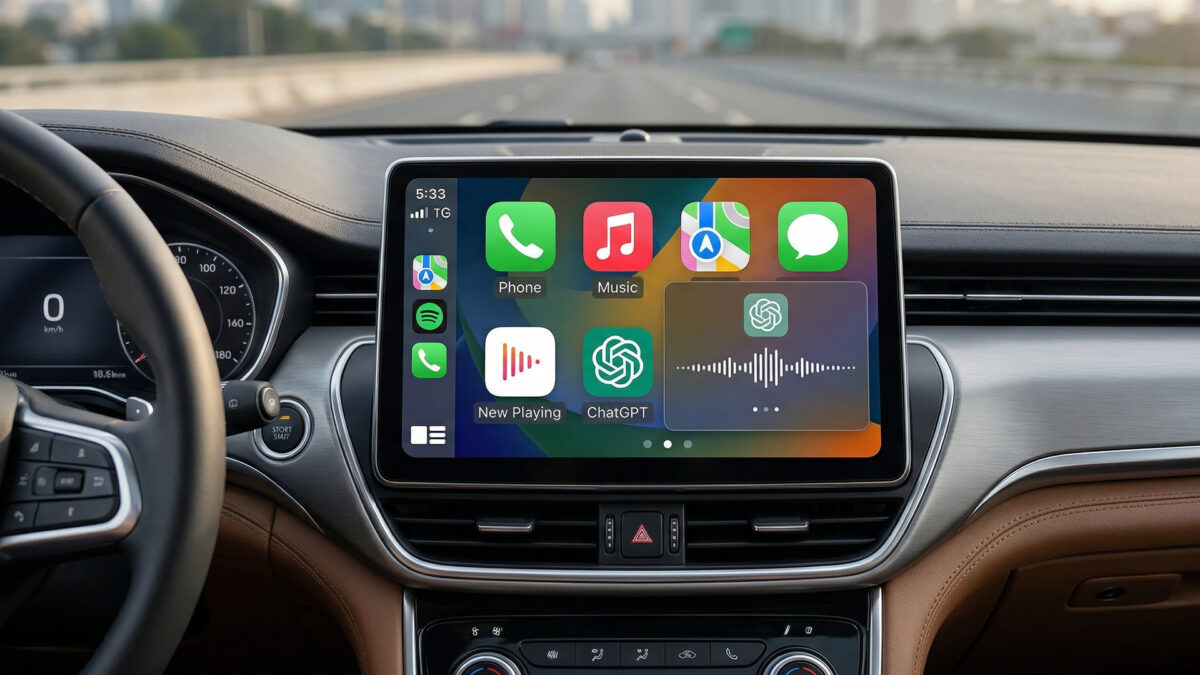
OpenAI has expanded the reach of its chatbot ChatGPT by bringing it to Apple CarPlay, allowing users to access AI while driving.

The feature comes with the latest iOS 26.4 update and enables iPhone users to interact with ChatGPT using voice commands. This means drivers can ask questions, get quick information, or even have simple conversations without needing to touch their phones.

To ensure safety, the CarPlay version is designed as a voice-only experience. Responses are spoken aloud, and no text is displayed on the screen, helping drivers stay focused on the road. This approach reduces distractions while still offering the benefits of AI assistance.

The move also signals a shift by Apple, which has traditionally relied on its own voice assistant, Siri, for in-car interactions. By allowing ChatGPT on CarPlay, Apple is opening its platform to third-party AI tools and giving users more flexibility in how they interact with technology.

However, the feature comes with some limitations. Users cannot activate ChatGPT with a wake phrase like “Hey Siri” and must open the app manually through the CarPlay interface. In addition, the chatbot cannot control vehicle functions or make changes to phone settings, as Apple continues to maintain strict control over system features for safety reasons.

Despite these restrictions, the integration is seen as a significant step forward. ChatGPT offers more natural and conversational responses compared to traditional voice assistants, making interactions feel smoother and more engaging.

Also Read: OpenAI raises $122 billion for AI expansion

Categories
Technology

OpenAI merges ChatGPT, Codex, Atlas

OpenAI is planning a major consolidation of its AI products into a single desktop “superapp” that will combine ChatGPT, the Codex coding assistant, and the Atlas AI‑powered browser into one integrated application. The goal is to simplify workflows, improve performance, and offer a more seamless experience for desktop users.

The company has been developing multiple standalone tools in parallel, but feedback from both users and internal teams highlighted that managing separate apps created fragmentation and slowed feature improvements. OpenAI leaders now believe a unified desktop platform will allow the AI to perform a wide range of tasks, from general conversation and productivity to coding, web research, and data analysis, without users having to switch between different apps.

The superapp will leverage agentic AI capabilities, meaning it can take autonomous actions on behalf of users, such as generating code, analysing data, and navigating complex workflows. According to insiders, the project is being led by Fidji Simo, OpenAI’s Chief of Applications, who explained that consolidating products is necessary to maintain quality and focus. Greg Brockman, OpenAI’s President, will oversee the product development and organisational changes required for the new platform.

Currently, the mobile ChatGPT app will remain unchanged. The superapp effort is focused solely on desktop users, where integrated workflows and multi-tasking capabilities are most beneficial. OpenAI has not announced a release date or pricing details for the app, and the name of the platform is also yet to be confirmed.

The initiative reflects a shift in OpenAI’s approach, moving from a portfolio of specialised tools toward a single, comprehensive platform aimed at improving user engagement, enhancing AI performance, and streamlining the overall experience for professional and personal desktop users alike.

The move is part of OpenAI’s strategy to stay competitive in the rapidly evolving AI market, where rivals like Anthropic and others are expanding enterprise-focused AI tools. Consolidating multiple AI products into one desktop platform could make it easier for developers, businesses, and everyday users to access advanced AI features without juggling different applications.

Also Read: SBI Mutual Fund to raise ₹13,000 cr via IPO

Categories
Technology

Sarvam AI beats global rivals in India tests

India’s artificial intelligence ecosystem has received a major boost as Sarvam AI, a Bengaluru-based startup, has outperformed global AI models such as Google Gemini and OpenAI’s ChatGPT in several benchmarks designed around India-specific use cases. The achievement has attracted international attention and highlighted the growing strength of indigenous AI innovation.

Sarvam AI’s success comes from its focus on challenges unique to India, including multilingual content, diverse scripts, and complex document formats. While many global AI models are designed for broad, international applications, they often struggle with regional languages and locally used documents. Sarvam has addressed this gap by building models specifically trained for Indian conditions.

One of its key products, Sarvam Vision, is an advanced optical character recognition (OCR) system capable of reading and understanding complex documents. These include scanned government records, handwritten text, tables, and pages containing multiple Indian languages in a single layout. In recent benchmark tests, Sarvam Vision scored higher than competing systems from major global players, demonstrating superior accuracy and reliability.

Another major highlight is Bulbul V3, Sarvam’s text-to-speech model. Bulbul V3 has been developed to generate natural-sounding voices in Indian languages and accents. The system currently supports more than 35 voices and is designed to eventually cover all 22 official Indian languages. In listening and performance tests, Bulbul V3 delivered clearer pronunciation and more natural speech than several international alternatives, particularly for Indian language outputs.

Experts say Sarvam’s performance shows the importance of building AI systems that are locally trained rather than globally generic. Its models are seen as especially useful for sectors such as government services, banking, education, healthcare and customer support, where Indian languages and document formats are widely used.

The achievement has also strengthened the idea of “sovereign AI”  technology developed within the country to meet national needs and reduce dependence on foreign platforms.

Also Read: Over a billion Android phones at risk

Categories
Technology

ChatGPT cites Elon Musk’s Grokipedia in responses

OpenAI’s latest AI language model, GPT‑5.2, has begun sourcing information from Grokipedia, the AI-generated encyclopedia developed by Elon Musk’s xAI, according to industry reports. Grokipedia, unlike traditional Wikipedia, relies entirely on AI for content creation and updates. While the platform aims to offer a fast, alternative knowledge base, experts caution that it may introduce factual inaccuracies and bias into AI outputs.

The move highlights how AI models are increasingly integrating proprietary or niche sources into their knowledge base. Tests have shown GPT‑5.2 referencing Grokipedia when responding to less widely known topics, including technical subjects and certain geopolitical histories. This reliance on a single, AI-authored source has drawn attention from analysts concerned about reliability, particularly in corporate and professional settings where data accuracy is critical.

Interestingly, GPT‑5.2 appears to avoid citing Grokipedia for high-profile or widely debated subjects, suggesting the model prioritizes perceived source credibility on mainstream topics. This selective integration indicates a strategic approach to information sourcing but underscores risks for business users relying on AI-generated insights for decision-making.

Industry observers note that while integrating multiple sources can enhance AI capabilities, including content from unverified AI platforms may impact trust and brand perception. OpenAI maintains that GPT‑5.2 draws from a broad range of publicly available sources and includes safety filters to mitigate misinformation. However, analysts say this development could influence competitive dynamics in AI knowledge services, particularly as other companies explore proprietary encyclopedias or curated datasets.

For enterprises and professionals leveraging AI, this development serves as a reminder to assess both the breadth and credibility of AI-sourced information. As AI increasingly shapes business research, communication, and decision-making, source transparency and verification will be crucial for maintaining reliability and trust.

Also Read: Canada rejects China deal after 100% tariff threat

Categories
Technology

ChatGPT adds ads, Google’s Gemini stays clean

OpenAI has started testing advertisements in its ChatGPT chatbot, marking a key shift in how generative AI is monetised. Ads will appear at the bottom of responses for free-tier users and those on the lower-cost ChatGPT Go plan, while paid subscribers,  including Plus, Pro, Business, and Enterprise,  will remain ad-free. OpenAI assures that ads will be clearly labeled, won’t influence responses, and user conversations won’t be shared with advertisers.

The move is aimed at generating additional revenue from ChatGPT’s large user base, currently estimated at around 800 million weekly active users, without forcing subscription fees on everyone. This step reflects OpenAI’s push to balance monetisation with user trust, especially as AI infrastructure costs continue to rise.

In contrast, Google has no plans to introduce ads into its Gemini AI assistant. Dan Taylor, Google VP of Global Ads, said inserting ads could undermine the assistant’s purpose, which is to help users analyse, create, and complete tasks. Instead, Google focuses on integrating AI-powered ad surfaces in products like AI Overviews in search results, where ads can coexist without affecting the core AI assistant experience.

Also Read: India’s power utilities make ₹2,701 cr profit after

Categories
Technology

Ex‑Google founders pivot to AI, launch $100mn startup

Two former Google employees, Dhruv Amin and Marcus Lowe, have turned the rise of AI tools like ChatGPT into a business opportunity. The duo initially ran Create, a platform connecting startups with freelance developers, which generated over $2 million annually. However, the launch of ChatGPT in late 2022 prompted them to rethink the future of coding and software development.

Seeing the potential for AI to automate much of the work their developers did, Amin and Lowe decided to close their existing marketplace in October 2023. They laid off half their small team and ended relationships with freelancers. “Within two weeks, we were back to an empty office,” Amin recalled.

From this reset, they rebuilt their company around AI-driven solutions. Their first products helped generate basic app components like forms and calendars. By April 2025, their rebranded startup, Anything, launched a more advanced platform capable of building complete online businesses, including backend systems and payment integrations, without users needing to write code.

The platform quickly gained traction. Within two weeks of the broader launch, Anything achieved an annualized revenue run rate of $2 million. Investor interest followed, resulting in $11 million in funding and a valuation of around $100 million.

Non-technical users have already built real applications on the platform, such as a salon booking app and a dental health tracker. While AI coding remains an emerging sector, Amin believes embracing the technology early positioned their company for growth and relevance in a rapidly evolving market.

Looking back, he described the decision to shut down their profitable business as difficult but strategic. Their story illustrates how AI tools like ChatGPT are reshaping entrepreneurship, enabling rapid innovation and entirely new business models.

Also Read: Giga CEO confronts $3mn crypto extortion

Categories
Technology

OpenAI’s ‘Your Year with ChatGPT’ makes 2025 personal

OpenAI has rolled out a new feature called “Your Year with ChatGPT”, offering users a personalised, year-end recap of their interactions with the AI throughout 2025. Similar to Spotify Wrapped, this recap blends stats, insights, and creative elements to show how users engaged with ChatGPT over the year.

The feature highlights key usage metrics such as total messages exchanged, number of chats, peak interaction days, and the most popular topics discussed. It also awards playful, personalised badges based on user behaviour, with titles like “Creative Debugger” or “Curious Explorer,” giving users a fun reflection of how they used ChatGPT.

Beyond numbers, OpenAI makes the recap visually engaging. Each summary begins with a short, AI-generated poem reflecting the user’s year and concludes with pixel art inspired by their most frequent conversation themes. This mix of stats, storytelling, and visuals creates an engaging and humanised experience rather than just a dry analytics report.

To access the recap, users need to have “reference saved memories” and “chat history” enabled. Once set up, they can trigger the feature directly in the ChatGPT app or by asking prompts like “Show me my year with ChatGPT.” The feature is available on Android, iOS, and web platforms for Go (India), Plus, and Pro users, while Team, Enterprise, and Education accounts are not supported.

OpenAI is gradually rolling out this feature across multiple regions, including India, the U.S., Canada, the U.K., Australia, and New Zealand. By providing a personalised summary of the year, the company encourages users to reflect on how they interacted with AI, highlighting both creativity and curiosity in their engagement.

Your Year with ChatGPT shows how AI can not only provide information but also create meaningful, fun experiences that celebrate the ways people use technology. With stats, creative visuals, and quirky awards, it’s a year-end gift from ChatGPT to its users, making 2025’s conversations memorable and personal.

Also Read: Apollo Micro gains access to DRDO’s advanced weapon tech