Categories
Corporate

GameStop makes surprise $56 bn bid for eBay

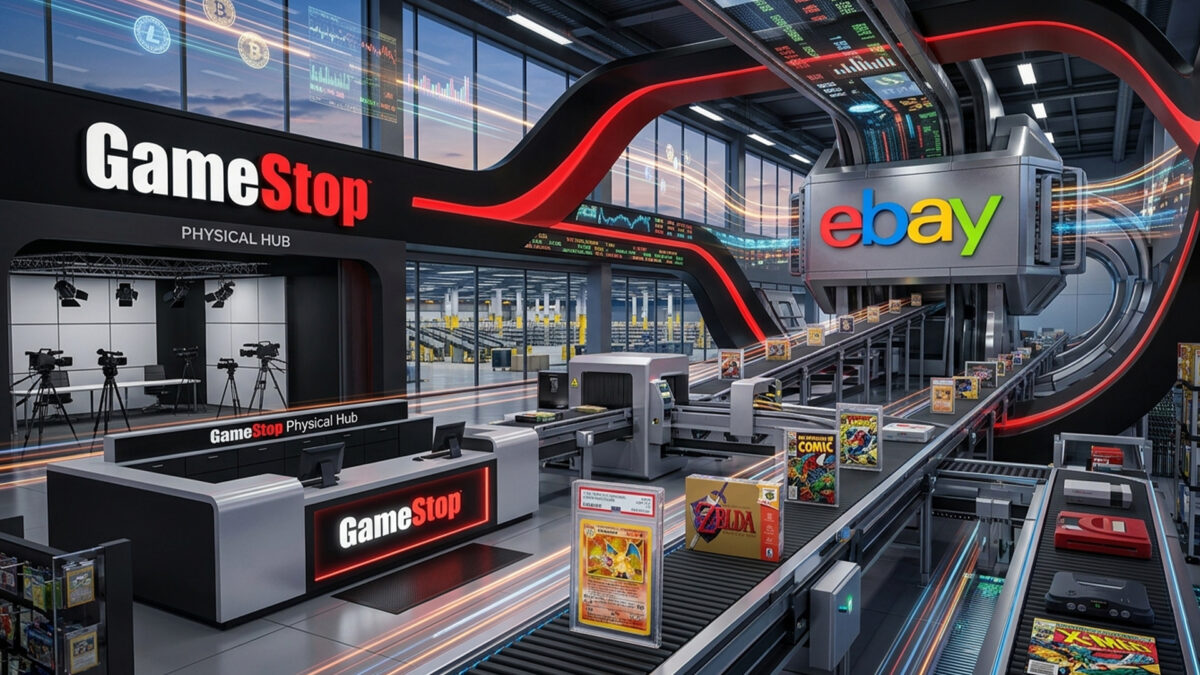
In a move that has surprised the market, GameStop has made a $56 billion offer to acquire eBay. The proposal, led by GameStop CEO Ryan Cohen, is one of the boldest takeover attempts seen in the e-commerce sector.

GameStop has offered $125 per share for eBay, which is higher than its recent trading price. The company plans to fund the deal through a mix of cash and stock, though details of the full financing strategy are still unclear.

Cohen believes the deal could transform GameStop’s business and create a stronger competitor to Amazon. His vision includes using GameStop’s physical retail stores to support eBay’s operations, such as handling product verification, logistics, and faster deliveries.

GameStop has already acquired a small stake in eBay and has indicated that it could approach shareholders directly if the company’s board does not respond positively. eBay has acknowledged receiving the offer and said it is reviewing it.

However, the proposal comes with significant challenges. GameStop is much smaller than eBay, which has raised doubts about whether it can successfully complete a deal of this size. While the company has reportedly secured about $20 billion in financing, the remaining funding requirements remain uncertain.

Market reaction has been mixed. eBay’s stock saw some gains following the announcement, as investors considered the possibility of a buyout. In contrast, GameStop’s shares declined, reflecting concerns over the risks involved in such a large acquisition.

Also Read: Zuckerberg, Chan back $500mn plan to model human cells

Categories
Leaders

Epigamia appoints Ritesh Gauba CEO, elevates Goel

Epigamia has announced a major leadership change, appointing Ritesh Gauba as its new Chief Executive Officer while elevating Ankur Goel to co-founder and Chief Operating Officer. The move comes as the company looks to strengthen its leadership and build on its recent growth.

The transition follows a strong year for the dairy and healthy foods brand, which recorded over 50% growth in FY26. This performance was driven by better execution, product innovation, and expansion across markets. The company is now aiming to maintain this momentum with a more defined leadership structure.

Ankur Goel, who has been with Epigamia for several years, played a crucial role during a challenging phase for the company. He stepped in to lead operations after the passing of co-founder Rohan Mirchandani in late 2024. Under his leadership, the company not only stabilised but also delivered one of its best-performing years. His elevation to co-founder reflects his contribution and continued importance to the business.

Ritesh Gauba brings extensive experience in the FMCG sector. Before joining Epigamia, he served as General Manager for India at Pladis and has held senior roles at companies such as Mars and Britannia. His expertise in building consumer brands and driving growth is expected to help Epigamia scale its business further.

The leadership change has the backing of the company’s investors, who view it as a step towards long-term growth. With Gauba focusing on overall strategy and expansion, and Goel continuing to drive operations, the company aims to strengthen its position in the competitive packaged foods market.

Epigamia has built a strong presence in categories like yogurt, smoothies, and protein-based snacks, catering to health-conscious consumers. With a sharper leadership focus, the company plans to expand its product portfolio and deepen its reach across India.

Also Read: Rupee slides to ₹95.31, hits fresh record low

Categories
Beyond

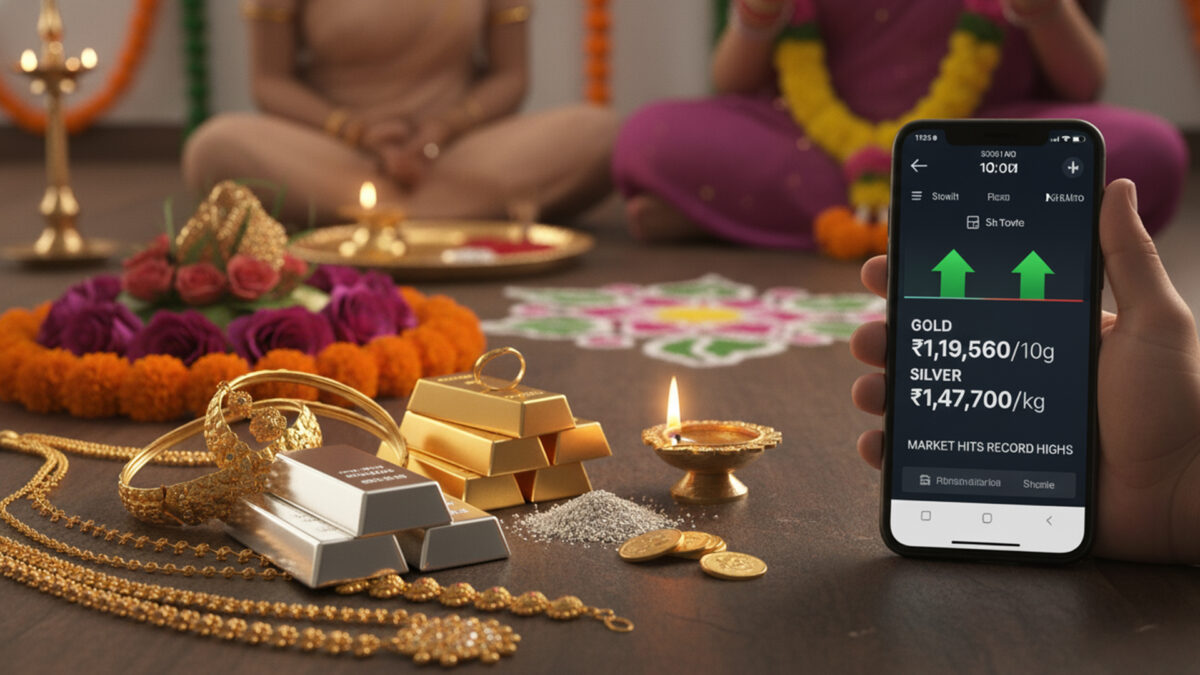
Gold near ₹1.5 lakh, Silver around ₹2.65 lakh

Gold prices remained steady while silver continued to stay under pressure on May 5, 2026, reflecting ongoing uncertainty in global markets.

In the retail market, 24-carat gold is currently priced at around ₹14,960 per gram, which is close to ₹1.5 lakh per 10 grams. Meanwhile, 22-carat gold is selling at about ₹13,700 per gram. Silver prices are hovering near ₹2.64–₹2.65 lakh per kilogram across major cities.

Gold has been moving in a narrow range over the past few days. While it hasn’t seen any major rise, it is holding firm despite global volatility. This shows that buyers are still interested, but are not making aggressive moves at current levels.

Silver, on the other hand, has been more unstable. Prices have dropped sharply in recent sessions, falling by nearly ₹10,000 per kilogram. This sharper movement is typical for silver, which is influenced not just by investment demand but also by industrial use.

The main reason behind these price trends is global uncertainty. Rising tensions in the Middle East have made investors cautious, while a stronger US dollar has limited the upside for gold. Usually, gold benefits during uncertain times, but higher interest rates are keeping gains in check.

Crude oil prices have also been rising, adding to inflation concerns worldwide. For India, a weaker rupee is making imports more expensive, which is also affecting gold and silver prices in the domestic market.

Prices differ slightly from city to city due to local taxes and jeweller charges, but the overall trend remains similar across the country. Buyers may notice small daily changes in gold rates, while silver prices tend to fluctuate more sharply.

Also Read: Sensex falls 300 points, Nifty slips below 24,050

Categories
Beyond

Air India to review CEO, cost cuts at May 7 meet

Air India is preparing for an important board meeting on May 7, where it will take a close look at its finances, leadership plans, and ways to cut costs. The meeting comes at a time when the airline is facing rising expenses and significant losses.

The board is expected to review the airline’s performance for the past financial year, during which losses are estimated to have crossed ₹22,000 crore. This has increased the urgency to find ways to reduce spending and improve efficiency.

One of the main areas of focus will be cost control. The airline is likely to consider steps such as cutting unnecessary expenses and possibly changing some services offered to passengers. For example, certain add-ons like meals or lounge access could be separated from ticket pricing to manage costs better.

Another key topic on the agenda is leadership. The airline is in the process of selecting a new chief executive, as current CEO Campbell Wilson is expected to step down later this year. The board may review potential candidates and discuss the transition plan.

Apart from internal challenges, external factors have also added pressure. Higher fuel prices and ongoing global tensions have increased operating costs and affected flight operations. These issues have made it more difficult for the airline to manage its finances.

The meeting is seen as an important step in Air India’s ongoing efforts to turn around its business under the Tata Group. Since returning to private ownership, the airline has been working to improve services, expand operations, and modernise its fleet.

However, the financial challenges remain significant, and the decisions taken at this meeting could shape the next phase of its journey.

Also Read: Netweb shares drop 7% despite strong Q4 results

Categories
Corporate

Sensex jumps 900 points, Nifty near 24,300

Indian stock markets opened the week with strong gains, as benchmark indices moved higher on positive global cues and election-related optimism. The BSE Sensex rose nearly 900–1,000 points in early trade, while the Nifty 50 approached the 24,300 mark.

The rally was supported by easing crude oil prices, which helped improve sentiment, especially for an oil-importing country like India. Early trends from ongoing assembly election results also boosted confidence, as investors looked for signs of political stability.

Among the top gainers were auto and FMCG stocks. Maruti Suzuki saw strong buying interest, supported by steady demand outlook. FMCG major Hindustan Unilever also moved higher, reflecting stable consumption trends. Infrastructure giant Larsen & Toubro was another key gainer during the session. Banking stocks also traded in positive territory, contributing to the overall market strength.

However, not all sectors participated equally in the rally. IT stocks remained under pressure, with Infosys and TCS among the major laggards. Weak global demand outlook and uncertainty in overseas markets weighed on investor sentiment in the technology space.

As the session progressed, markets trimmed some of their early gains but continued to trade in the green. Analysts said the overall mood remains positive, but volatility could increase as final election results become clearer.

Investors are also watching global developments, crude oil prices, and foreign fund flows for further direction.

Also Read: ₹37,500 cr plan to boost coal gasification projects

Categories
1 Minute-Read

OPEC plans small output increase amid gulf tensions

OPEC and its allies have decided to slightly increase oil production by around 188,000 barrels per day from June. This is the third straight month of output hikes, aimed at calming global markets.

However, the impact may be limited. Ongoing tensions in the Gulf region have disrupted shipments through the Strait of Hormuz, a key route for global oil trade.

As a result, even with higher production targets, actual supply remains tight. Oil prices continue to stay elevated, and analysts say stability will depend on easing geopolitical tensions and restoring normal shipping routes.

Categories
Corporate

Vodafone Idea gets ₹23,000 cr AGR relief boost

Debt-laden telecom operator Vodafone Idea has received a major financial relief after the government reduced its adjusted gross revenue (AGR) dues by about 27%, easing pressure on the company’s balance sheet.

The Department of Telecommunications (DoT) has revised Vodafone Idea’s total AGR liability to ₹64,046 crore from the earlier ₹87,695 crore, cutting dues by over ₹23,000 crore after a reassessment. This move is seen as a significant boost for the telecom firm, which has been struggling with heavy debt and losses for years.

The relief is expected to improve the company’s cash flow and make it easier to raise fresh funds and invest in network expansion. Analysts believe this could help Vodafone Idea stay competitive in a market dominated by larger rivals.

Following the announcement, Vodafone Idea’s shares surged in early trade, reflecting strong investor optimism. Market participants see the reduction in dues as a positive step toward stabilising the company’s finances and improving long-term prospects.

In addition to the reduction, the government has allowed a staggered payment schedule, giving the company more time to repay its dues. Payments will be spread over several years, easing immediate financial stress and providing breathing space for operations.

However, experts caution that the actual financial benefit may be smaller in the short term, as a large portion of payments has been pushed to later years. This means the company will still need to manage its finances carefully going forward.

The relief comes at a crucial time as Vodafone Idea looks to secure funding and strengthen its network infrastructure. Improved financial clarity is expected to boost confidence among lenders and investors.

Categories
Beyond

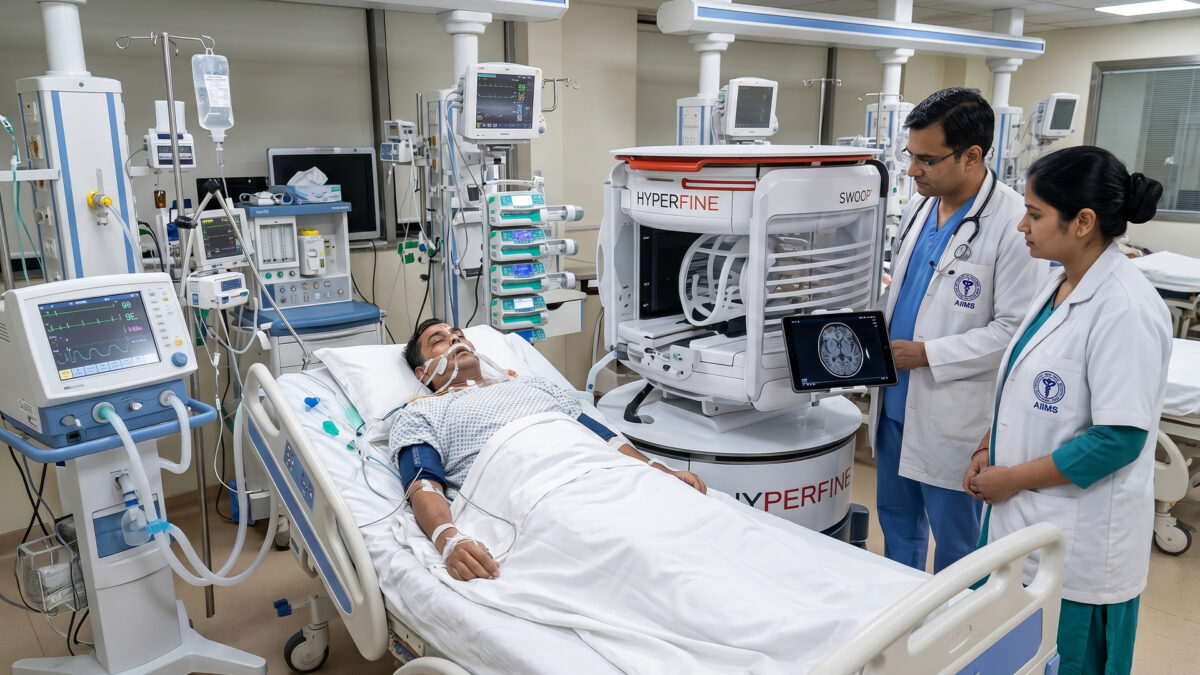
AIIMS launches portable MRI for faster patient scans

AIIMS Delhi has introduced India’s first portable MRI system, making it possible to carry out brain scans right at a patient’s bedside. The new device is expected to improve care for critically ill patients, especially those in intensive care units (ICUs).

Traditionally, patients need to be shifted to a separate room for MRI scans. For those who are on ventilators or in unstable condition, this process can be risky and time-consuming. With the portable MRI, doctors can now perform scans without moving the patient, reducing both risk and delay.

The system is designed mainly for brain imaging and will be used in cases such as stroke, head injuries, and other neurological emergencies. Quick access to imaging helps doctors understand a patient’s condition faster and begin treatment without waiting.

Another key benefit is continuous monitoring. Doctors can repeat scans when needed without the hassle of transporting patients multiple times. This is especially useful in ICUs, where even small movements can affect a patient’s condition.

The portable MRI uses a lower magnetic field compared to conventional machines. While it does not replace full-scale MRI scans, it works as a rapid diagnostic tool in emergency situations. Detailed scans can still be done later if required.

Also Read: Rohit Jain camed RBI Deputy Governor

Categories
Leaders

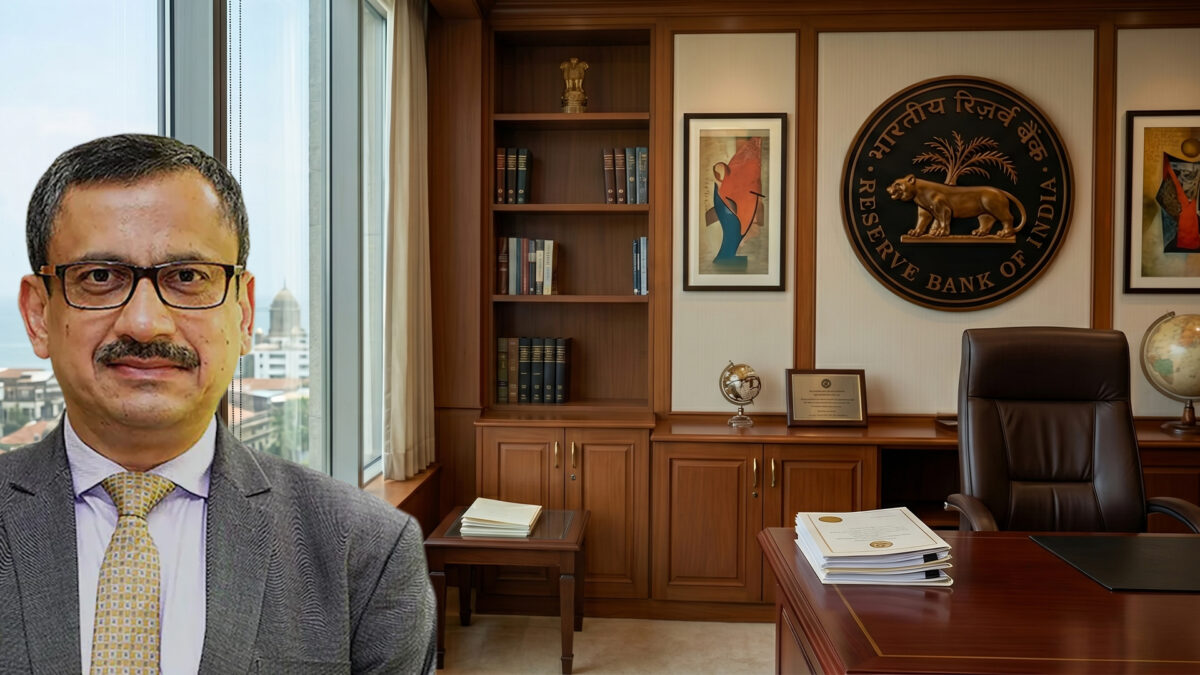
Rohit Jain camed RBI Deputy Governor

The government has appointed Rohit Jain as Deputy Governor of the Reserve Bank of India for a period of three years, marking an important leadership change at the central bank.

The appointment was cleared by the Appointments Committee of the Cabinet and will take effect from May 3, 2026. Jain replaces T Rabi Sankar, whose tenure recently concluded.

A career central banker, Jain brings close to three decades of experience within the RBI. He is currently serving as an Executive Director and has handled several key responsibilities during his tenure. His work has largely focused on banking supervision, risk management, and financial system oversight, areas that are critical to maintaining stability in the sector.

In his most recent role, Jain was associated with the Department of Supervision, where he dealt with risk assessment, analytics, and monitoring vulnerabilities in banks. His deep understanding of the financial system is expected to help the RBI navigate ongoing challenges.

The appointment comes at a time when the central bank is dealing with a rapidly evolving financial landscape. Issues such as digital banking, cybersecurity risks, and global economic uncertainties are increasingly shaping policy decisions. Jain’s experience in supervision and risk is likely to play a key role in addressing these concerns.

While his specific responsibilities as Deputy Governor are yet to be announced, the RBI is expected to assign him a portfolio soon after he formally takes charge. Deputy Governors typically oversee major areas such as banking regulation, financial markets, payment systems, and aspects of monetary policy.

Also Read: GalaxEye deploys Drishti, India’s private space milestone

Categories
Technology

GalaxEye deploys Drishti, India’s private space milestone

India’s space ambitions received a major boost with the launch of Mission ‘Drishti’, a next-generation Earth observation satellite built by startup GalaxEye. The satellite was successfully launched aboard a SpaceX Falcon 9 rocket, marking a key achievement for the country’s private space sector.

What makes Drishti special is its advanced OptoSAR system—a technology that combines optical and radar imaging. This allows the satellite to capture high-quality images regardless of weather conditions or time of day, overcoming a major limitation of traditional satellites.

In simple terms, while most satellites struggle to capture images during cloudy weather or at night, Drishti can continue to “see” clearly. This makes it a powerful tool for continuous monitoring of the Earth’s surface.

At around 190 kg, it is the largest Earth observation satellite developed by a private Indian company so far. The mission highlights how startups are stepping up and complementing the work of ISRO in building advanced space capabilities.

The satellite is expected to support a wide range of uses. From helping authorities respond faster during natural disasters to improving crop monitoring and urban development planning, Drishti’s data can be used in many practical ways. It can also strengthen defence and surveillance systems by providing reliable, real-time imagery.

The launch has been welcomed as a landmark moment for India’s growing space ecosystem. Experts say it reflects the increasing role of private companies in driving innovation and reducing dependence on traditional systems.

Also Read: Gold near ₹1.51 lakh, Silver slips below ₹2.65 lakh