
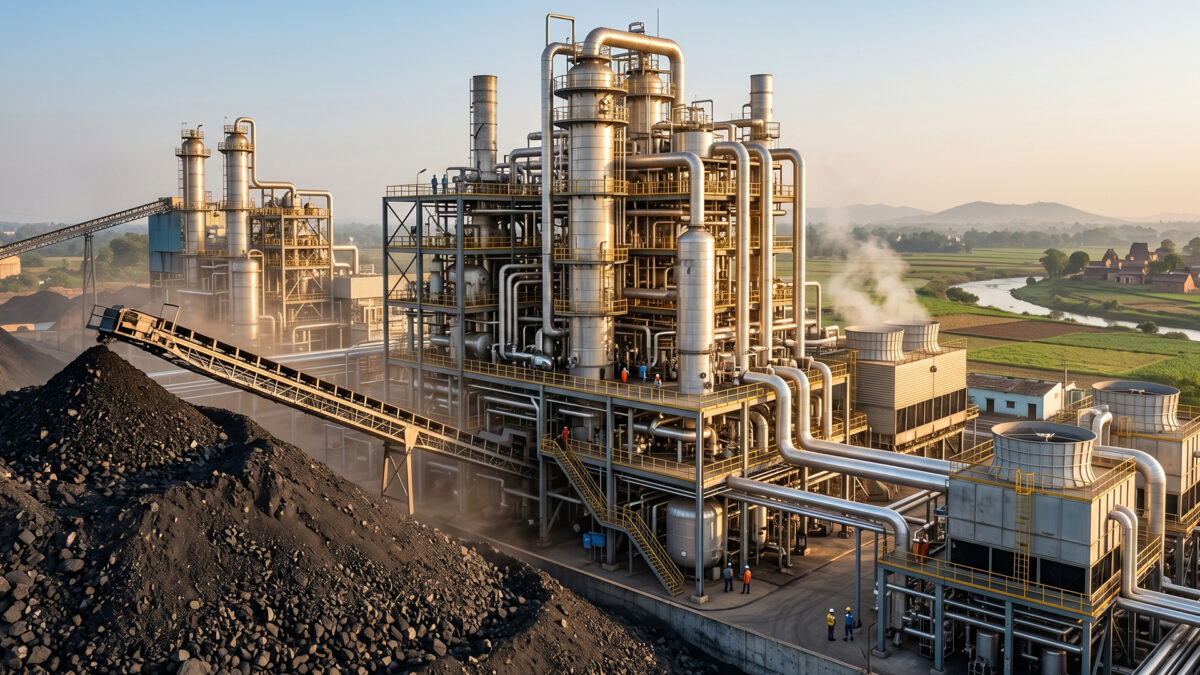
The government is preparing a major ₹37,500 crore push to promote coal gasification projects, as it looks to make better use of India’s coal reserves while reducing dependence on imports. The proposal is expected to be taken up by the Union Cabinet soon.
Coal gasification is a process that converts coal into a cleaner gas, which can then be used to produce fuels, fertilisers, and chemicals. Instead of burning coal directly, this method allows it to be used in a more efficient and less polluting way.
The main goal behind the plan is to reduce India’s reliance on imported fuels like liquefied natural gas (LNG) and key inputs such as urea. By using locally available coal, the government hopes to improve energy security and support domestic industries at the same time.
To encourage companies to invest in this technology, the government plans to offer financial incentives. Reports suggest that each project could receive support of up to ₹3,000 crore, making large-scale investments more viable for both public and private players.
The move is also part of a broader effort to shift towards cleaner energy solutions. While coal continues to play a major role in India’s energy mix, gasification is seen as a smarter way to use it with lower emissions. The government has set a long-term target of significantly increasing coal gasification capacity by 2030.
Officials believe the new scheme will simplify earlier policies and make it easier for companies to participate. A more streamlined approach is expected to speed up project approvals and implementation.
The plan comes at a time when global energy markets remain uncertain, with fluctuating prices and supply concerns. By focusing on domestic resources, India is aiming to become more self-reliant and less vulnerable to external shocks.