Categories
Beyond

Reliance wins Juhu Galli redevelopment bid

A consortium led by Reliance Group has won the bid to redevelop the Juhu Galli slum cluster in Mumbai’s Andheri area, marking the company’s entry into the city’s growing slum rehabilitation sector. The project, spread across more than 101 acres, is among the largest slum redevelopment initiatives currently planned in Mumbai.

The winning consortium is headed by Reliance 4IR Realty Development and includes Mahadev Realtors Juhu, a subsidiary of Aspect Realty. The group emerged ahead of competing bids from JSW Group and Shapoorji Pallonji Group.

According to the Slum Rehabilitation Authority (SRA), the redevelopment project is expected to provide more than 28,000 rehabilitation homes for eligible residents currently living in the Juhu Galli settlement. The initiative is aimed at improving housing conditions and modernising infrastructure in one of Mumbai’s densely populated areas.

The project reflects increasing interest from large corporate groups in Mumbai’s slum redevelopment sector. In recent years, the Maharashtra government introduced policy changes to encourage large-scale redevelopment projects. A new framework announced in 2025 allows redevelopment of large slum clusters and offers developers additional development rights and higher building limits, making such projects more financially attractive.

To safeguard residents during the redevelopment process, the Reliance-led consortium will be required to provide funds for temporary accommodation. The company must pay around ₹700 crore over the next two years towards temporary rent for affected residents. It is also required to deposit an additional year’s rent and provide a performance guarantee of ₹100 crore.

Officials said the successful bidding process highlights the growing role of major private-sector companies in addressing Mumbai’s housing challenges through large-scale urban renewal projects. The development also places Reliance alongside other major players already active in Mumbai’s redevelopment sector, including the Adani Group’s ongoing Dharavi redevelopment project.

Also Read: Jeff Bezos backed AI startup Prometheus raises $12 bn

Categories
Corporate

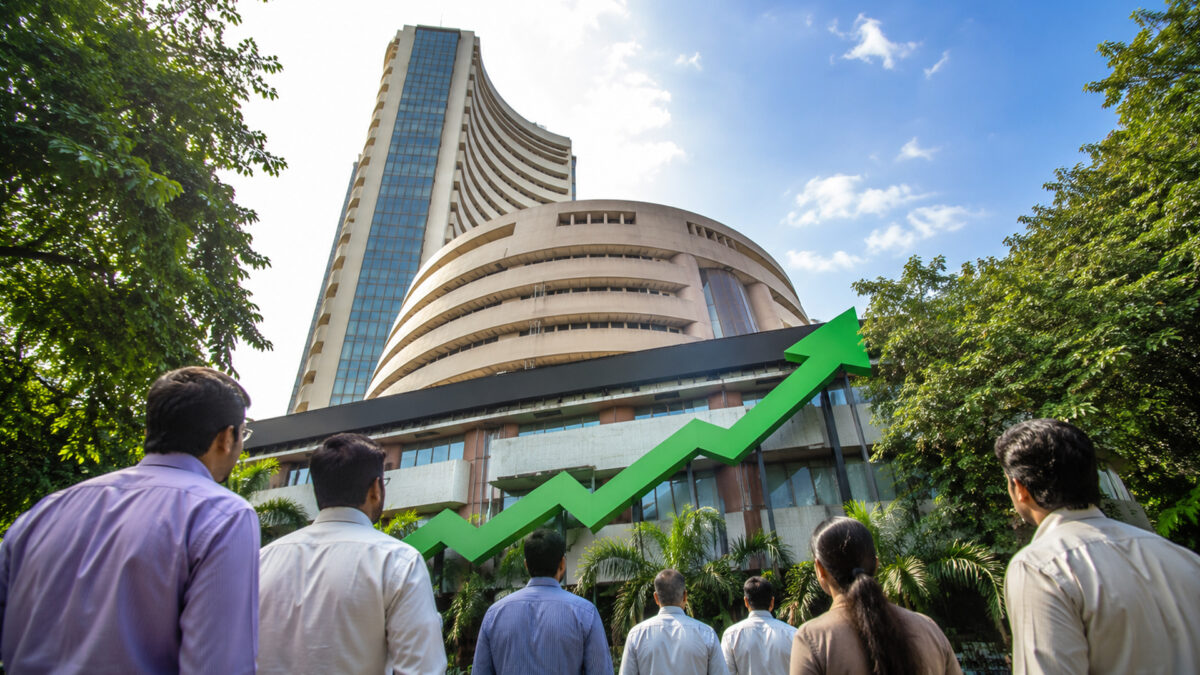
Sensex jumps 1,500 points, Nifty climbs above 23,400

Indian stock markets witnessed a strong rally on Friday, with the BSE Sensex soaring more than 1,500 points and the NSE Nifty climbing above 23,400, driven by positive global cues and renewed investor optimism.

The rally was led by broad-based buying across banking, financial and infrastructure stocks. Investors cheered reports of possible diplomatic progress between the United States and Iran, easing concerns over escalating tensions in West Asia. The development helped improve global market sentiment and reduced fears of a sharp rise in crude oil prices.

Among the major gainers on the benchmark indices were Reliance Industries, Adani Ports, State Bank of India, Larsen & Toubro, HDFC Bank and ICICI Bank. Strong buying in these heavyweight stocks provided significant support to the broader market.

On the other hand, some information technology stocks underperformed. Tech Mahindra, Infosys and HCLTech were among the notable laggards as investors shifted focus toward sectors expected to benefit more directly from improving domestic and global economic conditions.

Analysts attributed the rally to a combination of factors. Apart from easing geopolitical concerns, investors were encouraged by stable crude oil prices, positive global equity trends and expectations of continued economic resilience in India. Banking stocks also gained on hopes of healthy credit growth and improving business activity.

Market experts noted that foreign institutional investors returned as buyers, further boosting sentiment. Strong participation from domestic investors also helped sustain the upward momentum throughout the trading session.

The rally lifted overall market confidence and pushed key indices closer to recent highs. Broader markets also participated in the uptrend, with several mid-cap and small-cap stocks posting gains.

Despite the sharp rise, analysts advised caution, pointing out that global uncertainties and geopolitical developments remain key risks for investors. Any change in the outlook for oil prices, inflation or interest rates could influence market direction in the coming weeks.

Also Read: Microsoft partners with Alt Carbon for carbon removal project

Categories
Corporate

Microsoft partners with Alt Carbon for carbon removal project

Microsoft has signed a carbon removal agreement with Indian climate-tech startup Alt Carbon, marking a significant step in the tech giant’s efforts to meet its climate goals while highlighting India’s growing importance in the global carbon removal industry.

The deal focuses on a carbon removal technique known as enhanced rock weathering (ERW), a process that captures carbon dioxide from the atmosphere by spreading crushed rock on agricultural land. As the rock naturally breaks down, it absorbs and stores carbon, helping reduce greenhouse gas levels.

Under the agreement, Alt Carbon will generate carbon removal credits through its projects in India, which Microsoft will purchase as part of its broader strategy to become carbon negative. The exact financial details of the deal were not disclosed, but industry observers describe it as a major milestone for India’s emerging carbon removal sector.

Founded by Indian entrepreneurs, Alt Carbon works with farmers to deploy enhanced rock weathering across agricultural regions. The company says the approach not only removes carbon from the atmosphere but can also improve soil health and support agricultural productivity.

The partnership is being viewed as a vote of confidence in India’s climate innovation ecosystem. Until recently, most large-scale carbon removal projects were concentrated in North America and Europe. Microsoft’s decision to work with an Indian startup signals growing international interest in climate solutions being developed in emerging markets.

Carbon removal technologies have become increasingly important as governments and companies seek ways to offset emissions that are difficult to eliminate. Major corporations, including Microsoft, have committed billions of dollars toward achieving ambitious sustainability targets and are investing in a range of carbon reduction and removal initiatives.

India could become a major hub for carbon removal projects due to its large agricultural sector, favourable climate conditions and expanding climate-tech ecosystem. Such projects may also create new income opportunities for farmers participating in carbon credit programs.

For Alt Carbon, the agreement represents a significant validation of its technology and business model. The deal is expected to accelerate the startup’s growth and strengthen India’s position in the rapidly evolving global market for carbon removal solutions.

Also Read: Jeff Bezos backed AI startup Prometheus raises $12 bn

Categories
Beyond

Rupee holds steady at ₹95.8 against US dollar

The Indian rupee traded near ₹95.8 against the US dollar on Friday, supported by gains in domestic equity markets, lower crude oil prices and expectations of sustained foreign capital inflows.

The domestic currency remained stable during early trade as investors responded positively to a sharp rally in benchmark stock indices. The BSE Sensex surged nearly 1,000 points in opening trade, while the NSE Nifty crossed the 23,400 mark, boosting sentiment across financial markets.

Currency dealers said the rupee drew support from improving risk appetite among investors amid easing geopolitical concerns and strength in global markets. A decline in international crude oil prices also helped the currency, as lower oil costs reduce India’s import burden and improve the country’s trade balance.

“The rupee is benefiting from a combination of positive domestic and global factors, including strong equity market performance and reduced pressure from energy prices,” market participants said.

Foreign institutional investor (FII) activity remains a key driver of currency movements. Continued inflows into Indian equities and debt instruments have strengthened demand for the rupee and helped offset pressure from global uncertainties. Analysts noted that India’s economic growth outlook and stable macroeconomic indicators continue to attract overseas investors.

However, traders remain watchful of developments in global financial markets. The trajectory of the US dollar, interest-rate decisions by the US Federal Reserve and geopolitical developments could influence currency markets in the near term. Any sharp movement in global commodity prices may also affect the rupee’s performance.

Market experts expect the rupee to trade within a narrow range in the short term as investors assess upcoming economic data and policy signals from major central banks. Businesses with overseas exposure have been advised to monitor exchange-rate movements closely and adopt hedging strategies where necessary.

Despite external challenges, analysts believe the rupee is likely to remain relatively stable, supported by healthy foreign exchange reserves, improving capital inflows and India’s strong economic fundamentals.

Also Read: Gold dips to ₹1,45,630, silver down at ₹2,49,900

Categories
Beyond

SEBI proposes pay disclosure norms for AMCs

The Securities and Exchange Board of India (SEBI) has proposed changes to remuneration disclosure norms for mutual fund asset management companies (AMCs). Under the proposal, AMCs would no longer need to publicly disclose the names, designations and salaries of top executives and high-earning employees. Instead, compensation details would be reported in a consolidated format.

At present, mutual fund firms are required to disclose the remuneration of key officials, including the chief executive officer (CEO), chief investment officer (CIO), chief operating officer (COO), the top 10 highest-paid employees, and staff earning above specified salary thresholds. SEBI has proposed replacing these disclosures with category-wise compensation figures and the number of employees in each category.

The regulator said the proposal follows industry feedback highlighting concerns around employee privacy, data protection and the limited value of individual salary disclosures for investors. Industry participants also argued that such requirements could put AMCs at a disadvantage in attracting and retaining talent compared with portfolio management services (PMS) firms and alternative investment funds (AIFs), which do not face similar disclosure norms.

According to SEBI, consolidated reporting would continue to provide investors with an overview of senior management compensation while ensuring disclosures remain relevant and proportionate. Its analysis found that employees covered under the current rules account for only a small portion of the workforce at most AMCs.

SEBI has also proposed that scheme-level remuneration details of fund managers should not be publicly disclosed, though they may be shared with investors holding units in the concerned scheme upon request.

Also Read: Billboard India appoints Preeti Nayyar as COO

Categories
Leaders

Billboard India appoints Preeti Nayyar as COO

Billboard India has appointed Preeti Nayyar as its Chief Operating Officer (COO), bringing on board a seasoned media executive as the brand gears up for its next phase of growth in the country.

Nayyar joins Billboard India with more than two decades of experience across the media, entertainment and music industries. Over the years, she has worked with some of the country’s leading media and entertainment companies, building expertise in business strategy, brand partnerships, content and audience engagement.

Most recently, she was associated with Universal Music Group, where she led brand partnerships across India and parts of Asia. In that role, she worked closely with artists, brands and businesses to create collaborations that connected music with consumers in meaningful ways.

At Billboard India, Nayyar will be responsible for overseeing day-to-day business operations, driving revenue growth and building strategic partnerships. She will also play a key role in expanding the brand’s presence in India and strengthening its relationships with artists, labels, brands and other stakeholders in the music industry.

Her appointment comes at a time when India’s music industry is witnessing rapid growth, fuelled by the rise of digital platforms, independent artists and regional-language content. Billboard India, which launched recently through a partnership with Other Side Ventures, has been working to establish itself as a platform that celebrates and promotes Indian music through editorial content, charts, events and industry initiatives.

Nayyar described the Indian music industry as one of the most dynamic creative sectors in the country and said she was excited about the opportunity to contribute to Billboard India’s journey. She added that the focus would be on creating value for artists, fans and industry partners while helping strengthen India’s presence on the global music stage.

Commenting on the appointment, Billboard India leadership said Nayyar’s extensive experience and understanding of the media and entertainment landscape would be instrumental in shaping the company’s future growth strategy.

Also Read: FSB issues AI rules for financial firms

Categories
Corporate

Cognizant AI tool drives $200 mn in sales

IT services major Cognizant has revealed that an internally developed artificial intelligence platform has helped generate nearly $200 million in new business by improving the way the company identifies sales opportunities and connects employees with client requirements.

The platform, known as WorkFabric, was developed under the leadership of Cognizant CEO Ravi Kumar S and is designed to analyse large volumes of organisational data. Using AI, the system maps employee skills, project experience, client interactions and business requirements to help teams identify potential opportunities and respond more effectively to customer needs.

According to the company, WorkFabric acts as an internal intelligence network that enables employees to quickly locate subject matter experts, relevant project information and potential solutions for clients. By bringing together data that is often scattered across different systems, the platform helps improve collaboration and decision-making across the organisation.

Cognizant said the AI-powered system has already contributed to approximately $200 million in new business opportunities. Company executives noted that the technology has improved productivity by reducing the time required to find expertise and prepare proposals for clients.

The platform analyses information from multiple internal sources, including employee profiles, project databases and client engagement records. AI algorithms then identify patterns and recommend potential connections between client requirements and available talent within the company.

Industry experts view the initiative as an example of how large technology firms are increasingly using artificial intelligence not only for customer-facing applications but also to improve internal operations and business development. Many companies are investing heavily in AI tools that can enhance efficiency, automate routine tasks and uncover new revenue opportunities.

Cognizant’s announcement comes as global IT services firms continue to accelerate AI adoption amid growing demand for digital transformation solutions. The company believes platforms such as WorkFabric can provide a competitive advantage by helping employees access knowledge more quickly and respond faster to changing client needs.

Also Read: Noida International Airport ready for commercial take-off

Categories
Beyond

FSB sets AI governance rules for financial firms

The Financial Stability Board (FSB), the international body that monitors and makes recommendations about the global financial system, has released a set of guidelines to help banks, insurers and other financial institutions adopt artificial intelligence (AI) safely and responsibly.

The recommendations come as the financial sector increasingly uses AI technologies across a wide range of functions, including customer service, fraud detection, risk assessment, compliance monitoring and investment management. While AI offers significant opportunities to improve efficiency and decision-making, regulators have also raised concerns about potential risks associated with its rapid adoption.

In its report, the FSB outlined a series of sound practices designed to help financial institutions strengthen governance, oversight and risk management frameworks when deploying AI systems. The organisation emphasised that firms should ensure clear accountability for AI-related decisions and maintain adequate human supervision over critical processes.

The guidelines also call on financial institutions to improve transparency around AI models and establish controls to monitor their performance. Firms are encouraged to regularly assess risks linked to data quality, cybersecurity, model bias and operational resilience.

According to the FSB, financial institutions should ensure that AI systems are reliable, secure and aligned with existing regulatory requirements. The body warned that excessive reliance on complex AI models without proper safeguards could create vulnerabilities for individual firms and the broader financial system.

The recommendations were developed based on industry consultations and reviews of AI practices across major financial markets. The FSB noted that while AI adoption remains at varying stages globally, the technology is expected to play an increasingly important role in financial services in the coming years.

Also Read: US eyes for LNG exports to ASEAN

Categories
Beyond

US eyes for LNG exports to ASEAN

The United States is working on plans to release energy reserves and expand natural gas exports to Southeast Asian nations as part of efforts to strengthen regional energy security and stabilise global energy markets.

US Energy Secretary Chris Wright said Washington is exploring measures to make additional energy supplies available while encouraging greater exports of American liquefied natural gas (LNG) to member countries of the Association of Southeast Asian Nations (ASEAN). The initiative comes at a time when global energy markets are facing heightened uncertainty due to geopolitical tensions and concerns over potential supply disruptions.

Speaking during meetings with regional leaders and energy officials, Wright said the United States wants to play a larger role in supporting the energy needs of rapidly growing Asian economies. Increased LNG exports are expected to help ASEAN nations diversify their energy sources and reduce dependence on a limited number of suppliers.

The proposal includes the possible release of strategic energy reserves if market conditions require intervention. Such a move could help ease supply pressures and reduce volatility in global energy prices, particularly if geopolitical developments affect major oil and gas shipping routes.

Southeast Asia is among the world’s fastest-growing energy markets, with demand expected to rise sharply over the coming decades. Many countries in the region are seeking reliable and affordable fuel supplies to support industrial growth, electricity generation and economic development.

The US administration believes expanded LNG trade can strengthen economic ties with ASEAN countries while providing an alternative source of energy amid shifting global market dynamics. Several Southeast Asian nations have already increased imports of American LNG in recent years as part of their efforts to enhance energy security.

Energy analysts said the initiative reflects Washington’s broader strategy of positioning itself as a key global energy supplier. The United States has emerged as one of the world’s largest LNG exporters, supported by growing production and export infrastructure.

Also Read: Centre waives excise duty on higher ethanol-petrol

Categories
Beyond

Centre waives excise duty on higher ethanol-petrol

The Centre has exempted higher ethanol-blended petrol from excise duty, a move aimed at encouraging the use of cleaner fuels and reducing India’s dependence on crude oil imports.

Union Road Transport and Highways Minister Nitin Gadkari announced that petrol blended with higher levels of ethanol, including E20 and future blends such as E30, will receive excise duty relief. The decision is expected to lower the cost of such fuels and encourage consumers to shift towards greener alternatives.

The government has been actively promoting ethanol blending as part of its strategy to reduce fossil fuel consumption, cut carbon emissions and support the domestic agricultural sector. India has already achieved significant progress in ethanol blending, with the average blending rate crossing targets set for previous years.

Officials believe the excise duty exemption will help fuel retailers expand the availability of ethanol-blended petrol across the country while making it more attractive for vehicle owners. Lower taxation is expected to narrow the price gap between conventional petrol and higher ethanol blends.

Speaking on the initiative, Gadkari said the policy is intended to accelerate the adoption of alternative fuels and strengthen India’s energy security. Increased use of ethanol can reduce the country’s reliance on imported crude oil, helping save foreign exchange and insulating the economy from fluctuations in global oil prices.

The move is also expected to benefit sugar mills and farmers, as ethanol is primarily produced from sugarcane and other agricultural feedstocks. Industry stakeholders have long argued that greater ethanol demand can provide an additional revenue stream for farmers while supporting rural economic growth.

Automobile manufacturers have already begun introducing vehicles compatible with E20 fuel, in line with the government’s roadmap for higher ethanol blending. Industry experts believe the latest tax relief could further boost investment in ethanol production infrastructure and fuel distribution networks.

While the transition to higher ethanol blends will require continued expansion of supply chains and vehicle compatibility, policymakers see the measure as a key step towards cleaner transportation.

Also Read: Airtel renames ‘Priority Postpaid’ as ‘Fast Lane’