Categories
Technology

Gemini powers Google’s new home speaker

Google is making a fresh push into the smart home market with a new Google Home speaker powered by its Gemini artificial intelligence platform, betting that advanced AI can reignite interest in smart speakers.

The device marks Google’s first major smart speaker launch in nearly six years and represents a shift away from traditional voice assistants. Instead of responding only to simple commands, the new speaker is designed to hold more natural conversations, understand context and handle multiple requests in a single interaction.

Powered by Gemini for Home, the speaker allows users to speak in a more conversational manner. Users can ask follow-up questions, control multiple smart home devices at once and receive more detailed responses without repeating commands.

Google says the speaker has been built specifically for AI-first experiences. It features improved voice recognition, better noise handling and local AI processing to make interactions faster and more reliable. The device also acts as a hub for connected smart home products and supports industry standards such as Matter and Thread.

The company hopes the product will help it compete more effectively with Amazon’s Echo range and Apple’s growing smart home ecosystem. Industry experts believe the integration of generative AI could give smart speakers a new purpose after years of limited innovation in the category.

The speaker is expected to be available from June 25 and comes with access to premium Gemini features for early buyers. Google has reportedly fixed thousands of software issues during testing to improve the user experience before launch.

With AI becoming central to consumer technology, Google is positioning Gemini as the future of home assistance, transforming smart speakers from simple voice-controlled gadgets into more capable digital companions.

Also Read: RBI settles Apollo FEMA case after ₹17.76 cr payment

Categories
Corporate

Chennai hospital unveils advanced heart rhythm technology

Kauvery Hospital in Chennai has launched advanced Pulsed Field Ablation (PFA) technology for the treatment of atrial fibrillation (AF), a common heart rhythm disorder that affects millions of people worldwide. The condition causes an irregular and often rapid heartbeat, increasing the risk of stroke, heart failure and other cardiovascular complications if left untreated.

With this launch, Kauvery Hospital has become one of the first healthcare centres in Tamil Nadu to offer both leading PFA platforms, giving patients access to some of the latest innovations in cardiac care. Hospital officials said the move reflects their commitment to bringing globally recognised treatment options to patients in the State.

Pulsed Field Ablation is considered a major advancement in the treatment of atrial fibrillation. Unlike conventional ablation procedures that use heat (radiofrequency energy) or extreme cold (cryoablation) to destroy abnormal heart tissue, PFA uses carefully controlled electrical pulses. These pulses selectively target the cells responsible for irregular heart rhythms while reducing the risk of damage to nearby structures such as the oesophagus, nerves and blood vessels.

Cardiologists at the hospital said the technology offers several advantages for patients. In addition to being more precise, PFA procedures can often be completed more quickly than traditional methods. Patients may also experience shorter recovery times and potentially fewer complications, making the treatment a promising option for those suffering from persistent heart rhythm disorders.

Experts believe the introduction of PFA technology could significantly improve outcomes for patients with atrial fibrillation, particularly those who have not responded well to medication or other therapies. As awareness of heart rhythm disorders grows, demand for minimally invasive and effective treatment options is also increasing.

The hospital noted that access to advanced technologies within Tamil Nadu will help reduce the need for patients to travel long distances for specialised cardiac procedures. By bringing cutting-edge treatment closer to home, healthcare providers hope to improve both convenience and quality of care.

Kauvery Hospital expects the new technology to benefit a growing number of patients and strengthen Chennai’s position as a leading destination for advanced cardiac treatment in India.

Also Read: Apple may raise prices a memory costs surge

Categories
Beyond

Apple may raise prices a memory costs surge

Apple could increase the prices of future iPhones and other devices as rising memory chip costs begin to put pressure on the company’s manufacturing expenses.

According to recent reports, the sharp growth in artificial intelligence (AI) applications has triggered an unprecedented demand for high-performance memory chips, particularly DRAM and advanced storage components. As technology companies race to build AI-powered products and data centres, supplies of these critical chips have become increasingly tight.

The shortage has led to higher prices for memory components, a key part of smartphones, laptops and tablets. Industry analysts believe Apple may eventually pass some of these additional costs on to consumers, especially if chip prices continue to climb in the coming months.

Apple Chief Executive Officer Tim Cook recently acknowledged that memory markets are becoming more challenging as AI adoption accelerates across industries. The company is closely monitoring supply conditions while working with suppliers to secure enough components for its upcoming products.

The growing popularity of AI-powered features is changing the technology landscape. New smartphones and computers require larger amounts of memory to handle advanced AI tools, voice assistants and on-device processing capabilities. This has increased competition for memory chips among technology firms worldwide.

Market experts say the situation could affect not only Apple but also other major electronics manufacturers. Companies producing smartphones, personal computers and AI servers are all competing for the same pool of advanced memory components, creating further pressure on supply chains.

Consumers may not see immediate price hikes, but analysts warn that future product launches could carry higher price tags if component costs remain elevated. Apple’s expected AI-focused devices, including next-generation iPhones and Mac computers, may be particularly affected because they require more powerful hardware to support advanced features.

For now, Apple continues to focus on securing supplies, but the global AI boom is increasingly reshaping the economics of the technology industry and the prices consumers ultimately pay.

Also Read: Gold slips to ₹1.51 lakh, silver at ₹2.64 lakh

Categories
Corporate

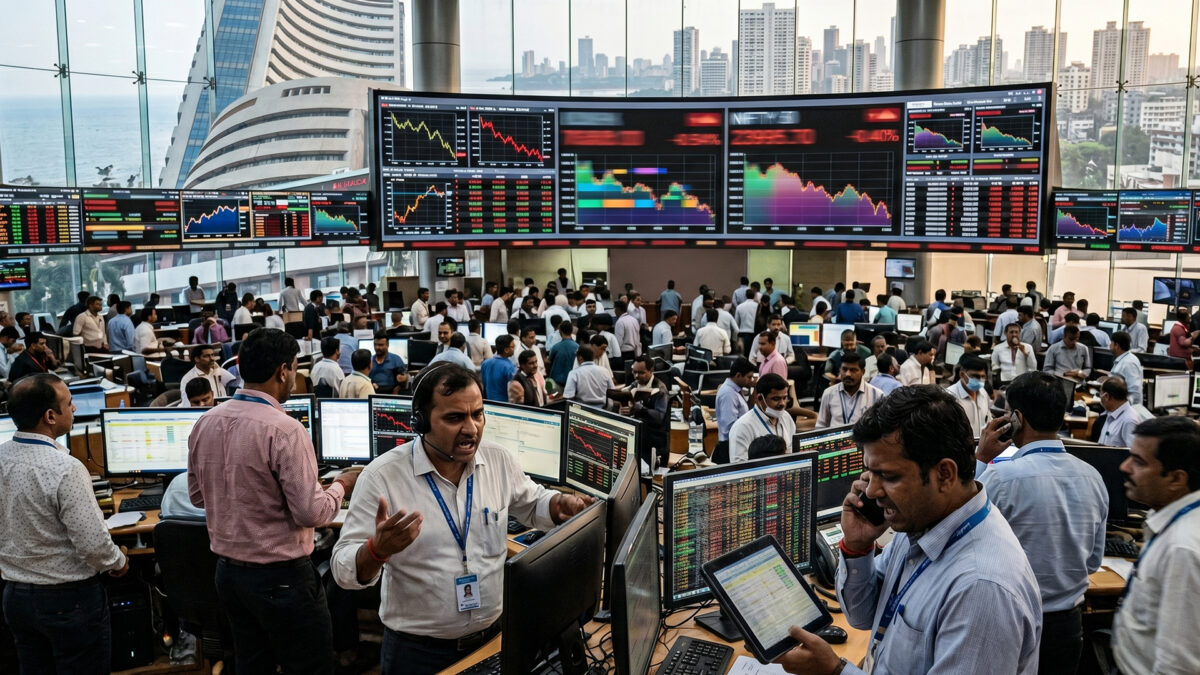
Sensex down 100 points, Nifty slips below 24,050

Indian equity benchmarks opened on a weak note on Thursday as global market sentiment remained cautious after the US Federal Reserve indicated that interest rates could stay higher for longer later this year.

In early trade, the BSE Sensex declined around 100 points, while the NSE Nifty slipped below the 24,050 mark. Market participants remained watchful of global cues, foreign fund flows and movements in crude oil prices.

Financial stocks offered some support to the broader market. Bajaj Finance, Bajaj Finserv and Asian Paints were among the notable gainers in morning trade, attracting buying interest amid optimism surrounding domestic economic fundamentals.

However, weakness in information technology stocks weighed on sentiment. Tata Consultancy Services (TCS), Tech Mahindra and Infosys featured among the key losers as investors assessed the impact of higher-for-longer US interest rates on technology spending and export-oriented businesses.

Broader markets were relatively resilient, with select mid-cap and small-cap stocks witnessing buying interest despite the weak opening. Analysts said lower crude oil prices continue to support sentiment by easing concerns over inflation and India’s import bill.

Investors are also keeping an eye on developments in global markets after the Federal Reserve maintained a cautious stance on inflation. The central bank’s outlook has raised concerns that borrowing costs could remain elevated for longer than expected.

As trading progresses, market participants will monitor sector-specific trends, institutional flows and overseas cues for further direction. For now, gains in financial stocks are being offset by weakness in IT counters, leaving benchmark indices under pressure in early trade.

Market experts believe domestic fundamentals remain supportive, backed by steady economic growth and improving corporate earnings. However, uncertainty over global monetary policy and geopolitical developments may keep investors cautious in the near term.

Also Read: Yum Brands sells Pizza Hut in $2.7bn deal

Categories
Corporate

SolarSquare raises $53 million to expand rooftop business

Rooftop solar startup SolarSquare has raised $53 million (around ₹455 crore) in a Series C funding round led by global investment firm B Capital, marking one of the largest fundraises in India’s residential solar sector.

The round also saw participation from existing investors, underscoring growing confidence in the company’s business model and the long-term potential of India’s clean energy market. The fresh capital will be used to expand SolarSquare’s presence across the country, strengthen its technology platform and boost customer acquisition efforts.

Founded in 2015, SolarSquare focuses on providing rooftop solar solutions for homes and housing societies. The company helps customers install solar panels, reduce electricity bills and transition to cleaner sources of energy. Over the years, it has emerged as a key player in India’s rapidly growing residential solar market.

The latest funding comes at a time when demand for rooftop solar installations is rising, driven by increasing electricity costs, government incentives and growing awareness about sustainable energy. Industry experts believe residential solar adoption in India is still at an early stage, leaving significant room for future growth.

SolarSquare plans to use the funds to enter new cities, expand its installation network and invest in technology aimed at improving customer experience. The company also intends to strengthen its workforce as it scales operations.

According to company executives, the investment will help accelerate the mission of making rooftop solar more accessible and affordable for Indian households. They believe the residential segment could become a major contributor to India’s renewable energy goals in the coming years.

Also Read: Reliance Jio nears filing for landmark $4 bn IPO

Categories
Corporate

Sensex jumps 350 points, Nifty tops 24,050

Indian equity benchmarks ended higher on Wednesday, with the Sensex rising more than 350 points and the Nifty closing above the 24,050 mark, supported by buying in financial, auto and select IT stocks.

The BSE Sensex gained around 350 points to close near 79,750, while the NSE Nifty50 settled above 24,050 after a largely positive trading session. Market sentiment improved as investors tracked global cues, easing concerns over crude oil prices and awaited the outcome of the US Federal Reserve’s policy meeting.

Among the top gainers, Mahindra & Mahindra, Bajaj Finance, ICICI Bank, Titan and HDFC Bank attracted strong buying interest, helping the benchmarks extend their gains. Auto and financial stocks were among the best-performing sectors during the day.

On the other hand, IndusInd Bank, Tata Steel, Hindalco and JSW Steel were among the notable laggards as metal stocks remained under pressure due to concerns over global demand and commodity price volatility.

Broader markets also witnessed buying activity, with several mid-cap and small-cap stocks trading in positive territory. Analysts said investors remained selective, favouring companies with strong earnings visibility and stable growth prospects.

The rupee traded in a narrow range against the US dollar, while foreign institutional investor activity remained in focus. Traders also kept an eye on upcoming macroeconomic data and central bank commentary for clues on future market direction.

Market participants closely monitored developments in global markets and geopolitical tensions in the Middle East, which continue to influence crude oil prices and foreign investment flows. However, steady domestic inflows and resilient economic indicators helped support sentiment.

Also Read: Snap bets big on future with smart Specs

Categories
Technology

Snap bets big on future with smart Specs

Snap has unveiled its latest augmented reality (AR) glasses, called Specs, in a major push towards a future where wearable devices could eventually reduce reliance on smartphones.

The new standalone smart glasses feature transparent AR displays that overlay digital content onto the real world. Unlike earlier generations of smart glasses that relied heavily on companion devices, Specs are designed to function independently, offering users a more immersive and seamless experience.

Powered by Snap’s AR platform, the glasses allow users to interact with digital objects, access information and experience entertainment through natural gestures and voice commands. The company says the device is aimed at making augmented reality more practical for everyday use, from navigation and communication to gaming and productivity.

Specs come equipped with advanced sensors, cameras and onboard processing capabilities, enabling real-time understanding of the user’s surroundings. The glasses can display interactive digital elements directly within a person’s field of view, creating a blend between physical and virtual environments.

Snap believes AR wearables represent the next major computing platform after smartphones. The launch reflects its long-term vision of making technology more intuitive and less dependent on handheld screens.

Priced at around $2,195, the glasses are initially targeted at developers and technology enthusiasts. Snap hopes software creators will build applications that expand the platform’s capabilities and accelerate wider adoption of AR technology.

The launch comes as technology companies around the world race to develop next-generation wearable devices. Firms including Apple, Meta and Google have invested heavily in mixed reality and smart-glasses projects, seeing them as a key growth area.

While widespread consumer adoption may still take time, Snap’s latest product signals growing confidence that AR technology is moving closer to mainstream use. The company is betting that future digital experiences will be delivered not through phones in people’s hands, but through smart devices worn on their faces.

Also Read: Zerodha, Groww get nod to offer US stocks

Categories
Corporate

Reliance Jio nears filing for landmark $4 bn IPO

Reliance Jio Infocomm, the telecom and digital services arm of Reliance Industries, is reportedly preparing to file draft papers for its much-awaited initial public offering (IPO) within the next few days, setting the stage for what could become India’s largest-ever public issue.

According to reports, the company is expected to submit its draft red herring prospectus (DRHP) to market regulator SEBI ahead of Reliance Industries Chairman Mukesh Ambani’s annual address to shareholders later this week. The proposed IPO is estimated to raise around $4 billion, making it one of the biggest listings in the country’s corporate history.

The IPO has been closely watched by investors for years. Ambani had earlier indicated that Jio would be listed by the first half of 2026, but market volatility and geopolitical uncertainties delayed the process. With equity markets showing signs of stability, Reliance now appears ready to move forward with the offering.

Jio has transformed India’s telecom landscape since its launch in 2016, rapidly becoming the country’s largest wireless operator. The company now serves more than 500 million subscribers and accounts for a major share of India’s mobile data traffic. Over the years, it has expanded beyond telecom into digital services, cloud computing, artificial intelligence and enterprise solutions.

Market experts believe the IPO could provide a much-needed boost to India’s primary market, where fundraising activity has slowed in recent months. Analysts expect strong investor interest given Jio’s scale, growth potential and strategic importance within the Reliance ecosystem.

The company is reportedly planning a relatively small public float of around 2.5% of its equity, a structure that could support strong pricing while still raising substantial capital. Jio is estimated to be valued at around $180 billion, according to several analyst estimates.

If the filing proceeds as expected, it would mark a significant milestone for Reliance and could reignite investor enthusiasm in India’s IPO market, with many seeing the listing as one of the defining financial events of 2026.

Also Read: BigBasket names Amit Nanda CEO as Menon exits

Categories
Leaders

BigBasket names Amit Nanda CEO as Menon exits

BigBasket, one of India’s largest online grocery and quick-commerce platforms, has announced a major leadership transition, with co-founder Hari Menon stepping down as Chief Executive Officer after nearly 15 years at the helm. The company has appointed Amit Nanda, a senior Amazon India executive, as its new CEO.

The appointment marks the first time an external executive will lead BigBasket since its founding in 2011. Nanda joins from Amazon India, where he served as Director of Selling Partner Services and played a key role in building and scaling the company’s marketplace operations. He brings more than two decades of experience across e-commerce, consumer goods and banking.

While stepping away from day-to-day management, Menon will continue to remain closely associated with the company. He, along with co-founder Vipul Parekh, will stay on the board and mentor the leadership team during the transition.

The leadership change comes at a crucial time for Tata-owned BigBasket as competition intensifies in India’s fast-growing quick-commerce market. Rivals such as Blinkit, Swiggy Instamart and Zepto have rapidly expanded their presence, forcing established players to accelerate innovation and delivery capabilities. Analysts believe the appointment reflects BigBasket’s focus on strengthening its position in the increasingly crowded sector.

In recent years, BigBasket has expanded beyond traditional online grocery deliveries through initiatives such as BB Now, its quick-delivery service. The company currently serves millions of customers across more than 60 cities through a network of hundreds of dark stores and fulfilment centres.

Welcoming Nanda, Menon said his deep understanding of consumers and experience in building large-scale businesses make him well-suited to lead the company’s next phase of growth. Nanda, in turn, said he was excited to build on BigBasket’s strong customer trust and leverage the Tata Group’s ecosystem to unlock future opportunities.

Also Read: Zerodha, Groww get nod to offer US stocks

Categories
Beyond

Air India launches basic fare without complimentary meals

Air India has introduced a new “Basic” fare category on select domestic routes, allowing passengers to book tickets at lower prices by giving up complimentary meals and some other bundled services.

The move is aimed at offering travellers greater flexibility and more affordable travel options, particularly for short-duration flights where many passengers may not require meal services. The airline said the new fare will be available on select domestic routes and is designed for cost-conscious flyers looking for lower ticket prices.

Under the Basic fare, passengers will continue to receive standard cabin baggage and check-in baggage allowances, but complimentary meals will not be included. Travellers who wish to purchase food and beverages during the flight can do so separately. Other fare categories will continue to offer meal services as part of the ticket price.

The introduction of the new fare reflects a broader trend in the aviation industry, where airlines are increasingly unbundling services and allowing customers to pay only for the amenities they need. Low-cost carriers have long followed this model, and full-service airlines are now adopting similar strategies to cater to a wider range of travellers.

Air India said the new option is intended to give customers more choice rather than reduce services across the board. Passengers who value onboard meals and additional benefits can continue to select higher fare categories, while those focused on affordability can choose the lower-priced Basic fare.

For frequent flyers and business travellers, the change may have limited impact, as many continue to prefer fare categories that include added conveniences. However, budget-conscious passengers and those travelling on short routes could benefit from the lower entry-level fares.

This could help Air India compete more effectively in India’s highly competitive domestic aviation market, where price remains a key factor influencing booking decisions. The airline has been expanding its network and revamping customer offerings as part of its ongoing transformation programme under the Tata Group.

The launch signals Air India’s efforts to balance service quality with pricing flexibility as competition intensifies in the country’s rapidly growing aviation sector.

Also Read: Qatar prepares LNG export restart after Hormuz reopens