Categories
Corporate

SBI funds IPO opens as investors eye long-term growth

The much-awaited initial public offering (IPO) of SBI Funds Management opened for public subscription on Tuesday, giving investors an opportunity to own a stake in India’s largest asset management company. The issue will remain open until July 16, with the stock expected to debut on the exchanges on July 21.

The ₹9,812.9-crore IPO is entirely an Offer for Sale (OFS), meaning no fresh shares are being issued and the company will not receive any proceeds from the issue. Instead, existing shareholders—State Bank of India and its joint venture partner Amundi India Holding—are selling part of their holdings.

The company has fixed the price band at ₹545-574 per share, while investors can bid in lots of 26 shares. At the upper end of the price band, a retail investor will need to invest at least ₹14,924 for one lot.

Ahead of the public issue, SBI Funds Management raised ₹2,663 crore from anchor investors. The anchor book attracted several marquee global names, including sovereign wealth funds from Singapore, Abu Dhabi and Norway, as well as BlackRock, reflecting strong institutional confidence in the asset manager.

Brokerages have largely recommended subscribing to the IPO, citing SBI Funds’ dominant market position, strong profitability, extensive distribution network and consistent growth in assets under management. Many analysts believe the valuation is reasonable compared with listed peers and see the company as a long-term play on India’s expanding mutual fund industry.

The IPO has also generated healthy interest in the grey market, indicating expectations of a positive listing. Existing SBI shareholders enjoy an added advantage, as they can apply under both the retail category and the shareholder reservation portion, improving their chances of receiving an allotment.

As India’s mutual fund industry continues to benefit from rising retail participation and record SIP inflows, the listing of SBI Funds Management is being viewed as one of the biggest capital market events of the year. Market participants will now closely watch subscription levels over the next three days to gauge investor appetite for the landmark offering.

Also Read: Centre nears Fairfax IDBI deal

Categories
Corporate

SBI sells 1.42% stake for ₹1,655 cr ahead IPO

The State Bank of India (SBI) has sold a 1.42 per cent stake in SBI Funds Management Ltd (SBIFML) for ₹1,655 crore, taking a significant step ahead of the asset management company’s proposed initial public offering (IPO).

The country’s largest lender sold 13.65 lakh shares to French financial services group Amundi, its long-time joint venture partner in the mutual fund business. The transaction was completed at ₹12,125 per share, helping SBI unlock value from its investment while retaining a controlling stake in the company.

Following the deal, SBI’s holding in SBI Funds Management has come down from 62.11 per cent to 60.69 per cent. Amundi’s stake has increased from 37.89 per cent to 39.31 per cent. Despite the sale, SBI will continue to remain the majority shareholder and retain management control of the asset management business.

The transaction comes as SBI prepares for the proposed public listing of SBI Funds Management, one of India’s largest asset management companies. The IPO is expected to include an offer for sale (OFS), allowing existing shareholders to monetise part of their holdings rather than issuing fresh shares.

SBI Funds Management oversees assets worth more than ₹11 lakh crore and has built a strong presence across equity, debt and hybrid mutual fund schemes. The company has consistently remained among the country’s top asset managers, supported by SBI’s extensive branch network and Amundi’s global investment expertise.

Market participants believe the pre-IPO stake sale will help establish a benchmark valuation for the company before it enters the public markets. The proceeds will also strengthen SBI’s capital position while giving Amundi a larger share in the fast-growing Indian mutual fund industry.

The proposed IPO is expected to attract strong investor interest, given the continued growth in mutual fund investments and increasing participation from retail investors. India’s asset management industry has expanded rapidly over the past few years as more households have turned to systematic investment plans (SIPs) and market-linked investment products.

Also Read: Gold slips to ₹145,460, Silver tops ₹227,160

Categories
Corporate

SBI rises above TCS to claim fourth spot in India

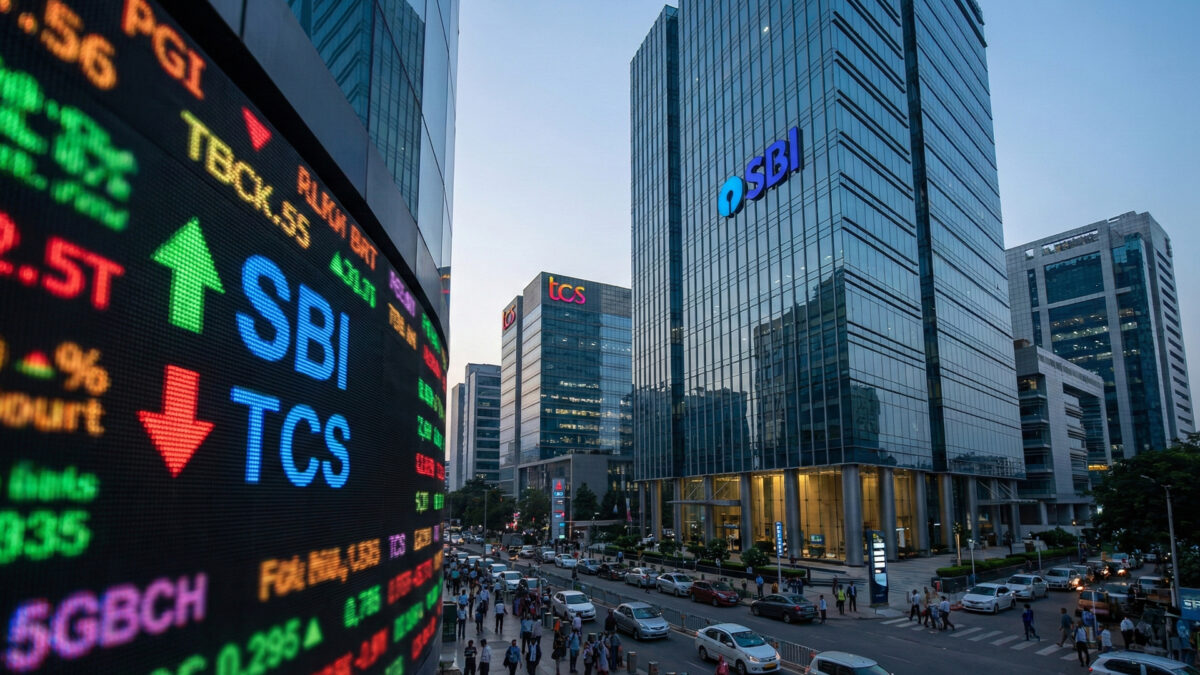
The State Bank of India (SBI) has overtaken Tata Consultancy Services (TCS) to become the fourth-largest listed company in India. This marks a rare moment when a public sector bank has climbed ahead of a major IT firm in market value.

SBI’s leap comes on the back of a record-breaking quarterly profit of ₹21,028 crore, a rise of nearly 25% compared to the same period last year. Strong growth in loans, higher interest and fee income, and better asset quality have helped the bank shine, even as other sectors faced pressure.

Investors responded enthusiastically. SBI’s shares surged over 3% to a 52-week high, while TCS saw a modest dip amid broader IT sector weakness. The rise in SBI’s market value to around ₹10.9 lakh crore nudged TCS, at ₹10.5 lakh crore, down a notch in the rankings.

While Reliance Industries, HDFC Bank, and Bharti Airtel continue to hold the top three spots, SBI’s climb reflects renewed confidence in the banking sector, particularly in India’s public banks. Analysts say the move signals that investors are paying closer attention to domestic financial growth, even in a market often dominated by technology companies.

Also Read: Global tech leaders gather for India AI Summit

Categories
Corporate

SBI Q3 profit hits record, shares rise 7%

Shares of State Bank of India (SBI) surged nearly 7% on Monday, hitting a record high, after the country’s largest public sector lender posted its highest-ever quarterly profit for Q3 of FY26.

SBI reported a net profit of ₹21,277 crore for the October–December period, up 24.5% year-on-year from ₹17,073 crore in the same quarter last year. Analysts attributed the growth to strong net interest income, improved asset quality, and disciplined risk management.

The bank’s net interest income (NII), which reflects core lending performance, rose by 9% to ₹45,323 crore. Non-interest income, which includes fees and trading gains, also contributed positively, amounting to ₹12,000 crore, marking a healthy year-on-year increase.

SBI’s asset quality improved significantly, with gross non-performing assets (GNPA) declining to 3.12% from 3.35% in the previous quarter. Provisions for bad loans also decreased, allowing the bank to post stronger profitability.

On the loan growth front, SBI reported a 13% increase in advances, with broad-based growth across corporate, retail, and small-business segments. The bank’s management raised its loan growth guidance for FY26 to 13–15%, signaling confidence in sustained credit demand.

The strong results led brokerages including Jefferies, Morgan Stanley, and BofA Securities to upgrade SBI’s stock. Price targets were raised, with some suggesting a potential upside of up to 14% from current levels. Most analysts maintained a “Buy” or “Outperform” rating, citing strong earnings momentum and improved fundamentals.

Investors responded positively to the earnings announcement, driving the stock to its all-time high of ₹1,145 per share during the trading session.

Also Read: FPIs return, pump ₹8,100 cr into Indian stocks

Categories
Corporate

SBI revises ATM charges for savings, salary accounts

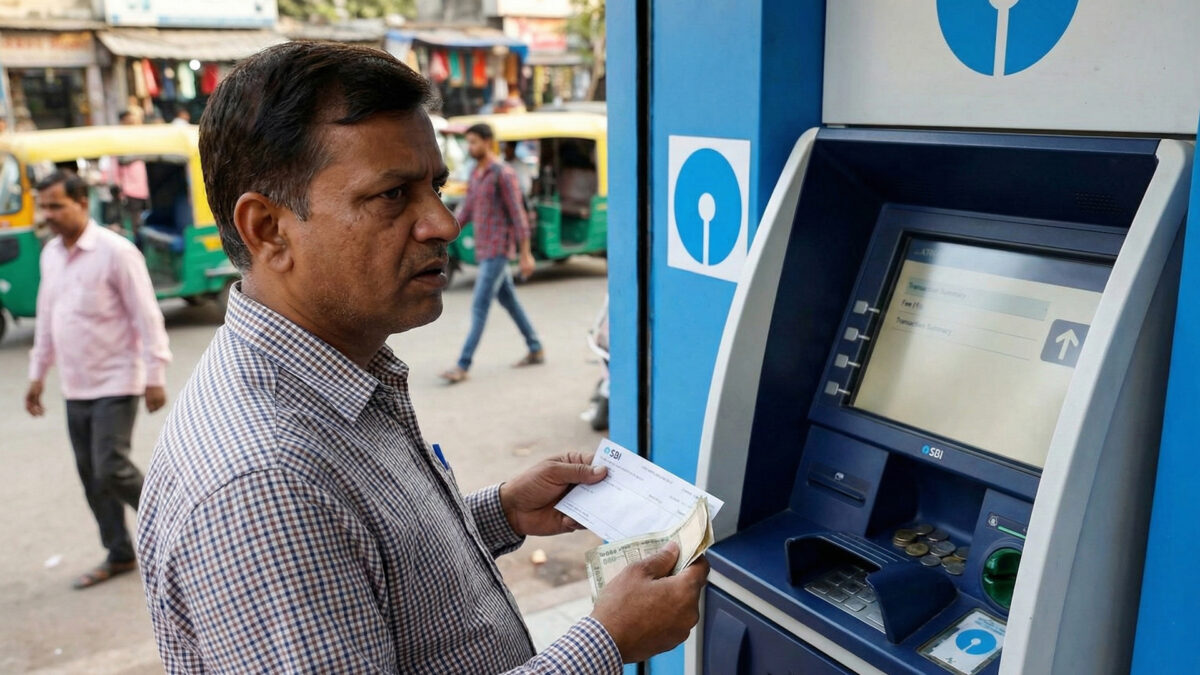
State Bank of India (SBI) has revised its ATM charges, impacting savings and salary account holders. The new fee structure, effective from December 1, 2025, primarily affects withdrawals and transactions at non‑SBI ATMs. The revision comes after an increase in interbank charges, the fees banks pay each other for ATM usage.

For regular savings account holders, the first five financial and non-financial transactions at non‑SBI ATMs remain free. Beyond this, cash withdrawals will attract ₹23 plus GST, up from ₹21, while non-financial transactions, such as balance inquiries or mini statements, will cost ₹11 plus GST, up from ₹10.

Salary account holders, who previously enjoyed unlimited free transactions, will now get 10 free transactions per month at all ATMs. Post-limit transactions will be charged the same rates as above.

Basic Savings Bank Deposit (BSBD) account holders will see no changes in ATM charges. Similarly, SBI debit cardholders using SBI ATMs and cardless cash withdrawals will continue to enjoy free and unlimited transactions.

SBI has advised customers to monitor their ATM usage carefully to avoid unexpected charges. The fee revision reflects rising costs in ATM operations and interbank transactions, aiming to balance service sustainability while encouraging responsible usage.

Also Read: FPIs sell ₹3,963 cr in Indian stocks

Categories
Corporate

SBI bets big on new YONO app

State Bank of India (SBI) is stepping up its digital push with a clear goal: to double the number of users on its YONO platform after rolling out a new and improved version of the app. From the current base of around 9.6 crore users, the country’s largest bank wants YONO to reach 20 crore customers in the coming years.

The new version of YONO has been designed to make everyday banking simpler and more intuitive. According to SBI Chairman C.S. Setty, the upgraded app brings together services across mobile phones, the web, and physical branches, offering customers a more seamless and consistent experience. Whether it is checking balances, applying for loans, or making payments, the bank wants customers to feel that digital banking is easy, reliable, and time-saving.

To ensure that customers are comfortable with the transition, SBI is not relying on technology alone. The bank plans to deploy nearly 10,000 staff members across its branches to help customers download the app, register, and learn how to use its features. This hands-on support is especially aimed at first-time digital users and customers who may be hesitant to move away from branch-based banking.

SBI believes that increasing digital transactions through YONO will also help reduce operating costs. Transactions carried out on mobile phones or online platforms are far cheaper than those handled at branches. By encouraging customers to shift routine activities online, the bank expects to improve efficiency while freeing up branch staff to focus on more complex customer needs.

The new YONO app also offers personalised insights, quicker approvals for loan limit enhancements, and the ability to handle a high volume of digital activity smoothly. These features are part of SBI’s broader strategy to strengthen its digital ecosystem and stay competitive in a fast-evolving banking landscape.

Also Read: Bond market ignores RBI rate cut, PSUs pause