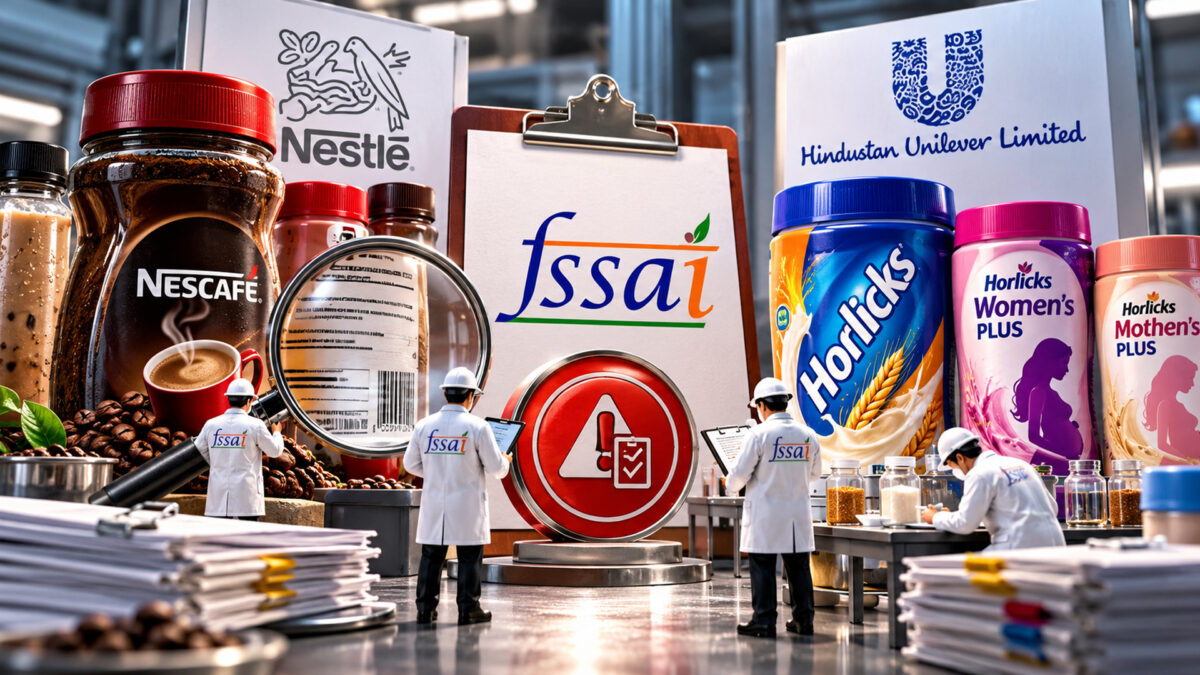
India’s food safety regulator has issued notices to Nestlé India and Hindustan Unilever Limited (HUL) over alleged misleading claims and labelling issues involving several food and nutrition products. The action covers Horlicks nutrition drinks, Nescafé ready-to-drink coffee beverages and a specialised nutritional powder marketed by Nestlé.
The Food Safety and Standards Authority of India (FSSAI) said it had identified potential violations involving product claims, online descriptions, mandatory labelling and regulatory approvals. The companies have been asked to respond within the stipulated period, with further action possible depending on their explanations.
The notices bring renewed attention to how food and nutrition products are marketed in India, particularly when packaging makes claims about health benefits, pregnancy, bone strength or specialised dietary needs. Such claims can influence consumer choices, making accuracy and compliance with food safety regulations important.
FSSAI’s action against HUL concerns two Horlicks products: Horlicks Women’s Plus Chocolate Nutrition Drink and Horlicks Mother’s Plus Kesar. Nestlé India has been flagged over its Nescafé ready-to-drink beverages and Resource Renal Vanilla Flavour Powder.
In the case of Horlicks Women’s Plus Chocolate Nutrition Drink, FSSAI questioned claims including “Nutrition for Strong Bones”, “Clinically Proven to Help Improve Bone Strength in 6 Months” and “Improves Bone Health”. The regulator said these claims were misleading or did not comply with the applicable food safety regulations.
The authority also raised concerns over the use of the term “Healthy Muscles”, saying it contravened rules governing the use of the word “healthy” in food-related claims.
Another issue involved the product’s “No Added Sugar” claim. FSSAI questioned whether this statement could mislead consumers because the formulation contains maltodextrin. The regulator also flagged deficiencies in the nutritional information table and raised concerns about a claim that the product provides 100% of the recommended daily allowance (RDA) of calcium, vitamin D and K2.
The concerns highlight the importance of presenting nutritional information clearly and ensuring that health-related statements comply with prescribed standards. Consumers often rely on front-of-pack claims when comparing products, making it important that such information accurately reflects the product and its ingredients.
HUL’s Horlicks Mother’s Plus Kesar product has also come under scrutiny. FSSAI questioned claims relating to “Healthy Birth Weight” on the packaging and “For baby’s healthy birth weight” in advertisements.
The regulator said these statements could give consumers the impression that the product itself ensures a particular health outcome. It also flagged promotional descriptions used on e-commerce platforms for allegedly failing to meet applicable requirements.
These notices are significant because nutrition products marketed to pregnant and breastfeeding women may influence decisions about maternal nutrition and infant health. Such products must follow the rules governing food advertising and claims rather than imply benefits that are not permitted under the regulations.
Nestlé India’s Nescafé ready-to-drink products have faced a separate set of questions. The regulator identified inconsistencies in the descriptions of Nescafé Intense Café Cappuccino, Nescafé Choco Mocha and Nescafé Chilled Latte sold through online platforms.
According to FSSAI, the front of the packaging described the beverages as “Flavoured Milk”, while the back label and online descriptions classified them as “Proprietary Food – 1.12 Dairy Based Drink”. The regulator questioned the mismatch between the product descriptions and the declared food category.
Nestlé India has also received a notice concerning Resource Renal Vanilla Flavour Powder, intended for the dietary management of people with conservatively treated chronic kidney disease.
FSSAI said the product required prior approval under the regulations governing specialised foods for medical purposes. The regulator alleged that the necessary approval had not been obtained. It also flagged the absence of the mandatory vegetarian or non-vegetarian symbol on the product label.
These requirements are particularly relevant for specialised nutrition products intended for people managing medical conditions, as their composition, labelling and permitted use are subject to specific rules.
HUL has said its two products comply with applicable requirements and that it will provide scientific and regulatory evidence to the authorities. Nestlé India had not immediately responded to a request for comment in reports published after the notices were issued.
The notices do not, by themselves, establish the final outcome of the cases. The companies have an opportunity to explain their positions, and the regulator may decide on further action after reviewing their responses.
For consumers, the episode is a reminder to look beyond prominent claims on food packaging and check ingredient lists, nutritional information and product descriptions. For manufacturers, it underlines the need to ensure that advertising, packaging and online listings remain consistent with food safety rules.
FSSAI’s action also signals continued regulatory scrutiny of the food industry, particularly products that make health and nutrition claims. The outcome of the proceedings will determine what further steps, if any, the regulator takes against the companies.