Categories
Corporate

Seven blue-chip firms lose ₹1.13 lakh cr in value

Seven of India’s 10 most-valued listed companies saw their combined market capitalisation decline by around ₹1.13 lakh crore last week, as the broader equity market remained under pressure and investor sentiment turned cautious.

Bharti Airtel and Reliance Industries accounted for the biggest erosion in value, with both companies losing more than ₹40,000 crore each. The decline came as benchmark indices extended their losses for a third consecutive week amid concerns over global interest rates, geopolitical uncertainty and volatility linked to the new closing auction session.

The BSE Sensex fell 276.32 points, or 0.35 per cent, during the week, while the NSE Nifty declined 76.35 points, or 0.31 per cent. Although the market staged a strong recovery on Friday, driven by buying in IT stocks following positive global technology cues, the late-week gains were not enough to prevent both benchmarks from ending lower.

Bharti Airtel recorded the biggest decline in market valuation among the top 10 companies. Its market capitalisation fell by ₹40,500.85 crore to ₹11,74,462.30 crore.

Reliance Industries followed closely, losing ₹40,056.32 crore in market value. Its market capitalisation stood at ₹17,38,119.27 crore at the end of the week. Despite the erosion, Reliance retained its position as India’s most-valued company.

HDFC Bank was the third-largest loser among the top companies. Its market valuation declined by ₹11,558.35 crore to ₹11,09,600.70 crore. Bajaj Finance also witnessed significant erosion, with its market capitalisation falling by ₹10,086.05 crore to ₹6,70,535.57 crore.

Larsen & Toubro saw its market value decline by ₹6,473.45 crore to ₹5,55,987.49 crore. Life Insurance Corporation of India, or LIC, lost ₹3,162.50 crore, bringing its market capitalisation down to ₹5,32,817.81 crore.

Hindustan Unilever was the seventh company among the top 10 to see its valuation decline. Its market capitalisation fell by ₹1,550.73 crore to ₹4,72,361.83 crore.

The selling pressure was not, however, spread across all the leading companies. Three of the top 10 firms added to their market value during the week, led by Tata Consultancy Services.

TCS emerged as the biggest gainer, adding ₹16,643.20 crore to its market capitalisation. Its valuation rose to ₹8,48,079.71 crore. The IT major benefited from strong buying in technology stocks, which helped the broader market recover sharply towards the end of the week.

ICICI Bank was another major gainer. Its market valuation increased by ₹4,475.28 crore to ₹10,22,805.73 crore. State Bank of India also registered a gain, with its market capitalisation rising by ₹599.99 crore to ₹9,65,568.75 crore.

The contrasting performance of the top companies highlights the selective nature of the current market trend. While investors reduced exposure to several large companies across telecom, energy, banking, finance, infrastructure and consumer sectors, buying interest remained visible in IT and select banking stocks.

Market analysts attributed the cautious tone to a combination of global and domestic factors. Concerns about the direction of global interest rates have continued to influence equity markets, while geopolitical uncertainty has added another layer of risk for investors.

The introduction of a new closing auction session has also contributed to market volatility, according to Ajit Mishra, senior vice-president of research at Religare Broking. He said Indian equities were in a corrective phase as investors assessed these uncertainties.

The sharp recovery on Friday offered some relief. Strong buying in IT stocks, supported by positive global technology cues, helped the benchmarks recover during the final trading session. However, the gains could not erase the losses accumulated earlier in the week.

Despite the changes in individual market valuations, the order of India’s 10 most-valued companies remained unchanged. Reliance Industries continued to lead the list, followed by Bharti Airtel, HDFC Bank, ICICI Bank, State Bank of India, TCS, Bajaj Finance, Larsen & Toubro, LIC and Hindustan Unilever.

The weekly decline in market capitalisation underscores the sensitivity of large-cap stocks to changes in investor sentiment. For companies with very high valuations, even relatively modest movements in share prices can translate into thousands of crores being added to or wiped off their market value.

Global interest-rate expectations, geopolitical developments and movements in overseas technology stocks are likely to remain important factors for Indian equities in the near term.

The ₹1.13 lakh crore decline across seven heavyweight companies therefore offers a snapshot of the market’s current cautious mood. At the same time, the gains recorded by TCS, ICICI Bank and SBI show that investors have not completely stepped away from equities, but are increasingly being selective about where they deploy capital.

 

Categories
Corporate

TCS, Porsche team up to drive AI-powered mobility

Tata Consultancy Services (TCS) and Porsche AG have entered into a five-year strategic partnership to expand the use of artificial intelligence across the German luxury carmaker’s operations. The agreement will focus on applying AI across engineering, manufacturing, business operations and customer experience as the automotive industry moves towards software-driven and connected mobility.

The partnership also includes TCS acquiring 100% of MHP Management- und IT-Beratung GmbH, Porsche’s Germany-based management and IT consulting subsidiary. The proposed acquisition has an enterprise value of €320 million, while the broader five-year strategic partnership between TCS and Porsche is valued at €1.25 billion ($1.46 billion). Both the acquisition and partnership remain subject to regulatory approvals.

TCS will establish a dedicated AI Mobility Centre of Excellence for Porsche. The centre will work on turning AI concepts into practical and scalable applications that can be used across the company’s value chain.

The focus will include intelligent manufacturing, engineering, operations and customer experience. The objective is to make AI useful in everyday business processes rather than treating it as a standalone technology project.

In manufacturing, AI can help companies analyse production data, identify potential problems and improve efficiency. In engineering, it can support product development and testing. For business operations, AI can assist with data-driven decision-making and process automation. On the customer side, the technology can help companies deliver more personalised digital experiences.

The companies said the partnership will bring together Porsche’s automotive engineering and brand expertise with TCS’s capabilities in artificial intelligence, product engineering, technology and business transformation. The aim is to develop secure and scalable AI solutions that can improve operational resilience, speed and competitiveness.

The MHP acquisition gives the deal another important dimension. Headquartered in Germany, MHP has more than 30 years of experience in management and IT consulting, with a strong focus on the automotive and industrial sectors. Its expertise covers AI, business transformation, SAP, manufacturing digitalisation, connected mobility and software-defined manufacturing.

MHP employs around 4,500 people worldwide. Its automotive expertise is expected to complement TCS’s global technology and engineering capabilities while helping the Indian IT company strengthen its position in Germany and among European automotive and industrial customers.

This acquisition for TCS, is also part of its broader effort to build its presence in AI and industry-specific technology services. The company has increasingly been positioning itself as an AI-led technology services provider as businesses move from experimenting with generative AI towards deploying it at scale.

The automotive sector is an important part of that transition. Vehicles are becoming more dependent on software, cloud platforms, data and connected systems. Modern cars already use software for functions ranging from infotainment and navigation to driver assistance, diagnostics and vehicle management.

The next phase is expected to involve greater use of AI throughout the vehicle lifecycle. That means AI could influence how vehicles are designed and tested, how factories operate and how manufacturers interact with customers.

TCS has already been developing capabilities in connected vehicles, autonomous driving, electric mobility and software-defined vehicles. Its mobility technology offerings cover areas such as cloud services, software development, data analytics, artificial intelligence and vehicle engineering.

TCS CEO and Managing Director K Krithivasan said the partnership would combine the company’s AI and engineering capabilities with MHP’s automotive consulting expertise. The goal is to scale AI across Porsche’s value chain and support the development of intelligent, software-defined mobility experiences.

Porsche CEO Michael Leiters said the transfer of MHP to TCS supports Porsche’s strategy of focusing more closely on its core automotive business. At the same time, the German carmaker will gain a strategic technology partner as mobility becomes increasingly shaped by software and data.

The agreement also comes as Porsche faces a challenging global automotive environment. Luxury carmakers are dealing with the cost of developing electric vehicles, changing consumer demand, tariffs and stronger competition, particularly from Chinese manufacturers. Porsche has been taking steps to streamline its operations and concentrate resources on its core business.

Selling MHP to TCS allows Porsche to change the ownership structure of its consulting arm while retaining a long-term business relationship with it through the new partnership.

The agreement provides access to a specialised automotive consulting business and strengthens TCS’s European footprint. The acquisition could also help the company work more closely with carmakers and industrial companies that are investing heavily in AI transformation, digital manufacturing and connected mobility.

The financial scale of the agreement makes it particularly significant. TCS is paying €320 million for MHP, while the five-year partnership with Porsche is worth €1.25 billion. Reuters reported that the acquisition is expected to close within the next three to four months, subject to regulatory clearance.

The partnership reflects a wider shift taking place across the automotive industry. The competition between carmakers is no longer based only on engine performance, design or manufacturing capacity. Software, data, artificial intelligence and digital services are becoming increasingly important in determining how vehicles are developed and how customers experience them.

With a five-year agreement and the planned acquisition of MHP, the partnership brings together Porsche’s automotive strengths and TCS’s technology expertise. Its success will ultimately depend on how effectively the companies can turn AI from an emerging technology into measurable improvements across engineering, manufacturing, operations and customer experience.

Categories
Corporate

Top 5 firms add ₹1.54 lakh cr market value

India’s biggest listed companies delivered a strong performance on the stock market during the past week, with five of the country’s 10 most-valued firms together adding nearly ₹1.54 lakh crore to their combined market capitalisation. The rally was driven by robust investor interest in blue-chip stocks, with Tata Consultancy Services (TCS) emerging as the biggest wealth creator during the week.

The rise in market value reflects improving investor confidence in fundamentally strong companies despite continued global uncertainties. Healthy corporate earnings, sustained domestic investment and optimism around India’s economic outlook encouraged investors to increase their exposure to leading stocks across information technology, banking and energy sectors.

Among all the companies, TCS recorded the highest jump in market capitalisation. The IT giant added more than ₹72,000 crore to its valuation during the week, making it the biggest contributor to the overall gains. Investor sentiment towards the company improved after its quarterly earnings met market expectations and the management expressed confidence about stronger business momentum in the coming months. The company’s positive outlook reassured investors that demand for technology services is expected to remain resilient despite global economic challenges.

Private sector lender ICICI Bank also witnessed a significant rise in market value, adding more than ₹29,000 crore during the week. Strong financial performance, consistent loan growth and healthy asset quality continued to attract investor interest in the banking major. Financial stocks remained among the preferred choices for investors as expectations of sustained credit growth and stable profitability supported buying activity.

Reliance Industries, India’s most-valued listed company, also contributed to the rally by adding nearly ₹24,000 crore to its market capitalisation. The conglomerate continued to receive support from investors due to its diversified business portfolio spanning energy, retail and digital services. The company’s long-term growth prospects and continued investments in expanding businesses helped maintain positive market sentiment.

Other major gainers included Infosys and HDFC Bank, both of which registered healthy increases in their market valuations during the week. The gains in these companies reflected renewed confidence in India’s leading technology and financial services firms, which continue to remain favourites among both domestic and foreign institutional investors.

Together, these five companies added approximately ₹1.54 lakh crore to their combined market capitalisation, highlighting the strength of India’s large-cap stocks. Market experts believe that investors continue to favour companies with stable earnings, strong balance sheets and proven business models, especially at a time when global markets remain volatile.

However, the week was not positive for every company among India’s top-10 most-valued firms. Five other companies witnessed a decline in their market capitalisation as investors booked profits after recent gains. Despite these losses, the combined increase recorded by the top performers comfortably outweighed the decline, allowing the overall valuation of India’s leading listed companies to move higher.

The latest changes did not significantly alter the hierarchy of India’s biggest listed firms. Reliance Industries retained its position as the country’s most-valued company by market capitalisation. It continued to be followed by HDFC Bank, Bharti Airtel, ICICI Bank, State Bank of India, TCS, Bajaj Finance, Life Insurance Corporation of India (LIC), Larsen & Toubro (L&T) and Hindustan Unilever Ltd (HUL). These companies collectively account for a substantial share of India’s total stock market value and often influence the movement of benchmark indices.

Market capitalisation, commonly referred to as market cap, represents the total value of a company’s outstanding shares. It is calculated by multiplying the current share price by the total number of shares in circulation. A rise in market capitalisation generally indicates growing investor confidence and an increase in shareholder wealth, while a decline reflects weaker market sentiment or profit booking.

Analysts say the latest rally underlines the resilience of India’s equity markets, supported by strong domestic participation, steady inflows from institutional investors and optimism surrounding corporate earnings. Large-cap companies continue to attract investors because they are generally considered more stable during periods of market volatility.

The performance of TCS has been particularly encouraging for the information technology sector, which has faced pressure over the past year due to slower global technology spending. The company’s strong quarterly performance and optimistic guidance have renewed hopes that demand for digital transformation projects could improve in the coming quarters.

With the earnings season gathering pace and investors closely monitoring quarterly results, market participants expect stock-specific movements to remain high in the coming weeks. If corporate earnings continue to meet expectations and macroeconomic conditions remain supportive, India’s leading companies could continue to witness healthy investor interest, strengthening the country’s equity markets further.

Also Read: Sensex slides 440 points, Nifty ends below 24,250

Categories
Corporate

TCS chosen to power JFK Airport’s new terminal

Tata Consultancy Services (TCS) has been selected as the strategic technology and innovation partner for New York’s upcoming Terminal One at John F. Kennedy International Airport (JFK), marking a major global infrastructure technology win for the Indian IT services company.

The partnership will see TCS provide digital solutions, technology expertise and innovation support for the new terminal, which is part of the $9.5 billion redevelopment project at JFK Airport. The new Terminal One is expected to become one of the largest international terminals in the United States once completed.

As part of the agreement, TCS will help design and implement advanced technology systems aimed at improving passenger experiences, operational efficiency and airport management. The company’s role will focus on creating a more connected and digitally driven airport environment using technologies such as artificial intelligence, data analytics, automation and cloud solutions.

The project is being developed by The New Terminal One, a private consortium responsible for delivering and operating the new facility. The terminal is designed to handle growing international travel demand while offering modern passenger facilities and sustainable infrastructure.

TCS said its partnership will support the vision of building a next-generation airport that combines technology with better customer experiences. The company will bring its global experience in areas such as digital transformation, enterprise technology and large-scale systems integration to the project.

For TCS, the JFK Terminal One contract strengthens its presence in the global transportation and aviation technology sector. The company already works with organisations worldwide on digital upgrades, helping businesses and public infrastructure providers improve efficiency through technology.

The partnership also highlights the increasing role of Indian technology companies in major global infrastructure projects. As airports worldwide invest in smart technologies, companies like TCS are becoming key partners in developing digital ecosystems that improve security, convenience and operational performance.

Also Read: Mylan exits Biocon after selling entire stake

Categories
Corporate

TCS restructures business for AI era

Tata Consultancy Services (TCS) has announced a major leadership overhaul as it sharpens its focus on artificial intelligence (AI) and digital transformation. The country’s largest IT services company has created five new global business units, aiming to help clients adopt AI faster while strengthening its own growth strategy.

The restructuring comes as businesses worldwide increase investments in AI-powered technologies and automation. TCS said the new structure is designed to make the organisation more agile, improve decision-making and deliver specialised solutions to customers across industries.

Under the new model, the company has reorganised its operations into five customer-focused business units, each led by senior executives with greater responsibility for growth, innovation and client relationships. The move is intended to simplify operations and enable faster execution in an increasingly competitive technology landscape.

TCS said AI is transforming the way enterprises operate, creating demand for new digital services across sectors such as banking, healthcare, manufacturing, retail and communications. By aligning its leadership around dedicated business units, the company hopes to respond more quickly to changing customer needs and emerging technology trends.

The company also believes the new structure will encourage closer collaboration between teams, improve service delivery and support the development of AI-led business solutions. TCS has been investing heavily in generative AI, cloud computing and automation, viewing these technologies as key drivers of future growth.

Also Read: Apple Pencil may get replaceable battery

Categories
Corporate

TCS faces $70 mn change in DXC case

Tata Consultancy Services (TCS) will take an additional charge of $70 million after the US Supreme Court declined to review a legal dispute involving DXC Technology, bringing the company closer to the conclusion of a years-long court battle.

The latest development relates to a trade secrets and intellectual property case linked to TCS’s work for a US insurance software platform. The US Supreme Court’s decision not to hear the appeal effectively leaves lower court rulings in place, prompting TCS to make an additional financial provision.

In a regulatory filing, TCS said the charge will be reflected in its financial statements. The company maintained that it had strong legal grounds in the matter but acknowledged that the Supreme Court’s decision marked the end of available judicial remedies in the case.

The dispute dates back several years and centres on allegations concerning the misuse of proprietary information. While TCS has consistently denied wrongdoing, the litigation has continued through multiple levels of the US legal system.

For investors and employees, the announcement is primarily a financial issue rather than an operational one. Analysts noted that although the additional provision will have an impact on earnings, it is unlikely to materially affect TCS’s long-term business outlook given the company’s size, profitability and strong balance sheet.

The company remains one of India’s largest information technology services firms, serving clients across industries including banking, retail, manufacturing, healthcare and telecommunications. Market observers said the provision reflects a prudent accounting approach following the legal outcome.

The development comes at a time when global technology companies are facing increasing scrutiny over intellectual property rights, data handling and contractual obligations. Legal disputes involving technology and software assets have become more common as businesses rely heavily on proprietary platforms and digital systems.

Despite the setback, analysts expect TCS to remain focused on its core business operations, including digital transformation, cloud services, artificial intelligence and enterprise technology solutions.

Also Read: Schneider Electric and Foxconn forge AI infrastructure alliance

Categories
1 Minute-Read

TCS partners Anthropic to scale enterprise AI adoption

Tata Consultancy Services (TCS) has partnered with artificial intelligence firm Anthropic to accelerate enterprise AI adoption and strengthen its workforce capabilities.

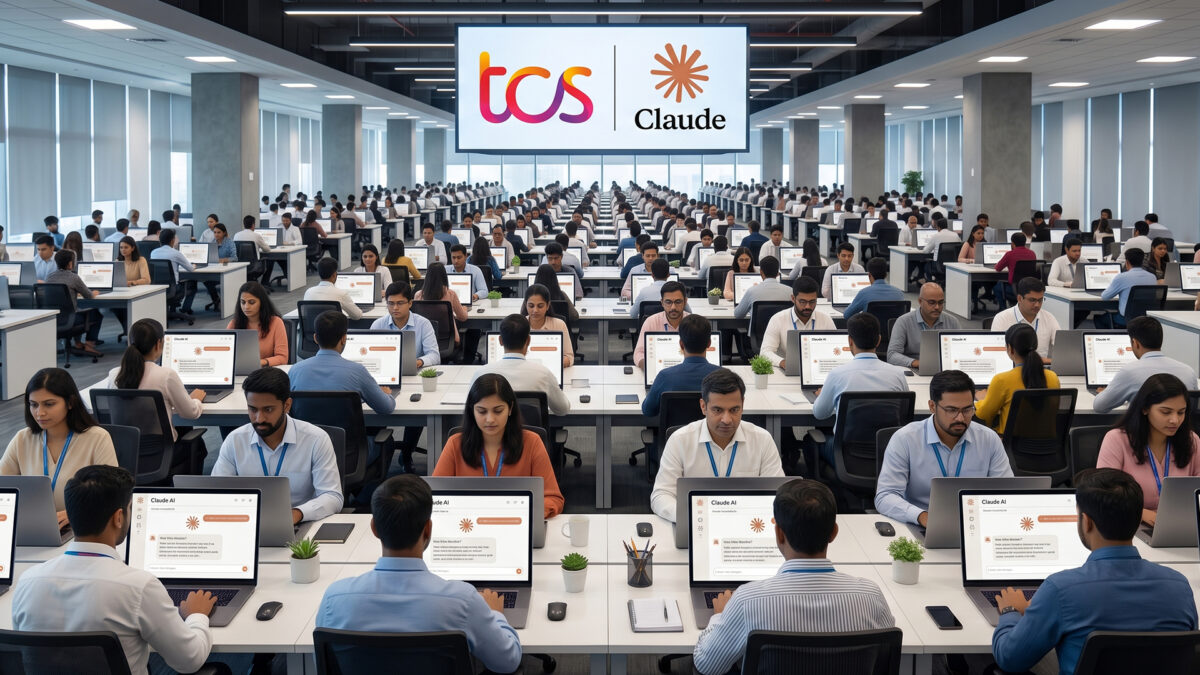
Under the collaboration, TCS will provide access to Anthropic’s Claude AI platform to 50,000 employees across functions such as engineering, finance, legal, marketing and sales. The companies will also jointly develop AI-powered solutions for industries including banking, healthcare, telecommunications and public services.

TCS said the partnership combines its industry expertise with Anthropic’s advanced AI technology to help clients improve productivity and drive digital transformation. The move reflects growing demand for enterprise AI solutions globally.

Categories
Corporate

TCS wins multi-year AI-led IT deal from Canada life

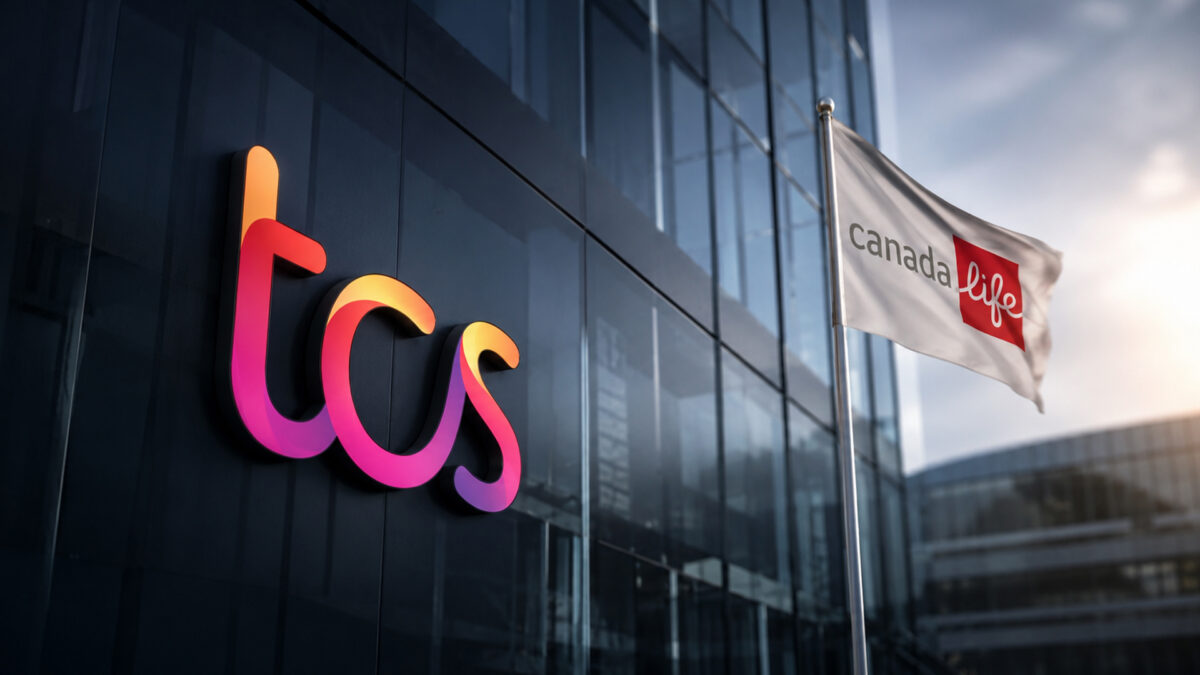
India’s largest IT services company, Tata Consultancy Services (TCS), has secured a multi-year technology transformation contract from Canada Life, strengthening its presence in the European insurance sector and expanding its portfolio of artificial intelligence-led digital transformation projects.

Under the agreement, TCS will help modernise Canada Life’s IT infrastructure and business operations across its European businesses. The project will focus on integrating advanced technologies, including artificial intelligence, automation and cloud-based solutions, to improve operational efficiency and enhance customer experience.

The deal is expected to support Canada Life’s long-term strategy of simplifying technology systems, streamlining processes and accelerating digital transformation initiatives. TCS will leverage its expertise in large-scale IT modernisation programmes to help the insurer upgrade legacy systems and build more agile technology platforms.

Company executives said the partnership aims to create a more resilient and future-ready technology environment capable of supporting evolving customer needs and regulatory requirements. The transformation programme is also expected to improve service delivery and enable faster deployment of digital products and services.

For TCS, the contract represents another significant win in the global financial services sector, one of the company’s largest business segments. The company has increasingly focused on AI-driven solutions as enterprises worldwide invest in automation and digital technologies to improve competitiveness and reduce operational costs.

The deal highlights growing demand among insurers for technology modernisation as they seek to improve efficiency, strengthen cybersecurity and deliver personalised customer experiences. Many financial institutions are accelerating investments in cloud computing, data analytics and artificial intelligence to adapt to changing market conditions.

The agreement further strengthens TCS’s long-standing presence in Europe, a key growth market for the company. TCS already works with several leading financial institutions, insurers and multinational corporations across the region.

The value of the contract has not been officially disclosed, though reports described it as a multi-million-euro engagement. The project is expected to be implemented over several years, with TCS providing end-to-end services spanning technology consulting, platform modernisation, automation and ongoing operational support.

Also Read: Haleon to invest ₹2,000 cr in first India plant

Categories
Corporate

TCS partners Mistral for enterprise AI models

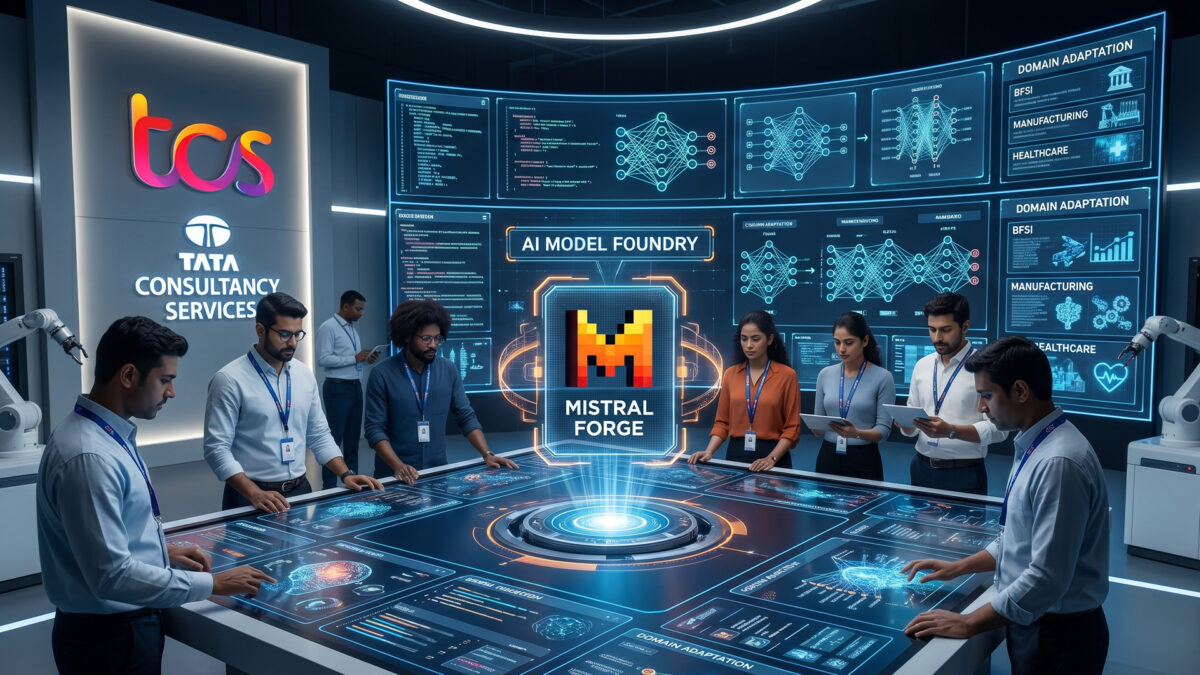
Tata Consultancy Services has partnered with French artificial intelligence startup Mistral AI to develop custom AI models and solutions for enterprise customers.

As part of the collaboration, TCS will help businesses use Mistral’s generative AI technology to build AI-powered applications tailored to specific industries and company needs. The partnership is aimed at supporting enterprises looking to adopt artificial intelligence in areas such as customer service, software development, automation, data analysis, and business operations.

TCS also announced the launch of a dedicated Centre of Excellence (CoE) focused on Mistral AI technologies. The centre will work on developing, testing, and deploying AI solutions for global clients across different sectors.

Mistral AI is one of Europe’s fastest-growing AI startups and is known for developing large language models that compete with global AI platforms. The company has gained international attention for building open and enterprise-focused AI systems.

According to TCS, the partnership will help clients create secure and scalable AI tools while maintaining greater control over enterprise data. The companies also plan to work on responsible AI practices and industry-specific use cases.

TCS executives said demand for generative AI solutions is growing rapidly among businesses worldwide. Companies are increasingly looking for AI systems that can improve productivity, reduce costs, and automate repetitive tasks.

The collaboration reflects the rising focus of Indian IT companies on artificial intelligence as global businesses accelerate digital transformation. Major technology firms are investing heavily in AI partnerships, cloud infrastructure, and custom AI development to stay competitive in the evolving technology market.

Also Read: Warner Bros. Discovery CEO earns $165 mn in 2025

Categories
1 Minute-Read

TCS Nashik case sparks outrage over harassment claims

A controversy has erupted at a TCS unit in Nashik after women employees accused some colleagues of sexual harassment and attempts at forced religious conversion. The company has suspended the accused staff and said it follows a strict zero-tolerance policy toward such behaviour.

Police have registered cases and launched an investigation into the matter. Reports say action was also taken against officials who allegedly failed to respond to earlier complaints.

A Special Investigation Team has been set up to look into the allegations. The case has drawn public attention, with demands for a fair probe and strict action against those found guilty.