Categories
Beyond

Centre to announce banking reform panel soon

The Centre is set to announce a high-powered committee to examine the next phase of banking sector reforms and define how banks can better support India’s ambition of becoming a developed economy by 2047. Finance Minister Nirmala Sitharaman said the panel would be constituted soon, with the ongoing discussions among public sector banks (PSBs) and public financial institutions expected to provide important inputs for its work.

The proposed High-Level Committee on Banking for Viksit Bharat was first announced in the Union Budget 2026-27. The government had said the committee would undertake a comprehensive review of the financial sector and suggest measures to align it with India’s next phase of growth, while keeping financial stability, inclusion and consumer protection in focus.

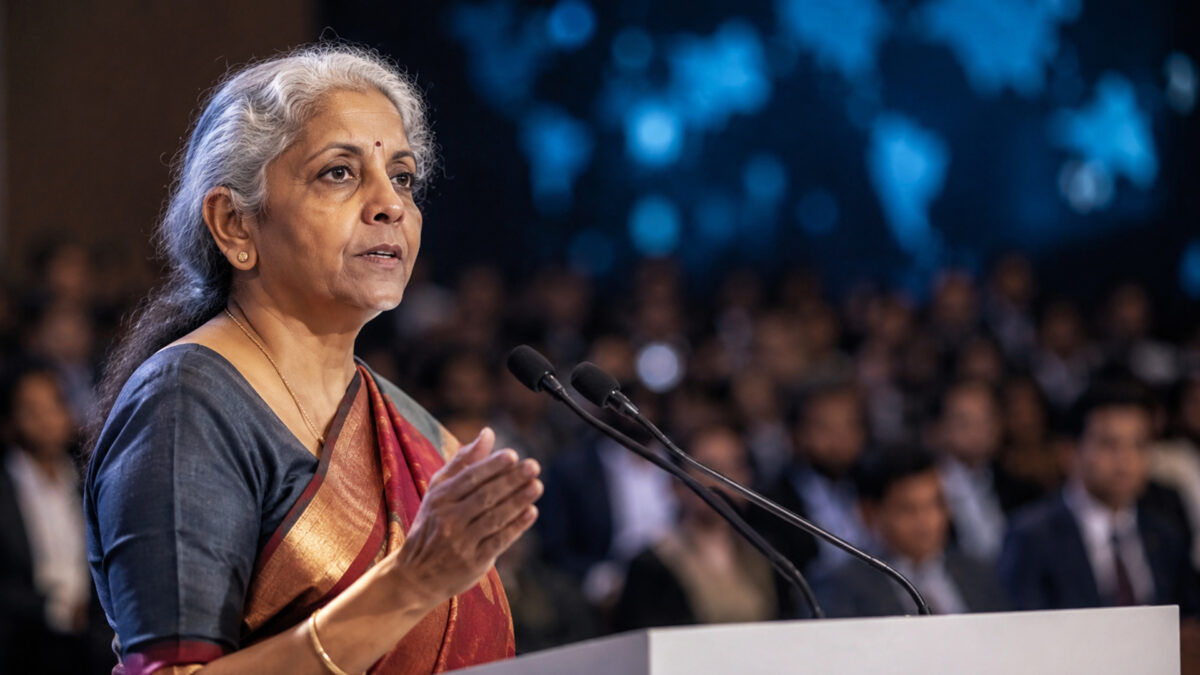
Sitharaman made the latest announcement while addressing the PSB Confluence 2026 in New Delhi on August 17. The two-day meeting, organised by the Department of Financial Services under the Ministry of Finance, brought together senior executives of public sector banks, public financial institutions, government officials and industry experts to discuss the changing requirements of the banking and financial system.

The timing of the proposed banking reforms is significant. Indian banks have emerged from a prolonged period of balance-sheet stress with much healthier asset quality. Public sector banks reported an aggregate net profit of ₹1.98 lakh crore in financial year 2025-26, their highest ever, while their gross non-performing asset ratio fell to 1.93% and net NPA ratio declined to 0.39% as of March 31, 2026. Their total business also rose to ₹283.3 lakh crore, while gross advances increased 15.7% year-on-year to ₹127 lakh crore.

Sitharaman said the historically low level of non-performing assets (NPAs) has put the banking industry in a stronger position to undertake the next phase of reforms. The focus is therefore shifting from repairing bank balance sheets to preparing lenders for the financing needs of a larger and more complex economy.

The PSB Confluence is expected to play an important role in that transition. The first day of the meeting focused on four areas: deposit mobilisation, banking for youth, supporting the investment cycle and opportunities arising from global capability centres, or GCCs. The discussions were aimed at identifying practical measures that can be implemented across public sector banks and financial institutions.

Deposit mobilisation has emerged as an important concern as banks seek to support faster credit growth while maintaining adequate funding. The discussions examined ways to deepen customer engagement and strengthen the deposit base. For banks, attracting stable deposits remains critical because sustained lending growth requires a dependable source of funds.

The government also wants the banking system to respond better to the financial needs of younger Indians. Sitharaman pointed out that people aged between 15 and 29 account for 29% of India’s population. The confluence therefore examined ways to make banking products and services more relevant to young customers, including areas such as education finance, entrepreneurship and career opportunities.

Participants also explored the possibility of using Mera Yuva Bharat (MY Bharat) to strengthen the connection between young people and the formal financial system. The platform has more than 26 million registered users and could provide banks with a wider avenue to reach potential customers and improve financial awareness among youth.

Another major area under discussion was the investment cycle. Banks and financial institutions will have to play a larger role in financing infrastructure, businesses and new investment opportunities as economic activity expands. The confluence looked at strengthening institutional capabilities and developing financing solutions that can respond to changing investment requirements.

The growing global capability centre (GCC) ecosystem was another focus. With multinational companies expanding their technology, research and service operations in India, public sector banks and financial institutions are being encouraged to identify new opportunities emerging from this sector.

The second day of the confluence is focused on agriculture and horticulture value-chain infrastructure, priority sector lending and rethinking the credit card business. The government expects the discussions across all seven themes to result in actionable strategies and innovative solutions that can eventually feed into the work of the proposed banking reforms committee.

The government is also looking for more direct participation from banking leaders in shaping the reform agenda. Sitharaman has urged bankers to put forward concrete recommendations rather than broad suggestions, with the objective of ensuring that the eventual reforms are practical and capable of being implemented.

For public sector banks, the proposed panel comes at a relatively stronger point in their financial performance. Years of efforts to improve governance, recover stressed assets, strengthen capital positions and tighten credit discipline have improved their resilience. The challenge now is to ensure that renewed lending growth does not recreate the asset-quality problems seen during earlier credit cycles.

The proposed committee is therefore likely to look beyond immediate banking issues and examine the broader role of financial institutions in India’s long-term economic transformation. Its recommendations could influence how banks approach credit, deposits, financial inclusion, technology, risk management and emerging sectors.

With less than two decades left until 2047, the government sees the banking system as a key pillar of the Viksit Bharat agenda. The immediate priority is to convert the improved health of Indian banks into a stronger foundation for sustainable credit growth, wider financial inclusion and greater economic opportunity.

The announcement signals that the next phase of banking reform will not simply be about fixing weaknesses. It will be about building lenders capable of supporting a much larger economy while maintaining stability, consumer confidence and responsible lending standards.

Categories
1 Minute-Read

Nirmala Sitharaman highlights push for higher foreign inflows

Union Finance Minister Nirmala Sitharaman has said the government is taking additional measures to attract higher foreign capital inflows into India, emphasizing its commitment to maintaining the country as a preferred investment destination.

Speaking at an industry event, Sitharaman said India continues to offer strong growth opportunities backed by policy stability, infrastructure development and economic reforms. She noted that the government is working to create a more investor-friendly environment and strengthen ease of doing business.

The minister highlighted India’s economic resilience amid global uncertainties and said sustained reforms would help draw long-term foreign investments. Her remarks come as the government seeks to accelerate growth, create jobs and support industrial expansion through increased global investor participation.

Categories
Beyond

Mis-selling a crime under BNS, FM tells banks

Finance Minister Nirmala Sitharaman has warned banks and financial institutions that mis-selling financial products is now a punishable offence under the Bharatiya Nyaya Sanhita, and asked them to return their focus to core banking activities instead of aggressively cross-selling third-party offerings.

Speaking at a meeting with bank chiefs, Sitharaman said customers must not be forced or misled into buying insurance, mutual funds or other investment products that do not match their needs. She stressed that such practices erode public trust in the banking system and will invite legal consequences under the new criminal law framework.

The minister made it clear that banks exist primarily to mobilise deposits and provide credit, and that these fundamental functions should not take a back seat to fee-based income from distribution of financial products. She urged lenders to strengthen their due diligence and ensure that products are sold only after proper assessment of a customer’s risk profile and financial goals.

The government’s message comes amid rising complaints from customers who say they were pressured into purchasing policies or investment schemes while availing loans or opening accounts. Officials noted that mis-selling not only harms consumers but also exposes banks to reputational and regulatory risks.

Sitharaman also asked bank managements to improve internal training and accountability so that frontline staff do not prioritise sales targets over customer interest. Senior executives were told to closely monitor sales practices and put in place transparent grievance redressal mechanisms.

The finance minister further emphasised the need for responsible growth in the financial sector, calling on banks to support productive sectors of the economy, improve credit flow and maintain strong asset quality.

Also Read: Gurugram tops Mumbai with ₹24,000 cr ultra-luxury home sales

Categories
Corporate

Government didn’t guide LIC’s Adani investments, says FM

Finance Minister Nirmala Sitharaman said the government did not issue any directions or advice to the Life Insurance Corporation of India (LIC) regarding its investments in the Adani Group. Responding to a question in the Lok Sabha, she emphasised that LIC’s decisions were made independently and in line with its standard operating procedures (SOPs).

Sitharaman said LIC has always made investment decisions based on company fundamentals, strict due diligence and regulatory norms. Over the years, the insurer has invested in several Adani Group companies after these checks. LIC currently holds shares worth ₹38,658.85 crore and debt worth ₹9,625.77 crore in various Adani firms.

She clarified that the Finance Ministry “does not issue any advisory or direction to LIC” on how it should invest its funds. Investment decisions, she said, are taken solely by LIC, governed by the Insurance Act, IRDAI rules, and regulations issued by SEBI and the RBI.

Her statement comes after a Washington Post report alleged that finance ministry officials pushed LIC to invest in the Adani Group earlier this year when the conglomerate was under global scrutiny. The report highlighted LIC’s ₹5,000-crore investment in secured non-convertible debentures of Adani Ports & SEZ in May 2025.

Sitharaman said the investment followed LIC’s due diligence process and board-approved policies. She added that LIC routinely invests in India’s largest companies. As of September 30, 2025, its investments in Nifty 50 firms amounted to ₹4.3 lakh crore, nearly 46% of its total equity portfolio.

The minister also detailed LIC’s internal oversight structure. Its investment operations are reviewed by concurrent auditors, statutory auditors, system auditors, internal vigilance teams, and are periodically inspected by IRDAI. “There is no direct oversight by the government on LIC’s investments,” she said.

Among private companies, LIC’s largest equity exposure is in Reliance Industries (₹40,901 crore), followed by Infosys, TCS, HDFC Bank, and Hindustan Unilever. Its biggest debt exposure is also with HDFC Bank (₹49,149 crore).

Within the Adani Group, LIC’s highest exposure is in Adani Total Gas (₹8,646 crore), ranking 25th among all its investments. Holdings in other Adani firms, including Adani Enterprises, Ambuja Cements, Adani Ports, Adani Energy Solutions, Adani Green Energy, and ACC fall further down the list.

Sitharaman also noted that LIC’s shareholdings of 1% or more in any listed company are already publicly available, as required under SEBI rules.

LIC, India’s largest institutional investor with assets of over ₹41 lakh crore, has repeatedly said its investments in the Adani Group were made independently, without any pressure from the Finance Ministry.

In an earlier statement, LIC said its decisions follow strict due diligence and comply fully with regulatory guidelines, adding that the Department of Financial Services “has no role” in its investment choices.

Also Read: Rupee slips to all-time low of 89.76 against dollar

Categories
Leaders

India Nears Top Three Globally, FM Sitharaman

India is steadily advancing toward becoming the third-largest economy in the world, Finance Minister Nirmala Sitharaman said, underlining the country’s impressive economic progress over the past decade.

Speaking at the Delhi School of Economics, she noted that India was the tenth-largest economy in 2014. Today, it ranks fifth globally, and with sustained growth, it is poised to move even higher, edging closer to joining the top three alongside the United States and China.

Sitharaman stressed that India’s growth is not just about numbers. An estimated 25 million people have been lifted out of multi-dimensional poverty in recent years, highlighting the social impact of economic development. Government reforms, infrastructure investments, and policies aimed at inclusive growth have all contributed to these achievements, she added.

The Finance Minister also pointed to significant improvements in India’s financial sector. Public sector banks are stronger today, with the long-standing twin balance sheet problem, which had strained both banks and corporate borrowers, largely resolved. This healthier banking environment is expected to boost investment, stimulate job creation, and support further economic expansion.

On fiscal management, Sitharaman noted that the government is on track to meet its fiscal deficit target of 4.4% of GDP (₹15.69 lakh crore) for FY 2025‑26, reflecting a commitment to balancing growth with fiscal responsibility. Analysts say that maintaining fiscal discipline while encouraging investment and consumption is critical to sustaining the momentum toward becoming a top-three economy.

India’s rise in global economic rankings carries broader implications. Achieving third-largest status would enhance the country’s international influence, increase foreign investment, and create more resources for sectors such as healthcare, education, and infrastructure.

Yet challenges remain: continued reforms, improved productivity, job creation, and careful navigation of global uncertainties, including inflation, commodity price volatility, and geopolitical risks, will be essential to secure this trajectory.

Sitharaman’s remarks underline that India’s growth strategy aims to combine economic scale with social progress, ensuring that prosperity reaches citizens across the country while strengthening the nation’s global standing.

Also Read: China lifts 24% US tariff, keeps 10%