
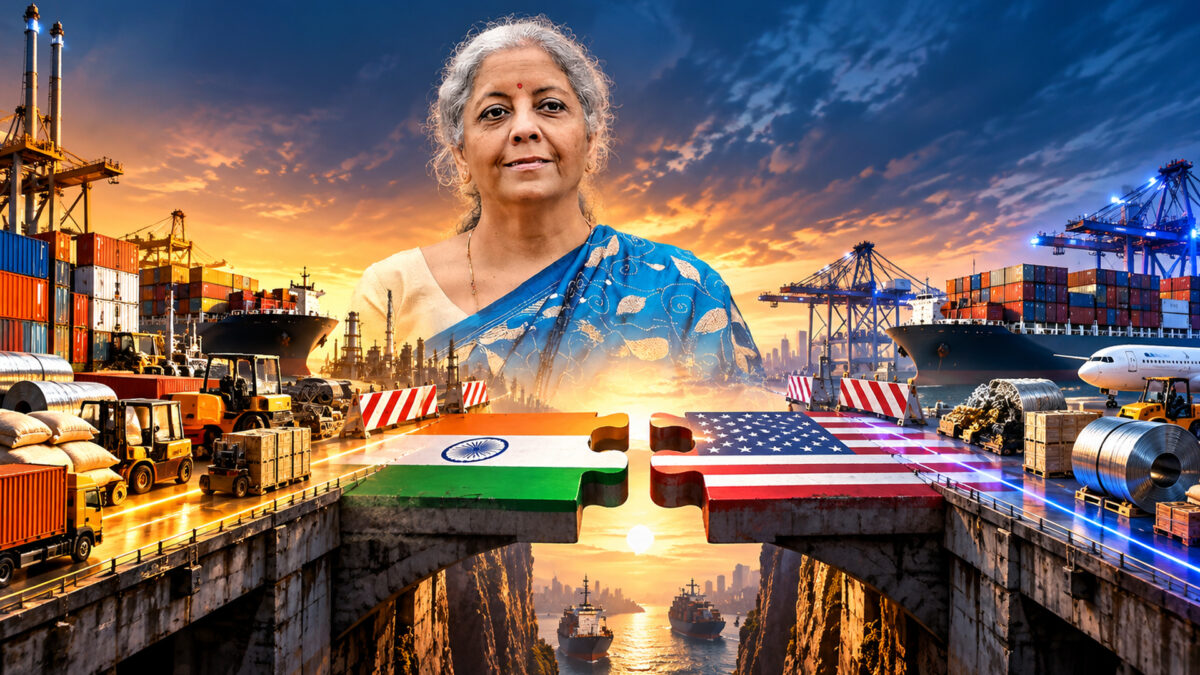
India and the United States have reached a difficult stage in negotiations for a trade agreement, with Finance Minister Nirmala Sitharaman saying the talks have reached a “plateau” and that securing further concessions will not be easy.
The remarks underline the challenges facing New Delhi and Washington as they try to settle differences on tariffs, market access and other trade-related issues. Despite months of negotiations, several sensitive matters remain unresolved.
Sitharaman said discussions between the two countries are continuing and that there is still scope for progress. However, she indicated that the negotiations have entered a stage where both sides are being forced to look carefully at what they are willing to give up.
The comments come at a time when Indian exporters are watching developments closely. The United States is one of India’s biggest export markets, and any increase in tariffs could affect the competitiveness of Indian products ranging from pharmaceuticals and textiles to engineering goods and electronics.
The trade negotiations gained urgency after the US imposed higher tariffs on imports from several countries, including India. Washington has been pushing for greater access to the Indian market, while New Delhi has been seeking better conditions for its exporters and protection for sensitive domestic sectors.
The two sides are discussing a broader bilateral trade agreement that could cover tariffs, market access, investment and other economic issues. Commerce and Industry Minister Piyush Goyal has been leading India’s negotiations, while US Trade Representative Jamieson Greer has been involved from the American side.
Greer has indicated that discussions remain constructive but that important differences are still being worked out. A final agreement is therefore unlikely to be reached until both countries find a solution to the remaining contentious issues.
The trade imbalance between India and the US is one of the issues in the background. India exports more goods to the American market than it imports from the US. The Trump administration has repeatedly highlighted such trade deficits and sought greater access for American goods.
India, however, has argued that trade relationships cannot be assessed only through bilateral goods deficits. Sitharaman has also pointed to India’s much larger trade deficit with China while questioning whether tariffs are an effective way to correct such imbalances.
Another complicated issue is India’s continued purchase of Russian crude oil.
Russian oil has become an important source of energy for Indian refiners, helping the country secure supplies at competitive prices. Washington has criticised purchases of Russian energy and has considered additional tariff measures targeting countries that continue significant trade with Moscow.
New Delhi has maintained that its energy decisions are based on national requirements and energy security. The issue has therefore become closely linked to the wider India-US trade negotiations.
The two countries are also dealing with concerns surrounding American trade investigations. A US investigation under Section 301 of the Trade Act is examining issues related to India’s industrial capacity and its possible impact on American businesses.
Any additional action following such investigations could increase pressure on Indian exporters and make the negotiations more complicated.
Businesses are particularly concerned about uncertainty. Exporters need to know the tariff rates they will face before committing to long-term orders, expanding production or making new investments.
Small and medium-sized businesses could face greater pressure because they generally have less ability to absorb additional costs. Higher tariffs can quickly affect profit margins and make Indian products less competitive against goods supplied from other countries.
At the same time, India is keen to expand its presence in the US market. A favourable trade agreement could provide Indian companies with greater certainty and improved access while encouraging investment and strengthening supply-chain ties between the two economies.
The negotiations also need to be viewed against the broader India-US relationship. The two countries have expanded cooperation in defence, technology, energy, manufacturing and strategic industries. Economic ties have become an important part of that larger partnership.
That makes a trade agreement valuable to both sides, but it also means that the negotiations involve several competing interests.
Neither India nor the US has indicated that the talks have broken down. Sitharaman’s comments suggest instead that negotiators have reached the difficult final stretch, where the remaining issues are more sensitive than those already resolved.
A possible conversation between Prime Minister Narendra Modi and US President Donald Trump could provide fresh political momentum if negotiators need guidance on the remaining differences.
The immediate task is to find common ground without either side feeling that it has made excessive concessions. India wants greater opportunities for its exporters while protecting key domestic industries. The US wants wider access to the Indian market and action on issues it considers trade barriers.
The negotiations therefore remain alive, but the path to an agreement has become more challenging. Sitharaman’s assessment makes clear that the next round of talks will require careful bargaining and flexibility from both sides.
For businesses, the biggest requirement is clarity. Until the tariff and market-access questions are settled, companies on both sides are likely to remain cautious about their next moves.
The India-US trade deal is still within reach, but the latest comments suggest that reaching the finish line will require considerably more negotiation than initially expected.