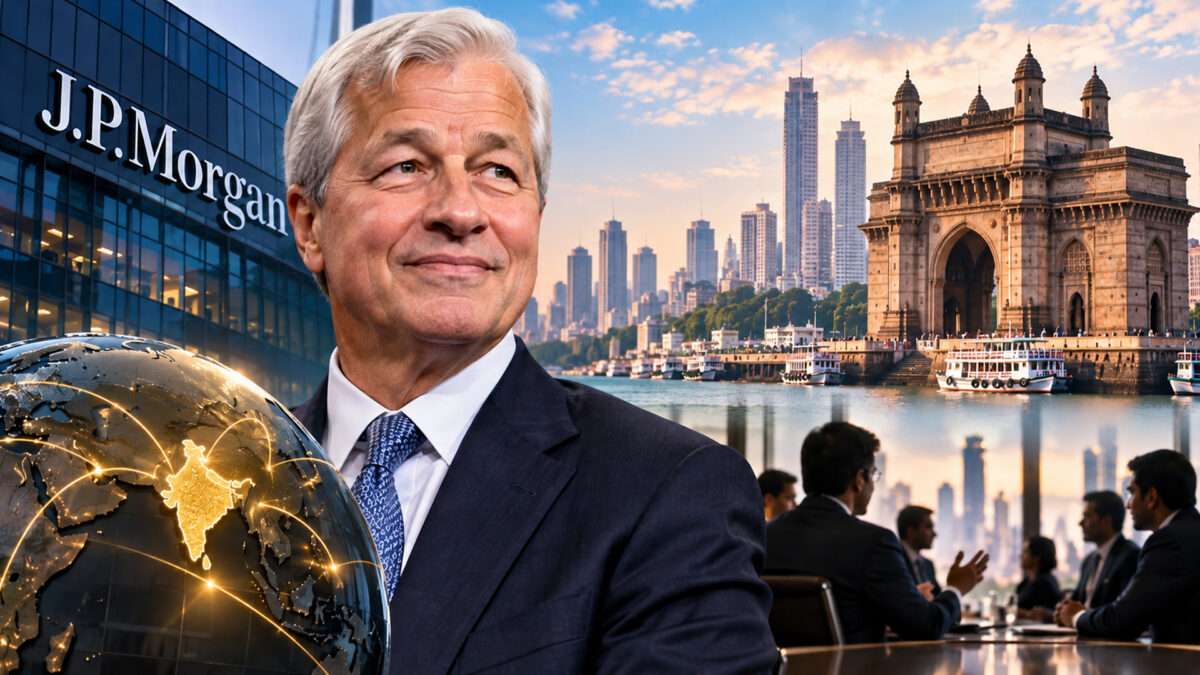
JPMorgan Chase Chairman and CEO Jamie Dimon met Union Finance Minister Nirmala Sitharaman in Mumbai on Monday, as the US banking giant held its annual India Investor Conference.
The meeting came as global investors and senior corporate executives gathered in Mumbai to discuss India’s economy, markets and investment opportunities. The two-day conference, held on September 21 and 22, brought together more than 1,000 investors and business leaders.
The Finance Ministry confirmed the meeting between Sitharaman and Dimon but did not disclose details of their discussion. Sitharaman also addressed the investor conference and participated in a conversation with JPMorgan’s Asia economics chief Sajjid Chinoy.
Dimon’s visit highlights JPMorgan’s growing focus on India. The bank has expanded its operations across investment banking, technology, payments and financial services and now has a workforce of more than 55,000 in the country.
India has become an important market for JPMorgan as companies raise more money through stock markets, pursue acquisitions and expand overseas. The bank has been active in equity offerings and other capital-market transactions involving Indian companies.
Dimon is also meeting senior business leaders during his Mumbai visit. Executives from several major Indian companies are taking part in meetings with investors at the conference, giving global funds an opportunity to assess sectors ranging from manufacturing and financial services to technology and consumer businesses.
The bank sees opportunities in areas such as artificial intelligence, renewable energy, digital infrastructure, data centres, healthcare and cross-border mergers and acquisitions.
Dimon has maintained a long association with India. His first visit to the country was around 2005, when JPMorgan’s presence was much smaller. Since then, India has developed into one of the bank’s largest international bases, particularly for technology, engineering, cybersecurity and global support operations.
India’s economic growth is a major focus for investors attending the conference. Questions around domestic consumption, corporate earnings, infrastructure spending and policy reforms are shaping the investment outlook.
Dimon has spoken positively about India’s longer-term economic potential during his visit. He has said India could significantly expand its economy over the next decade if it maintains its growth momentum.
At the same time, the JPMorgan chief has pointed to areas that could concern international investors. Tax uncertainty and the way taxes are applied to certain business transactions remain issues that companies monitor when deciding where to invest.
Global energy policy is another issue on Dimon’s radar. He has urged policymakers to consider the impact on oil markets and India’s refining sector when dealing with countries that purchase Russian crude.
His comments come at a time when India’s energy imports and its relationship with Russia remain closely watched by international markets and governments.
The Mumbai conference also comes as the Indian government continues efforts to attract foreign investment. Sitharaman has repeatedly called on global companies to expand manufacturing and technology operations in India and use the country’s large pool of skilled workers.
The opportunity for JPMorgan extends beyond traditional banking. India’s expanding capital markets, rising corporate activity and growing technology sector are creating demand for investment banking, financing, payments and other financial services.
The meeting between Dimon and Sitharaman therefore comes at an important time for both sides. While details of their conversation were not released, their meeting brought together two key parts of India’s investment story, government policy and global financial markets.
As international investors continue to assess India’s growth prospects, JPMorgan’s expanding presence reflects the increasing importance of the country to global financial institutions.