Categories
Beyond

India rolls out test of real-time disaster alert system

If your phone suddenly made a loud alert sound recently, you were not alone. The government carried out a nationwide test of a new emergency alert system, sending a message marked “extremely severe” to mobile users across India.

The alert was part of a trial run of the Cell Broadcast System, a technology built to deliver real-time warnings during disasters. While the message caught many people off guard, officials later confirmed that it was only a test and no action was needed.

The system is designed to improve how quickly people are informed during emergencies such as floods, earthquakes, cyclones, or other crises. Instead of sending individual text messages, it broadcasts alerts to all phones in a particular area at once.

This approach has a key advantage,  it works even when networks are busy or overloaded, which is often the case during emergencies. It also does not require users to install apps or register for alerts, making it more accessible.

The government says the system has been developed locally and is part of a larger effort to strengthen disaster response across the country. Future alerts are expected to be available in multiple languages to reach a wider population.

The recent test also helped authorities understand where improvements are needed. Some users said they did not receive the alert, highlighting areas where coverage can be enhanced.

Also Read: Pentagon ties up with tech giants for AI push

Categories
Beyond

India plans to relax FDI rules for China-linked firms

India is planning to ease foreign direct investment (FDI) rules for overseas companies that have a small exposure to Chinese firms, in a move aimed at attracting more global investments.

Under the proposed change, foreign companies with up to 10% stake from Chinese entities may face fewer restrictions when investing in India. The final notification is expected soon from the Department of Economic Affairs.

The move comes as India looks to speed up approvals and make it easier for global businesses to invest, especially in key sectors. Current rules, introduced in 2020, require stricter scrutiny of investments linked to countries sharing land borders with India, including China.

Officials say the new approach will help remove delays for companies where Chinese ownership is minimal, without compromising on security concerns.

At the same time, investments with higher Chinese stakes are likely to continue facing tighter checks.

The step is seen as an effort to strike a balance, encouraging foreign investment and economic growth, while still keeping a close watch on sensitive inflows.

Also Read: Reliance retail acquires Anomaly haircare brand

Categories
Beyond

India cuts export duty on diesel, jet fuel

India has reduced export duties on diesel and aviation turbine fuel (ATF), offering some relief to refiners as global oil prices remain volatile. The new rates came into effect on May 1.

Export duty on diesel has been brought down to ₹23 per litre from ₹55.5, while jet fuel duty has been reduced to ₹33 per litre from ₹42. There is no export duty on petrol. Despite these changes, taxes on fuels sold within the country remain unchanged.

The decision comes at a time when global crude oil prices have surged due to ongoing geopolitical tensions and supply concerns, particularly in West Asia. As a major importer of crude oil, India is sensitive to such fluctuations, which can impact both fuel availability and pricing.

Earlier, the government had raised export duties to ensure enough fuel stayed within the country and to prevent companies from exporting more for higher profits. The latest move signals a shift, allowing refiners more flexibility while still keeping domestic supply stable.

For consumers, there is no immediate impact, as petrol and diesel prices at the pump remain steady. The government has maintained these rates to avoid passing on the burden of rising global prices to the public.

The changes also come as the aviation sector faces higher fuel costs, with ATF being a major expense for airlines. Lower export duties may help ease some of the pressure on fuel supply and pricing.

Also Read: EPFO rolls out E-PRAAPTI as PF account tracker

Categories
Beyond

India’s forex reserves rise above $703 bn

India’s foreign exchange reserves have climbed to $703.3 billion, continuing a steady upward trend and strengthening the country’s financial buffer against global uncertainties.

According to the latest Reserve Bank of India data, the reserves increased by around $2.3 billion in the week ending April 17, 2026. The rise reflects a mix of valuation gains and stable external inflows.

The biggest contribution came from foreign currency assets, which make up the bulk of India’s reserves. These assets include holdings in major global currencies such as the US dollar and euro, and their value often changes with global currency movements and central bank operations.

Gold holdings also played a role in the increase. India’s gold reserves have seen a gradual rise in value in recent months, supported by higher global gold prices and consistent accumulation by the central bank. This has added another layer of stability to the overall reserves.

Other components, including Special Drawing Rights and India’s position with the International Monetary Fund, remained largely unchanged during the period.

The latest increase comes after some fluctuations earlier this year, when global uncertainties such as geopolitical tensions and changes in oil prices affected reserve levels. However, the recent trend shows a recovery and steady build-up.

Also Read: Ashok Lahiri named NITI Aayog vice-chairman


Categories
Beyond

India seafood exports makes a record of ₹72,325 cr

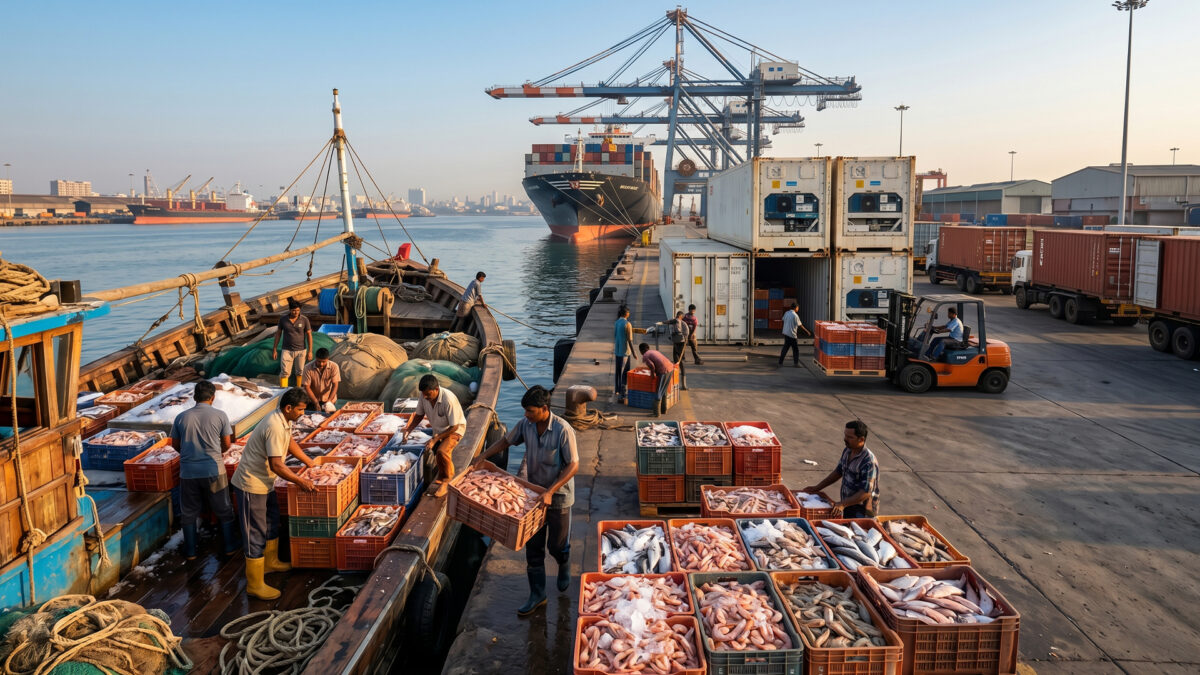
India’s seafood exports touched a record ₹72,325 crore in the financial year 2025-26, showing the strength of the sector even as demand from the United States weakened. Export volumes also increased, reflecting steady global interest in Indian marine products.

The country exported 19.32 lakh metric tonnes of seafood during the year, according to provisional figures from the Marine Products Export Development Authority (MPEDA). This marks one of the best performances for the industry in recent years.

Frozen shrimp remained the star product, contributing the largest share of export income. Shrimp exports brought in ₹47,973 crore, making up more than two-thirds of the total earnings. Demand for Indian shrimp remained firm across several international markets.

Although the United States continued to be the biggest buyer of Indian seafood, exports to that market declined during the year. Industry sources said tariff-related issues and trade pressures affected shipments, making Indian products less competitive there.

However, losses in the US market were more than offset by strong growth elsewhere. China emerged as a key growth driver, with imports of Indian seafood rising sharply. The European Union also increased purchases significantly, while countries in Southeast Asia recorded healthy demand.

Other seafood categories such as frozen fish, squid, cuttlefish, dried products and live seafood also performed well. Only chilled seafood exports reported a drop.

Also Read: Jio Financial, Allianz partner for insurance business


Categories
1 Minute-Read

India urged to cut West Asia energy dependence

India should rethink its heavy dependence on West Asia for energy after a major global supply shock, ONGC Chairman Arun Kumar Singh has said.

He noted that India relies on the region for a large share of its oil, gas and LPG needs, making it vulnerable to disruptions. Recent geopolitical tensions and shipping route issues exposed these risks, forcing supply adjustments.

Singh called for boosting domestic exploration and production, expanding strategic reserves, and diversifying import sources. He emphasized that energy security must become a priority as global uncertainties rise, urging a long-term shift toward a more resilient and self-reliant energy system.

Categories
Beyond

India delays refinery shutdowns to boost supply

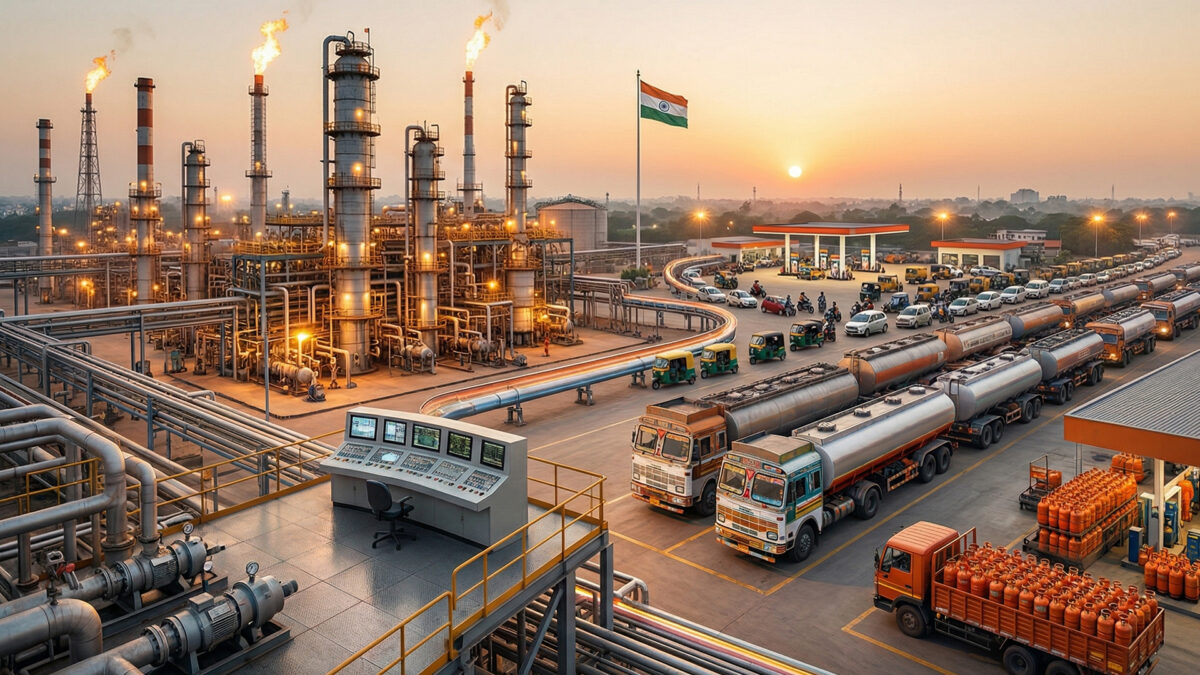
Indian oil refiners have postponed scheduled maintenance shutdowns at several plants to ensure steady fuel supply, as demand remains high across the country. The decision is aimed at preventing any disruption in the availability of petrol, diesel and LPG.

State-run companies such as Indian Oil Corporation and Bharat Petroleum Corporation are among those that have delayed routine maintenance at some of their refineries. These shutdowns are usually planned in advance to maintain operational efficiency, but have now been deferred to keep production levels stable.

Officials said the move comes at a time when domestic fuel consumption is strong and global energy markets remain uncertain. Ongoing geopolitical tensions, particularly in West Asia, have raised concerns over possible disruptions in fuel supplies, increasing the need to prioritise local production.

However, not all refiners are postponing maintenance. Nayara Energy is expected to go ahead with a planned shutdown of its Vadinar refinery in April. This facility plays a key role in fuel production, and its temporary closure could have some impact, especially on LPG supply.

The government is closely monitoring the situation and is prepared to take additional steps if required, including increasing imports, to ensure that fuel supplies remain sufficient. Officials have also reassured that there is currently no shortage of petrol or diesel in the country.

India depends heavily on crude oil imports, making it sensitive to global supply disruptions. In such conditions, maintaining refinery output becomes critical to meeting domestic needs.

By delaying maintenance work, refiners are trying to avoid supply gaps and keep the market stable.

Also Read: Air India CEO Campbell Wilson steps down

Categories
Beyond

Oil India increases Thar production by 70%

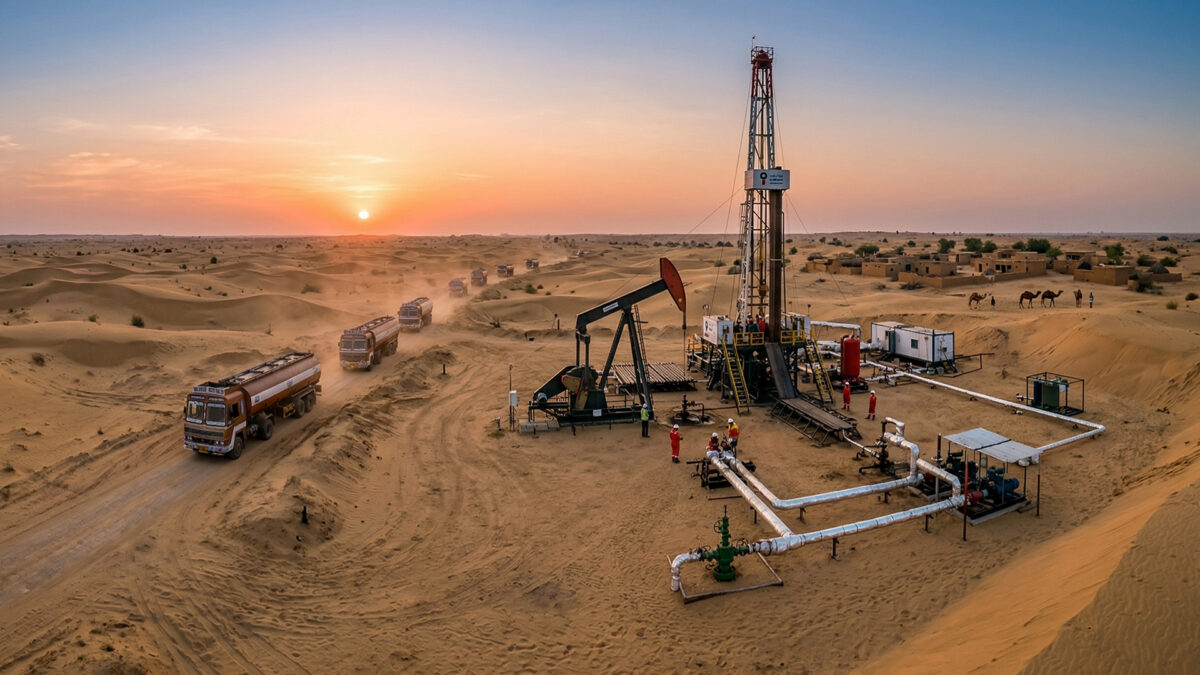
India is increasing its domestic oil production as global supply concerns grow, with a sharp rise in output from Rajasthan’s Thar Desert.

State-run Oil India Ltd has boosted crude production from its fields in the region, recording around 1,200 barrels per day. This is a significant jump of nearly 70% compared to last year, showing steady progress in tapping local oil reserves.

The move comes at a time when global oil markets are under pressure due to tensions in the Middle East. Disruptions around key shipping routes like the Strait of Hormuz have raised fears of supply shortages and higher prices. In response, India is looking to rely more on its own resources to meet energy needs.

The increase in production has been made possible by the use of better technology. Oil India is using advanced methods to extract heavy crude oil, which is usually harder to produce. These techniques have helped improve output from older and challenging fields in the desert region.

The oil extracted from the Thar Desert is transported to Gujarat, where it is processed at refineries. While the total production is still small compared to India’s overall oil demand, the increase is seen as an important step.

India depends heavily on imported crude oil, especially from the Middle East. Because of this, any global disruption can directly affect the country’s energy supply and costs. Boosting local production helps reduce some of this risk, even if only partially.

Experts say this effort is part of a larger plan to strengthen India’s energy security. By increasing domestic output, the country can better handle global uncertainties.

Even though the current production levels are not enough to replace imports, the growth shows that India is making progress in using its own resources more effectively.

Also Read: Wipro to acquire Olam’s IT unit for $375 mn


Categories
Beyond

India adds new nuclear submarine INS Aridhaman

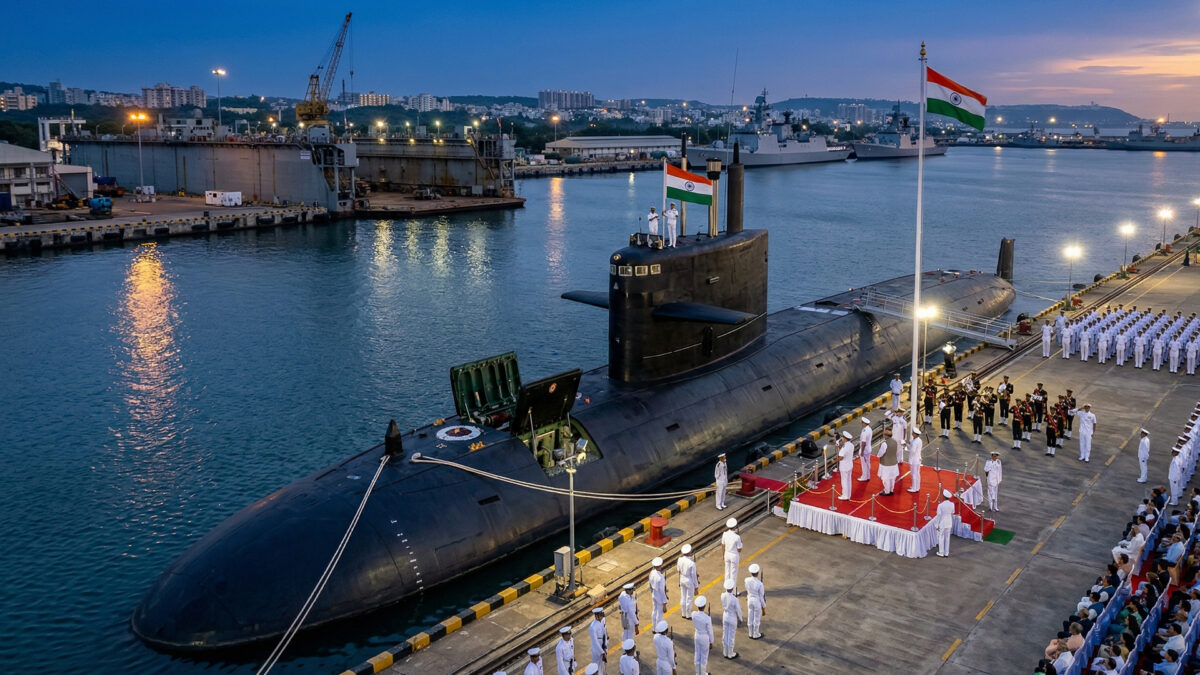
India has added a new nuclear-powered submarine, INS Aridhaman, to its navy, boosting its defence strength. The submarine was officially commissioned in Visakhapatnam on Friday in the presence of Defence Minister Rajnath Singh.

INS Aridhaman is India’s third nuclear-powered ballistic missile submarine, after INS Arihant and INS Arighaat. It has been built in India under a secret defence programme, showing the country’s growing ability to develop advanced military technology on its own.

The submarine is bigger, quieter, and more advanced than the earlier ones. Because it runs on nuclear power, it can stay underwater for long periods without coming up, making it difficult for enemies to detect.

INS Aridhaman can carry nuclear-capable missiles like K-15 and K-4, which can strike targets from long distances. This adds to India’s nuclear triad — the ability to launch nuclear weapons from land, air, and sea.

This submarine plays an important role in India’s second-strike capability. This means that even if the country is attacked first, it can still respond with a strong counterattack. Submarines like INS Aridhaman are hard to find underwater, making them a reliable part of this defence system.

The project also highlights India’s push for self-reliance in defence manufacturing. Much of the submarine was built in the country, especially at the Ship Building Centre in Visakhapatnam.

This strengthens India’s position in the Indian Ocean region, where strategic competition is increasing. With three such submarines, India is moving closer to maintaining continuous patrols at sea for better security.

Also Read: US proposes $1.5 trillion defence budget

Categories
Beyond

Russia offers more oil, gas to India

India and Russia have held high-level talks to strengthen their partnership, with a key focus on increasing the supply of oil and natural gas. The discussions took place in New Delhi between Russian Deputy Prime Minister Denis Manturov and Prime Minister Narendra Modi, along with other senior officials.

During the meeting, Russia предложed to expand its supply of crude oil and liquefied natural gas (LNG) to India. The move is aimed at supporting India’s growing energy demand at a time when global markets are facing uncertainty due to geopolitical tensions, particularly in West Asia.

India relies heavily on imports to meet its energy needs, making stable supply arrangements crucial. In recent years, Russia has emerged as one of India’s top suppliers of oil, and both countries are now looking to deepen this relationship further.

The talks were not limited to energy alone. Both sides discussed ways to improve cooperation in trade, fertilisers, and technology. Russia has been increasing its fertiliser exports to India and has expressed its willingness to continue meeting the country’s requirements.

Progress on ongoing nuclear energy projects, including the Kudankulam Nuclear Power Plant, was also reviewed. In addition, both nations explored opportunities for collaboration in areas such as innovation, critical minerals, and industrial development.

The discussions also covered broader economic ties and ways to expand bilateral trade. Leaders подчеркнули the importance of maintaining strong cooperation in a rapidly changing global environment.

Russia’s offer to supply more oil and gas is expected to help India secure its energy needs and manage price fluctuations. At the same time, it allows Russia to strengthen trade ties with one of its key partners.

Also Read: Google expands AI video tools