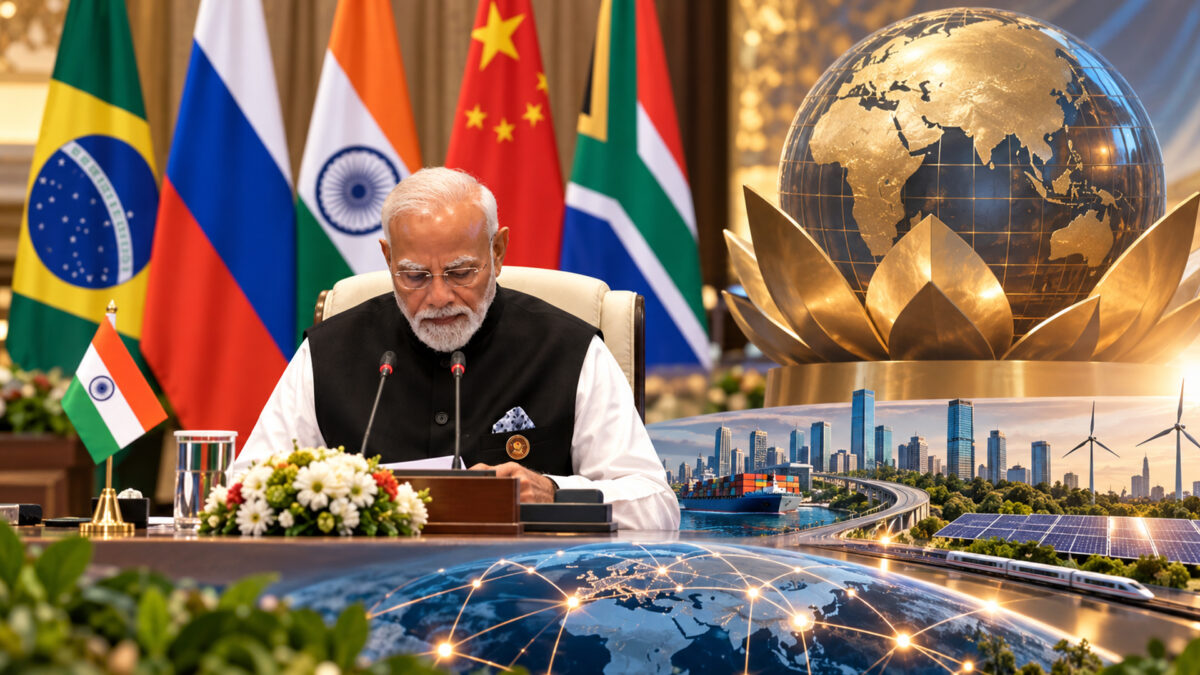
Prime Minister Narendra Modi has called for a new and ambitious agenda for BRICS for the next 20 years, saying the grouping must strengthen its own functioning while also pushing for reforms in global institutions. His remarks came as leaders of the expanded bloc gathered in New Delhi for the 18th BRICS Summit amid growing trade tensions, geopolitical conflicts and disruptions to global supply chains.
Opening the summit on Saturday, Modi said BRICS had reached a “coming of age” moment after two decades. He said the next phase should begin by improving the way the grouping functions and should run alongside a clear roadmap for reforming global institutions.
The economic weight behind that message is significant. PM Modi has said BRICS countries now account for around 50% of the world’s population, about 40% of global GDP and roughly 25% of international trade. The bloc has expanded well beyond its original members and now includes Brazil, Russia, India, China, South Africa, Egypt, Ethiopia, Indonesia, Iran and the UAE.
India wants that economic scale to translate into stronger business opportunities. At the BRICS Business Forum, PM Modi proposed a three-part agenda: identifying and removing the bloc’s top 10 trade barriers, helping 100 startups expand into other BRICS markets every year and creating 1,000 new business partnerships annually. He also called for regular reviews to track progress.
The proposals come at a time when global companies are dealing with tariffs, geopolitical tensions and increasingly fragile supply chains. PM Modi has argued that BRICS can use its combined market size to create more predictable conditions for trade and investment.
Trade facilitation has therefore emerged as one of India’s key priorities. Commerce and Industry Minister Piyush Goyal has urged BRICS members and partner countries to open markets, simplify regulations and strengthen cooperation in sectors ranging from agriculture and pharmaceuticals to engineering, electronics, automobiles, services, startups and emerging technologies.
Payment connectivity is another important part of the economic agenda. India is pushing for BRICS countries to link payment systems and promote greater use of national currencies in bilateral trade. The objective is to make cross-border transactions faster and cheaper while reducing some of the costs associated with currency conversion.
India’s Unified Payments Interface, or UPI, has been highlighted as one possible model for digital payment cooperation. PM Modi has also pointed to India’s progress in semiconductors, biotechnology and quantum technology as areas where BRICS members could build stronger partnerships.
The bloc is also moving towards greater cooperation on startups and logistics. The proposed BRICS Incubator Network would connect startups and innovation agencies across member countries, while the Startup Innovation Fund would support early-stage businesses. A separate logistics and supply-chain cooperation framework is aimed at improving connectivity and resilience.
Supply-chain security has gained greater importance as conflicts have disrupted shipping routes and energy flows. PM Modi has called for freedom of navigation and safer sea lanes, warning that the security of international waters and seafarers is directly linked to global trade. India is also seeking greater cooperation in strategic sectors such as shipbuilding, semiconductors and biotechnology.
The geopolitical side of the summit is equally important for the business agenda. Chinese President Xi Jinping arrived in New Delhi on Saturday for his first visit to India in seven years and is scheduled to meet Modi. The two countries are attempting to stabilise relations after tensions following their 2020 border clash. Better ties could have implications for trade, investment and supply-chain links between the world’s two most populous countries.
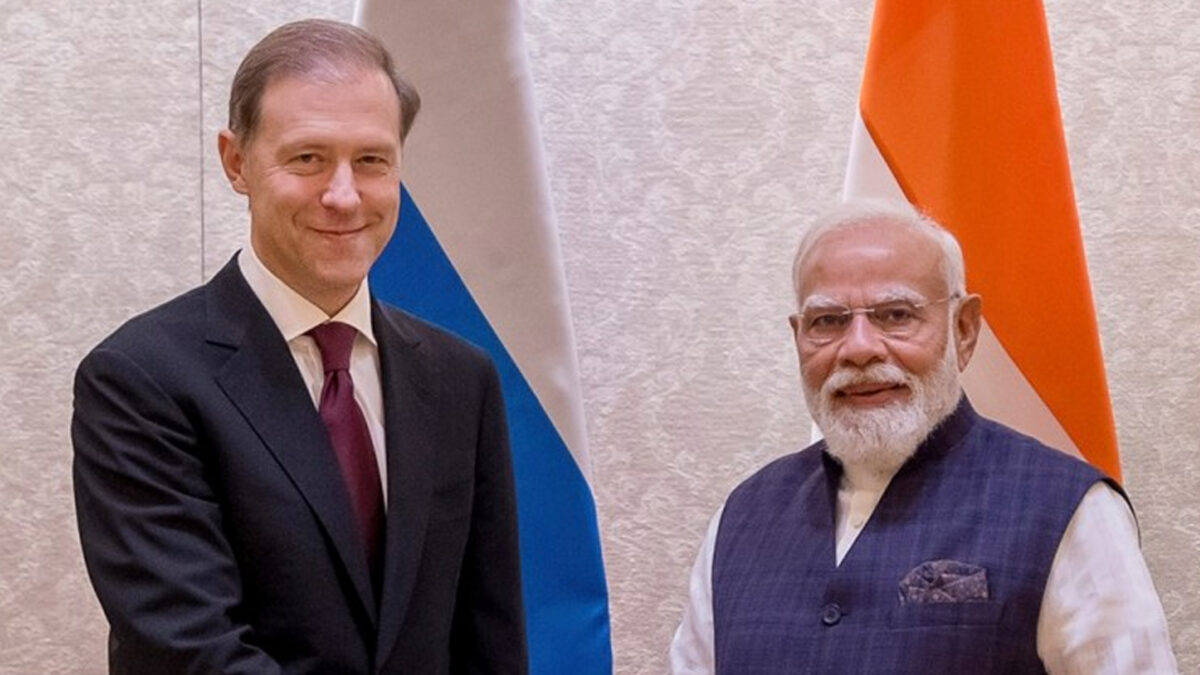
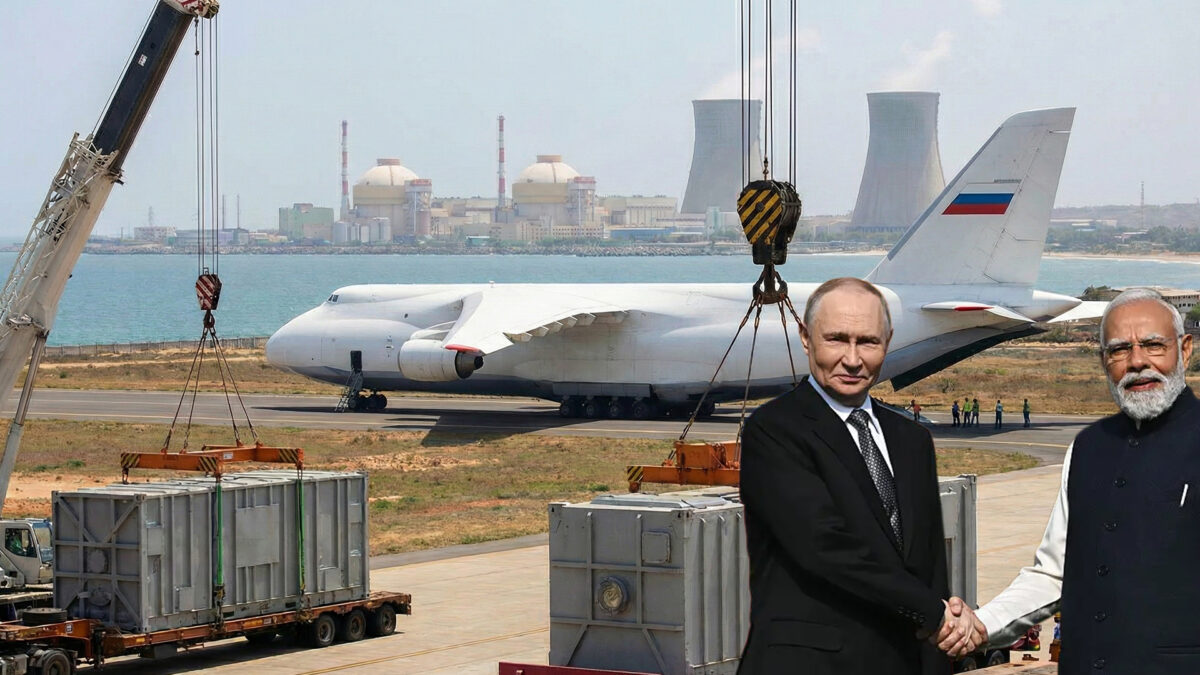
PM Modi has also held discussions with Russian President Vladimir Putin on the sidelines of the summit. The two leaders reviewed cooperation in trade, energy, defence, space, critical minerals, fertilisers and skill mobility. India and Russia are also looking to increase bilateral trade from nearly $70 billion to $100 billion by 2030.
The discussions come against a difficult global economic backdrop. The Russia-Ukraine war, the conflict involving Iran, disruptions in the Red Sea and Strait of Hormuz and broader US-China tensions have affected energy markets, shipping costs and international supply chains.
These pressures have strengthened the case within BRICS for greater economic resilience and reduced dependence on a single market or financial system. Russia, China and Iran have pushed for greater financial independence, while India has focused more heavily on practical trade cooperation and payment connectivity.
PM Modi has also used the summit to push for a larger role for the Global South in global decision-making. He said reforms to international institutions, including the United Nations Security Council, can no longer be delayed. India wants developing countries to have a greater voice in institutions that shape global economic and political rules.
That demand extends to global financial institutions. BRICS has been seeking reforms in bodies such as the International Monetary Fund, World Bank and World Trade Organization, arguing that their structures should better reflect the economic weight of emerging economies.
Yet the expanded BRICS bloc also faces a major challenge: maintaining consensus among countries with different political systems, economic priorities and foreign-policy positions. Iran and the UAE, for instance, have sharply different positions on the current Gulf conflict. Negotiators nevertheless reached agreement on a joint declaration ahead of the summit, with the document expected to condemn unilateral warfare without naming individual countries.
The agreement is important because BRICS foreign ministers failed to issue a joint statement during their May meeting because of differences between Iran and the UAE. Reaching consensus this time gives the bloc an opportunity to demonstrate that its expansion has not made collective decision-making impossible.
India’s larger objective is to make BRICS more practical and business-focused. The proposed 20-year agenda is not limited to political coordination. It includes trade barriers, digital payments, startups, investment, logistics, supply chains, technology and energy security.