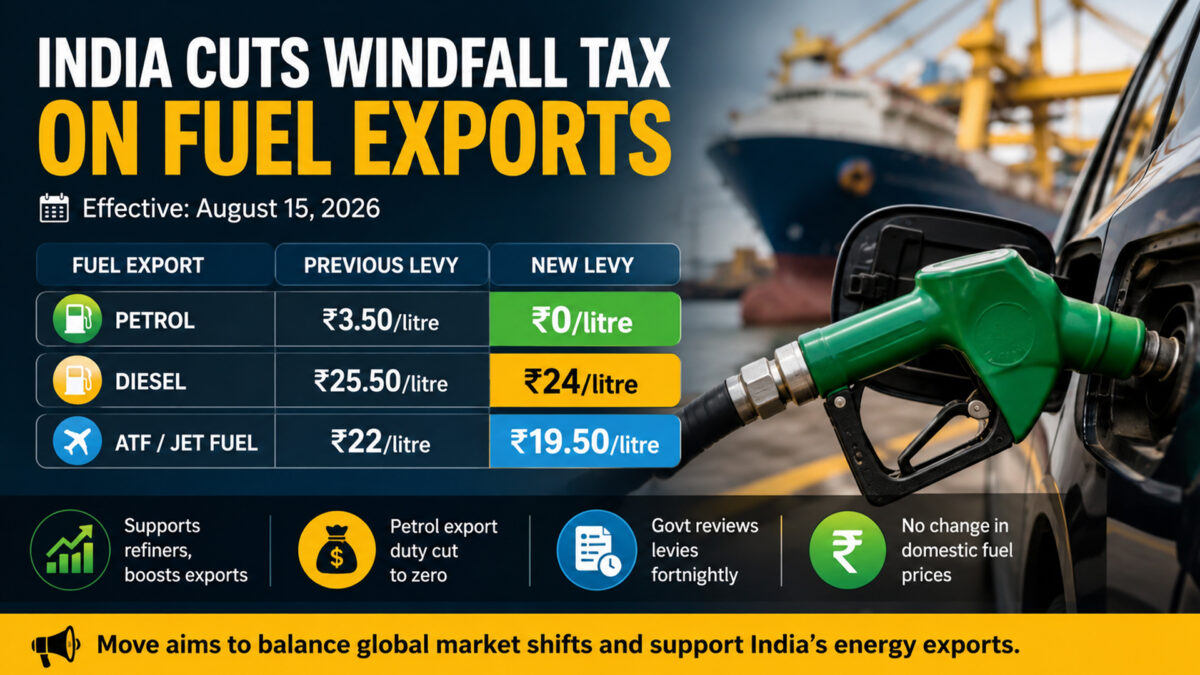
The government has cut the windfall tax on exports of petrol, diesel and aviation turbine fuel (ATF), giving oil exporters some relief as global crude prices remain volatile. The revised rates took effect from September 16 and will remain in force for the next fortnight.
The export levy on petrol has been reduced to ₹0.50 per litre from ₹1.50, while the tax on diesel exports has been lowered to ₹20 per litre from ₹25. The levy on aviation turbine fuel, or ATF, has also been cut to ₹15 per litre from ₹19.
The latest decision partly reverses the increase announced at the government’s previous review on September 1. The diesel levy has been reduced by ₹5 per litre, while the petrol and ATF levies have been lowered by ₹1 and ₹4 per litre, respectively.
The government reviews the windfall tax every two weeks, allowing it to adjust the levy in response to changes in international crude prices, refined petroleum product prices and refinery margins. The latest revision comes against the backdrop of sharp movements in global oil markets caused by concerns over supplies from the Middle East.
The structure of the diesel levy has also changed. The earlier ₹25-per-litre charge consisted of ₹24 in Special Additional Excise Duty (SAED) and ₹1 in Road and Infrastructure Cess. Under the revised structure, the SAED has been reduced to ₹20 per litre and the Road and Infrastructure Cess has been brought down to zero.
For petrol exports, the levy has fallen from ₹1.50 to ₹0.50 per litre. The ATF export tax has come down from ₹19 to ₹15 per litre.
The reduction comes as crude oil prices ease after rising sharply earlier in the week. Brent crude futures were down around 1.2% at $104.59 a barrel in early trading on Thursday, while US West Texas Intermediate crude fell about 1.1% to $101.29 a barrel. Both benchmarks had declined by around $3 on Wednesday.
One factor behind the recent decline in oil prices has been reports that Saudi Arabia is offering additional crude cargoes to Asian refiners. The supplies are being arranged through ship-to-ship transfers off Oman’s Sohar port, helping ease some immediate concerns about shortages.
The global oil market remains sensitive to developments in the Middle East. Concerns about attacks on oil infrastructure, disruptions to crude flows and risks around the Strait of Hormuz have kept prices elevated and contributed to sharp daily movements.
The latest windfall tax reduction is therefore being viewed in the context of changing global oil conditions. India has been reviewing the export levy regularly as crude and refined fuel prices move in response to developments overseas.
India introduced export levies on petroleum products on March 27, 2026, amid the West Asia crisis. The measure was aimed at discouraging excessive exports and ensuring sufficient availability of petroleum products in the domestic market. The fortnightly review mechanism allows the government to change the tax burden as market conditions shift.
The latest move, however, does not mean cheaper petrol or diesel for Indian consumers. The government has not changed the existing excise duty on petrol and diesel meant for domestic consumption. The reduction applies specifically to petroleum products exported from India.
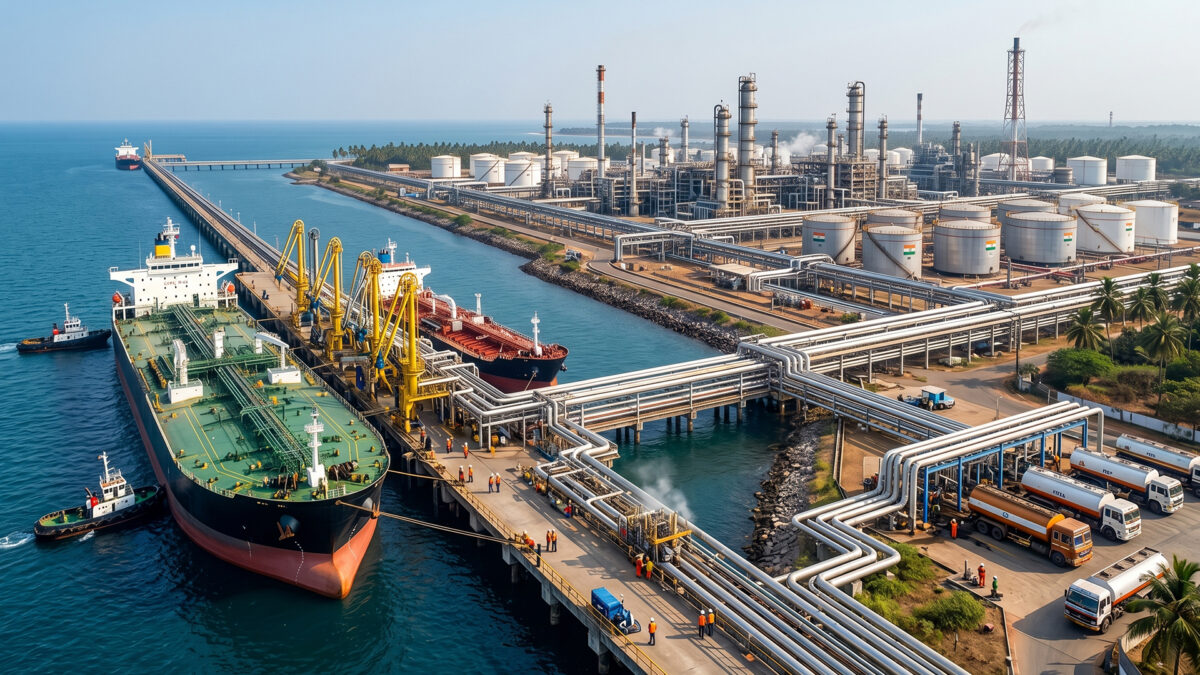
India is a major exporter of refined petroleum products, making changes in export duties important for refiners and oil companies with overseas sales. Petroleum exports accounted for 22.9% of India’s petroleum, oil and lubricants production and 10.8% of gross exports in June 2026, according to PPAC data cited in reports.
Lower export taxes can reduce the burden on refiners selling petrol, diesel and ATF in overseas markets. The impact on individual companies will depend on their export volumes, refining margins and the direction of international fuel prices.
The next review will be closely watched by refiners, exporters and investors. A sustained rise in crude prices could influence the government’s decision on the export levy, while further easing in global oil prices could create room for additional changes.
The immediate outlook for crude oil will continue to depend heavily on developments in the Middle East and the extent to which supply disruptions persist. Any prolonged disruption could push international oil prices higher again, affecting India’s import bill, refinery margins and the broader energy market.