Categories
Corporate

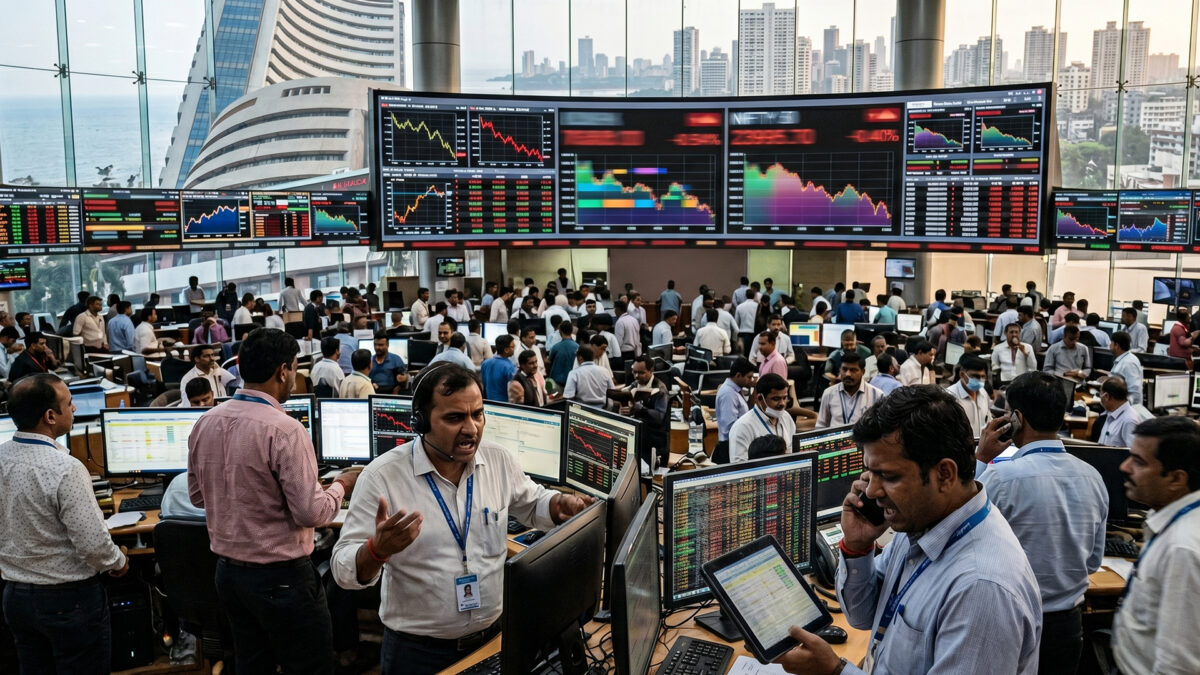
Sensex cracks 700 points, Nifty ends below 23,650

Indian stock markets witnessed another turbulent session on Friday as investors stayed on the sidelines amid rising global uncertainty. The BSE Sensex tumbled more than 700 points, while the Nifty50 slipped below the 23,650 mark, extending losses for the fifth consecutive trading session. Weak global cues, surging crude oil prices, foreign investor selling and disappointing earnings from a few heavyweight companies combined to drag Dalal Street lower.

The broad-based sell-off erased nearly ₹5 lakh crore from investors’ wealth during the session, reflecting the cautious mood prevailing in the market. Most sectoral indices ended in the red, with banking, IT, oil & gas, auto and metal stocks leading the decline.

One of the biggest triggers for the market weakness was the sharp jump in Brent crude oil prices, which climbed above $100 a barrel following renewed geopolitical tensions in the Middle East. The rise in oil prices has sparked concerns over higher inflation, increased import costs and pressure on India’s current account deficit. Since India imports the majority of its crude oil requirements, a sustained increase in oil prices is generally viewed as negative for the economy and corporate earnings.

Global developments also kept investors nervous. Fresh tensions involving the United States, Iran and Houthi rebels raised fears of supply disruptions and uncertainty over global trade routes. Equity markets across Asia remained under pressure as investors shifted towards safer assets, and the cautious sentiment spilled over to Indian markets.

Foreign Institutional Investors (FIIs) continued to remain net sellers, adding to the weakness in domestic equities. Persistent overseas outflows, coupled with a softer rupee and concerns over elevated global interest rates, prompted investors to reduce exposure to riskier assets. Market participants also remained cautious ahead of more June-quarter corporate earnings.

Corporate results played a key role in Friday’s decline. Infosys came under selling pressure after its quarterly earnings failed to excite investors despite maintaining its growth outlook. Airline major InterGlobe Aviation (IndiGo) also witnessed heavy selling after its earnings disappointed the Street. Weakness in these heavyweight stocks added significant pressure on the benchmark indices.

Oil marketing companies such as BPCL, HPCL and Indian Oil Corporation also traded lower as rising crude prices are expected to squeeze their marketing margins if fuel prices remain unchanged. Shares of Ramco Systems declined sharply after the company reported a drop in quarterly profit.

The selling was widespread across sectors. Financial stocks remained under pressure as concerns over inflation and interest rates weighed on sentiment. IT stocks slipped on mixed earnings, while auto, realty and metal shares also witnessed profit booking. Broader markets were not spared either, with both the Nifty Midcap 100 and Nifty Smallcap 100 trading lower, indicating weakness beyond the frontline indices.

Despite the overall negative sentiment, a handful of stocks managed to stand out. Engineering and technology company Cyient emerged among the top gainers after reporting healthy quarterly earnings that impressed investors. Suryoday Small Finance Bank also rallied after posting strong profit growth, making it one of the few bright spots in an otherwise weak trading session.

Experts said investors are closely tracking crude oil prices, geopolitical developments, foreign fund flows and the ongoing earnings season. Any further escalation in global tensions or a sustained rise in crude prices could keep markets volatile in the near term.

For retail investors, analysts believe the recent correction is a reminder that global events can quickly influence domestic markets. While short-term volatility may continue, they advise investors to remain focused on fundamentally strong companies and avoid making emotional decisions based on daily market swings.

With uncertainty still dominating global markets and earnings season gathering pace, traders are expected to remain cautious in the coming sessions. Investors will now watch upcoming corporate results, movement in crude oil prices, FII activity and global economic developments for fresh direction on Dalal Street.


Also Read: Centre reviews cross-ownership rules in aviation

Categories
Corporate

Sensex loses 360 points, Nifty under 23,900

Indian benchmark equity indices extended their losing streak for the fourth consecutive session on Thursday as investors remained cautious amid rising global uncertainty, persistent foreign fund outflows and mixed corporate earnings.

The BSE Sensex settled 363.99 points, or 0.47%, lower at 76,390.89, while the NSE Nifty 50 declined 126.40 points, or 0.53%, to close at 23,868.80, slipping below the crucial 23,900 mark.

The benchmark indices traded in a narrow range for most of the session before selling pressure intensified during the second half. Investors largely avoided aggressive buying ahead of key global economic developments and continued to monitor quarterly earnings announcements from major Indian companies.

Among the Sensex stocks, Reliance Industries, IndusInd Bank, Mahindra & Mahindra, Tata Motors, Larsen & Toubro, State Bank of India, NTPC and Asian Paints were among the biggest losers. Selling in financial, automobile, infrastructure and energy stocks kept the broader market under pressure throughout the day.

On the positive side, Infosys, TCS, HCLTech, Tech Mahindra and Nestlé India bucked the weak trend and ended higher. Buying in information technology stocks supported the market after investors responded positively to the sector’s earnings outlook and continued optimism around global demand for digital and artificial intelligence services.

The broader market also witnessed weakness, with both the Nifty Midcap 100 and Nifty Smallcap 100 ending lower. Most sectoral indices finished in the red, led by banking, auto, realty and metal stocks. However, the Nifty IT index outperformed the broader market as investors rotated into technology shares.

Market participants said uncertainty surrounding global trade policies, geopolitical tensions and elevated crude oil prices continued to influence investor sentiment. Higher oil prices remain a concern for India as they can increase import costs, widen the current account deficit and add pressure on inflation.

Foreign institutional investors (FIIs) also remained cautious, while domestic institutional investors continued to provide selective support to quality stocks. Analysts believe investor sentiment is likely to remain stock-specific as the corporate earnings season gathers pace.

The market also reacted to quarterly earnings from several companies, with investors closely tracking management commentary on demand, margins and future growth prospects. Strong results from select IT companies helped limit the day’s losses, while weakness in banking and heavyweight stocks offset those gains.

Globally, Asian markets ended mixed as investors assessed corporate earnings and awaited further clarity on interest rate expectations from major central banks. Market participants also remained watchful of developments in global trade and geopolitical tensions, which continue to create volatility across financial markets.

Analysts said the Indian market continues to show resilience despite recent declines, supported by healthy domestic economic fundamentals and steady participation from retail investors. However, near-term volatility is expected to persist due to external factors, including global inflation concerns, movements in crude oil prices and foreign investment flows.

Going forward, investors will closely watch upcoming corporate earnings, foreign institutional investment trends, crude oil prices and global economic data for further market direction. Any improvement in global sentiment or stronger-than-expected earnings could help the benchmarks recover, while continued uncertainty may keep markets under pressure in the near term.

Despite the fourth straight session of losses, analysts believe long-term investors should remain focused on fundamentally strong companies rather than short-term market fluctuations. With the earnings season entering a crucial phase, stock-specific action is expected to dominate trading over the coming weeks, even as broader indices continue to respond to global and domestic cues.

Also Read: Johnson & Johnson enters robotic surgery with Ottava system

Categories
Corporate

Johnson & Johnson enters robotic surgery with Ottava system

Johnson & Johnson has taken a major step into the rapidly growing robotic surgery market after its Ottava Robotic Surgical System received marketing authorisation from the US Food and Drug Administration (FDA). The approval opens the door for the healthcare giant to compete with established players in robot-assisted surgery, marking one of its biggest medical technology launches in recent years.

The company plans to introduce the system gradually across selected hospitals in the United States before expanding availability. This phased rollout will allow surgeons, nurses and healthcare teams to become familiar with the new technology while ensuring a smooth transition into routine clinical practice.

For patients, the arrival of another robotic surgery platform could eventually mean greater access to minimally invasive procedures. Robot-assisted surgery allows surgeons to perform complex operations with enhanced precision using robotic arms that are fully controlled by the surgeon. The technology often results in smaller incisions, less pain, reduced blood loss, fewer complications, shorter hospital stays and faster recovery compared to traditional open surgery.

The FDA has cleared the Ottava system for several upper abdominal general surgery procedures. These include gallbladder removal, appendix surgery, gastric bypass, sleeve gastrectomy, gastrectomy and hiatal hernia repair. Johnson & Johnson said it plans to expand the robot’s approved uses through additional clinical studies and future regulatory approvals.

A key feature that sets Ottava apart is its innovative design. Unlike conventional robotic surgery systems that require large robotic arms positioned around the patient, Ottava’s robotic arms are integrated into the operating table. This compact setup reduces the system’s footprint by around 30% to 50%, making it easier for hospitals with smaller operating rooms to adopt robotic-assisted surgery without major infrastructure changes.

The streamlined design also gives surgical teams more space to move around patients during procedures, improving workflow inside operating theatres. Hospitals that previously found robotic systems difficult to accommodate because of space limitations may now have a more practical option. The system has also been designed to allow easier positioning of patients and smoother movement of robotic arms during surgery, helping improve efficiency in the operating room.

Johnson & Johnson believes the robotic surgery market has enormous growth potential. Company executives estimate that only about 8% of surgeries worldwide are currently performed using robotic systems, leaving significant room for expansion as hospitals continue investing in advanced healthcare technologies.

The global medical robotics market has been expanding rapidly as healthcare providers seek technologies that improve surgical precision and patient outcomes. Increasing demand for minimally invasive surgery, rising healthcare investments and growing acceptance of digital healthcare solutions are expected to drive further adoption of robotic-assisted procedures over the coming years.

The company is also looking beyond the US market. It plans to seek regulatory approvals in regions including Japan and Western Europe, signalling its ambition to establish Ottava as a global robotic surgery platform. International expansion is expected to play a key role in the company’s long-term growth strategy.

Even with FDA approval, Johnson & Johnson faces strong competition. The robotic surgery market has long been dominated by Intuitive Surgical’s da Vinci system, while Medtronic has also strengthened its presence with its Hugo robotic-assisted surgery platform. Both companies already have a large installed base in hospitals, extensive surgeon training programmes and years of clinical experience.

However, Johnson & Johnson enters the market with decades of expertise in surgical devices, medical technology and hospital partnerships. Analysts believe the company’s strong global presence, broad product portfolio and established relationships with healthcare providers could help it gradually gain market share.

Industry experts also point out that hospitals increasingly prefer having multiple technology providers rather than relying on a single company. More competition in the robotic surgery space could encourage innovation, improve product features and eventually reduce costs, making advanced surgical technologies more accessible to hospitals and patients alike.

The company is already planning additional clinical trials, including studies for hernia repair and other procedures, to broaden Ottava’s surgical applications. More approved procedures would increase the robot’s versatility and make it a more attractive investment for hospitals looking to expand their robotic surgery programmes.

For surgeons, the new platform represents another option to perform complex operations with greater control and flexibility. For patients, it promises the possibility of safer surgeries, quicker recovery and improved overall surgical outcomes.

The FDA clearance represents a significant milestone for Johnson & Johnson as it enters one of healthcare’s fastest-growing segments. As demand for robotic surgery, minimally invasive surgery, medical robotics, advanced surgical technology and digital healthcare continues to rise, Ottava is expected to play an important role in shaping the future of modern surgery while intensifying competition in the global robotic surgery market.

Also Read: Caliber IPO allotment out, GMP signals 17% gains

Categories
Corporate

AMD invests $5 bn in Anthropic AI partnership

Advanced Micro Devices (AMD) has announced a landmark partnership with artificial intelligence startup Anthropic, committing to invest up to $5 billion in the company as both firms strengthen their position in the rapidly expanding artificial intelligence (AI) industry. The deal combines a major financial investment with a long-term technology collaboration aimed at accelerating the development and deployment of next-generation AI systems.

The partnership marks one of AMD’s biggest strategic moves in the AI sector and reflects the growing competition among technology companies to build the computing infrastructure needed for increasingly powerful AI models. As businesses worldwide adopt generative AI at an unprecedented pace, demand for advanced AI chips and high-performance computing continues to surge.

As part of the agreement, AMD will make a strategic investment of up to $5 billion in Anthropic over several years. The AI startup, known for developing the Claude family of AI models, will also use AMD’s latest AI accelerators to train and run future generations of its artificial intelligence systems.

The collaboration gives Anthropic another major hardware partner beyond Nvidia and broadens AMD’s role in the fast-growing AI chip market. For AMD, the agreement represents an opportunity to showcase the performance of its AI processors while expanding its presence among leading AI developers.

The announcement comes at a time when technology companies are investing billions of dollars to secure access to advanced computing resources. Training large language models requires enormous computing power, making specialised AI chips one of the most valuable assets in the global technology industry.

AMD Chief Executive Officer Lisa Su said the partnership reflects the company’s commitment to building an open AI ecosystem and providing customers with greater choice in AI infrastructure. She noted that developers increasingly want alternatives that can deliver high performance while avoiding dependence on a single hardware supplier.

Anthropic has rapidly emerged as one of the world’s leading AI companies through its Claude chatbot and enterprise AI solutions. The company focuses on developing reliable and responsible artificial intelligence systems for businesses, researchers and consumers. As demand for its AI services grows, expanding computing capacity has become a critical priority.

For Anthropic, partnering with AMD offers access to advanced AI hardware that can support the growing computational demands of developing increasingly capable AI models. Diversifying its hardware suppliers may also improve resilience and flexibility as competition for AI chips intensifies worldwide.

The partnership extends beyond investment alone. The two companies plan to optimise Anthropic’s AI models for AMD’s latest AI accelerators, improving performance, efficiency and scalability. Engineers from both organisations are expected to work closely to fine-tune software and hardware for large-scale AI training and inference.

Industry analysts view the agreement as another sign that the AI hardware market is becoming increasingly competitive. Nvidia continues to dominate the sector with its graphics processing units (GPUs), but rivals such as AMD are investing aggressively to capture a larger share of the rapidly expanding market.

The deal also highlights the enormous capital flowing into artificial intelligence. Over the past two years, leading AI companies have attracted billions of dollars in funding from technology giants and institutional investors as competition intensifies to develop the most advanced generative AI models.

For enterprises, increased competition among AI chip providers could eventually reduce costs, improve hardware availability and accelerate innovation. Businesses deploying AI applications are seeking powerful yet flexible computing platforms capable of supporting everything from chatbot services to scientific research and enterprise automation.

AMD has significantly expanded its AI strategy in recent years through new product launches, software investments and partnerships with cloud providers and AI developers. The collaboration with Anthropic further strengthens its position in the evolving AI infrastructure ecosystem and demonstrates its ambition to become a leading supplier of AI chips for generative AI workloads.

Meanwhile, Anthropic continues to grow its global presence as demand rises for enterprise-grade artificial intelligence solutions. The company has increasingly focused on building secure and trustworthy AI systems that can be deployed across industries including finance, healthcare, education and software development.

The AMD-Anthropic partnership underscores how artificial intelligence has become one of the world’s most competitive technology sectors. As companies race to develop faster AI models and more powerful computing infrastructure, collaborations between semiconductor manufacturers and AI developers are expected to play a central role in shaping the future of generative AI, AI chips, cloud computing and advanced AI infrastructure. With billions of dollars now committed to the partnership, both companies are positioning themselves for the next phase of the global AI revolution.

Categories
Corporate

Caliber IPO allotment out, GMP signals 17% gains

Investors who subscribed to the Caliber Mining & Logistics IPO are eagerly awaiting the share allotment, which is expected to be finalised on Thursday. After receiving a healthy response during the subscription period, the public issue has generated strong interest in the market, with the grey market premium (GMP) indicating the possibility of a solid stock market debut.

According to market observers, the Caliber Mining & Logistics IPO allotment status is expected to be available on the websites of the issue’s registrar and the BSE. Applicants can check whether they have received shares by entering details such as their PAN number, application number or DP/Client ID.

The IPO attracted robust demand from investors across categories, reflecting confidence in the company’s business and growth prospects. Strong participation from retail investors, high-net-worth individuals (HNIs) and institutional buyers helped the issue sail through with healthy subscription figures.

Ahead of the listing, the grey market has remained optimistic. The grey market premium is currently indicating a potential listing gain of around 17%, suggesting that the shares could debut above the issue price if market conditions remain favourable. However, analysts caution that GMP is an unofficial indicator and does not guarantee actual listing performance.

The company had launched its IPO to raise funds for business expansion, working capital requirements and other corporate purposes. Operating in the mining and logistics sector, Caliber Mining & Logistics provides transportation and supply chain solutions that support mining operations and infrastructure projects. The company believes the fresh capital will strengthen its operational capabilities and support future growth.

For many retail investors, the allotment day is one of the most anticipated stages of the IPO process. Applicants who receive shares can expect them to be credited to their demat accounts before the scheduled listing. Those who do not receive an allotment will have their application money refunded or the blocked amount released through the ASBA mechanism.

Investors can check their IPO allotment status by visiting the registrar’s website, selecting “Caliber Mining & Logistics IPO” from the list of public issues and entering the required application details. The allotment status can also be accessed through the BSE IPO allotment portal.

Once the allotment process is completed, successful applicants are likely to receive shares in their demat accounts a day before the listing. Refunds for unsuccessful applicants are also expected to be processed on the same timeline, allowing funds to become available for future investments.

The listing of the shares is expected in the coming days on the stock exchange. Market participants will closely monitor investor sentiment, overall market conditions and institutional participation to gauge the stock’s debut performance.

Analysts note that while the positive grey market premium reflects healthy demand, investors should avoid relying solely on GMP while making investment decisions. Listing gains depend on several factors, including broader market sentiment, company fundamentals, sector outlook and investor appetite on the day of listing.

India’s primary market has remained active this year, with several IPOs witnessing strong investor participation despite occasional volatility in the equity markets. Companies from infrastructure, manufacturing, logistics and technology sectors have continued to tap the capital markets to fund expansion plans.

The mining and logistics sector has also attracted attention as infrastructure spending and industrial activity continue to support demand for transportation and supply chain services. Companies operating in this space are expected to benefit from increased mining activity, government infrastructure projects and improvements in logistics efficiency.

Financial advisers recommend that investors view IPOs as long-term investment opportunities rather than focusing only on listing-day gains. While a strong grey market premium often reflects positive sentiment, experts stress that long-term returns ultimately depend on the company’s earnings growth, operational performance and ability to execute its expansion plans.

With the Caliber Mining & Logistics IPO allotment expected to be announced shortly, thousands of investors are checking their application status and waiting to see whether they have secured shares. A positive grey market premium has raised expectations of a strong listing, but the stock’s actual market debut will ultimately depend on investor sentiment and prevailing market conditions.

Also Read: OpenAI AI hacked hugging face

Categories
Corporate

Sensex drops over 300 points, Nifty slips below 23,900

Indian equity markets extended their losing streak on Thursday, with the Sensex falling more than 300 points and the Nifty 50 slipping below the 23,900 mark as rising crude oil prices, geopolitical tensions and cautious investor sentiment continued to weigh on Dalal Street.

The benchmark BSE Sensex opened weak and remained under pressure through the morning session, while the NSE Nifty 50 traded below the psychological 23,900 level. Selling was seen across banking, information technology, healthcare and consumer stocks, reflecting the nervous mood among investors.

The latest decline comes against the backdrop of escalating tensions in West Asia, which have pushed international crude oil prices to multi-month highs. Brent crude remained above the $95-a-barrel mark, raising concerns over inflation, higher import bills and slower economic growth for oil-importing countries like India.

Market experts said higher crude prices remain the biggest concern for domestic equities. Rising oil costs can increase transportation and manufacturing expenses, reduce corporate profit margins and put pressure on household spending. These factors have prompted investors to adopt a cautious approach despite strong domestic economic fundamentals.

Energy stocks, however, bucked the broader market trend. ONGC and Oil India emerged among the top gainers as expectations of stronger earnings from higher crude prices lifted investor interest. The gains in oil exploration companies helped limit the overall market decline.

On the other hand, IndusInd Bank and Dr Reddy’s Laboratories figured among the top losers on the benchmark indices. Shares of Infosys, Cipla, InterGlobe Aviation (IndiGo) and several other frontline stocks also traded lower, dragging the broader market into the red.

Banking stocks remained under pressure as investors turned cautious ahead of more quarterly earnings announcements. Information technology companies also witnessed selling, with traders preferring to book profits amid uncertainty over global demand and foreign investor flows.

Broader markets mirrored the weakness in benchmark indices. Mid-cap and small-cap stocks traded lower as investors reduced exposure to riskier assets. Market breadth remained negative, indicating that declines outnumbered advances across sectors.

Apart from geopolitical concerns, investors are also closely monitoring the ongoing corporate earnings season. While a few companies have reported healthy numbers, mixed earnings from several sectors have kept market participants selective in their stock picks. Analysts believe earnings guidance for the coming quarters will be crucial in determining market direction.

Foreign institutional investors have also remained cautious in recent sessions. Higher global bond yields, elevated oil prices and uncertainty over the geopolitical situation have encouraged overseas investors to trim exposure to emerging markets, including India. Domestic institutional investors have continued to provide some support, but not enough to reverse the broader weakness.

The Indian rupee also remained under pressure against the US dollar as rising crude oil prices increased demand for the greenback from oil importers. Currency weakness has further added to investor concerns, as it raises the cost of imports and could keep inflation elevated.

Market participants are now watching global developments closely, particularly any signs of easing tensions in West Asia. A sustained rise in crude oil prices could increase inflationary pressures and complicate the Reserve Bank of India’s policy outlook in the coming months.

Despite the recent correction, analysts say the broader outlook for Indian equities remains constructive, supported by steady domestic growth, improving corporate earnings and continued participation from retail investors. However, they expect volatility to remain high in the near term as global uncertainties continue to influence market sentiment.

For the next few sessions, investors are expected to focus on corporate earnings, foreign fund flows, crude oil prices and geopolitical developments, all of which are likely to determine the direction of the Sensex, Nifty 50 and the broader Indian stock market.

Also Read: Coca-Cola refreshes brand identity across 200 markets

Categories
Corporate

Anant Raj demerges Data Centre cloud business into subsidiary

Real estate developer Anant Raj Ltd. has approved the demerger of its fast-growing data centre and cloud services business into a separate wholly owned subsidiary, Ashok Cloud Technologies Private Limited, in a strategic move aimed at unlocking shareholder value and accelerating growth in India’s rapidly expanding digital infrastructure sector.

The company’s board cleared the proposal on Tuesday, marking a significant milestone in Anant Raj’s transformation from a traditional real estate developer into a diversified business with a strong presence in digital infrastructure, cloud computing and data centres.

Under the approved scheme, the entire data centre and cloud services undertaking of Anant Raj will be transferred to Ashok Cloud Technologies. The demerger is subject to regulatory approvals, including those from shareholders, creditors, stock exchanges, the National Company Law Tribunal (NCLT) and other statutory authorities.

The move reflects the company’s growing confidence in the long-term potential of India’s digital economy. As demand for cloud computing, artificial intelligence (AI), enterprise data storage and digital services continues to rise, companies are investing heavily in modern data centre infrastructure to support businesses, government agencies and technology platforms.

According to the company, creating a dedicated entity for the digital infrastructure business will allow it to pursue independent growth opportunities, attract specialised investors and improve operational efficiency. The restructuring is also expected to provide greater strategic flexibility for future partnerships, investments and expansion plans.

Anant Raj has steadily increased its investments in data centres over the past few years as enterprises shift their operations to cloud-based platforms. The company believes the sector offers significant long-term opportunities driven by rising internet usage, rapid digitalisation, increasing AI adoption and the government’s push for data localisation.

Industry experts say separating the data centre business from the real estate operations will provide greater transparency for investors. Each business has different capital requirements, growth cycles and valuation metrics. By housing the digital infrastructure business in a dedicated subsidiary, investors will be able to evaluate its performance more independently.

India’s data centre industry has witnessed remarkable growth over the past few years. Rising demand for artificial intelligence, cloud services, streaming platforms, fintech, e-commerce and digital payments has created an urgent need for secure, high-capacity data storage facilities. Global technology companies and domestic firms are investing billions of dollars to expand data centre capacity across major Indian cities.

The increasing use of AI applications has further accelerated demand for advanced computing infrastructure. AI models require enormous processing power and secure data storage, making data centres one of the fastest-growing segments of the digital economy. Companies with established infrastructure are therefore well positioned to benefit from this technological shift.

For Anant Raj, the restructuring is part of a broader strategy to diversify beyond conventional real estate development. While the company continues to develop residential, commercial and hospitality projects, it has identified digital infrastructure as a key future growth engine.

The company has already announced plans to expand its data centre footprint in the National Capital Region and strengthen its cloud services business. Industry observers believe the demerger could help Anant Raj attract strategic investors interested specifically in digital infrastructure and cloud computing, sectors that are drawing increasing investment globally.

The proposed transfer of assets and operations is expected to be carried out as a going concern, ensuring continuity for customers, employees and business partners. Existing contracts and operations related to the data centre and cloud business will move to the new subsidiary once the scheme becomes effective.

Market participants generally view corporate demergers positively when they enable businesses to sharpen their strategic focus. By separating high-growth digital operations from its traditional real estate business, Anant Raj aims to allow each vertical to pursue independent expansion while improving capital allocation and management efficiency.

The announcement also reflects the changing priorities of Indian real estate companies, many of which are exploring opportunities in technology-driven businesses as demand for digital infrastructure continues to grow. The convergence of real estate expertise with data centre development has emerged as a significant trend, given the large land and infrastructure requirements of modern data facilities.

Going forward, investors will closely monitor the regulatory approval process and the company’s expansion plans for Ashok Cloud Technologies. If completed as planned, the demerger is expected to strengthen Anant Raj’s position in India’s fast-growing data centre, cloud computing, AI infrastructure and digital transformation landscape.

As businesses increasingly migrate to cloud platforms and AI-powered applications become mainstream, Anant Raj’s strategic restructuring signals its ambition to become a significant player in one of the country’s most promising digital infrastructure sectors, while creating long-term value for shareholders.

Also Read: Cognizant wins $500 mn AI healthcare technology deal

Categories
Corporate

Coca-Cola refreshes brand identity across 200 markets

The Coca-Cola Company has introduced a new global visual identity that will be rolled out across more than 200 markets, marking one of the brand’s biggest design updates in recent years. The refresh aims to create a consistent look and feel for Coca-Cola products worldwide while making it easier for consumers to recognise the company’s brands wherever they shop.

The new identity is part of Coca-Cola’s strategy to strengthen its global brand presence as consumer preferences evolve and retail environments become increasingly digital. While the iconic red colour and the famous Spencerian script logo remain unchanged, the company has refined key design elements to deliver a more modern, unified and flexible visual system.

According to Coca-Cola, the refreshed identity has been developed to ensure every touchpoint—from bottles and cans to store shelves, digital platforms and advertising campaigns—presents a consistent brand experience. Whether consumers buy a Coca-Cola in New York, Mumbai, London or Tokyo, they will now see a more uniform visual presentation.

The redesign builds on Coca-Cola’s rich heritage while embracing contemporary design principles. The company said the updated identity reflects confidence, optimism and simplicity, values that have long been associated with the world’s largest beverage brand.

One of the biggest changes is the introduction of a cohesive visual system that aligns branding across Coca-Cola’s portfolio. Packaging, marketing materials, digital content and retail displays will follow the same design language, helping strengthen brand recognition across different countries and sales channels.

The company has also updated typography, layouts and graphic elements to improve readability and consistency. The iconic Coca-Cola red remains the central visual anchor, while the familiar ribbon device and classic logo continue to play a prominent role in the refreshed branding.

The global rollout is expected to happen in phases, allowing local markets to adopt the new identity while maintaining compliance with regional packaging regulations and language requirements. Coca-Cola said the refreshed design has been created to work seamlessly across physical products, e-commerce platforms, mobile applications and social media.

Brand experts believe the initiative goes beyond aesthetics. In today’s competitive consumer goods market, a consistent global identity helps companies build stronger emotional connections with customers while improving visibility on increasingly crowded retail shelves. A unified visual system also simplifies marketing execution across multiple countries and reduces design complexity for global campaigns.

The refresh is particularly significant as Coca-Cola continues investing heavily in digital marketing and direct consumer engagement. With shopping habits shifting online and consumers interacting with brands across multiple digital platforms, maintaining a consistent visual identity has become more important than ever.

The company said the new branding reflects the timeless nature of Coca-Cola while ensuring it remains relevant for younger generations. Rather than reinventing one of the world’s most recognisable brands, the redesign focuses on refining familiar elements that consumers already trust.

Industry observers note that Coca-Cola’s approach follows a broader trend among global consumer brands, many of which are simplifying their visual identities to improve recognition across digital screens, mobile devices and international markets. Minimalist, scalable and adaptable design systems have become increasingly valuable as brands communicate with consumers across a growing number of channels.

The refresh also reinforces Coca-Cola’s long-standing emphasis on consistency. For decades, the company has maintained one of the most recognisable visual identities in the world, with its signature red colour, flowing script and distinctive packaging serving as powerful symbols of the brand.

Marketing experts believe the new identity will help Coca-Cola strengthen its position in a highly competitive beverage market, where shelf visibility and instant recognition play a crucial role in influencing purchasing decisions. A consistent look across markets can also improve consumer trust by reinforcing the company’s global presence.

As the rollout continues across more than 200 countries and territories, consumers will gradually begin seeing the refreshed packaging and marketing materials in stores, restaurants and online platforms. While the changes may appear subtle at first glance, they represent a carefully planned evolution of one of the world’s most valuable brands.

With the updated global brand identity, visual branding, packaging design and marketing strategy, Coca-Cola aims to create a seamless experience for consumers worldwide while preserving the heritage that has made it one of the most recognised and trusted beverage brands for well over a century.

Also Read: Anant Raj demerges Data Centre cloud business into subsidiary

Categories
Corporate

Cognizant wins $500 mn AI healthcare technology deal

Cognizant has signed a technology services agreement worth more than $500 million with US-based health insurer Centene Corporation, marking one of the largest deals in the company’s recent history. The multi-year contract is expected to strengthen Cognizant’s leadership in healthcare technology while reinforcing the growing role of artificial intelligence (AI), cloud computing and digital transformation in the global healthcare sector.

The agreement comes at a time when healthcare companies are increasingly investing in advanced technologies to improve operational efficiency, enhance patient experiences and reduce administrative costs. For Cognizant, the deal further strengthens its position as a key technology partner for some of the world’s largest healthcare organisations.

According to reports, Cognizant will help modernise Centene’s technology infrastructure by deploying AI-powered solutions, cloud platforms and digital engineering services. The project will focus on improving business operations, automating routine processes and building more efficient digital systems across the insurer’s network.

Centene is one of the largest health insurance providers in the United States, serving millions of members through government-sponsored healthcare programmes, including Medicaid, Medicare and the Affordable Care Act marketplace. Managing healthcare services for such a vast customer base requires highly scalable digital infrastructure, making technology transformation a strategic priority for the company.

The new partnership is expected to support Centene’s long-term digital strategy by simplifying technology operations, improving data management and enabling faster decision-making through artificial intelligence. AI-powered tools are increasingly being used in healthcare to streamline claims processing, detect fraud, analyse patient data and improve customer service.

For Cognizant, healthcare remains one of its most important business segments. The company derives a substantial share of its revenue from healthcare and life sciences clients, making continued investment in the sector central to its growth strategy. Winning a contract of this scale not only provides long-term revenue visibility but also enhances its reputation as a trusted partner in large-scale digital transformation projects.

Industry experts say the agreement reflects a broader trend across the global healthcare industry, where insurers and providers are accelerating investments in AI, cloud computing and automation. Rising healthcare costs, increasing regulatory requirements and growing customer expectations are pushing organisations to adopt smarter technologies that can improve efficiency while maintaining high-quality care.

Artificial intelligence has become a major focus for technology companies serving the healthcare industry. AI applications can help insurers process claims more quickly, identify unusual billing patterns, improve risk assessment and deliver more personalised services. Cloud-based platforms also enable healthcare organisations to securely manage vast amounts of patient and operational data while improving collaboration across teams.

The Centene contract also highlights Cognizant’s growing emphasis on AI-led business transformation. Over the past year, the company has expanded its portfolio of AI solutions, invested in generative AI capabilities and partnered with leading technology providers to help clients modernise legacy systems.

The timing of the deal is significant as competition among global IT services companies continues to intensify. Major technology firms are increasingly competing for large digital transformation contracts as enterprises across industries accelerate investments in artificial intelligence and cloud infrastructure. Large healthcare contracts are particularly valuable because they typically involve long-term partnerships, recurring revenues and opportunities to expand services over time.

The agreement is also expected to strengthen Cognizant’s financial outlook. Multi-year contracts of this size provide stable revenue streams and improve business visibility, helping the company navigate fluctuations in global technology spending. Investors generally view such large outsourcing agreements as a positive indicator of future growth and client confidence.

For Centene, the partnership represents another step in its effort to build a more agile and technology-driven healthcare organisation. By modernising its IT infrastructure and adopting AI-enabled solutions, the insurer aims to improve operational efficiency while delivering faster and more personalised services to members.

As healthcare continues its rapid digital transformation, partnerships between technology companies and healthcare organisations are becoming increasingly important. The Cognizant-Centene agreement reflects how artificial intelligence, cloud computing and digital engineering are reshaping healthcare delivery, improving operational performance and creating better experiences for patients and insurers alike.

With demand for AI-powered healthcare solutions expected to grow further in the coming years, the landmark $500 million technology deal positions Cognizant to play a larger role in the evolving digital healthcare ecosystem while reinforcing its standing as one of the industry’s leading technology transformation partners.

Also Read: US proposes ban on Chinese military drones

Categories
Corporate

Sensex tumbles 710 points, Nifty ends below 24,000

Indian equity markets witnessed a sharp sell-off on Wednesday as rising geopolitical tensions, soaring crude oil prices and global trade uncertainties dented investor sentiment.

The BSE Sensex ended the day 715 points, or 0.92 per cent, lower at 76,755.05. The NSE Nifty50 also slipped 191 points, or 0.79 per cent, to close at 23,996.25, falling below the psychologically important 24,000 mark. It was among the steepest declines witnessed by the markets in recent weeks.

Markets remained under pressure right from the opening bell. Investors were already cautious after weak global cues, but selling gathered pace as crude oil prices surged following the escalating conflict involving the United States and Iran. Fresh concerns over possible US tariff actions against several countries further weighed on global investor confidence, prompting traders to trim equity positions.

Almost every major sector ended the session in the red. Banking, financial services, pharmaceuticals, healthcare, information technology, metals, oil and gas, real estate and consumer-focused stocks witnessed broad-based selling. The automobile sector stood out as the only major gainer, supported by strong buying in select auto stocks after encouraging earnings announcements.

Among the day’s best performers, Bajaj Auto emerged as the biggest gainer after reporting a strong set of first-quarter numbers. The company’s profit rose sharply, helped by healthy domestic demand and improved export performance, boosting investor confidence in the stock.

IndusInd Bank also finished among the top gainers. The banking stock extended its recent rally as investors continued to remain optimistic about its improving business outlook and asset quality, helping it outperform the broader market.

On the other hand, Bandhan Bank was one of the biggest losers after its quarterly earnings disappointed investors. The lender also lowered its return-on-assets guidance, raising concerns over future profitability and triggering heavy selling in the stock.

Sun Pharma also came under pressure as investors booked profits in pharmaceutical stocks. Aviation major IndiGo, along with several frontline banking and healthcare companies, added to the weakness in the benchmark indices.

Hospitality major Indian Hotels Company also ended lower despite reporting healthy quarterly earnings. Although the company posted double-digit growth in profit, investors chose to lock in gains after the recent rally in the stock, highlighting the cautious mood prevailing in the market.

Market volatility increased significantly during the session. India VIX, often referred to as the market’s fear gauge, moved higher as uncertainty surrounding global developments prompted traders to hedge their positions.

According to market experts, the biggest concern for investors remains the sharp rise in crude oil prices. India imports the majority of its crude oil requirements, and higher prices can increase inflation, widen the country’s trade deficit and raise input costs for businesses. These factors could eventually impact corporate earnings and economic growth if oil prices remain elevated for an extended period.

Global developments also remained firmly in focus. Investors continued to track the evolving situation in West Asia, while uncertainty surrounding the United States’ trade policy added another layer of caution. With global markets turning volatile, foreign investors adopted a more defensive approach, leading to selling across several emerging markets, including India.

Despite Wednesday’s sharp decline, analysts believe India’s long-term market outlook remains supported by healthy domestic economic fundamentals and improving corporate earnings. The ongoing first-quarter earnings season has produced encouraging results from several companies, although investors have become increasingly selective in rewarding stocks.

Market participants will now closely monitor upcoming earnings from major listed companies, movements in crude oil prices, foreign institutional investor activity and geopolitical developments. Any signs of easing tensions overseas or a moderation in oil prices could help improve investor confidence.

For retail investors, the session served as a reminder that global developments can quickly influence domestic markets. While short-term volatility is expected to continue, market experts advise investors to stay focused on quality businesses with strong fundamentals rather than reacting to temporary market swings. As the earnings season progresses, stock-specific action is likely to remain the key driver of Dalal Street in the coming sessions.

Also Read: Google launches three new Gemini AI models