Categories
Beyond

Rupee nears 93 due to West Asia conflict

The Indian rupee fell to a record intra-day low against the US dollar on Friday. In early trade, the rupee dropped about 12 paise to around ₹92.37 per dollar in the interbank foreign exchange market. The fall came as investors reacted to tensions in the Middle East, which have pushed crude oil prices higher and created volatility in global markets.

The rise in oil prices has put pressure on the Indian currency because the country imports a large share of its crude oil requirements. As oil becomes more expensive, India’s import bill increases, weakening the rupee and affecting the overall economy.

The fall in the rupee has also raised concerns about inflation. Recent data shows that retail inflation in India has reached a 10-month high. Economists say higher oil prices could increase transportation and production costs, which may lead to higher prices for many goods and services.

A weaker rupee also makes imports such as electronics, fertilisers and machinery more expensive. These higher import costs may eventually be passed on to consumers, increasing the cost of living.

Market experts say global uncertainty caused by the West Asia conflict has reduced investor confidence. During such periods, investors often shift funds to safer assets such as the US dollar, putting pressure on emerging market currencies like the rupee.

The Reserve Bank of India (RBI) is closely monitoring the situation and may step in to stabilise the currency if volatility increases.

Economists warn that if geopolitical tensions continue and oil prices remain high, the rupee could face further pressure. This could also add to inflation risks for the Indian economy.

Also Read: Gold at ₹1,62,210, Silver at ₹2,79,900

Categories
Beyond

Gold at ₹1,62,210, Silver at ₹2,79,900

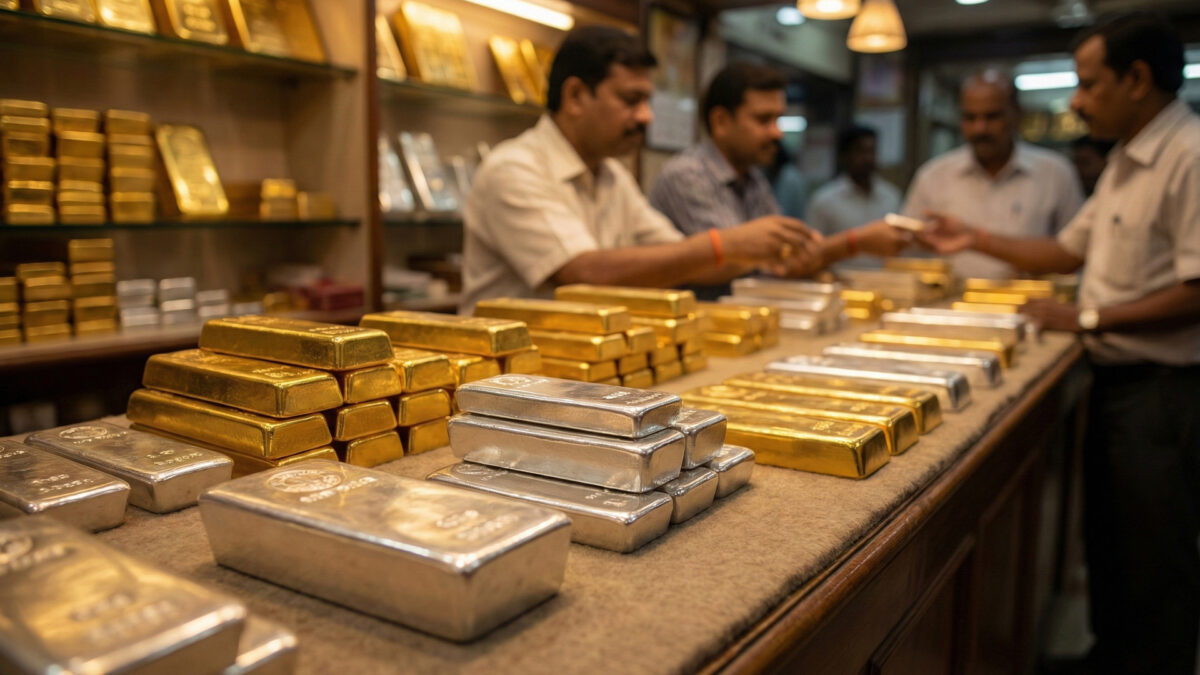
Gold and silver prices in India recorded a marginal decline in early trading on Friday. In the domestic market, the price of 24-carat gold fell slightly by ₹10 to around ₹1,62,210 per 10 grams. Similarly, silver prices dropped by ₹100 and were trading near ₹2,79,900 per kilogram. Despite the minor fall, gold prices continue to remain close to record levels due to strong demand for safe-haven assets.

The price of 22-carat gold also saw a small dip, with 10 grams trading at approximately ₹1,48,690. Market analysts note that while prices have eased slightly, the overall trend in precious metals remains supported by global uncertainty and investor interest in safe assets.

Several international factors are currently influencing movements in the gold and silver markets. Ongoing geopolitical tensions in the Middle East have raised concerns among investors, leading many to seek protection through traditionally safe investments such as gold. Such developments typically increase volatility in precious metal prices.

At the same time, rising crude oil prices and expectations surrounding US monetary policy are also affecting market sentiment. Higher oil prices can increase inflation concerns, which in turn may influence decisions by the US Federal Reserve regarding interest rates. If interest rates remain high for longer, the upside potential for gold may remain limited.

Movements in the US dollar are another key factor shaping precious metal prices. A stronger dollar tends to make gold and silver more expensive for international buyers, which can reduce demand and weigh on prices.

On the Multi Commodity Exchange (MCX), gold and silver futures have also shown fluctuations in recent sessions, reflecting mixed global cues and profit-booking by traders. Market participants are closely watching international developments, including geopolitical events and economic indicators, for further direction.

Also Read: Sensex dives 900 points, Nifty near 23,330

Categories
Beyond

Oil tops $100 after tanker attacks in Iraqi waters

Global oil prices jumped sharply on Thursday after reports that two oil tankers were attacked in Iraqi waters near the Gulf of Hormuz, a key route for about one-fifth of the world’s oil shipments. The attacks stoked fears that ongoing Middle East conflicts could further disrupt crude supply and push prices even higher.

Brent crude briefly rose above $100 per barrel, while US West Texas Intermediate (WTI) oil also climbed significantly. Traders reacted to the news of port shutdowns and fires caused by the attacks, which forced temporary halts at some terminals.

The attacks come amid escalating tensions involving Iran, the United States, and Israel, heightening worries about shipping safety in the region. Analysts said that disruptions in the Gulf, especially around the Strait of Hormuz,  could severely affect global oil supply, since the area is critical for transporting crude to international markets.

Governments are trying to ease the pressure. The International Energy Agency (IEA) announced the release of 400 million barrels from global reserves, while the US released 172 million barrels from its strategic reserves to help stabilize prices. Despite these measures, uncertainty continues, and traders are factoring in the risk of more disruptions.

Experts warn that higher oil prices could increase costs for fuel, transportation, and goods worldwide, adding to inflation concerns already affecting many countries. The recent surge shows how sensitive global energy markets are to geopolitical tensions and how a single incident can ripple through economies.

Investors and policymakers are watching the situation closely. Any further escalation in the region or continued attacks on tankers could keep oil prices volatile, impacting businesses and consumers globally.

Also Read: India backs record IEA oil reserve release

Categories
Beyond

LPG fears spark rush for induction cooktops

Concerns about a possible LPG shortage in parts of India have triggered a rush for induction cooktops, with many models quickly selling out on online quick-commerce platforms. As worries about cooking gas availability spread, many households are buying electric cooktops as a backup option.

Several quick-delivery platforms, including Blinkit, Swiggy’s Instamart and Zepto, have reported a sharp increase in orders for induction stoves. In many cities, including Delhi, Mumbai, Bengaluru and Chennai, customers found that most induction cooktops were already out of stock or available only in limited numbers.

Retailers say the sudden demand began after news of LPG supply concerns began circulating. Many families rushed to buy induction stoves so they would have an alternative way to cook if gas cylinders became difficult to get.

Electronics store owners also reported a surge in walk-in customers looking for induction cooktops. Some shops said they sold several days’ worth of stock in just a few hours as people hurried to secure the appliances.

The surge in demand has not been limited to the cooktops themselves. Utensils designed for induction cooking, such as compatible steel pans and pots, have also seen a spike in sales and are running low in many stores.

The LPG supply concerns are linked to global energy market uncertainties and geopolitical tensions affecting fuel supply chains. These developments have raised fears that cooking gas availability could be affected if the situation worsens.

Restaurants and small food businesses have also been watching the situation closely. Some eateries have started exploring electric cooking equipment to avoid disruptions if LPG supply becomes limited.

Meanwhile, government officials have urged the public not to panic. Authorities say they are monitoring the situation and taking steps to ensure there is enough LPG supply in the country.

Also Read: Reliance silent after Trump’s $300bn refinery claim

Categories
Beyond

India backs record IEA oil reserve release

India has said it is ready to support global oil markets after the International Energy Agency (IEA) announced a record release of oil from emergency reserves to ease supply concerns and stabilise prices.

The IEA said its member countries would release around 400 million barrels of oil from their strategic petroleum reserves. The move is aimed at increasing supply in global markets and reducing pressure on oil prices, which have risen due to supply disruptions and geopolitical tensions.

The Government of India said it is closely monitoring developments in international energy markets and supports efforts to ensure stability in global oil supplies. Officials said India stands ready to take suitable steps if required to help maintain market balance, though no specific measures have been announced so far.

The emergency release comes as tensions in parts of the Middle East have raised concerns about disruptions to oil supply routes. These concerns have pushed up global crude prices and increased uncertainty in energy markets.

According to the IEA, the coordinated release of oil reserves is the largest in the organisation’s history. Member countries will release oil based on their individual capacities and national conditions to ensure markets receive additional supply in the coming months.

Although India is not a full member, it works closely with the IEA as an associate member and participates in discussions on global energy security. As one of the world’s largest oil importers, India is highly sensitive to changes in global oil prices and supply disruptions.

Officials said India continues to strengthen its own strategic petroleum reserves and diversify its sources of crude oil imports to improve energy security.

Experts believe the large reserve release could help calm markets in the short term by increasing available supply. However, they also note that long-term stability will depend on how geopolitical tensions evolve and whether key global oil supply routes remain stable.

Also Read: Reliance silent after Trump’s $300bn refinery claim


Categories
Beyond

Gold rises to ₹1,63,320, silver slips to ₹2,89,900

Gold prices in the domestic market edged up slightly on Thursday, while silver declined, as global currency movements and geopolitical concerns influenced bullion trading.

The price of 24-carat gold increased by ₹10 to ₹1,63,320 per 10 grams, whereas silver fell by ₹100 to ₹2,89,900 per kilogram in early trade.

Market analysts said the strengthening of the US dollar has put pressure on precious metals globally. A stronger dollar typically makes commodities priced in the currency more expensive for international buyers, which can limit demand and cap price gains.

At the same time, ongoing geopolitical tensions in the Middle East have continued to support gold’s appeal as a safe-haven asset. Investors often turn to gold during periods of global uncertainty, helping keep prices relatively firm despite currency pressures.

In international markets, gold prices have shown limited movement as traders remain cautious ahead of key global economic signals and interest-rate expectations. Higher interest rates tend to reduce the attractiveness of gold because the metal does not generate interest or yield.

Silver prices, which are more closely linked to industrial demand, witnessed a decline during the session. Market participants attributed the fall to profit-booking and softer demand outlook in some industrial sectors.

Despite the slight decline in silver, both precious metals are trading near historically elevated levels in India. Gold has been hovering around the ₹1.63 lakh mark per 10 grams in recent sessions, reflecting sustained investor interest amid global financial volatility.

Currency fluctuations have also played a role in domestic bullion prices. A stronger dollar and movements in the Indian rupee often influence the landed cost of precious metals in the country.

Any further escalation in international tensions could increase safe-haven demand for gold, while continued dollar strength may restrict significant upward movement in prices.

Also Read: Sensex falls 975 points, Nifty drops to 23,500

Categories
Beyond

Air India to add fuel surcharge as jet fuel costs rise

Air India has announced that it will introduce a fuel surcharge on flight tickets as rising aviation fuel prices push up airline operating costs. The surcharge comes amid global energy market volatility linked to tensions involving Iran in West Asia.

The airline said passengers booking domestic flights will have to pay an additional ₹399 fuel surcharge starting March 12. The same charge will also apply to flights to nearby South Asian destinations such as Nepal, Sri Lanka and Bangladesh.

For longer international routes, the surcharge will be higher. Flights to West Asia will see an additional charge of around $10, while routes to Southeast Asia and Africa will have surcharges ranging from $60 to $90, depending on the distance and route.

Air India said the move is necessary because of the sharp increase in aviation turbine fuel (ATF) prices in recent weeks. Fuel is one of the biggest expenses for airlines, and sudden price increases can significantly affect operating costs.

Global oil prices have been fluctuating due to the ongoing conflict in West Asia, which has raised concerns about energy supply and shipping routes. As a result, airlines are facing higher fuel bills and are adjusting ticket prices to manage the added costs.

The airline clarified that the surcharge will apply only to new tickets booked from March 12 onwards. Passengers who have already purchased tickets will not be affected unless they change their bookings or reissue their tickets.

Air India said it understands that the additional charge may affect travellers, but described it as a necessary step to offset rising fuel expenses and maintain operations.

Also Read: Reliance backs first new US oil refinery in 50 years


Categories
Beyond

Reliance steps up LPG output to support domestic supply

Reliance Industries plans to increase the production of liquefied petroleum gas (LPG) and divert natural gas from its KG-D6 fields to priority sectors in order to support India’s fuel supply. The move comes as global energy markets remain uncertain due to tensions in West Asia.

The company said it is working to maximise LPG output at its large refinery complex in Jamnagar, Gujarat. By optimising operations at the refinery, the company aims to ensure that adequate LPG is available for domestic use, especially for cooking gas supplies across the country.

At the same time, natural gas produced from the KG-D6 basin in the Bay of Bengal will be redirected to sectors that are considered essential. These include household LPG supply, compressed natural gas (CNG) used in vehicles, and piped natural gas connections for homes and businesses.

The decision follows government guidelines that prioritise these sectors when domestic gas supplies are tight. Authorities have been taking steps to ensure that households and critical services continue receiving fuel without disruption.

Energy markets have become volatile in recent weeks because of the ongoing conflict in West Asia, which has affected global fuel supplies and shipping routes. As India imports a significant amount of energy, any disruption in international markets can influence domestic availability.

Reliance said the steps are part of its efforts to support India’s energy security during a period of uncertainty.

Also Read: Gold at ₹1,62,390, Silver at ₹2,90,100


Categories
Beyond

Gold at ₹1,62,390, Silver at ₹2,90,100

Gold and silver prices remained firm in the domestic market on March 11, supported by steady demand from investors looking for safe-haven assets. Global uncertainty and geopolitical tensions have increased interest in precious metals, which are often seen as a hedge during volatile times.

In the bullion market, gold prices edged up by ₹10 to ₹1,62,390 per 10 grams, while silver gained ₹100 to trade at ₹2,90,100 per kilogram. The small rise indicates that prices are holding steady even near record levels, with investors continuing to buy despite high valuations.

Across major cities such as Delhi, Mumbai, Chennai and Kolkata, gold prices remained largely similar. 24-carat gold was trading above ₹1.62 lakh per 10 grams, while 22-carat gold was priced around ₹1.48–1.49 lakh per 10 grams, excluding GST and making charges. Silver prices also stayed elevated, reflecting strong global demand and price movements in international markets.

The geopolitical tensions in West Asia, particularly involving Iran and the United States, have pushed investors toward safer investment options like gold and silver. When uncertainty rises in global markets, demand for bullion often increases as investors look to protect their wealth from market volatility.

It is noted that fluctuations in global economic indicators, currency movements, and inflation concerns are influencing bullion prices. These factors have contributed to price volatility in recent weeks, even as the broader trend remains supportive for precious metals.

Investment experts from Tata Mutual Fund recommend that investors avoid making large purchases at once and instead follow a staggered investment strategy.

Also Read: Sensex falls 500 points, Nifty dips below 24,000

Categories
Beyond

Indonesia signs BrahMos deal with India

Indonesia has taken a major step in modernising its armed forces by signing an agreement with India to procure the BrahMos supersonic cruise missile system. The deal highlights closer defence ties between the two nations and comes amid growing regional security concerns.

Indonesian Defence Ministry spokesperson Rico Ricardo Sirait confirmed the agreement, saying the country is investing in advanced military technology to strengthen its capabilities, particularly in the maritime domain.

The BrahMos missile, jointly developed by India’s Defence Research and Development Organisation (DRDO) and Russia’s NPO Mashinostroyeniya, is known for its speed and precision. Capable of flying at three times the speed of sound, it can be launched from land, sea, air, and submarines, making it a versatile addition to Indonesia’s defence arsenal.

Indonesia is now only the second foreign buyer of the BrahMos system, after the Philippines. This move reflects the growing interest among Southeast Asian countries in advanced military technology as they navigate complex regional security challenges and protect their maritime territories.

While the exact cost of the deal has not been publicly disclosed, earlier reports suggested a potential range of $200–350 million. Details on the delivery schedule and specific missile configurations are yet to be announced.

For India, exporting BrahMos is part of a broader effort to expand its defence manufacturing footprint globally, supporting initiatives like “Make in India” while strengthening strategic partnerships across Asia. The sale to Indonesia underscores India’s growing role as a trusted supplier of advanced defence technology.

For Indonesia, acquiring BrahMos is a significant boost to its ability to defend its archipelagic waters. Military experts say the missile’s speed and precision will enhance the country’s deterrence capability and provide a stronger shield for its vast maritime borders.

Also Read: G7 warns as oil tops $110