Categories
Beyond

Rupee falls 42 paise to settle at ₹91.50 a dollar

The Indian rupee came under heavy pressure on Monday, weakening beyond the 91 mark against the US dollar as global tensions rattled financial markets. The currency slipped to around ₹91.32–₹91.50 per dollar during the day, marking one of its sharpest recent declines.

The fall follows escalating tensions involving Iran, Israel and the United States, which have unsettled investors worldwide. Whenever geopolitical risks rise, global investors typically move money into safe-haven assets like the US dollar. This increases demand for the dollar and weakens emerging market currencies such as the rupee.

A key concern is the impact of the conflict on crude oil supplies. Oil prices jumped amid fears of potential disruption in the Middle East, a region critical to global energy exports. For India, which imports the majority of its crude oil needs, higher oil prices mean a larger import bill. Since oil purchases are made in dollars, this further increases demand for the US currency and adds pressure on the rupee.

The nervousness also spread to Indian equity markets. Benchmark indices opened lower, reflecting cautious investor sentiment. Foreign institutional investors were seen trimming positions, contributing to market volatility.

A weaker rupee can have a direct impact on the economy. Imports such as crude oil, electronics, machinery and fertilisers become more expensive. This can eventually push up prices for businesses and consumers, adding to inflation concerns.

Market participants will now closely track geopolitical developments and crude oil movements. Any further escalation in tensions could keep the rupee under strain.
Categories
1 Minute-Read

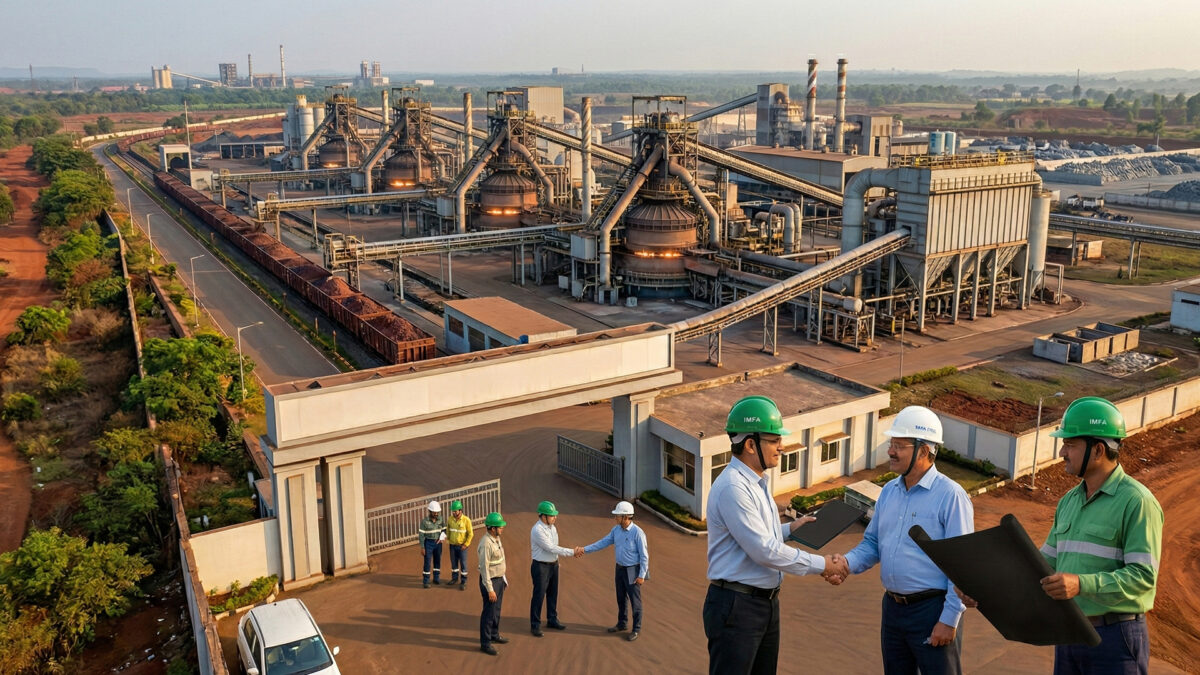
IMFA acquires Tata Steel’s Ferro‑Chrome plant for ₹707 cr

Indian Metals & Ferro Alloys Ltd (IMFA) has completed the acquisition of Tata Steel’s ferro‑chrome plant in Kalinganagar, Odisha for ₹707.26 crore, including GST and working capital adjustments.

The plant spans 115 acres and currently has four furnaces producing 100,000 tonnes annually, with a fifth under construction expected to increase capacity to 150,000 tonnes per year within a year.

Funded entirely from IMFA’s internal accruals, the deal strengthens the company’s position as a leading ferro‑chrome producer in India, expanding production and improving operational efficiency in the ferro‑alloys sector.

Categories
Corporate

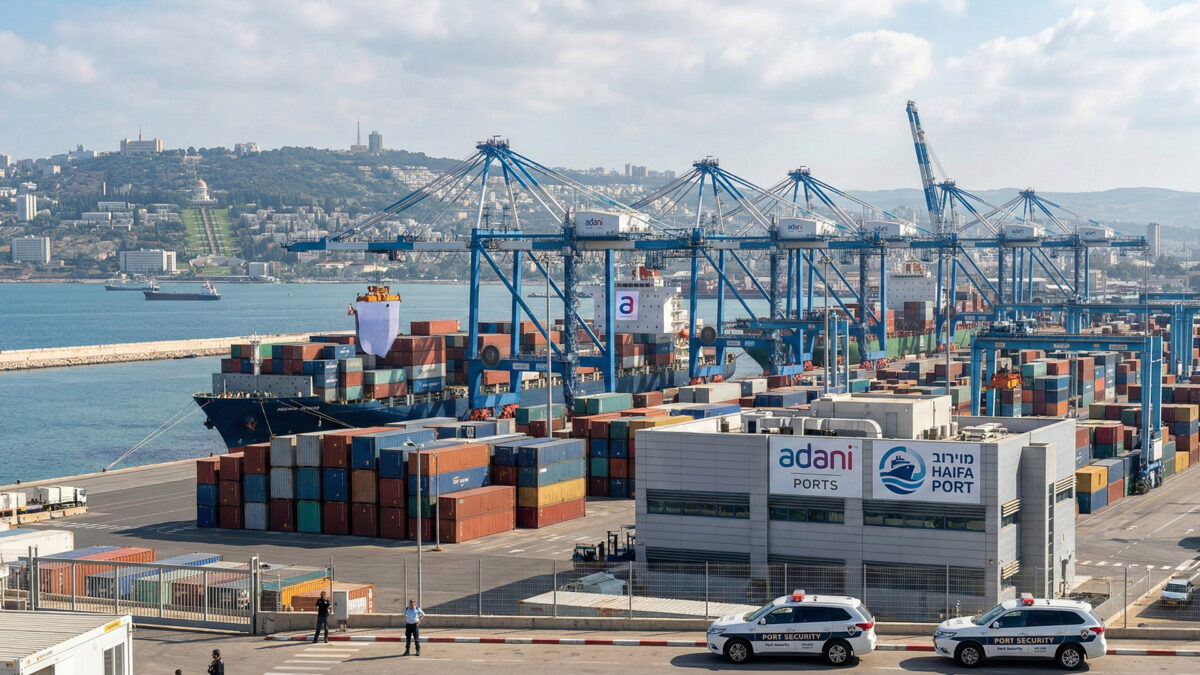
Adani Ports confirms Haifa port safe, fully operational

Adani Ports and Special Economic Zone Ltd (APSEZ), India’s largest port operator, has confirmed that its Haifa Port terminal in Israel is secure and fully operational, despite ongoing regional conflict following recent military strikes. The company said port operations continue as usual, with no disruptions to cargo movement or vessel schedules.

Haifa Port, on Israel’s Mediterranean coast, is a vital hub for container shipments, vehicles, and bulk cargo. Adani Ports manages terminal operations through a joint venture with local partners, ensuring smooth handling of trade between Israel, India, and other international markets. Maintaining operational continuity is crucial amid heightened security concerns in the region.

In an official statement, APSEZ said it has implemented all necessary measures to safeguard its employees, assets, and infrastructure. The company emphasised that business activities at the port remain unaffected, with cargo handling, vessel calls, and supply chains running normally. These assurances aim to allay concerns of traders and shipping partners relying on stable operations.

Haifa Port plays a strategic role not only for Israel’s domestic trade but also for connecting Mediterranean and European routes with Asia. Analysts note that keeping the port open during regional instability reassures international shippers and investors, preserving confidence in the logistics and shipping sector.

Adani Ports’ statement also comes amid broader market concerns over potential disruptions caused by geopolitical tensions in the Middle East, which could affect fuel costs, insurance premiums, and shipping schedules. By confirming that its Haifa operations remain unaffected, APSEZ signals resilience and commitment to uninterrupted service for global trade partners.

The company reiterated its commitment to the safety and well-being of employees and partners at the port. All standard security protocols are in place, and management continues to monitor the situation closely to respond promptly to any potential risks.

Also Read: PM Modi urges peace, flags economic risks in Gulf

Categories
Leaders

PM Modi urges peace, flags economic risks in Gulf

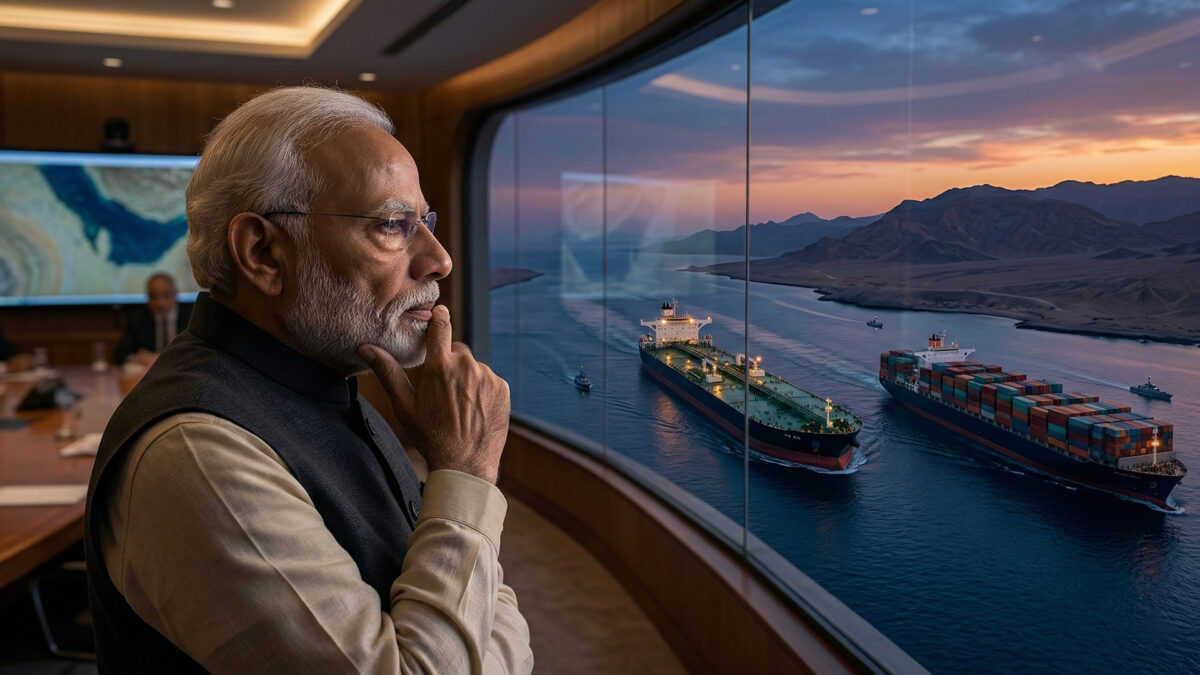
Prime Minister Narendra Modi held a telephone call with Benjamin Netanyahu on Monday, urging an “early cessation of hostilities” and emphasising that the safety of civilians must be a priority as tensions soar in West Asia following US–Israel strikes on Iran.

In his message on social media platform X, Modi said he had conveyed India’s concerns over the ongoing violence and called for de‑escalation to protect non‑combatants caught in the crossfire. He reiterated that India wants hostilities to end quickly and urged all sides to prioritise peace and civilian security.

The call comes amid growing concerns over trade and energy flows. India imports a significant portion of its crude oil and LPG from West Asia, and instability in the region, especially near strategic chokepoints like the Strait of Hormuz, could affect fuel costs, shipping schedules, and supply chains.

PM Modi also spoke with Sheikh Mohamed bin Zayed Al Nahyan, President of the United Arab Emirates, condemning recent attacks on the UAE and expressing India’s solidarity, while thanking UAE leadership for looking after the large Indian expatriate community.

Although direct trade with Iran has declined due to sanctions, India continues to export agricultural products, machinery, and pharmaceuticals, while importing dry fruits, chemicals, and glassware. Analysts warn that escalating conflict could disrupt these trade flows, affecting businesses and exporters dependent on Gulf markets.

India’s government is closely monitoring the economic fallout, including potential delays at ports, shipping disruptions, and volatility in energy prices. The PM’s outreach reflects India’s dual focus: advocating for peace to protect civilians and ensuring continuity of critical trade and energy interests.

PM Modi’s calls to regional leaders signal proactive diplomacy, combining humanitarian concerns with strategic economic foresight as businesses watch the Gulf situation for its impact on energy, logistics, and trade stability.

Also Read: GST collections rise to ₹1.83 lakh cr in February

Categories
Beyond

GST collections rise to ₹1.83 lakh cr in February

India’s Goods and Services Tax (GST) mop‑up rose to ₹1.83 lakh crore in February 2026, marking an 8.1% increase compared with the same month last year, government data showed. The figure reflects continued strength in consumption and economic activity despite global headwinds and geopolitical tensions.

The February collection brings the total GST revenue for the current financial year (FY26) to over ₹20.27 lakh crore, surpassing last year’s tally and reinforcing India’s robust tax base. The GST regime, which replaced multiple indirect taxes in 2017, remains a key indicator of domestic demand and business performance across sectors.

Officials said the jump in GST receipts was driven primarily by improved compliance, better revenue enforcement, and sustained consumer spending. Payments of Integrated GST (IGST) on imports and domestic supplies contributed substantially to the overall mop‑up, supported by subdued inflation in many core sectors.

The February GST number also includes a significant portion of cess collections, which are used to compensate states for revenue shortfalls, particularly on account of the implementation of the unified tax system. Analysts noted that the steady growth in collections signals resilience in consumption demand, especially in automobiles, consumer goods, and services.

Experts highlighted that while global uncertainties, including supply chain disruptions and inflation pressures, continue to pose challenges, robust domestic demand has cushioned the impact on revenue streams. “The sustained growth in GST collections reflects the underlying strength of India’s economy,” said one tax expert. “It suggests that businesses are adapting to policy shifts and that consumer confidence remains intact.”

Government officials also pointed to ongoing efforts to widen the tax base and simplify compliance, including digitised processes and stricter anti‑evasion measures, which have contributed to higher net revenue. These efforts, they said, help ensure a more transparent and efficient GST framework.

The February outcome is likely to provide some cushion to fiscal managers as they balance revenue targets with expenditure priorities, especially ahead of budget planning for the next fiscal year. Economists will watch March figures closely, as they often reflect the year’s strongest GST performance.

Also Read: TCS temporily suspends Middle East work travel

Categories
Corporate

TCS temporily suspends Middle East work travel

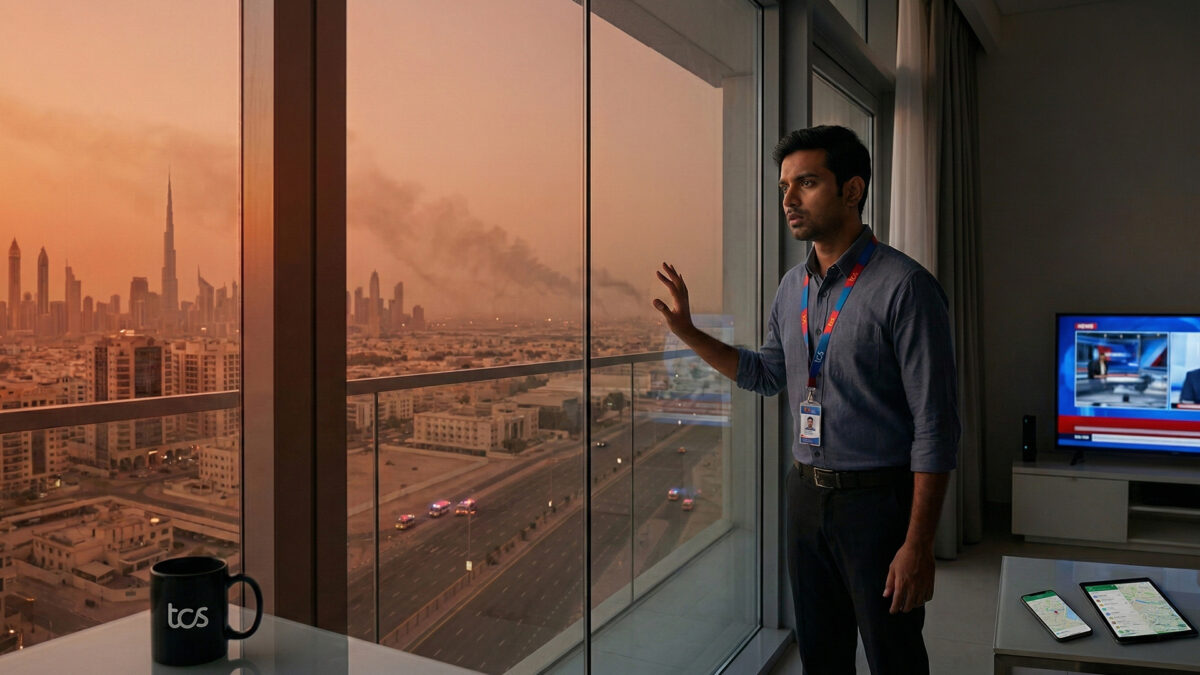
India’s IT giant Tata Consultancy Services has temporarily suspended all business travel to the Middle East and asked its employees in the region to remain indoors following escalating tensions in the Gulf. The advisory comes after a series of military strikes involving Iran, United States, and Israel, which have heightened security risks, disrupted airspace, and affected daily life in Gulf countries.

TCS instructed its regional employees to avoid commuting unless absolutely necessary and to follow updates from local leadership. The company emphasised that the move was purely precautionary, prioritising employee safety amid uncertainty. Staff have been advised to stay connected with HR and local management teams for guidance on work arrangements and safety measures.

In addition to halting travel, TCS is monitoring developments across its offices in the UAE, Qatar, Bahrain, Oman, and other affected areas. The advisory extends to contractors, client meetings, and site visits, ensuring minimal exposure to risk while maintaining continuity of operations remotely wherever feasible.

The company’s decision follows similar moves by other multinational corporations operating in the region, as firms respond to a rapidly evolving security situation. Civilian travel has already been disrupted due to airspace closures and flight cancellations, adding to operational challenges for businesses with significant regional presence.

While TCS did not provide a timeline for resuming travel, it reassured employees that it is continuously assessing the situation in consultation with local authorities and security experts. Regular updates will be provided to ensure that employees can make informed decisions about movement, work, and safety.

The advisory underscores the broader impact of geopolitical instability on global business operations. With thousands of Indian IT professionals working in Gulf countries, companies like TCS are taking proactive measures to safeguard employees while managing operational continuity.

Also Read: Middle East war clouds ground flights across India


Categories
Beyond

Middle East war clouds ground flights across India

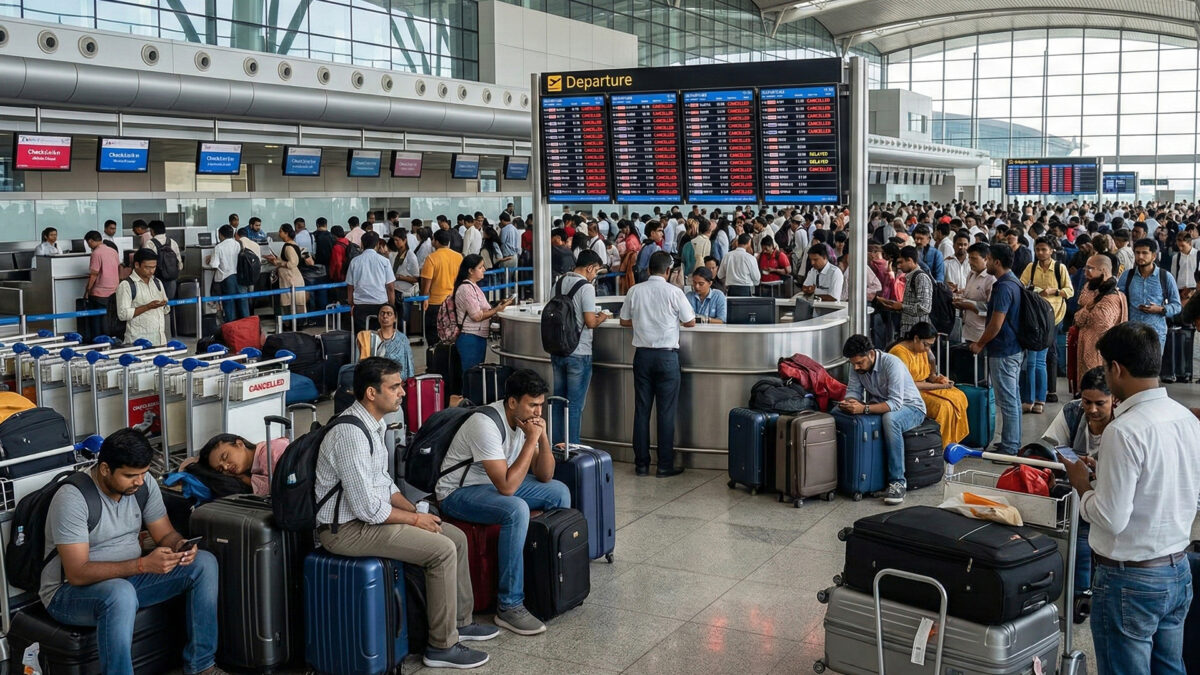
Air travel across India faced major disruption on Monday as escalating tensions in the Middle East, involving Iran, the United States and Israel,  forced airlines to cancel or delay multiple services. Widespread airspace restrictions across parts of the Gulf triggered precautionary suspensions and rerouting of flights.

At Rajiv Gandhi International Airport, authorities confirmed 48 cancellations, largely affecting international flights to Gulf destinations along with some domestic sectors impacted by aircraft rotations. Passengers were seen waiting at airline counters seeking rebookings and refunds.

In Kempegowda International Airport, at least 24 flights were cancelled, primarily services connecting Bengaluru to Middle Eastern cities. Some Europe-bound flights were also rescheduled because they normally transit through affected air corridors.

Similar scenes unfolded at Chhatrapati Shivaji Maharaj International Airport and Indira Gandhi International Airport, where passengers travelling to destinations such as Dubai, Doha and Riyadh experienced last-minute cancellations and delays. Kochi airport also reported stranded flyers after Gulf-bound services were disrupted.

Aviation officials said the cancellations were precautionary following advisories warning of potential risks in parts of Middle Eastern airspace. With some countries temporarily restricting overflights, airlines opted to suspend operations rather than risk safety concerns.

The disruption had a cascading impact on domestic schedules as aircraft assigned to international routes were grounded, causing knock-on delays across networks.

Airlines have urged travellers to check flight status updates before heading to airports and to use official communication channels for rebooking options. With geopolitical tensions continuing, further disruptions remain possible if airspace restrictions persist.

Also Read: Brent crude jumps 13% as Iran moves on Hormuz

Categories
Beyond

Brent crude jumps 13% as Iran moves on Hormuz

Global oil markets were rocked on Monday after crude prices surged more than 13% amid escalating conflict involving Iran, the United States and Israel, raising fears of a prolonged supply shock.

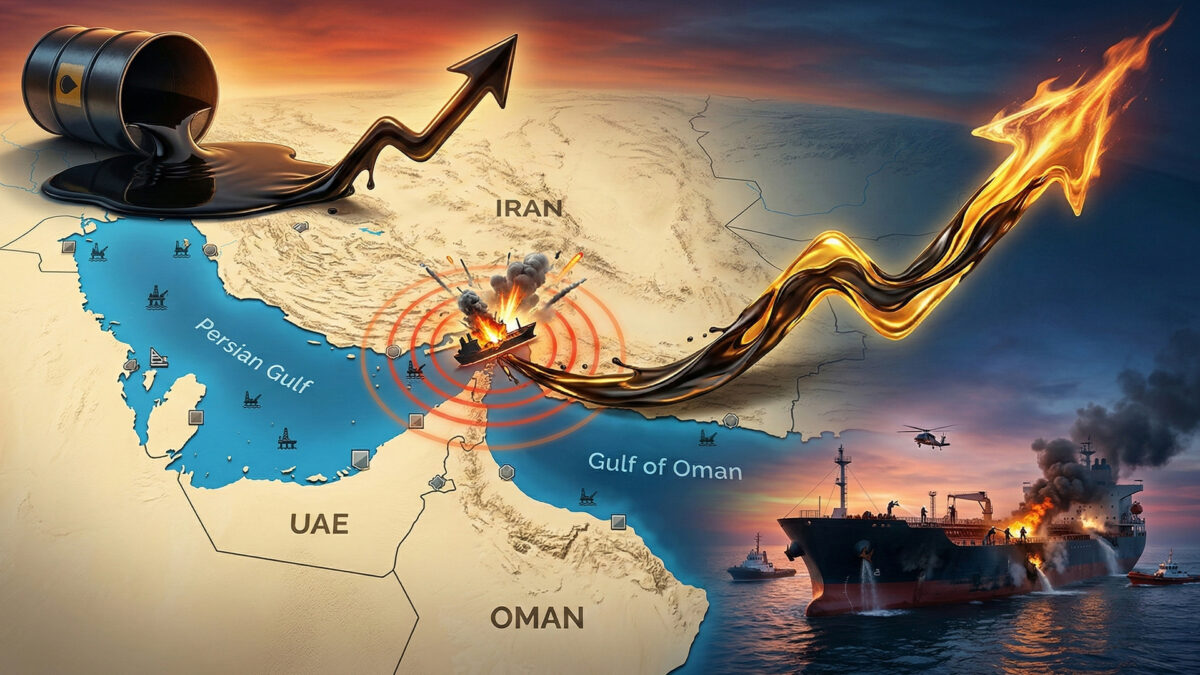
The sharp rally came after reports that Iran moved to restrict traffic through the Strait of Hormuz following coordinated US–Israel strikes on Iranian targets. The narrow waterway, located between Iran and Oman, is one of the world’s most critical energy corridors, handling nearly 20% of global crude oil and liquefied natural gas shipments each day.

Global benchmark Brent Crude surged as much as 13% to $82.37 per barrel, marking its highest level in over a year before easing slightly to trade near $79–$80. Meanwhile, West Texas Intermediate (WTI) climbed roughly 8% to around $72–$73 per barrel after volatile trading.

Shipping firms and maritime insurers have reportedly paused or delayed tanker movements through the Strait due to heightened security risks. Although Iranian authorities have not formally declared a complete closure, vessel tracking data shows significant slowdowns and rerouting activity. Analysts warn that even partial disruptions could tighten global supply chains.

Energy experts estimate that if flows through Hormuz were fully blocked, the global market could temporarily lose between 8 million and 10 million barrels per day, a volume difficult to replace quickly despite strategic reserves or alternative pipeline routes in Saudi Arabia and the UAE.

The price spike also reflects growing concern about retaliatory strikes and possible expansion of the conflict across the Gulf region. Traders are building in a geopolitical risk premium, pushing futures contracts higher across near-term delivery months.

Oil-importing nations face immediate pressure. Countries such as India, Japan and several European economies depend heavily on crude shipped through the Gulf. Higher prices could translate into rising fuel costs, inflationary pressures and widening trade deficits if the situation persists.

Meanwhile, producer alliance OPEC+ has signaled readiness to increase output modestly, but market analysts caution that incremental supply hikes may not offset a major disruption in Hormuz.

Financial markets reacted sharply, with global equities falling while safe-haven assets such as gold rose. Energy stocks, however, rallied on expectations of stronger earnings.

With geopolitical tensions intensifying and military exchanges continuing, oil markets remain highly volatile. Traders are closely monitoring developments around the Strait of Hormuz, as any confirmation of extended disruption could push crude prices toward the $90–$100 per barrel range in the near term.

Also Read: Gold ₹1.73 lakh, Silver ₹2.94 lakh

Categories
Beyond

Gold ₹1.73 lakh, Silver ₹2.94 lakh

Gold and silver prices surged sharply as escalating tensions in the Middle East drove investors toward safe-haven assets. Heightened geopolitical risks following the US–Israel strikes on Iran triggered volatility across global equity markets, boosting demand for precious metals.

In India, 24-carat gold climbed to ₹1,73,090 per 10 grams, marking a strong rebound from recent levels. The rally reflects a sharp increase of nearly ₹6,000 per 10 grams over a short span as buyers rushed to hedge against uncertainty. 22-carat gold also moved higher in line with the broader trend, tracking gains across major cities including Delhi, Mumbai and Chennai.

Silver prices remained firm, trading around ₹2.94 lakh per kilogram in domestic markets. On the Multi Commodity Exchange (MCX), silver witnessed heightened volatility but held near elevated levels as investment inflows supported prices.

Globally, spot gold prices rallied significantly, supported by safe-haven flows and concerns that the conflict could widen, impacting oil supply routes and global trade. Rising crude oil prices have added to inflation concerns, further strengthening gold’s appeal as a hedge. US gold futures also advanced in tandem with spot prices.

Market analysts say geopolitical instability typically benefits bullion, especially gold, which is considered a long-term store of value during crises. Exchange-traded funds (ETFs) backed by gold and silver also recorded increased inflows, reflecting institutional participation in the rally.

However, experts caution that bullion prices may remain volatile in the near term. Movements in the US dollar, global bond yields and further developments in the Middle East will likely dictate the next trend. If tensions persist or escalate further, gold could test higher levels, while silver may continue to track both safe-haven demand and industrial outlook.

Also Read: Sensex down 1,100 points, Nifty falls to 24,876

Categories
Corporate

Sensex down 1,100 points, Nifty falls to 24,876

Indian equity benchmarks opened sharply lower on Monday. The BSE Sensex plunged 1,100 points to open at 72,418, while the NSE Nifty50 dropped 332 points to 24,876, slipping below the key 25,000 mark in early trade.

This is because of the escalating military tensions between Iran and Israel, with reported involvement of the United States, that has triggered a global sell-off and pushed crude oil prices higher.

The sharp fall followed fears that widening conflict in the Middle East could disrupt oil supplies, fuel inflation and slow global growth.

Heavyweight IT and banking stocks led the decline. Infosys, HDFC Bank and Reliance Industries were among the biggest drags on the benchmarks. Shares of private lenders and frontline technology firms saw broad-based selling as investors reduced exposure to risk assets.

Oil marketing companies also traded weak on concerns that persistently high crude prices could squeeze marketing margins. Broader markets mirrored the weakness, with mid-cap and small-cap stocks declining in early deals.

However, defence stocks bucked the trend. Bharat Electronics Limited and Hindustan Aeronautics Limited emerged as top gainers on expectations of increased defence spending amid rising geopolitical tensions. Select upstream energy companies also saw buying interest as higher crude prices improved earnings prospects.

Asian markets traded mostly in the red, reflecting a broader flight to safety. Investors shifted funds into gold and government bonds, while emerging market equities faced outflows.

Analysts expect volatility to remain elevated in the near term, with crude oil prices and geopolitical developments likely to dictate market direction.