Categories
Beyond

RBI keeps Tata Sons in upper layer

The Reserve Bank of India (RBI) has retained Tata Sons in the Upper Layer of non-banking financial companies (NBFCs) for 2026-27, keeping the long-running question over a possible stock-market listing of the Tata Group holding company alive.

The RBI’s latest classification brings Tata Sons under enhanced regulatory oversight at a time when the company is seeking to surrender its Core Investment Company (CIC) registration. The central bank has made it clear that Tata Sons’ inclusion in the upper layer does not prejudice its pending application for deregistration.

For Tata Sons, the development is significant because an NBFC-Upper Layer (NBFC-UL) classification generally carries a mandatory listing requirement. The company was first placed in the upper layer in 2022, and under the earlier framework it was expected to list within three years.

However, Tata Sons has been trying to avoid that outcome. It applied to the RBI in March 2024 to surrender its CIC registration and had repaid its debt as part of its efforts to move away from the regulatory conditions that could trigger a public listing. That application is still being examined.

The RBI changed the way upper-layer NBFCs are identified in June 2026. Under the revised scale-based regulation framework, an asset threshold of ₹1 lakh crore is now central to determining whether an NBFC falls into the upper layer.

Tata Sons is comfortably above that threshold. Its total assets stood at around ₹2.01 lakh crore as of March 31, 2026, making its inclusion under the revised framework difficult to avoid.

The new approach is more straightforward than the earlier system, which relied on a combination of size, interconnectedness, complexity and other risk parameters. The RBI’s latest framework puts greater emphasis on the scale of an NBFC, bringing several large public-sector financial institutions into the upper layer as well.

The RBI has expanded the FY27 upper-layer NBFC universe with the addition of major infrastructure financiers, including REC, Power Finance Corporation (PFC), Indian Railway Finance Corporation (IRFC) and HUDCO. The move reflects the central bank’s broader effort to bring large financial institutions under stronger regulatory supervision.

The immediate question is whether Tata Sons will ultimately have to list its shares on Indian stock exchanges.

The RBI has not given a fresh public deadline for a Tata Sons listing while its deregistration application remains under consideration. Reuters reported that the central bank is unlikely to insist on an immediate listing while the application is pending, although the regulatory position remains unresolved.

This leaves Tata Sons in an unusual position. It remains classified as an upper-layer NBFC, but at the same time its request to surrender its CIC licence is still before the RBI.

The uncertainty matters because a public listing would fundamentally change the ownership and governance dynamics of one of India’s most influential business groups.

Tata Trusts control about 66% of Tata Sons, through the Sir Ratan Tata Trust and Sir Dorabji Tata Trust. The Shapoorji Pallonji Group holds a significant minority stake and has been seeking ways to unlock value from its holding. A Tata Sons listing could potentially provide a market-based valuation and create a clearer exit route for the minority shareholder.

At the same time, a listing would bring greater public disclosure, shareholder scrutiny and market accountability to the holding company.

The RBI’s revised framework also makes the classification more consequential. Once an NBFC enters the upper layer, it remains subject to enhanced regulations for at least five years, even if it later falls below the eligibility threshold.

This means the latest classification cannot simply be viewed as a temporary consequence of Tata Sons’ asset size. The company would face a substantially tighter regulatory framework if it continues in the upper layer.

The broader objective is to strengthen governance, risk management and financial stability among India’s largest NBFCs. Upper-layer entities face stricter requirements because their size and interconnectedness could create wider risks for the financial system.

For Tata Sons and Tata Trusts, the RBI decision therefore leaves several possibilities open. The company can continue pursuing deregistration as a CIC, while preparing for the possibility that it may have to comply with the listing requirement.

The situation has also renewed attention on the internal debate around a potential Tata Sons IPO. Tata Trusts had resolved in July 2025 that Tata Sons should remain privately held, while some trustees have subsequently expressed support for a listing.

For the Shapoorji Pallonji Group, the issue has an added financial dimension because its Tata Sons stake has been used as collateral for borrowings. A public market valuation could potentially improve liquidity and provide greater flexibility around its investment.

For investors, the RBI’s decision is therefore more than another regulatory classification. It keeps the possibility of one of India’s biggest and most closely watched corporate listings firmly on the radar.

For now, however, Tata Sons remains private. The next major trigger will be the RBI’s decision on its deregistration application. Until that happens, the Tata Sons listing debate is likely to remain unresolved, with regulation, ownership, governance and value unlocking all pulling the company in different directions.

Categories
Corporate

Sensex falls 455 points, Nifty slips below 24,600

Markets ended sharply lower on Friday, as pressure on financial stocks outweighed gains in information technology, automobiles and selected heavyweight shares. The benchmark BSE Sensex fell 455.65 points, or 0.58%, to close at 78,499.17, while the Nifty 50 declined 65.35 points, or 0.27%, to settle at 24,570.65.

The session remained volatile as investors adjusted to the newly introduced Closing Auction Session (CAS), which entered its fifth day. The new mechanism continued to create some divergence between the closing movements of the Sensex and Nifty. Market participants, however, expect this volatility to ease as traders and institutions become more familiar with the process.

On the Nifty 50, TCS, Mahindra & Mahindra and ONGC were among the leading gainers during the session. TCS emerged as a strong performer as IT stocks found buying interest. Grasim Industries and State Bank of India also traded firmly, with SBI gaining around 1.1% by the close.

At the other end, Bajaj Finance, Bajaj Finserv and Trent were among the biggest losers. Bajaj Finance ended down about 5.8%, while Bajaj Finserv declined around 3.7%. Trent also fell more than 3.5%, with ICICI Bank and other financial stocks adding to the pressure on the benchmark.

The sharp fall in Bajaj Finance and Bajaj Finserv came after a new Reserve Bank of India proposal concerning non-banking financial companies. The proposed framework would restrict NBFCs from offering revolving credit products, except for entities authorised to issue credit cards. Investors interpreted the proposal as potentially affecting the business models of some large consumer lenders, triggering selling in the sector.

Financial stocks therefore became the main drag on the market. Financial Services, banking and private-bank indices ended in the red, while IT emerged as the strongest sectoral performer, gaining around 2%. Auto stocks also remained relatively resilient, with realty, FMCG and healthcare stocks seeing selective buying.

The broader market showed a somewhat different picture. While the Nifty Smallcap 100 ended lower, the Nifty Midcap 100 gained about 0.2%. This suggested that selling pressure was concentrated more heavily in large financial stocks rather than being spread uniformly across the market.

Several individual stocks also reacted sharply to quarterly earnings. Hero MotoCorp rose more than 3% after reporting a 29% year-on-year increase in standalone net profit to ₹1,454 crore for the June quarter. Revenue increased 36% to ₹12,999 crore, helping the two-wheeler major beat market expectations.

Titan Company also reported strong first-quarter numbers. Its profit rose 65% year-on-year to ₹1,699 crore, while revenue increased 24% to ₹18,101 crore. The results provided some support to the consumer-facing segment even as the broader market remained under pressure.

In contrast, Godrej Consumer Products slipped more than 4% despite reporting a 12% increase in consolidated net profit to ₹505 crore. Investors focused on pressure on margins amid higher commodity costs. Ixigo also fell sharply, declining as much as 9.4%, despite reporting its highest-ever quarterly profit, highlighting how investors are increasingly looking beyond headline earnings to assess future spending and profitability.

The solar-energy space also remained under pressure. Vikram Solar dropped around 11% to a fresh lifetime low after reporting an 85% year-on-year decline in first-quarter profit. Concerns about margins and the impact of a US tariff on polysilicon products added to investor worries around the sector.

Meanwhile, commodity markets were firmer. Aluminium futures rose 1.07% to ₹352.95 per kg, zinc futures gained 0.49% to ₹396.80 per kg, and copper futures climbed 0.77% to ₹1,386.55 per kg, supported by fresh positions and firm spot demand.

The rupee remained broadly stable, ending at ₹95.2075 against the US dollar, compared with ₹95.22 in the previous session.

Global cues remained mixed. US equity futures were modestly positive during Indian trading hours, while European markets also traded higher. However, investors remained cautious ahead of US payroll data, which could influence expectations around the Federal Reserve’s interest-rate path and global fund flows.

Crude oil remained another concern. Prices moved above $83 a barrel amid renewed uncertainty surrounding the Strait of Hormuz and geopolitical developments involving Iran. Higher oil prices can add pressure to India’s import bill, inflation outlook and corporate margins.

Despite Friday’s decline, the domestic market retained part of its weekly gains. The Nifty 50 finished the week about 0.8% higher, while the Sensex gained roughly 0.5%. Foreign investors have also remained supportive, with foreign portfolio investors putting about $1.3 billion into Indian equities in August after investing $2.1 billion in July.

For investors, the week’s trading offered a clear reminder that the market is being driven by several forces at once — quarterly earnings, regulatory changes, crude oil prices, global cues and the transition to the new closing mechanism. While sectors such as IT, auto and telecom continue to show earnings resilience, elevated valuations could limit the market’s upside, according to market strategist VK Vijayakumar of Geojit Investments.

With the CAS still settling into the Indian market structure, traders are likely to watch closing-price volatility closely in the coming sessions. For now, the focus remains on earnings, financial-sector regulation, crude prices and global economic data as Dalal Street heads into the next week.

Categories
Technology

OpenAI’s first AI speaker could cost over $300

OpenAI is reportedly preparing to enter the consumer hardware market with an unusual new product: a small, donut-shaped artificial intelligence speaker that could cost between $300 and $400.

The device, which has not yet been officially unveiled by OpenAI, is expected to be the company’s first major consumer hardware product. Reports suggest it could arrive in 2027, giving OpenAI a physical presence in homes rather than limiting ChatGPT to smartphones, computers and other existing devices.

The reported price immediately sets the product apart from conventional smart speakers. Amazon’s Alexa and Google’s Nest devices have traditionally competed in a much lower price range, while OpenAI appears to be positioning its product as something more sophisticated than a conventional voice assistant.

The upcoming OpenAI device is reportedly about the size of a hockey puck and designed with a doughnut-like shape. It is expected to be battery-powered and portable, allowing users to move it around the home.

Unlike many smart home devices that rely on a display, the reported OpenAI speaker is expected to be screen-free. Instead, users would interact with it primarily through voice, similar to ChatGPT’s existing voice mode.

What could make the device different is the way it responds to people. Reports indicate that it may contain moving components that react during conversations, giving the device a more expressive and physical presence.

The hardware is also reportedly expected to include cameras and other sensors. These could allow the AI assistant to understand more about its surroundings and the context in which a user is interacting with it.

That would take the idea of a smart speaker beyond simply answering questions, setting timers or playing music. The ambition appears to be creating an AI companion capable of having more natural conversations and helping users perform tasks around the home.

One of the most closely watched aspects of the project is its connection with renowned designer Jony Ive, the former Apple design chief.

OpenAI has been working with Ive and his design company, LoveFrom, on consumer hardware. In 2025, OpenAI announced that the team behind io had officially merged with the company, while Ive and LoveFrom retained independent creative and design responsibilities across OpenAI.

That collaboration has fuelled expectations that OpenAI’s hardware will place unusual emphasis on industrial design and the way people interact with technology.

The reported doughnut-shaped design appears to reflect that philosophy. Rather than looking like another traditional smart speaker, the device is being developed as a new kind of physical interface for artificial intelligence.

The biggest strategic shift is perhaps not the shape or price, but the idea of moving ChatGPT away from screens.

For years, consumers have interacted with AI largely through keyboards, touchscreens and apps. OpenAI’s reported hardware strategy suggests the company wants AI to become more ambient — something people can simply talk to without opening an application.

A dedicated AI device could potentially handle tasks such as answering questions, controlling compatible smart-home products, playing media, sending messages and assisting users with everyday activities. Earlier reports have also pointed to the device being designed as a more human-like assistant for the home.

OpenAI has already been investing heavily in voice technology. In May 2026, the company introduced new realtime voice models designed to reason, translate and transcribe as people speak. OpenAI described voice as an important interface between people and products.

The hardware could therefore become a natural extension of that strategy, putting ChatGPT voice AI into a dedicated physical device.

The move into hardware could give OpenAI greater control over how people experience its technology.

At present, ChatGPT operates through devices made by Apple, Google, Samsung and other manufacturers. A dedicated OpenAI product would allow the company to control the hardware, software, sensors and AI experience together.

It could also create a new consumer revenue stream at a time when AI companies are searching for ways to turn enormous computing costs into sustainable businesses.

OpenAI has been scaling rapidly. The company said in March 2026 that it had closed a funding round with $122 billion in committed capital at a post-money valuation of $852 billion. It has also stressed the importance of consumer adoption, enterprise deployment, developers and computing infrastructure to its broader AI strategy.

The reported $300–$400 price tag could be one of the biggest challenges.

Consumers already have access to inexpensive smart speakers from established companies. Convincing people to pay several hundred dollars for an AI-first device will require OpenAI to offer capabilities that feel substantially more useful than today’s voice assistants.

OpenAI has not publicly confirmed the final design, specifications, price or launch date reported for the device. Those details could change before the product reaches consumers.

If OpenAI succeeds, its first device could turn ChatGPT from something people open on a screen into something they simply talk to at home. That would make the company’s hardware launch much more than another smart speaker release, it could be an early attempt to redefine how consumers interact with artificial intelligence.

Categories
Uncategorized

Lupin Q1 profit rises 16% as strong growth boosts performance

Lupin Ltd has started financial year 2026-27 on a strong note, with robust growth across its major markets helping the pharmaceutical company deliver a 16% year-on-year rise in consolidated profit after tax (PAT) for the June quarter.

The company reported a consolidated PAT of ₹1,417 crore for Q1 FY27, compared with ₹1,221 crore in the same quarter last year. Revenue from operations climbed 32% year-on-year to ₹8,277 crore from ₹6,268 crore a year earlier. The numbers underline the continuing strength of Lupin’s business across the US, India and other international markets.

The quarterly performance was also stronger at the operating level. Lupin’s EBITDA rose 43% year-on-year to ₹2,580 crore, while the EBITDA margin improved to 31.4%, compared with 29.3% in Q1 FY26. The improvement in margins points to stronger operating leverage and a favourable product and geographic mix.

Lupin’s gross profit increased 39.5% to ₹6,128 crore during the quarter, with gross margin expanding to 74.6% from 71.3% a year earlier. Profit before tax rose 42.5% to ₹2,017 crore.

The company’s performance was led particularly by its international business. US sales, Lupin’s largest market, increased 42.9% year-on-year to ₹3,435 crore. The US business accounted for about 42% of the company’s global sales during the quarter. In dollar terms, US sales rose to $366 million from $282 million in the year-ago period.

The strong US performance was supported by new product launches and regulatory approvals. Lupin received six abbreviated new drug application (ANDA) approvals from the US Food and Drug Administration during the quarter and launched three products in the US. The company now has 149 generic products in the US market.

India remained another important growth engine. Lupin’s India sales increased 13.9% year-on-year to ₹2,380 crore, accounting for about 29% of global sales. Sales from India’s formulations business grew 15.1% during the quarter, while the company launched seven brands across different therapeutic areas.

The company also recorded notable growth beyond its two largest markets. Sales in other developed markets rose 48.3% to ₹1,149 crore, while emerging-market sales jumped 51.7% to ₹990 crore. Together, these markets helped broaden Lupin’s revenue base and reduce dependence on any single geography.

Formulations remained the main contributor to the company’s growth. Total formulations sales increased 34.3% year-on-year to ₹7,954 crore. Global active pharmaceutical ingredient (API) sales grew at a more modest 8.5% to ₹264 crore.

Lupin’s first-quarter numbers also reflect continued investment in research and innovation. The company spent ₹608 crore on research and development during the quarter, equivalent to 7.4% of sales. Its cumulative ANDA filings with the US FDA stood at 429 as of June 30, 2026, with 350 approvals received so far. The company also has 50 First-to-File filings, including 21 exclusive opportunities.

The balance sheet remained relatively comfortable. Lupin reported net debt of negative ₹2,831 crore as of June 30, effectively indicating a net cash position. Capital expenditure during the quarter stood at ₹279 crore, while operating working capital was ₹8,260 crore.

Lupin Managing Director Nilesh Gupta said the company had made a strong start to FY27, driven by growth across key markets and continued improvement in profitability. He highlighted execution, operational excellence and investments in technology and innovation as important factors supporting the company’s longer-term growth.

The latest Lupin Q1 FY27 results therefore present a picture of a pharmaceutical business benefiting from broad-based demand rather than relying solely on one market. The US continues to provide significant momentum, while India, emerging markets and other developed markets are adding to the growth story.

For investors tracking the Indian pharmaceutical sector, the key takeaway is the combination of strong revenue growth and expanding operating profitability. With Lupin continuing to strengthen its generic portfolio, invest in R&D and expand its presence across global markets, the first-quarter performance provides a positive opening to FY27.

However, sustaining this momentum through the rest of the financial year will depend on the company’s ability to maintain US growth, execute new product launches, manage costs and convert its expanding product pipeline into commercial opportunities.

For now, Lupin’s Q1 FY27 performance shows a company entering the new financial year with healthy growth across markets, stronger operating margins and continued investment in its future portfolio.

Categories
Beyond

Cabinet clears ₹23,731 cr GOBARdhan scheme for CBG

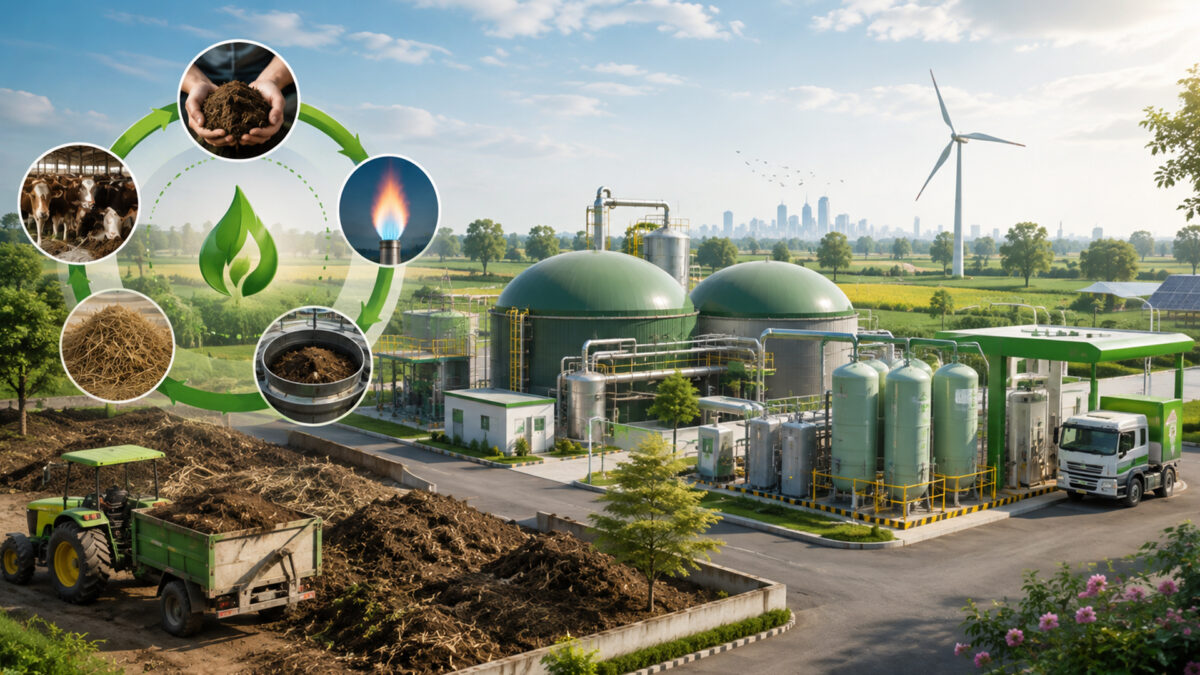
India is giving a major push to compressed biogas (CBG), with the Union Cabinet approving a ₹23,731-crore national scheme aimed at turning agricultural waste, cattle dung and other organic material into clean fuel, organic manure and a new source of rural income.

The GOBARdhan scheme, short for Galvanizing Organic Bio-Agro Resources Dhan, has been approved as India’s National Circular Bioenergy Scheme. It will be implemented from 2026-27 to 2035-36, with the government seeking to make CBG a significant part of the country’s future energy mix.

The move comes as India looks for ways to strengthen energy security and reduce its dependence on imported fossil fuels, including liquefied natural gas (LNG).

The basic idea behind the scheme is simple: waste that is often difficult to manage can be collected and processed to produce a renewable gas that can be used in the existing gas ecosystem.

The government expects the scheme to drive nearly ten-fold growth in domestic CBG production and attract large-scale private investment into the sector.

CBG is chemically equivalent to natural gas and can be used across transport, households, industry and commercial applications. This gives the fuel an advantage because it can potentially work with India’s existing gas infrastructure rather than requiring an entirely separate energy network.

The scheme brings several existing government initiatives for the biogas sector under one national framework. These include programmes supporting CBG plants, biomass aggregation, organic manure and pipeline infrastructure.

More than 200 CBG plants have already been commissioned under earlier initiatives, providing the foundation for the next phase of expansion.

Under GOBARdhan, the government has identified six major areas of support.

The first is assured CBG offtake. City Gas Distribution companies will provide a more predictable market for producers, with the notified CBG obligation set at 3% in 2026-27, 4% in 2027-28 and 5% from 2028-29 onwards for the CNG transport and PNG domestic segments.

This is important for investors because CBG plants require substantial upfront investment. A reliable market can make it easier for developers to secure financing and plan production over the long term.

The second component is a stable CBG pricing framework. The scheme provides for an administered price of ₹2,110 per Metric Million British Thermal Unit (MMBTU), with a minimum 10-year horizon. The objective is to give producers greater revenue visibility while keeping the fuel affordable.

The third is capital assistance. Eligible new CBG projects can receive support of up to ₹2 crore per tonne per day of installed capacity. Existing plants expanding their capacity can also qualify for assistance.

The support will cover not only plant equipment but also important parts of the value chain, including feedstock aggregation and organic manure processing.

The government is also planning to expand pipeline connectivity between CBG plants, trunk pipelines and City Gas Distribution networks. Better connectivity could reduce transportation and evacuation costs and allow producers to reach larger markets.

A dedicated credit guarantee mechanism is another key part of the scheme. It is expected to make institutional finance more accessible, particularly for MSME-based CBG projects. Lower lending risks could encourage participation by rural entrepreneurs, cooperatives and first-time developers.

The sixth component is a CBG Ecosystem Challenge Fund, which will support district-level planning, feedstock mapping, technology adoption, capacity building and development of local supply chains.

For farmers, the scheme could create a new income stream from materials that often have little commercial value.

Agricultural residue, cattle dung, press mud from sugar mills and municipal organic waste can become valuable feedstock for CBG plants. This could create economic opportunities not just for farmers, but also for people involved in collection, transportation, processing and plant operations.

The process also produces organic manure, creating another potential revenue stream while encouraging more scientific waste management.

The government expects this waste-to-wealth model to support a wider rural economy. Instead of treating agricultural and organic waste purely as a disposal problem, the scheme seeks to turn it into an economic resource.

There is also an environmental angle. Greater use of CBG could reduce the burning or dumping of organic waste and help lower greenhouse gas emissions by replacing some fossil fuel use.

For India, the larger objective is energy diversification.

Natural gas demand is growing across transportation, homes, industries and commercial establishments. Increasing domestic production of renewable gas could help meet part of that demand while reducing exposure to international fossil-fuel prices and import dependence.

The scheme also opens the door for greater private sector investment in India’s clean energy sector. Stable pricing, assured demand, capital assistance and easier access to credit are intended to make CBG projects more commercially viable.

However, the success of the programme will ultimately depend on how effectively feedstock is collected and transported, how quickly infrastructure is built and whether CBG plants can operate consistently at scale.


Categories
Beyond

Bengal reopens Tata talks with fresh industrial investment

Nearly two decades after the bitter Singur controversy pushed Tata Motors out of West Bengal, the state government is making a fresh attempt to rebuild ties with the Tata Group — this time with an eye on both settling the old dispute and attracting new investment.

The West Bengal government has formally invited the Tata Group to return to the state and set up new industrial projects. Senior state officials have recently met Tata Group representatives in Mumbai to discuss possible investments in areas including IT, manufacturing and infrastructure.

The outreach is closely linked to efforts to resolve the long-running legal dispute arising from the abandoned Tata Nano project at Singur. The state has begun discussions with Tata Motors over a possible out-of-court settlement in the arbitration case connected with the project.

The development marks a significant shift from one of the most politically charged industrial episodes in Bengal’s recent history.

In 2006, Tata Motors chose Singur in Hooghly district for its small-car manufacturing plant. The project involved nearly 997 acres of land, much of it acquired amid strong opposition from farmers and political groups. Protests over land acquisition intensified, eventually forcing Tata Motors to withdraw from Singur in 2008. The Nano project was subsequently shifted to Sanand in Gujarat.

The factory at Singur was reportedly around 90 per cent complete when Tata Motors decided to leave Bengal. The company had invested more than ₹1,000 crore in the project by then, according to reports.

The dispute did not end with the project’s exit.

Tata Motors later initiated arbitration proceedings seeking compensation for losses arising from the abandoned project. In 2023, a three-member arbitral tribunal unanimously awarded about ₹765 crore to Tata Motors, covering expenses and losses associated with the Singur project, including litigation costs. The award also carried interest.

The West Bengal Industrial Development Corporation (WBIDC) challenged the award before the Calcutta High Court. However, the court’s refusal in May to stay the arbitration award has added urgency to efforts to find a negotiated settlement. The state has been asked to secure the payment through an undertaking listing its immovable properties.

Against this legal backdrop, senior state officials have opened discussions with Tata Group executives.

The government’s approach appears to go beyond simply resolving the compensation issue. Officials are exploring a broader arrangement that could bring fresh Tata investments into West Bengal, potentially turning a long-running industrial dispute into an opportunity for a new partnership.

Commerce and Industry Minister Tapas Roy has also said efforts are underway to bring the Tata Group back in a significant way. Chief Minister Suvendu Adhikari is leading the initiative, according to the minister.

For the state government, the talks carry an importance that goes beyond one corporate group.

West Bengal has been trying to strengthen its reputation as an investment destination and attract large industrial projects. The renewed engagement with Tata is therefore being seen as part of a broader effort to rebuild investor confidence, industrial growth and employment opportunities.

The timing is also significant. The state is reportedly finalising a new industrial policy, expected to be released in August, while discussions are also underway with Japanese conglomerate Mitsubishi over potential investment in the semiconductor sector.

For Tata, any return to Bengal would also carry symbolic significance. The group has continued to have a presence in the state through several businesses, but the Singur episode became a defining moment in the relationship between industry and politics in West Bengal.

The controversy had raised fundamental questions about land acquisition, farmers’ rights, industrialisation and employment. It also became a major political issue, with the agitation against the Tata Nano project playing an important role in the rise of the Trinamool Congress in Bengal.

Nearly 20 years later, the political and economic landscape has changed. The current government is now seeking to use dialogue and investment to move beyond that chapter.

For Singur itself, the possibility of a new industrial project could be particularly significant. The abandoned Nano site became a powerful symbol of Bengal’s industrial setback after Tata Motors’ departure. A fresh investment could potentially bring jobs, ancillary businesses and economic activity back to the area.

However, the discussions are still at an early stage. There is no confirmed agreement yet on a new Tata project, nor has a final settlement been announced in the arbitration dispute.

For now, both sides appear to be testing whether an old conflict can give way to a new business relationship.

If the talks succeed, Bengal could close one of its most contentious industrial chapters while opening another — one built around investment, manufacturing, jobs and renewed confidence in the state’s industrial future.

Categories
Corporate

Sensex tumbles 400 points, Nifty breaks below 24,600

Indian equity markets came under pressure on Friday as the Sensex fell more than 400 points and the Nifty 50 slipped below the 24,600 mark. Rising crude oil prices, renewed concerns over the Strait of Hormuz and selling in financial stocks kept investors cautious, even as gains in select automobile, consumer and technology stocks offered some relief.

The Sensex opened on a weak note and extended its losses during the morning session, while the Nifty also struggled to hold key levels. At around 11:38 am, the Nifty 50 was trading at 24,578.75, down 57.25 points. The market remained volatile as investors assessed global developments alongside the latest corporate earnings.

Financial stocks were among the biggest drags on the benchmarks. Bajaj Finance and Bajaj Finserv emerged among the top losers, falling sharply after the Reserve Bank of India proposed new regulatory norms for non-banking financial companies. Bajaj Finance declined around 3.9%, while Bajaj Finserv was down about 3.3% during the session.

The proposed RBI framework has raised concerns over tighter rules for certain lending products and business practices. The selling in the two stocks also weighed on the broader financial services space, which remained one of the weakest segments of the market.

In contrast, Hero MotoCorp and Britannia Industries were among the top gainers. Hero MotoCorp rose around 3% after the company reported a strong first-quarter performance. Its consolidated profit increased 29% year-on-year, supported by higher revenue and improved operating performance.

Britannia Industries also attracted buying interest after reporting a healthy quarterly performance. The stock gained nearly 4%, helping the consumer segment remain relatively resilient despite the broader market weakness.

Kalyan Jewellers was another stock in focus, gaining around 3.7% after positive commentary from brokerage Jefferies. The movement showed that investors continued to favour companies with strong earnings prospects or favourable analyst views, even as the broader market remained under pressure.

The biggest concern for the market, however, was the renewed rise in crude oil prices. Brent crude moved above $84 a barrel amid heightened concerns about shipping through the Strait of Hormuz. The waterway is a crucial route for global oil shipments, and any prolonged disruption could push energy prices higher.

Higher crude prices are particularly important for India because the country relies heavily on imported oil. A sustained increase in energy costs could widen the import bill, put pressure on the rupee and complicate the inflation outlook. It could also affect the profitability of companies that are unable to pass higher input costs on to consumers.

The rise in oil prices came alongside fresh geopolitical concerns involving Iran and the wider Middle East. Investors are therefore closely monitoring developments around the Strait of Hormuz for signs of a prolonged disruption or further escalation.

The India VIX, which tracks expected volatility in the equity market, also moved higher during the session. The increase indicated growing caution among traders and suggested that investors were preparing for larger swings in stock prices.

Despite the weakness in the headline indices, the market was not uniformly negative. Information technology stocks remained among the better-performing sectors, while automobile, healthcare and realty stocks also found buying interest. This helped limit the overall damage from the sell-off in financial shares.

Among individual stocks, Siemens Energy India was one of the notable performers after its quarterly results. Indraprastha Medical Corporation also advanced following its earnings announcement. These gains highlighted how company-specific developments continued to influence trading despite the broader risk-off mood.

At the other end of the spectrum, Vikram Solar plunged around 11%, touching a fresh lifetime low. The sharp decline added to the volatility in individual stocks and reflected the heightened sensitivity towards companies facing concerns around valuations or business performance.

Investors are also keeping a close watch on the ongoing Q1 earnings season. Several companies have delivered strong revenue and profit growth, providing support to the market. However, expensive valuations, elevated crude prices and uncertainty over global interest rates have made investors more selective.

Global cues also remained mixed. Asian markets traded without a clear direction, while US stocks had closed lower in the previous session. Investors were awaiting fresh US economic data for clues about the Federal Reserve’s future interest-rate decisions.

For the Indian market, the immediate focus is likely to remain on crude oil prices, geopolitical developments, foreign fund flows and corporate earnings. The movement of the Nifty around the 24,600 level will also remain important for traders in the near term.

Friday’s session once again showed the contrasting forces shaping Indian equities. Strong earnings and buying in select stocks are providing support, but financial-sector weakness, rising oil prices and geopolitical uncertainty are keeping the benchmark indices under pressure.

Categories
Corporate

Aurobindo Pharma Q1 profit jumps 25% to ₹1,032 cr

Aurobindo Pharma has started the new financial year on a strong note, reporting a 25.2% year-on-year rise in consolidated net profit to ₹1,032 crore for the April-June quarter. The Hyderabad-based drugmaker also posted its highest-ever quarterly revenue, helped by broad-based growth across the US, Europe and other international markets.

Revenue from operations increased 16.3% year-on-year to ₹9,150 crore in Q1 FY27, compared with ₹7,870 crore in the same quarter last year. The company said the quarter benefited from higher volumes, new product launches and stronger performance across its formulations business.

The numbers underline a healthy start for Aurobindo Pharma, particularly as the company continues to expand its global generics portfolio and strengthen its presence in key overseas markets.

Europe emerged as one of the strongest contributors during the quarter. Revenue from the European business jumped 25.6% to ₹2,937 crore from the year-ago period. The company reported broad-based growth across major European markets.

The US business, which remains an important part of Aurobindo Pharma’s international operations, also performed well. Revenue from the US increased 8.1% year-on-year to ₹3,770 crore. The growth was supported by higher volumes and new product launches.

The company’s Growth Markets business delivered an even sharper increase. Revenue from these markets rose 37.7% to ₹1,063 crore, reflecting stronger demand across markets outside its major US and European operations.

The performance shows that Aurobindo is not depending on a single geography for growth. Its diversified international presence is helping the company manage changing conditions in individual markets.

The formulations business, which contributes the largest share of Aurobindo Pharma’s revenue, grew 16.5% year-on-year to ₹8,101 crore during the quarter.

The company said growth in US formulations was supported by new product launches and higher volumes. Europe also delivered strong growth across several markets.

The active pharmaceutical ingredients (API) business was another positive contributor. API revenue increased 14.6% to ₹1,049 crore during Q1 FY27.

Aurobindo also received final US Food and Drug Administration approvals for 10 products during the quarter and launched 10 products in the US market. New product launches are particularly important for generic drugmakers because they can help companies build revenue as older products face pricing pressure and competition.

Aurobindo’s operating performance also improved during the quarter. Operating EBITDA, excluding forex impact and other income, rose 20% year-on-year to ₹1,924 crore.

The corresponding EBITDA margin expanded by 60 basis points to 21%. This indicates that the company was able to convert a part of its revenue growth into stronger operating profitability.

The improvement is notable because pharmaceutical companies continue to operate in a competitive global environment, where pricing pressure, regulatory requirements and currency movements can affect margins.

Aurobindo Vice Chairman and Managing Director K. Nithyananda Reddy said the company had begun FY27 with healthy growth across businesses, supported by disciplined execution, operational performance and a diversified product portfolio. He also acknowledged that the global operating environment remains dynamic.

Alongside the quarterly results, Aurobindo Pharma announced a significant corporate restructuring involving its injectable medicines business.

The company’s board approved a proposal to merge Eugia Steriles Private Limited and Eugia SEZ Private Limited with wholly owned subsidiary Eugia Pharma Specialities Limited. The proposal will require approval from the National Company Law Tribunal (NCLT).

All three companies are involved in the manufacture of injectable pharmaceutical products. The proposed amalgamation is aimed at bringing similar operations under one legal entity and simplifying the group’s corporate structure.

Aurobindo expects the restructuring to remove overlapping corporate and administrative functions, reduce costs, improve treasury management and create operational synergies. The company said the merger will not change its shareholding structure and will not involve any cash consideration because the entities are wholly owned within the group.

The move is part of Aurobindo’s broader effort to make its business structure more efficient as it expands its specialty and injectable drug operations.

The June quarter also included the completion of Aurobindo’s acquisition of Lannett Company LLC in the US. The transaction was completed on June 29.

Aurobindo said it ended the quarter with a net cash position of $42 million, or about ₹397 crore, including investments. This was despite spending $247 million on the Lannett acquisition and $85 million on a share buyback.

The Lannett acquisition strengthens Aurobindo’s US generics presence and adds to its product and operational capabilities in the world’s largest pharmaceutical market.

The company is also continuing to build its international footprint. During the quarter, it incorporated new step-down subsidiaries in France and Indonesia. It also acquired a 26% stake in Swarnaakshu Solar Power Private Limited.

After the quarter ended, Aurobindo subsidiary Apitoria Pharma approved the acquisition of an 80% interest in the A1 Biochem Group for an enterprise value of $17 million.

For investors tracking Aurobindo Pharma shares, the latest results provide several positives, including record quarterly revenue, double-digit growth across major markets, improving operating margins and a strong product pipeline.

At the same time, the company operates in a highly regulated and competitive global pharmaceutical market. US pricing, regulatory approvals, product launches, currency movements and the integration of recent acquisitions will remain important factors for future performance.

For now, however, the June quarter has given Aurobindo Pharma a solid beginning to FY27. Strong growth in Europe and Growth Markets, steady expansion in the US and improving profitability suggest that the company’s international strategy is gaining momentum.

The planned Eugia merger adds another layer to the story by simplifying the corporate structure and potentially reducing duplication. With new products, acquisitions and restructuring happening alongside organic growth, Aurobindo is entering FY27 with a broader platform for expansion.

Categories
Leaders

Demis Hassabis leaves Google DeepMind CEO role

Demis Hassabis is stepping down as chief executive of Google DeepMind, marking a major leadership change at one of the world’s most influential artificial intelligence research organisations.

Hassabis will become chair of Google DeepMind and chief scientist of Alphabet, Google’s parent company. He will move away from the lab’s day-to-day management but remain closely involved in its long-term artificial intelligence strategy. He will also continue leading Isomorphic Labs, Alphabet’s AI-focused drug discovery company.

The change comes at an important moment for Google. The company is investing heavily in AI as competition intensifies from rivals including OpenAI and Anthropic. Google has been pushing its Gemini AI models, AI agents and other products while trying to maintain its position in the rapidly changing generative AI market.

Under the new structure, Koray Kavukcuoglu, a long-time DeepMind executive, will take over as senior vice-president of Google DeepMind. He will oversee the organisation’s core AI research, Gemini model development and the Gemini app and developer teams.

For Hassabis, however, the move is not an exit from Google or artificial intelligence. Instead, it gives him a broader role across Alphabet, with a greater focus on scientific research, advanced AI and the longer-term goal of developing artificial general intelligence (AGI).

Hassabis co-founded DeepMind in 2010 with the ambition of building machines capable of learning and solving complex problems. Google acquired the company in 2014, and DeepMind was later combined with Google Brain in 2023 to create Google DeepMind.

The organisation has since become central to Google’s AI strategy. Its research has produced landmark systems such as AlphaGo, which defeated a leading human Go player, and AlphaFold, which transformed the study of protein structures. More recently, Google DeepMind has been deeply involved in the development of Gemini and other generative AI technologies.

Hassabis’ scientific reputation also extends beyond the technology industry. In 2024, he shared the Nobel Prize in Chemistry with John Jumper for work connected to protein structure prediction using AI. His career has placed him at the intersection of computer science, neuroscience and scientific research.

His new position as Alphabet chief scientist reflects that background. Rather than focusing primarily on operational management, Hassabis is expected to concentrate on the broader scientific direction of the company and its efforts to push the boundaries of AI.

The leadership change is part of a much wider shake-up inside Google’s AI division.

Jeff Dean, one of Google’s most senior AI figures and a company veteran of 27 years, is leaving to start a new public-benefit company called Discovery Loop. The venture will focus on using AI to automate scientific and engineering research. Dean will be joined by several other prominent Google researchers.

Dean’s departure is particularly notable because he has played a central role in Google’s computing and AI development for many years. His exit, alongside other senior departures, has raised questions about how Google will manage its research talent while the AI race becomes increasingly competitive.

Google is also facing pressure to turn its enormous AI investment into products that can compete effectively with rapidly developing systems from OpenAI, Anthropic and other companies.

The company’s financial results show how central AI has become to its future. Alphabet said recently that its second-quarter revenue rose 24% year-on-year, while Google Cloud revenue increased 82%, driven partly by demand for AI infrastructure and AI solutions. Google said Gemini was also becoming an important driver of growth across its cloud business.

That backdrop makes the leadership restructuring particularly significant. Google is no longer treating AI simply as a research project. Artificial intelligence now sits at the centre of its search business, cloud operations, consumer products and future technology plans.

The company has also expanded Gemini into a wider ecosystem covering AI assistants, developer tools and enterprise services. At the same time, Google DeepMind continues to work on areas including robotics, scientific discovery and advanced AI systems.

Hassabis has repeatedly argued that AI could have an enormous impact on science and society. In his expanded role, he is expected to focus more strongly on that long-term vision while allowing a new leadership team to handle day-to-day execution.

The transition also highlights how quickly the AI industry is changing. A few years ago, leadership at major AI laboratories was largely associated with research breakthroughs. Today, those organisations are simultaneously responsible for developing foundation models, running consumer products, managing huge computing requirements and responding to intense commercial competition.

Hassabis stepping back from the CEO position does not mean Google DeepMind is moving away from its AI ambitions. Instead, the company is separating its scientific and strategic leadership from its operational management.

Kavukcuoglu now faces the immediate task of leading the organisation’s next phase, including Gemini development and frontier AI research. Hassabis, meanwhile, will have a wider platform across Alphabet to focus on advanced research and AGI.

The leadership change therefore represents more than a change of title. It signals Google’s attempt to organise itself for the next stage of the global AI race, where scientific breakthroughs, powerful AI models, commercial products and computing infrastructure are becoming increasingly intertwined.


Categories
Beyond

US returns $100 bn collected under Trump tariffs

The United States government has refunded about $100 billion in tariffs collected under President Donald Trump’s earlier trade programme, according to a recent court filing. The refunds follow the US Supreme Court’s February 2026 ruling that struck down a broad set of tariffs imposed under the International Emergency Economic Powers Act (IEEPA).

The scale of the repayment is significant. The US government had collected roughly $166 billion from more than 330,000 businesses through the tariffs that were later invalidated. The nearly $100 billion already returned represents about 60% of that amount, according to the latest figures submitted to the US Court of International Trade.

The refunds are being made to US importers and businesses that had paid the duties when bringing goods into the country. For many companies, the money represents a substantial recovery of costs that had earlier been added to imported products.

The latest development brings a new chapter to one of the most contentious parts of Trump’s trade policy. The administration had used emergency economic powers to impose sweeping tariffs on imports, arguing that the measures were necessary to address trade imbalances and other economic concerns.

However, the Supreme Court ruled in February that the IEEPA did not give the president the authority to impose tariffs. The decision effectively invalidated the legal basis for a major portion of Trump’s tariff programme and created an obligation for the government to return the money already collected.

The refund process has been complicated because of the sheer number of transactions involved. Thousands of importers paid tariffs across millions of customs entries, leaving US Customs and Border Protection with the difficult task of identifying eligible payments and processing repayments.

The government has now made substantial progress. About $100 billion has been refunded, while a portion of the remaining amount is still being reviewed or processed. Earlier figures indicated that around $29 billion was still under review, while another amount was delayed because some importers had not provided the banking information required to receive payments.

The refunds also highlight the financial consequences of the Supreme Court decision for the US government. Tariffs had generated substantial revenue for the Treasury while they were in force. Returning that money means the government must absorb a large reversal in tariff collections.

For American businesses, however, the refunds could provide some financial relief. Importers generally paid the tariffs when goods entered the United States. Depending on their individual circumstances, they may have absorbed those costs themselves or passed some of them on through higher prices.

The question of who ultimately benefits from the refunds has therefore become an important issue. The government is returning the money to the businesses that paid the duties, rather than automatically sending payments to consumers who may have faced higher prices because of the tariffs.

That distinction could become increasingly important. Some US consumers have already taken legal action against companies, arguing that they should receive a share of tariff-related refunds because the duties may have contributed to higher prices for imported goods.

The controversy began with Trump’s so-called “Liberation Day” tariffs, announced in April 2025 as part of a major restructuring of US trade policy. The administration used tariffs as a tool to pressure trading partners, reduce trade deficits and encourage more manufacturing activity in the United States.

The policy affected imports from a large number of countries and businesses. Tariffs became a central part of Trump’s economic agenda, but they also generated uncertainty for companies that rely on global supply chains.

The Supreme Court’s ruling did not mean that all tariffs imposed by the Trump administration disappeared. The decision specifically addressed tariffs imposed under IEEPA. The administration subsequently sought other legal routes to maintain tariffs, including measures under different sections of US trade law.

That has kept the broader US tariff policy in flux. Businesses are now dealing with both the refund process for invalidated duties and a changing framework of new tariffs imposed under other legal authorities.

The latest refund figures also offer a sense of how large the original tariff programme was. Returning approximately $100 billion means the government has already reversed a substantial share of the tariff revenue collected under the measures struck down by the court.

For the Trump administration, the episode presents both a financial and political challenge. The refunds demonstrate the practical impact of the Supreme Court’s decision, while the continuing use of tariffs shows that the administration remains committed to using trade duties as an economic policy tool.

The remaining refunds could take additional time because of the large number of importers and customs transactions involved. Once the process is substantially completed, attention is likely to shift toward the future of US trade policy and whether new tariff measures can withstand legal challenges.