Categories
Technology

Moto G Max India launch set for August 14

Motorola is preparing to launch the Moto G Max in India on August 14, adding a new smartphone to its popular G-series lineup. The company has started revealing key details ahead of the launch, with the phone expected to focus heavily on battery life, performance and durability.

The Moto G Max will make its India debut at 12 noon on August 14. It will be sold through Flipkart, where a dedicated product page has already revealed several specifications and colour options.

One of the biggest highlights of the upcoming Motorola smartphone is its large 7,000mAh battery. The battery is considerably larger than those found on many mainstream smartphones and is expected to appeal to users who prioritise long usage between charges.

The Moto G Max will support 30W wired fast charging. While the charging speed is not the fastest available in the segment, the large battery capacity could give the device an advantage for users who spend long hours streaming videos, playing games, browsing the internet or using social media.

Under the hood, the Moto G Max will be powered by Qualcomm’s Snapdragon 6s Gen 4 chipset. The processor is paired with LPDDR5X RAM and UFS 3.1 storage, specifications that are aimed at delivering faster app loading, smoother multitasking and improved overall performance.

Motorola is also expected to offer the phone with a 6.72-inch Full HD+ LCD display. The screen will support a 120Hz refresh rate, which should make scrolling, animations and compatible games appear smoother.

The display technology is one area where the Moto G Max differs from the Moto G Max model launched earlier in international markets. Motorola had introduced a different Moto G Max variant in Brazil with a 6.8-inch AMOLED display, MediaTek Dimensity chipset, 200-megapixel camera and a 5,200mAh battery.

For India, the company appears to be positioning the Moto G Max as a battery-focused smartphone with a different hardware configuration.

On the camera front, the upcoming phone is expected to feature a dual rear-camera setup. This includes a 50-megapixel primary camera and an 8-megapixel ultra-wide camera. The combination should give users flexibility for everyday photography as well as wider landscape and group shots.

For selfies and video calls, the Moto G Max will reportedly feature a 32-megapixel front camera. Motorola is also expected to include software-based camera features through its Hello UI interface.

The smartphone will run Hello UI based on Android 16. Motorola is expected to provide two major Android operating system upgrades along with three years of security updates, giving users a longer software-support cycle.

The Moto G Max will also carry an IP64 rating for protection against dust and water splashes. This means the device should offer some additional protection during everyday use, although the rating does not make the smartphone waterproof.

Connectivity options are expected to include 5G, Wi-Fi 5, Bluetooth 5.1 and USB Type-C. The phone is also expected to support dual SIM functionality.

Motorola has also revealed three colour options for the Indian market. The Moto G Max will reportedly be available in Pantone Alaskan Blue, Pantone Malaga and Pantone Stargazer finishes. The Pantone branding continues Motorola’s recent approach of using distinctive colour names and finishes across its smartphone portfolio.

The design and colour choices could help the phone stand out in a crowded mid-range smartphone market, where manufacturers are increasingly competing not only on specifications but also on appearance and build.

Motorola has not yet officially confirmed the India price of the Moto G Max. The pricing will be important because the phone will enter a highly competitive segment featuring devices from brands such as Samsung, OnePlus, Realme, Redmi and Poco.

The combination of a 7,000mAh battery, Snapdragon 6s Gen 4 processor, 120Hz display and 5G connectivity gives the Moto G Max a clear focus. Rather than competing primarily through flagship-level cameras or premium display technology, Motorola appears to be targeting consumers looking for endurance and everyday performance.

The large battery could particularly appeal to students, travellers and heavy smartphone users who frequently rely on their phones throughout the day. Meanwhile, the Snapdragon processor, fast storage and high-refresh-rate display could make the device suitable for multitasking and casual gaming.

The India launch also comes shortly after the Moto G Max name was used for a different international model. That global variant features a Dimensity 6400 processor, 200-megapixel camera and 5,200mAh battery, showing that Motorola is adapting the G Max branding and specifications for different markets.

With the Indian launch just days away, the remaining key detail is the official price. Once Motorola announces the price and available configurations, consumers will be able to assess how the Moto G Max compares with other smartphones in the same category.

For now, the Moto G Max is shaping up as a battery-first Motorola smartphone with a high-refresh-rate display, Snapdragon hardware, capable cameras and 5G support. Its August 14 launch will reveal whether Motorola can turn that specification sheet into a compelling option in India’s fiercely contested smartphone market.


Categories
Corporate

Dhoot transmission’s ₹3,067-cr IPO opens today

Dhoot Transmission’s initial public offering (IPO) opened for subscription on Monday, August 10, giving investors an opportunity to participate in the ₹3,066.89-crore issue. The IPO will remain open until August 12, with the company looking to raise funds for debt reduction, expansion and strategic growth.

The IPO has a price band of ₹829 to ₹871 per equity share. At the upper end of the band, the issue is valued at about ₹3,067 crore. The offering consists of a fresh issue of ₹1,400 crore and an offer for sale (OFS) of around ₹1,666.89 crore.

The company has fixed the lot size at 17 shares. Retail investors applying at the upper price band will need to invest ₹14,807 for one lot. The IPO is proposed to be listed on both the National Stock Exchange (NSE) and Bombay Stock Exchange (BSE).

Early subscription data showed a measured but positive response from investors. By around 2:39 pm on the first day, the issue had been subscribed 0.42 times overall. The retail portion was subscribed 0.55 times, while the non-institutional investor category was subscribed 0.64 times. The qualified institutional buyer portion had received comparatively limited demand at that point.

Earlier in the day, the IPO had received bids for around 24.09 lakh shares against approximately 2.49 crore shares on offer, according to exchange data. The non-institutional category had reached 16% subscription, while the retail portion stood at 12% during the morning session.

One of the biggest talking points around the Dhoot Transmission IPO has been its grey market premium, or GMP. Market trackers indicated a premium of about ₹259 per share on the first day. Against the upper IPO price of ₹871, this represented an implied premium of nearly 30%. However, GMP is an unofficial market indicator and does not guarantee the actual listing price or returns.

The company had already attracted significant institutional interest before the IPO opened. Dhoot Transmission raised ₹918.3 crore from anchor investors, with more than 10.5 million shares allotted to 72 funds at ₹871 apiece.

The anchor book included several large global and domestic investors, including BlackRock, Abu Dhabi Investment Authority and SBI Mutual Fund. Domestic mutual funds accounted for the largest share of the anchor allocation, with eight fund houses investing through 46 schemes and receiving about 61% of the anchor shares.

Dhoot Transmission operates in the automotive components and electrical systems space. Its product portfolio includes wiring harnesses, battery packs, sensors, electronic controllers, automotive switches, connectors, terminals and power supply cords.

The company supplies components for a wide range of vehicles and equipment, including two-wheelers, three-wheelers, commercial vehicles, off-road vehicles and agricultural equipment. It also has exposure to electric vehicle platforms, making its business relevant to the growing shift towards vehicle electrification.

According to the company’s disclosures, Dhoot Transmission is among the leading players in India‘s two-wheeler and three-wheeler wiring harness market. It has reported a market share of about 41% in that segment and nearly 70% in electric two-wheeler and three-wheeler wiring harnesses in FY26.

The funds raised through the fresh issue are planned to be used for several purposes. These include repayment or prepayment of certain borrowings, investment in subsidiaries for debt repayment and the establishment of new wiring harness manufacturing facilities in Jhajjar, Haryana, and Hosur, Tamil Nadu.

The company also plans to allocate part of the proceeds towards potential inorganic acquisitions and other strategic initiatives. The expansion is expected to increase manufacturing capacity and support Dhoot Transmission’s plans to participate in the growing automotive and electric vehicle components market.

Dhoot Transmission’s plans to expand manufacturing capacity and pursue strategic opportunities reflect the broader business activity taking place across India’s corporate sector. Explore more corporate developments in our Corporate News section.

The IPO also comes as investors closely watch the valuation of the auto component maker. The upper price band implies a valuation based on its earnings that some analysts consider reasonable, although customer concentration and the execution of expansion projects remain risks that investors need to consider.

Dhoot Transmission was founded in 1999 and is headquartered in Maharashtra. Over the years, it has expanded beyond traditional automotive wiring products into electronic and electrical components used across automotive and non-automotive applications.

The IPO allotment is expected to be finalised on August 13. Refunds and share credits are expected to follow on August 14, while the shares are scheduled to make their market debut on August 17.

For investors, the Dhoot Transmission IPO offers exposure to the automotive components industry at a time when demand for vehicle electronics, wiring systems and EV components is increasing. At the same time, the response over the remaining bidding days will be important in determining the final level of demand.

The strong grey-market premium has created optimism around the issue, but investors will need to distinguish between unofficial market sentiment and the company’s underlying financial performance. The final subscription figures, institutional participation and listing-day demand will provide a clearer picture of how the market values Dhoot Transmission once the IPO closes.

Categories
Beyond

Gold at ₹1,52,050 while silver rises to ₹2,33,030

Gold and silver prices moved in opposite directions on Monday, August 10, as investors tracked global economic signals, geopolitical developments and expectations around the US Federal Reserve’s interest-rate policy. While gold prices eased in domestic futures trading, silver gained, keeping the precious metals market mixed.

On the Multi Commodity Exchange (MCX), gold futures were trading 0.70% lower at ₹1,52,050 per 10 grams around 9:13 am. MCX silver futures, meanwhile, rose about 0.90% to ₹2,33,030 per kg. The contrasting moves came as investors assessed developments in global markets and looked ahead to important US inflation data due this week.

In the retail market, both 24-carat and 22-carat gold prices recorded marginal declines across several major Indian cities. Silver, however, continued to remain firm in the domestic bullion market.

Gold has been particularly sensitive to movements in the US dollar and expectations about interest rates. International spot gold slipped on Monday after touching a seven-week high in the previous session. According to the latest market data, spot gold was down about 0.5% at $4,322.28 per ounce, while US gold futures declined 0.4% to $4,381.60.

The recent movement in gold comes after weaker-than-expected US employment data boosted expectations that the Federal Reserve could eventually adopt a less restrictive monetary policy. Lower interest rates generally support gold because the metal does not offer interest or dividends, making it relatively more attractive when bond yields fall.

Investors are now waiting for the latest US inflation readings for further clues about the Fed’s next move. The direction of US interest rates, the dollar and bond yields is expected to remain important for gold prices in the coming sessions.

The domestic retail market also reflected the softer tone in gold prices. In New Delhi, 24-carat gold was priced at ₹1,51,190 per 10 grams, while 22-carat gold stood at ₹1,38,591 per 10 grams. Silver 999 fine was quoted at ₹2,32,200 per kg.

In Mumbai, the 24-carat gold rate stood at ₹1,51,450 per 10 grams and 22-carat gold at ₹1,38,829. Silver was priced at ₹2,32,600 per kg.

Kolkata recorded a 24-carat gold price of ₹1,51,250 per 10 grams, while 22-carat gold was quoted at ₹1,38,646. Silver stood at ₹2,32,300 per kg.

Prices were slightly higher in some other major markets. In Bengaluru, 24-carat gold was available at ₹1,51,570 per 10 grams, while 22-carat gold was ₹1,38,939. Silver was quoted at ₹2,32,790 per kg.

Hyderabad recorded one of the higher retail gold prices, with 24-carat gold at ₹1,52,020 per 10 grams and 22-carat gold at ₹1,39,352. Silver was priced at ₹2,34,300 per kg. Chennai reported 24-carat gold at ₹1,52,220 per 10 grams, 22-carat gold at ₹1,39,535 and silver at ₹2,34,610 per kg.

The difference between 24-carat and 22-carat gold is important for consumers. While 24-carat gold is considered the purest form commonly traded, 22-carat gold is widely used for jewellery because the addition of other metals makes it more durable.

Market analysts are also watching the broader international environment. Moneycontrol reported that international spot gold was around $4,387.20 per ounce in early trade, while silver was at about $63.64 per ounce on Comex. The report said a weaker US dollar, softer crude prices and changing expectations around Federal Reserve policy had supported precious metals.

Recent US employment figures have added to expectations of a possible shift in the Fed’s policy outlook. July non-farm payrolls reportedly fell by 23,000, against market expectations of an increase of 85,000, while employment figures for May and June were revised lower by a combined 103,000. These developments have increased market attention on upcoming inflation figures.

For Indian buyers, however, international prices are only one part of the equation. Domestic gold rates are also influenced by the rupee-dollar exchange rate, import costs, taxes, local demand and bullion market conditions. Retail jewellery prices can further differ because of making charges, GST and other applicable costs.

Silver has meanwhile attracted attention because of its industrial as well as investment demand. Unlike gold, silver is widely used in electronics, solar panels and other industrial applications. This gives the metal an additional source of demand when industrial activity and investment interest remain supportive.

For consumers planning to buy gold jewellery or silver, the latest rates provide a snapshot rather than a guaranteed price for the entire day. Precious metal prices can change several times during trading hours as global markets respond to economic data, currency movements and geopolitical developments.

For now, the precious metals market remains finely balanced. MCX gold is trading below the previous session’s level, while MCX silver is gaining. With US inflation data and Federal Reserve expectations likely to influence global markets, gold price today and silver price today are expected to remain closely watched by investors, traders and retail buyers alike.

Categories
Corporate

Sensex gains 150 points, Nifty holds above 24,600

Indian equity markets traded higher on Monday, with the Sensex gaining around 150 points and the Nifty 50 holding above the 24,600 mark as investors weighed strong corporate earnings against rising crude oil prices and continuing geopolitical uncertainty.

The market remained volatile in early trade, with both benchmarks swinging between gains and losses. At around 10.28 am, the Nifty was at 24,579.20, up 8.55 points, after moving above 24,600 earlier in the session. The Sensex, meanwhile, had recovered to trade more than 100 points higher. The initial gains were supported by buying in IT, metal, cement and pharmaceutical stocks, while auto and healthcare shares also remained firm.

Among individual stocks, State Bank of India (SBI) and Titan were among the key gainers. SBI shares rose 1.55% to Rs 1,113 on the BSE after the country’s largest public-sector lender reported a stronger-than-expected June-quarter performance. SBI’s standalone net profit increased 10% year-on-year to Rs 21,121 crore in the first quarter of FY27, beating Street expectations.

SBI’s quarterly numbers also attracted positive attention from global brokerages. Citi maintained a Buy rating and raised its target price to Rs 1,300, citing an improvement in net interest margin, fee income, cost efficiency and loan growth. HSBC also retained its Buy call and raised its target price to Rs 1,310. The bank’s domestic net interest margin improved seven basis points sequentially to 3%, while advances grew 19% year-on-year. Management retained its domestic NIM target of 3% and raised its FY27 credit-growth guidance to 14-15%.

Titan was another stock in focus and gained around 1% in early trade. The jewellery and consumer company was among the stocks investors were watching after its latest quarterly performance. Titan, SBI, Ola Electric, Astra Microwave Products and Hindalco were among the prominent stocks in focus at the start of Monday’s session.

The picture was very different for some companies after their earnings disappointed investors. Kaynes Technology emerged as one of the biggest losers, with its shares plunging as much as 8%. The electronics manufacturing services company reported a 24.4% year-on-year decline in first-quarter FY27 net profit to Rs 56.4 crore.

The weakness came despite strong revenue growth. Kaynes Technology’s revenue rose 40.5% year-on-year to Rs 946 crore, while EBITDA increased 29.5% to Rs 147.5 crore. However, the EBITDA margin narrowed to 15.6% from 16.7%, raising concerns about profitability and cost pressures.

Delhivery was another notable loser, with its shares falling around 4%. The logistics company reported a 64.9% year-on-year decline in first-quarter net profit to Rs 32 crore from Rs 91 crore a year earlier. Revenue, however, increased 27.8% to Rs 2,931 crore. EBITDA fell 4.5% to Rs 142 crore, while the EBITDA margin narrowed to 4.8% from 6.5%.

Despite the broader gains, the sectoral picture remained mixed. IT, cement, metals and pharmaceuticals were among the stronger sectors, while auto and healthcare stocks also traded higher. PSU banks, FMCG, oil and gas and financial services remained under pressure. The uneven movement showed that investors were responding more selectively to individual earnings rather than taking broad positions across the market.

Global markets offered some support to Indian equities. Asian stocks were largely higher on Monday after Wall Street ended the previous week on a strong note. Japan’s Topix gained 0.6%, Hong Kong’s Hang Seng rose 0.7% and the Shanghai Composite advanced 0.2%, while Australia’s S&P/ASX 200 fell 0.4%. US stocks had closed higher on Friday, with the S&P 500 hitting a record high after weaker-than-expected US jobs data boosted expectations of possible Federal Reserve policy easing.

The GIFT Nifty had also pointed to a positive opening. It traded around 24,668.50, up 27 points or 0.11%, before the Indian market opened. The Nifty had ended Friday at 24,570.65 after falling 65.35 points, or 0.27%. The Sensex declined 455.59 points to 78,499.17. Despite Friday’s fall, both benchmarks gained around 0.5% during the previous week, marking their second consecutive weekly advance.

Crude oil remained a major risk for the Indian stock market. Brent crude was trading around $84-$85 a barrel amid renewed uncertainty over the reopening of the Strait of Hormuz. Iran has indicated that discussions over alternative shipping arrangements are progressing, but conditions remain unresolved. Any prolonged disruption around the key waterway could keep oil prices elevated and put pressure on India’s import bill, inflation and corporate profitability.

Foreign investor activity provided another positive signal. Foreign portfolio investors turned buyers of Indian IT stocks in July for the first time in 2026, investing Rs 3,358 crore in the sector. Of this, Rs 3,298 crore came during the second half of the month. The return of foreign buying has offered some relief to IT stocks, which had faced sustained selling pressure earlier this year.

The market is therefore entering the new week with a cautiously positive tone. Strong earnings from companies such as SBI are supporting selective buying, while disappointing numbers from Kaynes Technology and Delhivery are triggering sharp selling. With crude oil, global interest-rate expectations, foreign fund flows and the remaining quarterly earnings season all in focus, volatility is likely to remain high. For investors, the Nifty’s ability to sustain levels above 24,600 and eventually cross the 24,700-24,800 resistance band could determine whether the current recovery gathers further momentum.

Categories
Corporate

Astrobase reveals India’s 800kN rocket engine

India’s private space sector has taken another major step into advanced rocket propulsion with Bengaluru-based startup Astrobase Space Technologies unveiling Everest, an 800 kN-class Full-Flow Staged Combustion (FFSC) rocket engine.

The company describes Everest as India’s first privately developed engine using the demanding FFSC architecture. Designed to run on liquid oxygen and methane, the engine is intended to power future reusable medium-lift launch vehicles and support a more frequent and commercially viable launch programme from India.

The unveiling comes as India’s space industry expands beyond government-led missions, with private companies increasingly developing rockets, propulsion systems, satellites and launch infrastructure. Everest is particularly significant because advanced rocket engines remain among the most technically challenging components of a launch vehicle.

Everest is an 80-tonne-class rocket engine designed to generate around 800 kilonewtons of thrust. It uses a Full-Flow Staged Combustion cycle, one of the most advanced propulsion architectures being developed for modern reusable rockets.

In an FFSC engine, both the fuel and oxidiser pass through separate preburners before entering the main combustion chamber. This arrangement can allow the engine to operate at high efficiency and chamber pressure while reducing some of the thermal stress on its turbomachinery.

The technology, however, is extremely complex. It requires two separate turbopump systems and precise management of fuel-rich and oxidiser-rich flows. The potential benefits include high efficiency, strong performance and suitability for repeated operation, making the architecture attractive for reusable launch vehicles.

Astrobase says Everest is designed with a 50 per cent to 110 per cent throttling range, allowing its thrust to be adjusted according to different flight requirements. Such control could be important for a reusable rocket, where engines need to operate differently during various stages of ascent and landing.

The engine uses liquid methane and liquid oxygen, commonly known as methalox propulsion. Methane has become an increasingly popular fuel for next-generation reusable rockets because of its performance characteristics and compatibility with repeated engine operations.

The choice of methane also places Everest in the same broad technological category as SpaceX’s Raptor engines, which power the company’s Starship launch system. Raptor also uses a methane-oxygen Full-Flow Staged Combustion cycle. However, Everest remains at an earlier stage of development and still needs extensive testing before it can be considered flight-ready.

That distinction is important because unveiling a rocket engine is only the beginning of a long development process. An engine intended for orbital flight must undergo repeated hot-fire tests to demonstrate that its combustion chamber, turbopumps, valves, cooling systems and other components can withstand extreme operating conditions.

Astrobase plans to begin hot-fire testing of Everest in the coming months. The company is targeting December 2028 for the first flight of its proposed reusable launch vehicle. It also plans to manufacture and test multiple engines before attempting its first orbital mission.

The Bengaluru startup’s broader objective is to develop a reusable medium-lift rocket capable of supporting commercial orbital missions. Reusability has become a major focus of the global launch industry because recovering and flying rocket hardware multiple times can reduce launch costs and improve launch frequency.

For Astrobase, Everest is therefore not an isolated engineering project. The engine is expected to form the propulsion backbone of a larger launch system designed around repeated use and faster turnaround.

The company is also looking at a future in which India can support more frequent commercial launches. Such a capability could benefit satellite operators and other space companies that need reliable access to orbit without depending entirely on a small number of launch opportunities.

The development of Everest comes as India’s private space ecosystem continues to grow. Startups are increasingly entering areas including launch vehicles, satellite manufacturing, propulsion, Earth observation and space-based communications.

Government reforms have also opened the sector to greater private participation, while institutions such as IN-SPACe have been created to facilitate and regulate the involvement of private companies in India’s space activities.

India already has considerable experience with advanced rocket propulsion through ISRO’s launch programmes, including liquid and cryogenic engines. The development of an 800 kN FFSC engine by a private company nevertheless represents a significant technical challenge because of the complexity of the propulsion cycle and the requirements of reusable flight.

The next major milestone for Astrobase will therefore be testing. Hot-fire trials will help engineers understand how Everest performs under actual operating conditions and identify areas that require redesign or refinement.

The company will need to demonstrate sustained engine operation, combustion stability, reliable turbopump performance, effective thermal management and consistent thrust before the engine can move towards flight qualification.

If those tests are successful, Everest could become an important component of India’s emerging private launch industry. It could also give Indian companies greater control over advanced propulsion technology needed for future reusable rockets.

For now, the unveiling marks the start of a demanding development journey rather than the completion of one. Everest has put private Indian rocket propulsion firmly in the spotlight, but its eventual importance will depend on how successfully Astrobase moves from an unveiled engine to a tested, qualified and repeatedly flown system.

With hot-fire testing expected to begin soon and the first reusable launch vehicle targeted for 2028, the coming years will determine whether Everest can help turn India’s growing private space ambitions into a competitive and regular commercial launch capability.

Categories
Beyond

Meta faces $567 mn penalty in child safety case

Meta has been ordered to pay an additional $567 million in a landmark child safety case in New Mexico, bringing the social media giant’s total penalties in the case to $942 million.

The ruling by New Mexico District Judge Bryan Biedscheid adds to the $375 million civil penalty imposed earlier in the case. It also requires Meta to introduce a series of new measures aimed at protecting children and teenagers on Facebook and Instagram.

The latest judgment is one of the biggest financial penalties Meta has faced over child safety and marks a significant legal setback for the company. The judge also declared Meta’s platforms a “public nuisance”, saying the harm associated with them extends beyond individual users and affects families, schools, healthcare providers and law enforcement.

The case was brought by the state of New Mexico in 2023 after an investigation into the way Meta’s platforms handled young users and child safety. Authorities alleged that Facebook and Instagram exposed children to sexually explicit material and enabled contact between minors and sexual predators.

The case focused heavily on Meta’s recommendation systems, which determine what content and accounts users see. Prosecutors argued that the company’s algorithms could direct young users towards harmful material and interactions despite concerns about the safety of children on its platforms.

During the first phase of the trial, a New Mexico jury found that Meta had violated the state’s consumer protection laws. The company was ordered to pay $375 million in civil penalties. The latest phase dealt with measures intended to prevent further harm and address the wider consequences identified by the court.

Under the latest order, $420 million of the new $567 million amount will be used for treatment programmes and behavioural health services for children affected by social media-related harm. The remaining funds will support awareness campaigns and training for teachers and healthcare professionals.

The court has also ordered Meta to make significant changes to its platforms. Adults will be restricted from messaging minors or receiving recommendations for accounts belonging to users under 18. The company must also block the exchange of nude images involving minors and introduce a one-strike policy for adults involved in child sexual exploitation.

Other measures target how teenagers interact with Meta’s platforms. The company has been ordered to remove “like” counts for users under 18, limit push notifications during night-time and school hours and restrict minors to 90 hours of combined monthly use across Facebook and Instagram.

The ruling also calls for stronger age-verification measures and privacy protections. However, implementing age checks remains a complicated issue for technology companies because of privacy requirements and limitations under federal law.

For Meta, the financial cost is only one part of the problem. The company now faces pressure to change aspects of the design and operation of its social media platforms while dealing with growing scrutiny from regulators, lawmakers and parents.

Meta said it disagreed with the ruling and plans to appeal. The company has maintained that it is committed to protecting young users and has invested heavily in systems designed to detect and remove harmful content.

The company’s defence is likely to remain important as similar legal challenges continue to develop across the United States. The New Mexico case could become an important reference point for other lawsuits involving social media companies and allegations of harm to children.

The ruling comes as concerns over social media and youth mental health continue to grow. Researchers, parents and policymakers have increasingly questioned whether features such as algorithmic recommendations, notifications and highly personalised content can encourage excessive use among teenagers.

The New Mexico judge’s decision goes further by treating the alleged harm as a broader public issue rather than simply a matter between individual users and a technology company.

That approach could have wider implications for the social media industry. If other courts adopt similar reasoning, companies such as Meta could face greater pressure to redesign products, strengthen age verification and introduce stricter controls for minors.

Meta also faces thousands of other lawsuits in the United States involving claims related to social media and young users. Another major case involving multiple states is expected to add to the legal pressure on technology companies over child safety.

For investors and the wider technology industry, the case highlights a growing regulatory risk. Social media companies may have to spend more on content moderation, age assurance, privacy controls and child protection systems. They could also face additional financial liabilities if courts determine that existing safeguards were inadequate.

At the same time, stricter rules could influence how social media platforms generate engagement. Features designed to keep users active for longer periods could face increased scrutiny when they involve teenagers.

The New Mexico ruling therefore represents more than a financial penalty for Meta. It signals a tougher legal environment for technology companies whose platforms are widely used by children.

The company’s appeal could determine whether the judgment survives further legal review. Until then, Meta will have to prepare for the implementation of the court-ordered safeguards while continuing to defend its existing child safety measures.

For parents and child-safety advocates, the ruling provides a major legal acknowledgement of concerns surrounding social media and minors. For Meta and other technology companies, it sends a clear warning that failures in protecting young users can carry significant financial and operational consequences.

Categories
Leaders

Netflix CEO deepens India content push

Netflix is deepening its India strategy as the streaming giant marks 10 years in the country, betting on local storytelling, new talent and India’s growing influence on global entertainment.

Netflix co-CEO Ted Sarandos, who recently met Prime Minister Narendra Modi, said India has a strong storytelling culture but remains “under-screened”, suggesting there is significant room for the country’s stories to reach larger audiences. He said Netflix believes it can help bridge that gap by taking more Indian stories to viewers in India and around the world.

Sarandos’ comments come as Netflix celebrates a decade of operations in India. The company has used the milestone to announce new initiatives focused on storytelling, talent development, tourism and cultural promotion, signalling that its India strategy is moving beyond simply acquiring and producing content.

One of the key developments is the Netflix India Storytelling Initiative, which aims to support the next generation of Indian storytellers. Netflix said the programme will help strengthen India’s creative ecosystem and expand opportunities for emerging talent. The company is also working with the National Film Development Corporation (NFDC) to build a stronger talent pipeline in the second phase of the initiative.

The focus on talent reflects the growing importance of India to Netflix’s global content strategy. Indian films and series are increasingly reaching audiences outside the country, while stories in regional languages are gaining visibility on international streaming platforms.

For Netflix, this provides an opportunity to combine India’s large domestic entertainment market with its ability to export local stories globally. Sarandos has previously described India as strategically important to Netflix despite the market’s relatively low average revenue per user compared with developed markets. The company’s approach has increasingly focused on local content, pricing and product strategies suited to Indian viewers.

Netflix entered India in 2016, at a time when the country’s streaming market was still developing. Since then, the platform has invested in Indian original series, films, documentaries and stand-up specials, while also acquiring rights to locally produced content.

The company’s Indian slate has included titles such as Sacred Games, Delhi Crime, The Railway Men, Heeramandi: The Diamond Bazaar and several regional-language productions. The strategy has helped establish Netflix as an important player in India’s increasingly competitive over-the-top, or OTT, market.

Sarandos’ latest remarks suggest the company sees considerable untapped potential. His description of India as “under-screened” points to a gap between the country’s storytelling capacity and the number of stories that reach audiences through cinema, television and streaming.

That opportunity is particularly relevant as India’s entertainment industry expands beyond traditional Bollywood and Hindi-language content. Regional film industries in Tamil, Telugu, Malayalam, Kannada, Bengali and other languages have built strong domestic audiences and increasingly attract international viewers.

Netflix’s global distribution network gives such stories a potential route to audiences beyond their original markets.

The company is also looking to strengthen the connection between entertainment and tourism. Netflix and India’s Ministry of Tourism and Ministry of Culture have launched the “As Seen on Netflix” section on the Incredible India website. The initiative highlights filming locations, cultural traditions, heritage sites, landscapes and experiences featured in Netflix productions.

The partnership is designed to encourage screen tourism, where viewers visit destinations after seeing them in films and television series. For India, the initiative creates another way of using the country’s entertainment industry to promote tourism and cultural heritage.

The economic impact of Netflix’s production activity is also becoming more visible. Sarandos said the company’s upcoming production Operation Safed Sagar contributed more than Rs 215 crore to the Indian economy, making it Netflix’s biggest and most ambitious Indian production so far.

Such investments can benefit a wider ecosystem that includes actors, writers, directors, technicians, production companies, location services and other businesses supporting film and television production.

Netflix’s India strategy is therefore increasingly tied to the broader growth of the country’s creative economy. Instead of treating India only as a market for subscriptions, the company is positioning the country as a source of stories, talent and production capabilities for its global platform.

The competitive environment, however, remains intense. Netflix operates alongside platforms such as Amazon Prime Video, JioHotstar, SonyLIV and Zee5, while India’s traditional television and film industries continue to command large audiences.

The company therefore needs to balance premium international programming with Indian content that can generate strong engagement among local viewers.

Pricing is another important factor. India’s streaming market is highly price-sensitive, and Netflix has had to adapt its plans and product strategy to the country. The platform currently offers several subscription tiers in India, with plans starting at Rs 149 per month.

The next phase of Netflix’s India journey is consequently likely to focus on both scale and quality. More local productions can strengthen the platform’s appeal, while global distribution can give Indian creators a larger audience than traditional domestic channels.

For India‘s entertainment industry, the opportunity is equally significant. Greater investment in training, production and international distribution could create more opportunities for emerging filmmakers and storytellers.

The streaming giant’s latest initiatives indicate that it intends to play a larger role in closing that gap, by investing in Indian talent, producing ambitious local stories, promoting filming destinations and taking more Indian content to audiences worldwide.

Categories
Technology

Amazon Freedom Sale Offers deals on electronics

Amazon’s Great Freedom Sale is drawing shoppers with discounts across electronics, home appliances and smart devices, with the second day of the event bringing fresh deals on products ranging from laptops and dash cams to kitchen appliances and smart speakers.

The annual shopping event has become an important opportunity for consumers looking to upgrade gadgets or household products while taking advantage of limited-period discounts, bank offers and additional coupons. The latest deals cover several popular categories, giving shoppers more choices as the sale progresses.

Laptops remain among the key attractions during the Amazon Great Freedom Sale. Buyers looking for a new device can find discounts across everyday laptops, premium models and gaming machines. With prices varying significantly depending on processor, memory and storage, shoppers are being encouraged to compare specifications rather than relying only on the percentage discount displayed on the product page.

Bank offers and instant discounts can further reduce the effective purchase price on selected products. However, the final price may depend on the payment method, eligibility for a coupon and other conditions attached to the offer.

The sale is also highlighting home appliances, including kitchen products such as chimneys. For households planning a kitchen upgrade, discounted chimneys and other appliances can make the sale particularly attractive.

Dash cams are another category receiving attention during the sale. These compact devices have become increasingly popular among car owners who want an additional record of events on the road. Current offers include models from established electronics and automotive-accessory brands.

For consumers considering a dash cam, factors such as video resolution, night recording, storage capacity, viewing angle and parking-monitoring features are worth checking before making a purchase. A lower price does not necessarily mean better value if essential features are missing.

Smart speakers are also among the notable technology deals during the Amazon sale. Products from brands including Amazon Echo, Sonos and JBL are available at promotional prices, giving consumers an opportunity to add voice-controlled audio and smart-home functions without paying their usual retail prices.

Amazon Echo devices are particularly relevant for shoppers already using Alexa-compatible products. They can connect with other smart-home devices and allow users to control compatible lights, appliances and entertainment systems through voice commands.

Sonos and JBL, meanwhile, appeal to consumers who place greater emphasis on audio quality. Their smart and connected speakers can serve as standalone music systems or become part of a wider home audio setup.

The range of smart speaker deals also reflects the changing role of connected devices in Indian homes. Smart speakers are no longer limited to basic voice commands. Depending on the model, users can stream music, control smart-home equipment, set reminders and access information.

Smartphone discounts remain another major part of the Great Freedom Sale. Premium and mid-range models are being offered with combinations of price cuts, exchange benefits and bank promotions. Consumers upgrading from older phones may find additional savings through exchange programmes, although the final exchange value depends on the condition and model of the device being traded in.

The sale also covers a broad range of consumer electronics, including televisions, audio products, accessories and other gadgets. This makes the event particularly relevant for shoppers planning several purchases rather than looking for a single product.

For customers, however, the biggest discount displayed on a product page should not automatically be treated as the best deal. Prices can fluctuate during large online sales, while coupons and bank offers may have specific eligibility requirements.

Some shoppers have also pointed to the importance of checking price history before buying. Discussions among Indian online shoppers during the current sale have raised concerns that prices of some products may change before discounts are applied, making independent price comparisons useful.

The sale is therefore creating opportunities but also requiring consumers to shop carefully. Checking the product’s recent price, warranty, seller rating, return policy and final checkout price can help determine whether an advertised offer represents genuine savings.

For Amazon, large shopping events such as the Great Freedom Sale remain an important way to drive demand across multiple categories. Electronics, home appliances and smart devices typically attract significant consumer interest because shoppers often postpone expensive purchases until major promotional periods.

The current sale is also giving brands an opportunity to reach customers who may otherwise delay purchases. Limited-period offers can encourage consumers to bring forward planned spending, particularly when combined with bank discounts and exchange deals.

As the Amazon Great Freedom Sale continues, shoppers can expect deal availability and prices to change. Popular products may sell out or see their discounts revised during the event.

For consumers, the best approach is to focus on the final price and product value rather than the headline discount. Whether it is a laptop, chimney, dash cam or smart speaker, comparing specifications and checking all available offers can make the difference between simply finding a cheaper product and finding a genuinely worthwhile deal.

Categories
Beyond

US jobs fall unexpectedly in July

The US labour market delivered an unexpected setback in July, with employers cutting jobs for the first time in months and earlier employment figures revised sharply lower. The data has raised fresh questions about the strength of the US economy and the Federal Reserve’s next move on interest rates.

US nonfarm payrolls fell by 23,000 in July, according to the latest government data, sharply missing economists’ expectations for an increase of about 83,000 jobs. The decline marks a significant change from the relatively resilient employment picture seen earlier this year.

The weakness was even more apparent when previous months were taken into account. Employment gains for May and June were revised down by a combined 103,000 jobs, suggesting that the US labour market had been losing momentum well before the July numbers were released.

At first glance, another figure appeared encouraging. The unemployment rate slipped to 4.1 per cent from 4.2 per cent. But economists cautioned that the improvement did not come from stronger hiring. Instead, the labour force shrank, with fewer people either working or actively looking for work.

The labour force participation rate fell to 61.4 per cent, its lowest level in more than five years. The decline means the lower unemployment rate does not necessarily signal a healthier employment market.

The July jobs report is therefore being closely watched by businesses, investors and Federal Reserve policymakers. A weaker labour market could eventually strengthen the case for lower interest rates, particularly if hiring continues to slow and unemployment begins to rise.

However, the Federal Reserve faces a difficult policy balance. Inflation remains a concern, meaning policymakers cannot rely on a single weak employment report to justify a major shift in monetary policy.

The latest figures also show that weakness was not evenly spread across the economy. Private employers added about 30,000 jobs, but that increase was not enough to offset losses elsewhere. Construction and manufacturing recorded modest gains, while leisure and hospitality and retail employment weakened.

Government employment was another drag on the overall figures. Local government education jobs recorded a particularly sharp decline, although analysts have warned that seasonal adjustment factors can have a significant effect on education-related employment data during the summer months.

Healthcare continued to be one of the stronger areas of the labour market. The sector has remained a relatively consistent source of job creation even as hiring in several other industries has slowed.

The revisions to earlier employment data are perhaps more important for businesses than the headline July decline. May’s job growth was revised down to 63,000, while June’s figure was cut to 20,000. The revisions have reduced the recent average pace of job creation and suggest that employers have become more cautious about expanding their workforces.

For companies, slower hiring can be both a response to economic uncertainty and a sign of weaker demand. Businesses often delay recruitment when they are uncertain about consumer spending, borrowing costs or future sales.

The latest numbers come as US companies continue to adjust to changing economic conditions under President Donald Trump’s administration. Trade policy, tariffs, inflation and borrowing costs remain important considerations for businesses making investment and hiring decisions.

A cooling labour market could eventually ease wage pressures and inflation, potentially giving the Federal Reserve more room to reduce interest rates. Lower rates could help businesses by reducing borrowing costs and encouraging investment.

Financial markets reacted to the weak employment data by reducing expectations for aggressive monetary tightening. Investors are now paying closer attention to whether the July figures represent a temporary slowdown or the beginning of a broader deterioration in the US labour market.

Economists have also warned against reading too much into one monthly report. Employment data is frequently revised, and the July figures could change in coming months. The sharp revisions to May and June are a reminder that the initial numbers do not always provide a complete picture.

Still, the direction of the revisions is significant. The combination of falling payrolls, weaker earlier job gains and declining labour force participation points to a labour market that is no longer as strong as earlier reports suggested.

For American workers, the slowdown could mean fewer opportunities for job seekers and more cautious hiring by employers. For businesses, it could signal softer demand but also potentially lower wage and financing pressures if inflation continues to ease.

The Federal Reserve will now have to weigh the latest employment data against inflation and other economic indicators. Policymakers have repeatedly stressed that monetary policy decisions depend on a broad range of data rather than any single report.

The next few months will therefore be critical. If job creation rebounds, July could prove to be a temporary setback. But if payroll declines continue and previous figures are revised lower again, concerns about a wider US economic slowdown are likely to grow.

For now, the July jobs report has delivered a clear warning: the US labour market is losing momentum, and the strength of the world’s largest economy is facing a more closely watched test in the months ahead.

Categories
Beyond

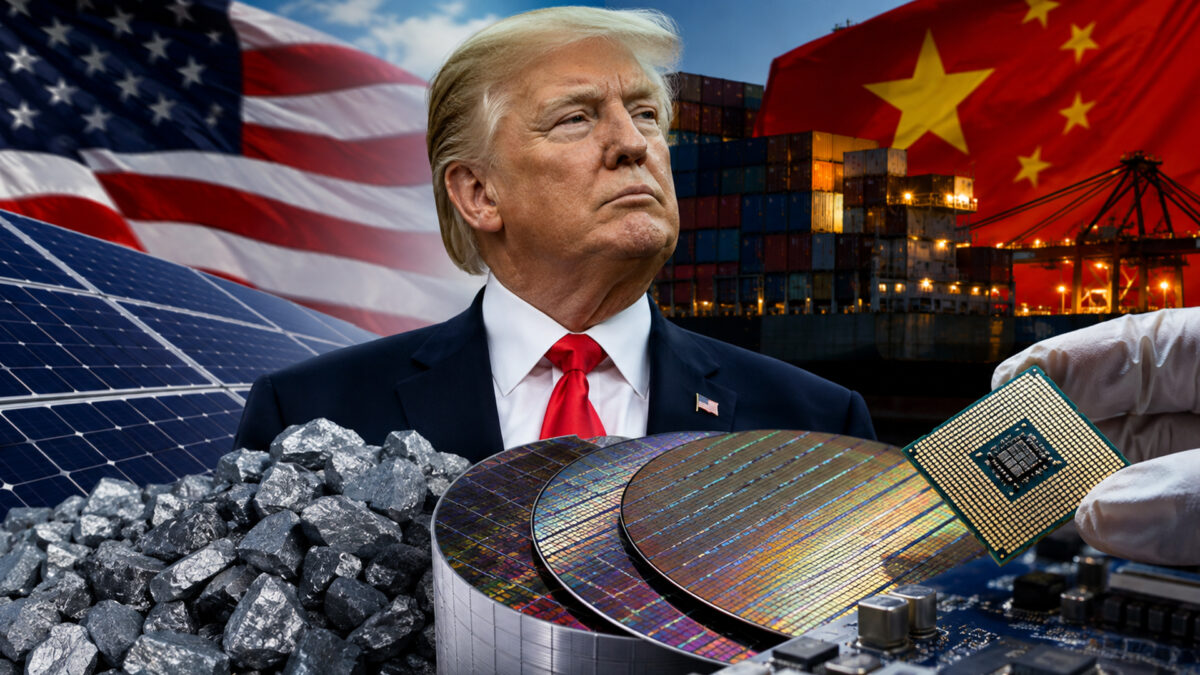
Trump slaps 15% tariff on polysilicon imports

The US has imposed a 15 per cent tariff on imported polysilicon and related products, opening a new front in Washington’s effort to reshape critical supply chains for solar power and semiconductors.

The tariff, announced by President Donald Trump, will take effect on December 4 and is accompanied by minimum import prices for polysilicon, wafers, solar cells and modules. The measures are designed to support US manufacturers while reducing dependence on overseas suppliers.

For businesses across the solar industry, the move could have a direct impact on input costs, pricing strategies and investment decisions.

Polysilicon is one of the most important raw materials in the solar manufacturing chain. It is processed into ingots and wafers, which are then used to manufacture solar cells and, ultimately, solar panels. The material is also used in semiconductor production, making it strategically important to the US technology sector.

Under the new policy, imported raw polysilicon will face a minimum price of $21 per kilogram. The floor rises to $100 per kilogram for polysilicon ingots and wafers. Solar cells will have a minimum import price of $0.22 per watt, while solar modules will face a floor of $0.38 per watt.

For US manufacturers, the policy could provide greater protection from cheaper imports and improve the economics of domestic production. For import-dependent businesses, however, the higher costs could put pressure on margins.

The tariff is part of a wider US strategy to rebuild domestic manufacturing capacity. The Trump administration has argued that the country has become too dependent on foreign suppliers for materials critical to energy and technology.

The decline in US polysilicon production has been particularly sharp. The US accounted for roughly half of global polysilicon production capacity in 2005, but its share had dropped to less than 2 per cent by 2024.

Washington now wants companies to invest in domestic production and expand the American solar supply chain.

The policy could therefore create opportunities for US manufacturers and investors willing to build new production facilities. Companies planning to establish, refurbish or expand domestic facilities could qualify for tariff relief on certain imports needed for those projects.

That incentive could encourage fresh capital expenditure in polysilicon production, solar manufacturing and related infrastructure.

However, the business impact is unlikely to be limited to manufacturers. Solar developers and project operators could also feel the effects if equipment prices rise. Higher module prices can increase project costs and potentially affect the economics of new solar installations.

Companies may respond by changing suppliers, accelerating imports before the December deadline or seeking alternative sources of polysilicon and solar components.

The policy also reflects growing US concern over China’s dominance of the global solar manufacturing industry. Chinese companies and manufacturers operating across Asia control large portions of the polysilicon, wafer and solar-cell supply chain.

By introducing tariffs and price floors, the US is attempting to make domestic production more competitive while limiting the impact of low-cost imports.

For semiconductor companies, the issue is equally important. Polysilicon is used in the production of semiconductor wafers, linking the new trade policy to Washington‘s broader effort to strengthen domestic chip manufacturing.

The United States has already invested heavily in expanding semiconductor production and reducing its dependence on overseas supply chains. The new polysilicon measures extend that strategy further upstream, targeting a basic material used in advanced manufacturing.

The move could also alter global supply-chain economics. Producers may redirect shipments away from the US, while American buyers could look for suppliers from countries less affected by the tariff regime.

For companies with global operations, this could mean reassessing sourcing strategies, inventory levels and long-term procurement contracts.

The tariff comes after a Commerce Department investigation launched in July 2025 under Section 232 of the Trade Expansion Act, which allows the US government to restrict imports on national-security grounds.

The administration has increasingly used the provision to impose sector-specific trade measures, particularly in industries it considers strategically important.

The business community will now be watching how companies respond before the December 4 implementation date. Importers could bring forward shipments, while manufacturers may use the intervening period to renegotiate contracts or secure alternative supplies.

The longer-term outcome will depend on whether the policy succeeds in attracting investment without significantly increasing costs for downstream industries.

For the US, the objective is clear: build a stronger domestic polysilicon and solar manufacturing base while securing critical inputs for the semiconductor industry.

For businesses, however, the transition could bring both opportunities and challenges. Domestic manufacturers may gain pricing power and investment opportunities, while importers and solar developers could face higher costs.

The new tariff therefore represents more than another trade barrier. It is part of a broader restructuring of the US clean-energy and technology supply chains, with companies likely to be forced to reconsider where they source materials, where they manufacture products and how they manage costs in an increasingly protectionist global market.