Categories
Corporate

BSE replaces Wipro in September index reshuffle

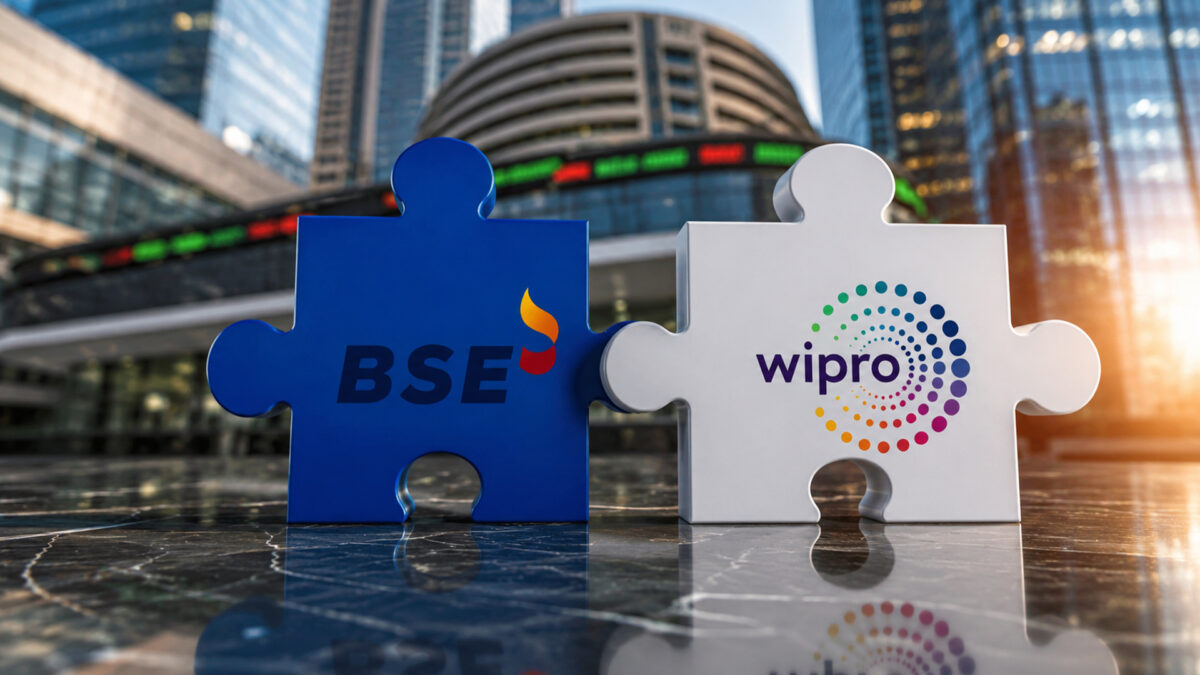
The Bombay Stock Exchange (BSE) is set to enter India’s benchmark Nifty 50 index, replacing information technology major Wipro from September 30, 2026. The change was announced as part of the latest semi-annual review by NSE Indices and marks a significant shift in the composition of one of India’s most closely tracked stock market indices.

The move reflects the changing structure of India’s equity market. BSE’s six-month average free-float market capitalisation has risen significantly, allowing it to meet the eligibility requirement for inclusion in the Nifty 50. Under the index methodology, a stock must have a free-float market capitalisation at least 1.5 times that of the smallest Nifty 50 constituent for the replacement to take place. BSE met that threshold against Wipro.

For BSE, the inclusion is an important milestone. The stock exchange has seen a strong rally in its shares over the past year, helped by growing activity in India’s equity and derivatives markets. Its inclusion in the Nifty 50 will also increase its visibility among domestic and international investors.

BSE shares gained sharply after the replacement announcement, with the stock rising more than 3% during Monday’s trading session before paring some gains. The stock has been among the stronger performers in the financial market segment this year, reflecting expectations around the exchange’s expanding business and increased trading activity.

The Nifty 50 tracks 50 large and liquid companies listed on the National Stock Exchange. It is widely used as a benchmark by mutual funds, exchange-traded funds and other investment products. Passive funds that track the index generally adjust their holdings whenever the index composition changes.

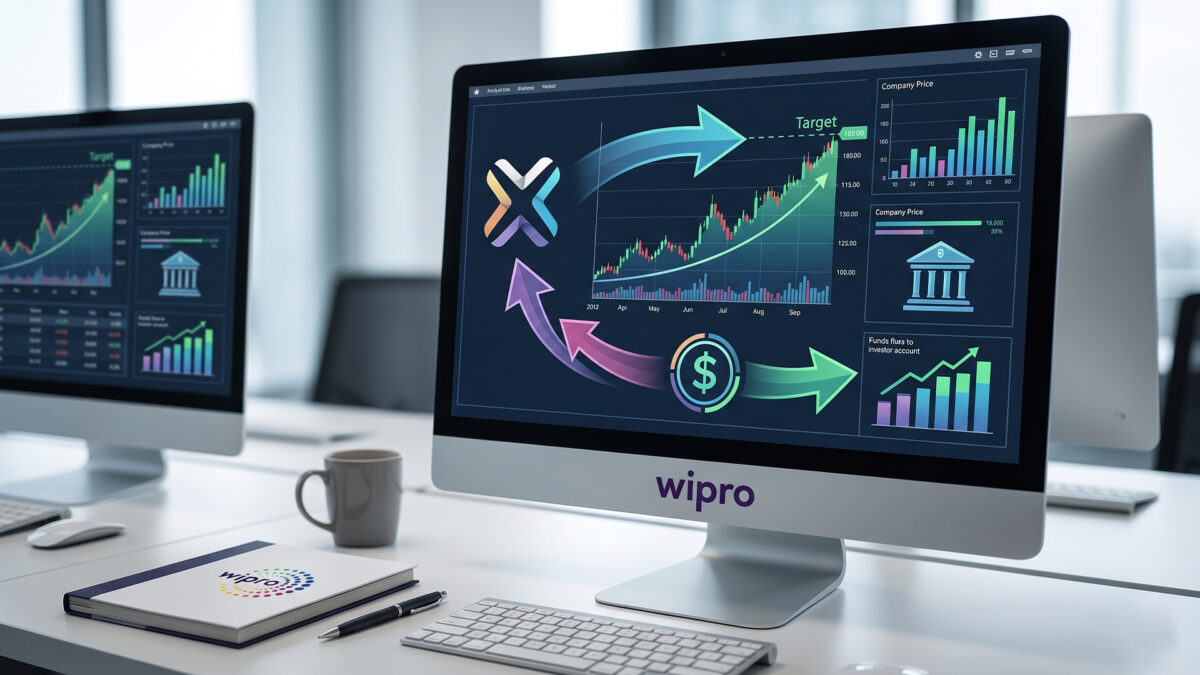
That is why the BSE-Wipro switch could result in significant fund flows. Analysts estimate that passive funds could direct about $691 million towards BSE shares following its inclusion, while Wipro could see outflows of around $240 million as funds tracking the Nifty 50 remove the stock from their portfolios.

Such flows are largely mechanical and do not necessarily reflect a sudden change in the fundamental outlook for either company. Index funds are required to adjust their portfolios to match the new composition, creating additional buying demand for the incoming stock and selling pressure on the outgoing one.

For Wipro, the exclusion is a notable development. The IT services company has been a long-standing member of the Nifty 50, although it has faced sustained pressure in recent months. The company’s shares have declined significantly this year amid broader concerns over the outlook for Indian IT services companies.

One of the biggest issues confronting the sector is the growing use of artificial intelligence. Investors have been assessing whether rapid advances in AI could reduce demand for some traditional software and technology services, potentially affecting revenue growth and margins for established IT companies.

Wipro has also faced broader sector-wide concerns, with Indian IT stocks under pressure as investors reassess valuations and long-term growth prospects. The Nifty IT index has experienced a significant decline this year, reflecting these worries.

The Nifty 50 change does not mean Wipro is being removed from the stock market or that its business has become fundamentally weaker. It simply means that, under the index’s rules, another company currently has a stronger position based on market-capitalisation and liquidity criteria.

Wipro’s exit will nevertheless matter because of the large amount of money benchmarked to the Nifty 50. Index-tracking funds will have to reduce or eliminate their Wipro holdings as the new composition takes effect. This could create short-term selling pressure around the implementation date.

BSE, meanwhile, stands to benefit from the opposite effect. Funds tracking the benchmark will need to acquire the exchange’s shares, potentially creating additional demand. The company could also receive greater visibility among global investors who use the Nifty 50 as a primary gauge of Indian equities.

The inclusion is particularly interesting because BSE operates in the same broad capital-markets ecosystem as the National Stock Exchange. The exchange has been expanding its presence in equity derivatives and other market segments, benefiting from the rapid growth of retail participation in Indian financial markets.

India has seen a substantial increase in household participation in equities through direct investing, mutual funds and systematic investment plans. Rising participation has contributed to higher trading volumes and greater activity across the country’s stock exchanges.

The Nifty 50 reshuffle therefore reflects more than a change in two stocks. It highlights how quickly market leadership can change as companies grow, valuations shift and investor participation evolves.

For investors, the immediate focus will be on how BSE and Wipro shares behave between now and September 30. BSE could continue to attract attention because of expected passive fund buying, while Wipro may face pressure from index-related selling.

However, market participants are likely to distinguish between these technical flows and the companies’ underlying fundamentals. Once the index adjustment is completed, stock prices will ultimately depend on earnings, business growth, valuations and investor expectations.

The BSE inclusion also strengthens the exchange’s standing in India’s capital-market ecosystem. For Wipro, meanwhile, the exit represents a difficult phase for a company that has been a familiar name in the benchmark for years.

The Nifty 50 reshuffle will officially take effect on September 30. Until then, investors are likely to track BSE’s share-price performance, Wipro’s response and estimates of index-related fund flows. The change serves as another reminder that India’s benchmark index is constantly evolving with the changing fortunes of its listed companies.


Categories
Corporate

Wipro Q1 profit flat at ₹3,352 cr, outlook weak

Wipro kicked off FY27 on a cautious note, reporting a largely unchanged first-quarter profit and issuing a subdued revenue outlook for the September quarter, underlining the continued pressure on the global information technology (IT) services industry.

The Bengaluru-headquartered IT major posted a consolidated net profit of ₹3,352 crore for the quarter ended June 30, almost flat compared with the corresponding period last year. Revenue from operations stood at ₹22,135 crore, while revenue from the IT services business declined 1.4% year-on-year to $2.6 billion, falling short of market expectations.

The company’s guidance for the second quarter also disappointed investors. Wipro expects IT services revenue in constant currency to range between a 1.5% decline and a marginal 0.5% growth sequentially, indicating that demand recovery remains slow as global clients continue to tighten technology budgets.

The earnings reflect a broader trend across the Indian IT sector, where enterprises are delaying discretionary technology spending amid persistent macroeconomic uncertainty. Many customers are prioritising cost optimisation over large-scale digital transformation programmes, resulting in longer decision-making cycles and slower project execution.

While announcing the results, Wipro’s management said the company remains focused on helping clients improve efficiency and adopt artificial intelligence (AI)-led solutions. However, executives acknowledged that clients continue to be cautious in committing to new spending, particularly for large transformation projects. Although interest in AI services is growing rapidly, many engagements are still in the evaluation stage and have yet to translate into meaningful revenue.

The company also reported a decline in deal momentum during the quarter. Total bookings stood at $3.37 billion, significantly lower than the corresponding period last year. Analysts said the fall in bookings indicates that large contracts are taking longer to close and that converting signed deals into revenue remains a challenge.

Despite weak revenue growth, Wipro managed to protect profitability through tight cost controls and operational efficiency measures. The company has continued to optimise utilisation levels, improve delivery productivity and maintain pricing discipline, helping it keep margins relatively stable despite a difficult demand environment.

Reflecting confidence in its balance sheet, Wipro’s board declared an interim dividend of ₹2 per equity share for shareholders.

The results were received cautiously by the market, with the company’s shares coming under pressure after the earnings announcement. Several brokerages revised their price targets, citing weaker-than-expected revenue performance and conservative guidance for the coming quarter. Analysts believe Wipro continues to face execution challenges even as peers such as TCS, HCLTech and Tech Mahindra have shown relatively better resilience in navigating the uncertain business environment.

Industry experts say the pace of recovery for IT companies will largely depend on improvements in client confidence, particularly in the US and Europe, which remain the largest markets for Indian software exporters. Interest in generative AI, cloud modernisation and cybersecurity continues to create long-term opportunities, but customers are seeking faster returns on investment before committing to major technology programmes.

For Wipro, the immediate focus is likely to remain on improving deal conversion, strengthening client relationships and expanding its AI-powered service offerings. The company has been investing in artificial intelligence capabilities and consulting services to capture emerging demand, even as traditional IT spending remains subdued.

The Wipro Q1 results reinforce the challenges facing the IT services industry, where profitability has remained relatively stable but revenue growth continues to be constrained by cautious enterprise spending. With management projecting another muted quarter ahead, investors will be closely watching whether improving demand for AI and digital transformation can help the company regain growth momentum in the second half of FY27.

For now, Wipro’s performance suggests that while the worst of the slowdown may be over, a broad-based recovery in the global technology spending cycle is yet to take hold.

Also Read: Gold higher at ₹141,220, Silver at ₹215,950

Categories
Corporate

Wipro ADRs fall 17% on AI headwinds

Wipro is expected to remain in focus after its American Depositary Receipts (ADRs) plunged sharply in overnight trading, reflecting growing investor concerns over the company’s near-term growth prospects and mounting pressure from artificial intelligence-led changes in the IT services industry.

The ADRs fell by more than 17%, signalling a weak start for the stock on Indian exchanges. The sharp decline followed cautious management commentary on demand trends and concerns that rapid adoption of AI could intensify pricing pressure across the technology services sector.

Analysts said enterprises are increasingly seeking AI-driven solutions that improve efficiency while reducing costs. While this presents new business opportunities, it also puts pressure on IT companies to deliver services at lower prices, affecting revenue growth and profit margins.

The weak sentiment around Wipro has also shifted investor attention to other major IT companies, including Infosys, TCS and KPIT Technologies, with markets closely watching their upcoming earnings and management outlooks for signs of broader industry trends.

Market experts believe the current environment remains challenging for the information technology sector. Although demand for digital transformation, cloud computing and AI services continues to grow, clients are still cautious about discretionary technology spending amid global economic uncertainty.

Companies that successfully integrate AI into their service offerings without sacrificing profitability are expected to remain better positioned.

Also Read: Amazon faces Australia lawsuit over Prime video

Categories
Corporate

Wipro shares fall upto 8% after buyback record date

Wipro shares declined about 8% on June 5, making the IT company one of the biggest losers on the Nifty index even as Indian equity markets rallied. The fall came after the stock turned ex-buyback following the company’s share buyback record date.

The decline was largely driven by a technical adjustment in the share price rather than any negative development in the company’s operations. Market analysts said such movements are common when stocks trade ex-buyback, as investors who purchase shares after the record date are no longer eligible to participate in the buyback offer.

Wipro recently announced a share buyback programme under which eligible shareholders can tender their shares at a price higher than the prevailing market rate. Investors holding shares on the record date qualify for the buyback, while those buying afterward do not receive that benefit.

As a result, the stock witnessed selling pressure, leading to a noticeable drop in its market value. Experts noted that similar price corrections are often seen around corporate actions such as buybacks, dividends and bonus issues.

The weakness in Wipro shares contrasted with the broader market’s positive performance. Benchmark indices Sensex and Nifty gained strongly after the Reserve Bank of India announced supportive policy measures, including a larger-than-expected interest rate cut. Banking and financial stocks led the market rally, helping lift overall investor sentiment.

Despite the sharp fall, analysts emphasized that Wipro’s business fundamentals remain unchanged. They said the company’s long-term performance will continue to depend on factors such as global demand for IT services, digital transformation spending and its ability to secure new contracts.

Also Read: Google brings Search profiles to boost creator visibility

Categories
Corporate

Wipro buyback may bring short-term gains

Wipro’s proposed share buyback could offer an attractive short-term opportunity for investors, with brokerages estimating possible returns of 8% to 14% over the next two to three months.

The IT company has announced a ₹15,000 crore buyback at ₹250 per share, a price higher than where the stock was recently trading in the market. This premium has drawn interest from investors looking for quick gains.

In a buyback, a company purchases its own shares from shareholders, usually at a fixed price. It is often seen as a way of rewarding investors and returning surplus cash.

Market experts said retail investors may benefit the most because buyback offers usually have a separate reservation category for small shareholders. This improves their chances of getting shares accepted under the offer.

However, analysts noted that final returns will depend on several factors, including the share price before the record date, the number of shares accepted in the buyback and market movement during the offer period.

If acceptance levels remain strong, investors could see healthy gains in a relatively short time.

The buyback is also being viewed as a positive signal from the company, suggesting management confidence despite a challenging environment for the IT sector.

Global technology spending has remained cautious, with clients delaying decisions and controlling budgets. In that backdrop, returning cash to shareholders is being seen as a supportive move.

Wipro shares have remained in focus since the announcement, with investors now watching for the record date and detailed timeline of the process.

Also Read: Samsung wins Global awards for coral reef project

Categories
Corporate

Wipro secures $71 mn Alpha Net contracts deal

Wipro has announced a deal to acquire select customer contracts from US-based Alpha Net Consulting for up to $70.8 million, as it looks to expand its capabilities in technology and consulting services.

Under the agreement, Wipro will take over a set of key client contracts along with related teams, giving it access to new customers and strengthening its presence in areas like software development, data engineering, and AI-led solutions.

The deal is expected to be completed by June 2026, subject to customary approvals. A part of the payment will be linked to future performance, meaning the final payout may depend on how the acquired business performs over time.

Alpha Net Consulting, based in California, works in areas such as enterprise applications, digital services, and managed solutions. By bringing these contracts under its fold, Wipro aims to build on its existing strengths and offer more integrated services to global clients.

The contracts involved in the deal generated around $37 million in revenue last year, providing an immediate addition to Wipro’s business.

The company said the move is part of its broader strategy to focus on high-growth areas like artificial intelligence, cloud, and digital transformation, where demand continues to rise as businesses modernise their operations.

For Wipro, this is another step in its approach of making targeted, smaller acquisitions to strengthen specific capabilities rather than large-scale takeovers.

Also Read: 108 malicious Chrome extensions flagged

Categories
1 Minute-Read

Wipro shares jump 3% on buyback buzz

Shares of Wipro rose about 3% after the company announced its board will consider a share buyback on April 16, alongside quarterly results. This would be its first buyback in three years, drawing strong investor interest.

The stock has declined over 20% this year, so the potential buyback is seen as a step to support prices and improve sentiment. While details such as size and price are yet to be disclosed, market expectations are building around a sizable offer. Analysts say the move could boost confidence amid ongoing weakness in the IT sector.

Categories
Corporate

Wipro to acquire Olam’s IT unit for $375 mn

Wipro has announced that it will acquire the IT and digital services business of Singapore-based Olam Group for $375 million, in a move aimed at expanding its capabilities and securing long-term business.

The deal includes the acquisition of Mindsprint, Olam’s technology services arm, which will become a fully owned subsidiary of Wipro after the transaction is completed. Mindsprint provides services such as digital transformation, cloud, cybersecurity, and technology consulting, with a strong focus on industries like agriculture, food, and manufacturing.

As part of the agreement, Wipro has also signed a long-term contract with Olam to manage its technology operations. The partnership is expected to run for eight years and could be worth over $1 billion in total, giving Wipro steady revenue over the period.

The acquisition is seen as a strategic step for Wipro, helping it deepen its expertise in specific industries, particularly in the agriculture and food sectors. By integrating Mindsprint’s specialised knowledge with its own global capabilities, Wipro aims to offer more targeted and end-to-end digital solutions.

Investors responded positively to the announcement, with Wipro’s shares rising in early trade. Market participants view the deal as a strong move that not only brings in new capabilities but also ensures a stable and long-term client relationship.

For Olam Group, the sale is part of a broader plan to streamline its operations and focus on its core businesses. By divesting its IT unit, the company aims to unlock value while continuing to benefit from Wipro’s technology services through the partnership.

The deal is expected to be completed by mid-2026, subject to regulatory approvals.

Also Read: Rupee rebounds to 92.85 per dollar

Categories
1 Minute-Read

Wipro partners Harness for AI-led software delivery

Wipro has partnered with Harness to boost AI-driven software delivery for enterprises worldwide. The collaboration will combine Wipro’s AI capabilities with Harness’ delivery platform to streamline how software is built, tested, and deployed.

The partnership aims to reduce manual processes, improve efficiency, and speed up development cycles while maintaining quality and security. It will help companies adopt AI-native development methods and respond faster to changing business needs.

The move highlights the rising demand for automation and AI in modern software development across industries.

Categories
1 Minute-Read

Wipro CEO sees AI boosting IT demand

Wipro CEO Srinivas “Srini” Pallia said Indian IT services are seeing higher demand as companies move from small AI experiments to large-scale implementations, speaking at the World Economic Forum in Davos.

Wipro is bidding for both major and minor AI projects as clients adopt technology at different paces. Despite some pricing pressures due to faster deliveries with smaller teams, Pallia expects AI-driven cost savings to encourage more projects.

While overall tech budgets may remain stable, spending is increasingly focused on AI and efficient IT services. Wipro has invested $1 billion to enhance its AI offerings.