Categories
1 Minute-Read

Trump approves Nvidia H200 AI chip sales to China

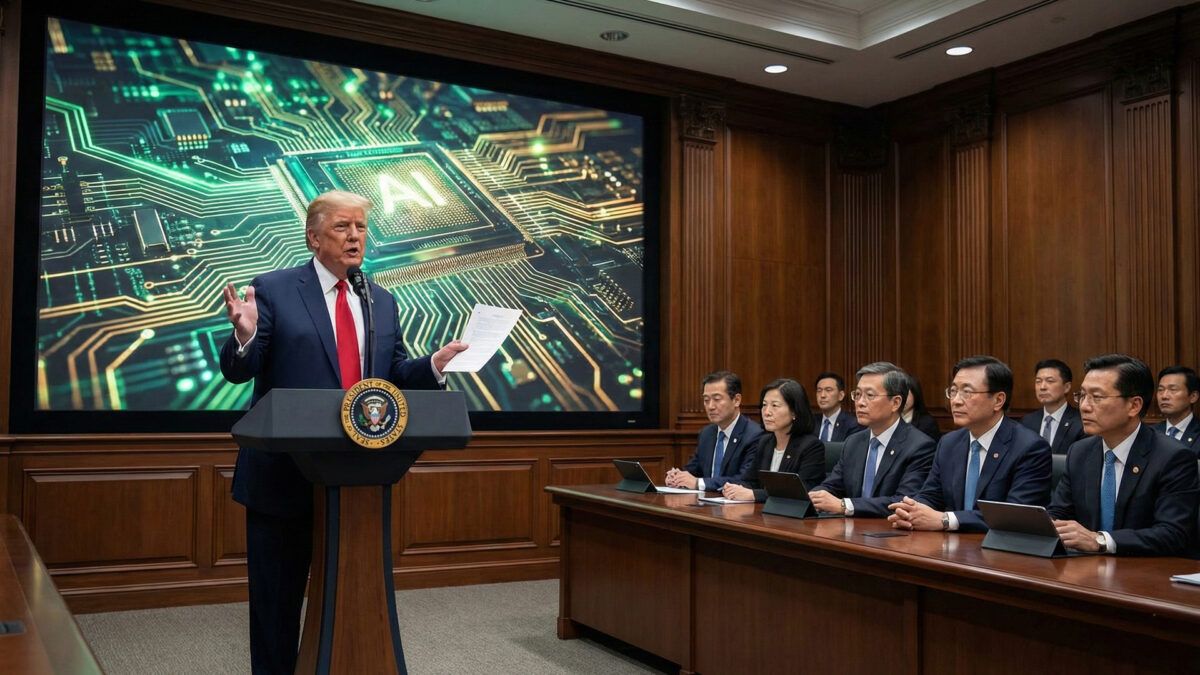
The US government, under former President Donald Trump, has cleared Nvidia to sell its powerful H200 AI chips to selected customers in China. These chips, designed for artificial intelligence and large-scale computing, were previously restricted from export due to security concerns.

As part of the approval, the US will receive 25% of the sales revenue. Nvidia welcomed the decision, saying it supports American manufacturing and jobs while maintaining safeguards. Investors responded positively, and experts note the move could accelerate Chinese AI development while benefiting the US economically.

Categories
Technology

Starlink India pricing leak sparks debate

SpaceX-owned Starlink has briefly displayed pricing details for its residential satellite internet service in India, giving users their first official-looking glimpse of what the service could cost once launched. The prices appeared on Starlink’s website before being taken down, with the company later clarifying that these were not final and were shown due to a technical configuration issue.

According to the website listing, the residential plan was shown at a monthly subscription fee of around ₹8,600, along with a one-time hardware cost of about ₹34,000 for the Starlink kit, which includes the satellite dish, router and mounting equipment. The plan was shown as offering unlimited data and high-speed internet access, targeted especially at remote and rural areas where traditional broadband infrastructure is weak or unavailable .

The service promises low-latency, high-speed internet delivered via a network of low-earth orbit satellites, which can provide connectivity in difficult terrains such as hills, forests and isolated villages. The setup process is designed to be simple, with a “plug-and-play” installation that allows users to go online quickly after setting up the device at home.

However, Starlink clarified that the pricing shown on the website was not an official announcement. The company said the numbers appeared due to a configuration glitch and that the service is yet to receive full regulatory approvals in India. This means customers in India cannot yet place orders or subscribe to the service, and the final pricing could change when the commercial launch actually takes place .

Industry experts say that if these prices are close to the final rates, Starlink may primarily attract users in remote and underserved regions, government projects, emergency connectivity services, and businesses operating in difficult-to-reach locations. For urban users, the service may remain a premium alternative to fibre broadband and 5G.

For now, the pricing leak has sparked wide interest and debate about the future of satellite broadband in India, but customers will have to wait for official government clearances and a formal launch announcement before the service becomes available.

Also Read: IndiGo shares fall 7%, government reallocates slots

Categories
Corporate

IndiGo shares fall 7%, government reallocates slots

Shares of InterGlobe Aviation, the parent company of IndiGo, dropped nearly 7% on Monday, marking a seventh consecutive session of losses as investors reacted to ongoing operational turmoil and government intervention. The sell-off has wiped out over ₹30,000 crore in market capitalization, highlighting investor concerns over the airline’s ability to manage its operations and regulatory compliance.

The government has directed IndiGo to reduce about 5% of its daily flights, around 110 flights. amid widespread cancellations and delays. These freed slots are set to be reassigned to other carriers to ease passenger inconvenience during the busy winter season. Between December 1 and 8, IndiGo canceled more than 7.3 lakh bookings, issuing refunds totaling nearly ₹745 crore.

Civil Aviation Minister K Ram Mohan Naidu confirmed the curtailment, noting that the measure aims to prevent over-reliance on a single airline, which currently operates about 2,200 flights daily. The Directorate General of Civil Aviation (DGCA) has warned that further cuts may follow if operations remain inconsistent, and top executives, including the CEO and COO, may be summoned to explain operational lapses.

Analysts say the combination of operational disruptions, regulatory scrutiny, and potential penalties has significantly undermined investor confidence. Brokerages have revised price targets downward, while some caution that further volatility is likely until IndiGo stabilizes operations and restores passenger trust. Despite its dominant market share, the airline’s stock performance underscores the risks of operational and regulatory shocks in India’s aviation sector.

Also Read: Rupee slips, hovers around ₹90 against US dollar

Categories
Beyond

Rupee slips, hovers around ₹90 against US dollar

The Indian rupee remained under pressure on Tuesday, opening at ₹90.15 per US dollar before recovering slightly to around ₹89.99 in early trade. The local currency has been struggling to hold gains as multiple factors continue to weigh on investor sentiment.

A major reason for the rupee’s weakness is the strong demand for dollars from importers. India’s heavy import requirements, particularly in oil and machinery, keep pushing up the demand for foreign currency. At the same time, foreign investors are pulling funds out of Indian equities, creating additional pressure on the rupee. Uncertainty surrounding India–US trade negotiations has also made investors cautious, further affecting the currency’s performance.

Rising crude oil prices are another factor contributing to the rupee’s decline. Higher oil prices increase India’s import bill, adding stress to the currency. Analysts say that unless global crude prices stabilize, the rupee may continue to face downward pressure in the near term.

The weak rupee has also impacted the stock markets. At the opening, the BSE Sensex fell over 600 points (about 0.7%), while the NSE Nifty 50 declined nearly 0.9%, reflecting investor concerns over currency volatility and its effect on corporate earnings.

Market participants are closely watching developments in global trade, crude oil prices, and foreign capital flows for clues on the rupee’s direction. Experts advise businesses and investors to stay alert and adopt hedging strategies where possible, given the current volatility in the currency market.

With multiple domestic and global factors influencing the rupee, the currency is expected to remain volatile in the coming days. Investors will keep a close eye on government policies, trade developments, and international market trends to gauge the rupee’s movement.

Also Read: Gold rises to ₹1,30,430, Silver falls to ₹1,88,900

Categories
Beyond

Gold rises to ₹1,30,430, Silver falls to ₹1,88,900

On Tuesday, December 9, 2025, gold prices in India saw a modest rise, while silver experienced a small decline. Ten grams of 24-carat gold increased by ₹10, trading at ₹1,30,430. The 22-carat variant also rose by ₹10, reaching ₹1,19,560 per 10 grams. City-wise rates showed minor variations: in Delhi, 24-carat gold was priced at ₹1,30,580, while in Chennai it stood at ₹1,31,340. Similarly, 22-carat gold in Delhi was ₹1,19,710, and in Chennai ₹1,20,390. Other major cities like Mumbai, Kolkata, Bengaluru, and Hyderabad recorded 22-carat gold at ₹1,19,560.

In contrast, silver prices fell slightly. One kilogram of silver traded at ₹1,88,900 in Delhi, Mumbai, and Kolkata, while Chennai reported a higher rate of ₹1,97,900.

Globally, US gold prices also edged higher, reflecting cautious sentiment among investors. Spot gold increased by 0.1% to $4,194.83 per ounce, while US gold futures for December delivery rose 0.2% to $4,223.60 per ounce. Meanwhile, silver slipped 0.1% to $58.05 per ounce. Other precious metals saw gains, with platinum up 0.4% to $1,649.46 and palladium rising 0.6% to $1,473.32.

The movements in precious metal prices are often influenced by global economic conditions, currency fluctuations, and investor sentiment. In particular, traders are closely watching the US Federal Reserve’s upcoming policy meeting, where cautious signals on interest rates and monetary easing may affect gold and silver markets.

Overall, the early Tuesday session showed stability in gold with minor gains, while silver experienced a slight correction, reflecting a mixed but steady start for precious metals in India and abroad.

Also Read: Sensex falls 500 points, Nifty below 26,000

Categories
Corporate

Sensex falls 500 points, Nifty below 26,000
The Indian stock market opened lower on Tuesday as investor sentiment remained weak after the sharp sell-off in the previous session. The BSE Sensex started the day down by around 500 points, while the NSE Nifty slipped below the 26,000 mark in early trade.

Markets opened on a cautious note and remained volatile in the first hour. Mid-cap and small-cap stocks also came under pressure, showing that investors were in a risk-off mood. Global uncertainty, weak cues from overseas markets and concerns over interest rate decisions in the US added to the nervousness.

A few stocks managed to move higher despite the weak market. IT and FMCG stocks showed resilience as investors shifted money to defensive sectors. Shares of TCS, Infosys, HUL and Nestlé India were among the early gainers. Select pharma stocks also saw buying interest.

Heavy selling was seen in banking, metal and infrastructure stocks. HDFC Bank, ICICI Bank, State Bank of India, Tata Steel and JSW Steel were among the major losers in early trade. Realty and PSU stocks were also under pressure.

Most sectoral indices were trading in the red, with banks, metals, realty and auto stocks leading the losses. IT stocks were the only sector showing relative strength.

Market experts said today’s weak opening reflects ongoing global worries and foreign investor selling. A weak rupee and rising bond yields internationally also kept investors cautious.

Analysts advised investors to stay calm during this volatile phase and avoid panic buying or selling. They said market movements in the near term will depend largely on global developments and foreign investment flows.

Also Read: Elon Musk fights EU over X platform fine

Categories
Leaders

Elon Musk fights EU over X platform fine

Elon Musk’s social media platform X (formerly Twitter) has been fined €120 million ($140 million) by the European Union, the first major penalty under the EU’s Digital Services Act (DSA). Regulators said X violated rules by allowing users to buy “blue checkmarks,” lacking transparency in advertising, and restricting researcher access to public data.

The “blue checkmark,” previously reserved for verified public figures, can now be purchased by anyone, which the EU says misleads users about authenticity. The EU also flagged X’s advertising practices for not being transparent, with unclear information about ad buyers and targeting. Researchers were reportedly blocked from accessing public data, limiting scrutiny of content and potential misuse.

Musk reacted strongly, calling the EU a “bureaucratic monster” and saying it “should be abolished.” His response reflects his frustration with regulatory oversight and his willingness to challenge global institutions.

Since acquiring Twitter, Musk has reshaped the platform, introducing paid verification, subscription services, and new content policies. These moves, while controversial, show his focus on rapid innovation and monetization. The EU fine challenges this approach but also highlights Musk’s risk-taking leadership style.

Experts say the fine is a warning to global tech companies that EU regulations will be strictly enforced. It also underscores the tension between international regulation and the fast-moving world of digital platforms. Musk’s defiance positions him as a leader ready to confront regulatory challenges while pursuing his vision for X.

This clash marks a defining moment for Musk and the platform, showing how global tech leadership now involves navigating legal, regulatory, and political pressures. As digital rules tighten worldwide, Musk’s bold approach to innovation and governance is likely to face more scrutiny, making him a central figure in shaping the future of social media and tech regulation.

Also Read: Chinese phone makers lure iPhone users with AI

Categories
Technology

Chinese phone makers lure iPhone users with AI

Chinese smartphone makers are increasingly targeting iPhone users, seeking to convert those frustrated by Apple’s delayed AI rollout in China. With the tech giant’s new AI features still slow to arrive, rivals such as Honor, Oppo, Vivo, Xiaomi, and Huawei see an opportunity to lure customers with innovative tools and services.

One key strategy is making the switch from iPhone to their devices as seamless as possible. Honor, for instance, offers a “Device Clone” app that transfers contacts, photos, messages, and other data simply by scanning a QR code. Oppo provides a similar feature, allowing users to manage their calls, messages, and notifications from their new phones almost immediately after migration. Vivo and Xiaomi are also expanding tools that reduce the friction for iPhone users considering a move to their ecosystems.

Beyond migration apps, Chinese brands are rolling out advanced AI features to differentiate themselves. Oppo’s new AI assistant can analyze screenshots to track expenses, offer real-time workout guidance via the camera, and help users navigate daily routines more efficiently. Honor has launched AI tools that compare coupons across platforms, assist with ride-hailing, and even create short-form videos — features that could appeal to iPhone users looking for smarter, more interactive devices.

The timing of these initiatives comes at a moment when Apple is facing a slight slowdown in China. In the third quarter of 2025, iPhone shipments fell about 2% year-on-year, while local brands gained momentum. Vivo, for example, overtook Apple to lead the market with roughly 18.5% share, highlighting the competitive threat to the U.S. tech giant in its key premium market.

Analysts say these moves may entice some iPhone users to switch, especially those eager for AI enhancements that Apple has yet to deliver. However, Apple still maintains a strong hold on the premium segment globally, with brand loyalty and ecosystem advantages keeping many users invested.

For now, Chinese smartphone makers are betting that easy-switch tools combined with AI-powered features could be enough to tempt a wave of iPhone users toward their devices, potentially reshaping the premium smartphone landscape in China.

Also Read: ICICI Securities sees 21% upside in ITC Hotels shares

Categories
1 Minute-Read

Snapdeal parent AceVector files ₹300 crore IPO papers

AceVector, the parent company of Snapdeal, has filed an updated Draft Red Herring Prospectus with SEBI, moving closer to its IPO launch.

The offer includes a ₹300 crore fresh issue of equity shares, alongside an Offer-for-Sale of about 63.8 million shares by existing investors.
Promoted by founders and backed by SoftBank, Nexus Venture Partners, eBay, and Temasek, AceVector also operates Unicommerce and Stellaro Brands.

Proceeds from the IPO are planned for marketing, technology upgrades, and strategic growth initiatives. The filing signals the company’s intent to strengthen its financial position and expand in India’s competitive e‑commerce market.

Categories
1 Minute-Read

Meesho IPO allotment for ₹5,421 cr closes this week

The Meesho IPO allotment will be finalised on 8 December 2025, with refunds and share credits expected by 9 December.

Investors can check their allotment status via registrar Kfin Technologies or the BSE and NSE websites. The ₹5,421 crore IPO saw overwhelming response, being oversubscribed nearly 79 times, reflecting strong demand from both retail and institutional investors.

Grey-market trends indicate a premium of ₹40–₹43, hinting at a potential listing price of ₹150–₹153. Analysts say the strong subscription and GMP signal positive investor sentiment, setting the stage for a promising debut on the stock exchanges.