Categories
Corporate

Stock market trading rules changes

A set of new stock market trading rules took effect in India on April 1, aimed at strengthening market stability and tightening regulations for traders, investment firms, and listed companies. The changes range from higher trading costs on certain segments to curbs on algorithmic strategies and adjustments in buyback taxation.

One of the most notable changes is the increase in Securities Transaction Tax (STT) on equity derivatives. STT is a levy paid on trades of futures and options (F&O) and is intended to discourage excessive speculative trading. The revised rates will raise costs for traders active in the derivatives market and could temper short‑term, high‑frequency trading strategies.

In addition, the Securities and Exchange Board of India (SEBI) has introduced new norms to rein in algorithmic and high‑frequency trading (HFT) practices. While algorithmic trading can improve market efficiency, regulators believe unchecked automated strategies may contribute to sharp price swings and volatility. The new rules will tighten eligibility, risk controls and monitoring for algo participants, aiming to strike a balance between innovation and market safety.

Listed companies will also face changes, particularly related to share buybacks. A revised tax structure will be applicable to buybacks, where firms repurchase their own shares from investors. The updated framework could affect how companies plan capital returns, dividend policies, and shareholder value strategies.

Other changes include enhanced disclosure requirements and stricter action on misuse of APIs (Application Programming Interfaces) used by brokers and algorithmic traders. Regulators are also focusing on improving surveillance and risk management to reduce market manipulation and protect retail investors.

Market participants, including traders, brokers and analysts, say the new rules are part of a broader shift toward more cautious, transparent market operations. While some traders expressed concerns about higher transaction costs and tighter controls on sophisticated strategies, long‑term investors and regulators argue the changes could lead to healthier market behaviour.

Investors are advised to stay updated and review how the new norms affect their trading patterns, costs and portfolio strategies.

Also Read: Cosmic PV Power plans ₹640 crore IPO

Categories
Leaders

IndiGo names William Walsh as new CEO

India’s leading airline, IndiGo, is entering a new chapter with the appointment of William “Willie” Walsh as its Chief Executive Officer. Known globally for his transformative leadership at British Airways and the International Air Transport Association, Walsh takes the helm at a time when the airline seeks to strengthen its domestic dominance and expand internationally.

He succeeds Pieter Elbers, who stepped down earlier this year, bringing a wealth of experience that industry watchers hope will guide IndiGo through its next phase of growth.

Walsh has spent decades in the aviation sector, leading major airlines and shaping global airline policies. His career highlights include overseeing operations at British Airways, managing its parent group IAG, and directing the global airline industry as IATA’s chief. His appointment is effective immediately, and he will take charge of strategy, operations, and growth initiatives at India’s largest carrier.

Elbers, who led IndiGo during a period of rapid expansion, left after strategic differences with the board. Walsh’s arrival is seen as a move to bring global insights and proven leadership to the airline, especially as it navigates rising fuel costs, expanding fleet requirements, and increasing competition both domestically and internationally.

In his new role, Walsh is expected to focus on enhancing operational efficiency, expanding international routes, and modernizing the airline’s network. Analysts note that his experience in fleet optimization and strategic planning could help IndiGo balance growth with profitability.

Industry experts have welcomed the appointment, seeing it as a strong signal that IndiGo aims not just to maintain its leadership in India but also to compete on a global scale. The airline operates one of the largest single-fleet networks in the world, serving millions of passengers annually, and Walsh’s guidance is expected to strengthen its international footprint.

The board of IndiGo expressed confidence that Walsh would steer the airline toward long-term success while keeping customer experience and operational excellence at the forefront.

Also Read: Cosmic PV Power plans ₹640 crore IPO
Categories
Corporate

Cosmic PV Power plans ₹640 crore IPO

Solar module manufacturer Cosmic PV Power has filed draft papers with the Securities and Exchange Board of India (SEBI) to raise up to ₹640 crore through an initial public offering (IPO), marking its first step toward becoming a publicly traded company.

The company’s IPO will follow a fresh issue of shares, meaning it plans to issue new equity to investors to raise funds. Cosmic PV Power has not yet specified the share price range or the exact dates for the offering, as SEBI will first review the draft Red Herring Prospectus (DRHP) before the company moves ahead with the public launch.

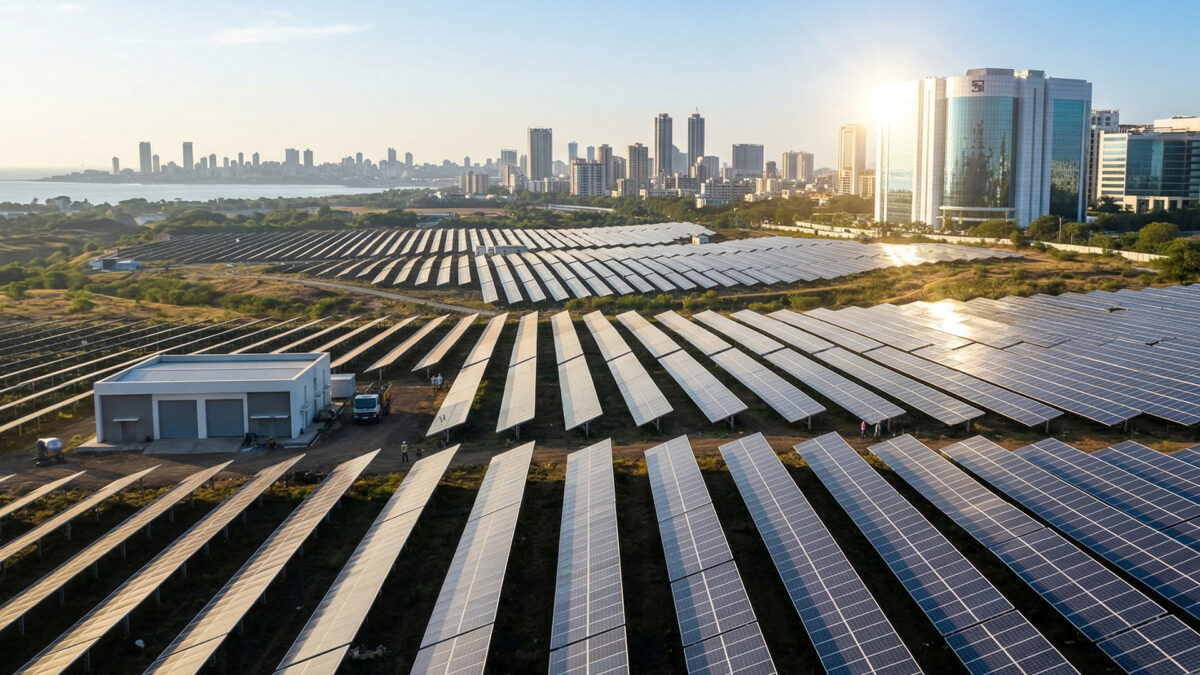
Cosmic PV Power is engaged in manufacturing solar photovoltaic (PV) modules—essential components used in solar power generation systems. The company’s products are used in rooftop and utility-scale solar projects, helping convert sunlight into electricity. With India pushing for increased renewable energy capacity under its climate and energy goals, demand for solar modules has grown rapidly.

The funds raised from the IPO are expected to be used primarily to expand the company’s production capacity and to support working capital requirements. This suggests that Cosmic PV Power plans to scale up operations to meet rising market demand. The company may also use part of the proceeds for general corporate purposes, though precise allocation details will be outlined in its final prospectus.

Cosmic PV Power’s proposed public listing comes at a time when interest in renewable energy companies remains strong among investors. Solar energy firms have attracted attention due to favorable government policies, growing project uptake, and long-term demand for clean energy solutions. The IPO could offer investors exposure to India’s expanding solar manufacturing sector.

Analysts note that the success of the offering will depend in part on market conditions and investor appetite for renewable energy stocks, but the bright outlook for solar power infrastructure could work in the company’s favor.

If approved and successfully launched, the IPO will allow Cosmic PV Power to raise capital from public markets, increase its visibility among investors, and potentially accelerate its growth plans in the rapidly evolving clean energy space.

Also Read: India boosts chip manufacturing with Gujarat

Categories
Technology

Anthropic leaks AI tool code again

AI company Anthropic has once again accidentally leaked the source code of its coding tool, Claude Code, raising concerns about how securely it handles its systems.

The latest incident happened on March 31, when a large internal file with more than 500,000 lines of code was mistakenly made public during a software update. The company clarified that this was not a hack, but a human error during the release process.

The leaked code revealed how the AI tool is built and works, along with details about features that have not yet been officially released. Experts say this could give competitors useful insights into the company’s technology and future plans.

Anthropic confirmed that no user data or sensitive personal information was exposed. The leak was limited only to internal code and system design.

Even so, the incident has raised concerns because developers quickly accessed and shared the code online, making it hard to fully control once it was exposed.

This is the second such mistake by Anthropic in the past year, leading to questions about its internal processes and quality checks. The company has said it is taking steps to prevent similar errors in the future.

While the leak may not directly affect users, it highlights the growing challenges AI companies face in keeping their systems secure while rapidly developing new technologies.

Also Read: India limits Chinese CCTV sales 

Categories
Beyond

India limits Chinese CCTV sales

India has introduced new rules from April 1 that limit the sale of many Chinese-made CCTV cameras. The decision is part of the government’s effort to improve cybersecurity and reduce reliance on foreign technology.

Under the new rules, all CCTV cameras that connect to the internet must get government approval before being sold. Companies whose products do not meet these standards will not be allowed to sell in India. Many Chinese brands are affected, as their devices have not received the required certification.

The main reason behind this move is concern over data safety. Officials worry that some imported cameras could have security risks, such as hidden access points that may allow outsiders to view or steal data.

For people who already have Chinese CCTV cameras installed at home or in offices, there is no need to worry immediately. These existing devices will continue to work as usual. The rules apply only to new sales and imports, not to cameras that are already in use.

However, there may be some problems in the future. As these companies reduce their presence in India, users might find it harder to get software updates, security fixes, or customer support. This could make the cameras less secure over time.

The new policy is expected to benefit Indian manufacturers, as it encourages the use of locally made products. Many domestic companies are likely to gain a larger share of the market as a result.

At the same time, experts say that fewer options in the market could lead to higher prices in the short term.

Also Read: Unilever–McCormick $65 billion food deal

Categories
Beyond

Premium petrol climbs to ₹160/litre

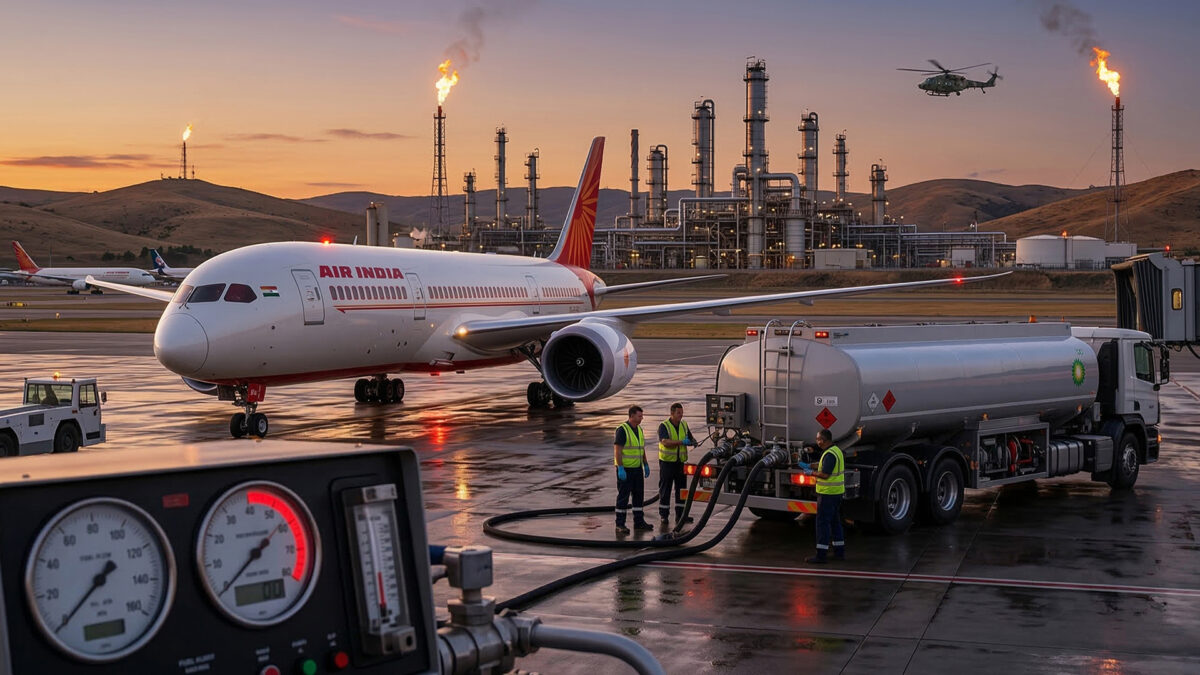
Fuel prices in India have seen a noticeable spike, with premium petrol now costing as much as ₹160 per litre in Delhi. The increase comes at a time when global oil markets are under pressure due to rising tensions in West Asia, affecting supply and pushing prices higher.

Indian Oil Corporation recently raised the price of its high-performance XP100 petrol by ₹11 per litre, taking it from ₹149 to ₹160. This type of fuel is mainly used in luxury cars and high-end motorcycles, so the impact will be felt most by niche consumers rather than the general public.

At the same time, jet fuel prices have seen an even sharper rise. Aviation turbine fuel (ATF), which airlines rely on heavily, briefly crossed ₹2 lakh per kilolitre, a record high. Although prices were later adjusted to around ₹1.04 lakh per kilolitre for domestic carriers, the cost remains significantly elevated.

This surge is closely tied to global crude oil prices, which have risen amid fears of supply disruptions. Key oil-producing regions and important shipping routes are under strain due to ongoing geopolitical conflicts, making fuel more expensive worldwide.

For airlines, this is a major concern. Fuel typically makes up a large share of their operating costs, sometimes as much as 40–45%. With such a sharp increase in ATF prices, airlines may have little choice but to raise ticket prices or cut back on certain routes to manage expenses.

Also Read: Commercial LPG gets costlier by ₹195.5


Categories
Beyond

₹195.5 hike in commercial LPG prices

Commercial LPG cylinder prices have been increased by ₹195.50 from April 1, bringing fresh cost pressures for businesses across India. The hike mainly impacts commercial users such as restaurants, hotels, and small-scale industries that depend on LPG for daily operations. In several cities, the price of a 19-kg cylinder has now gone beyond ₹2,000.

In contrast, domestic LPG cylinder prices have been left unchanged, offering relief to households. The move is seen as an effort to protect consumers from rising expenses and keep cooking fuel affordable amid broader inflation concerns.

The latest increase in commercial LPG rates comes against the backdrop of rising global energy prices. Ongoing geopolitical tensions, especially in the Middle East, have disrupted supply chains and pushed up fuel costs worldwide. As India relies heavily on LPG imports, these international developments have a direct impact on domestic pricing.

To ensure that supply remains steady, the government has increased the allocation of commercial LPG to 70%. This step is aimed at supporting key sectors and preventing disruptions in essential services and industrial activities.

Meanwhile, the Andhra Pradesh government has reassured citizens that there is no shortage of fuel in the state. Civil Supplies Minister Nadendla Manohar stated that adequate stocks of LPG, petrol, and diesel are available. He also urged the public to avoid panic buying or hoarding, emphasizing that the situation is under control.

Authorities have said strict monitoring is in place to prevent black marketing and ensure fair distribution of fuel.

Also Read: Gold tops ₹1.50 lakh, Silver slips below ₹2.50 lakh

Categories
Beyond

Gold tops ₹1.50 lakh, Silver slips below ₹2.50 lakh

Gold prices strengthened on April 1, 2026, climbing past the ₹1.50 lakh per 10 grams mark in the domestic market, while silver prices edged lower, highlighting a mixed trend in bullion.

On the MCX, gold futures traded in the range of ₹1.50–₹1.51 lakh per 10 grams, supported by a weaker US dollar and improving global sentiment. In the international market, prices remained firm near $4,700 per ounce, keeping the overall trend positive.

The rise in gold prices comes after recent volatility, as investors once again turned to the metal for safety. Expectations that geopolitical tensions in the Middle East may ease also helped stabilise sentiment, reducing fears of sharp inflation spikes and supporting bullion demand.

Silver, however, did not follow gold’s upward momentum. Prices on the MCX slipped to around ₹2.39 lakh to ₹2.45 lakh per kilogram, staying below the ₹2.50 lakh level. The decline is largely due to profit booking and concerns over industrial demand, which plays a significant role in silver pricing.

Market experts point out that gold and silver often move differently because of their distinct roles. Gold is primarily a store of value and safe-haven asset, benefiting during times of uncertainty. Silver, on the other hand, has a strong link to industrial activity, making it more sensitive to economic growth expectations.

The divergence seen in today’s trade reflects this contrast—investors are favouring gold for safety, while remaining cautious on silver due to demand concerns.

Looking ahead, analysts believe bullion prices may remain volatile. Factors such as global economic trends, currency movements, and geopolitical developments will continue to influence price direction in the coming sessions.

Also Read: Sensex rockets 1,800 points, Nifty at 22,750

Categories
Corporate

Sensex rockets 1,800 points, Nifty at 22,750

Indian equity markets bounced back strongly on April 1, 2026, with benchmark indices recovering after days of losses. The BSE Sensex jumped around 2,000 points to nearly 73,900, while the Nifty50 rose close to 600 points to hover above 22,900, marking one of the steepest single-day rallies in recent weeks.

The surge was fueled by signs of easing tensions in the Middle East, which eased fears of sharp crude price rises. Coupled with positive global market cues, Wall Street and Asian indices posted solid gains, the mood on Dalal Street turned optimistic.

Banking and financial stocks were the biggest beneficiaries, with Shriram Finance and HDFC Bank among the top gainers. Other heavyweights such as Reliance Industries, Larsen & Toubro, and GRSE also saw strong buying interest, reflecting confidence in cyclical sectors.

Metals, capital goods, and real estate shares joined the rally, benefiting from a global uptick and domestic bargain hunting after recent corrections. Analysts noted that investors were keen to pick up beaten-down stocks at attractive levels.

On the other hand, IT and telecom stocks underperformed. Infosys, HCL Tech, and Tech Mahindra lagged behind, as some investors booked profits in defensive sectors despite the broader market rally.

Categories
Beyond

ONGC starts gas output from $1 bn Daman project

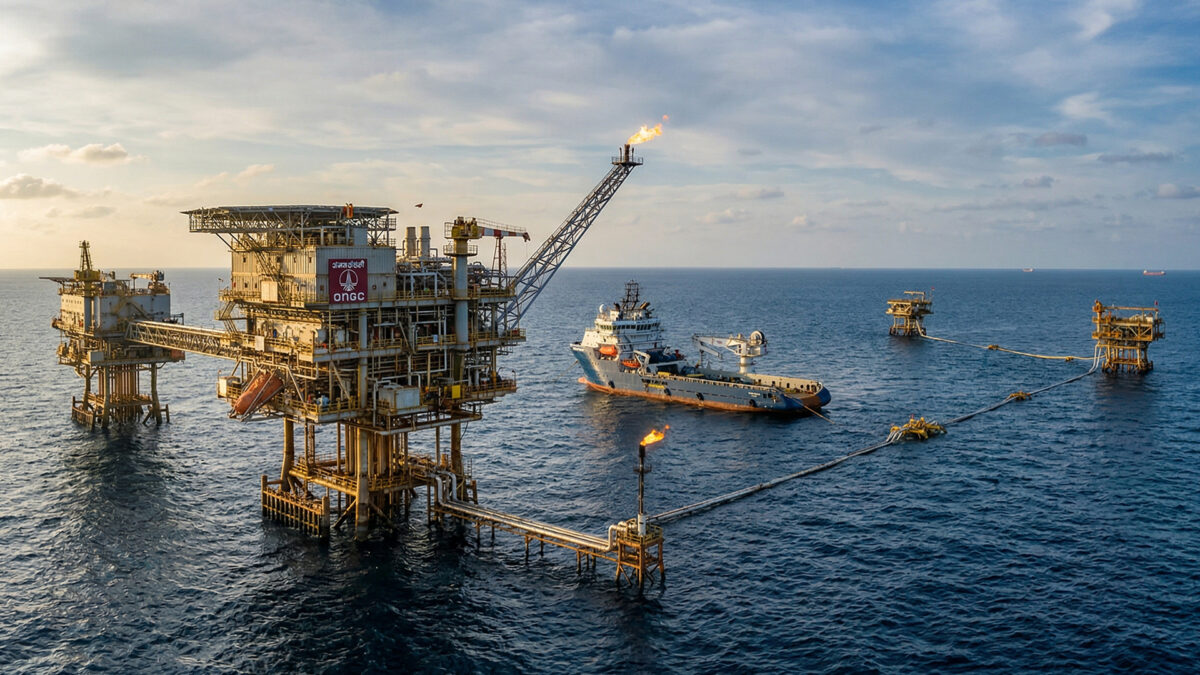
Oil and Natural Gas Corporation (ONGC) has started gas monetisation from its Daman Upside Development Project, marking a significant step in increasing India’s domestic natural gas production.

The company commenced gas flow from the offshore B-12-24P platform on March 29. The extracted gas is being transported to the Hazira plant in Gujarat, where it will be processed before being supplied to consumers.

Located in the Arabian Sea, the Daman project lies about 180 km off the Mumbai coast. It is part of ONGC’s broader strategy to enhance output from its western offshore assets and reduce reliance on energy imports.

Developed at an estimated cost of around $1 billion, the project has been completed in a relatively short time frame of under two years. ONGC attributed this to improved drilling methods and efficient project execution, including the use of advanced techniques to speed up development.

The start of gas monetisation signals the beginning of commercial production from the field. Output is expected to increase gradually as additional wells are brought into operation in phases over the coming months.

At peak levels, the project is expected to produce around 5 million standard cubic metres of gas per day. Overall, it is estimated to contribute significantly to India’s gas output over its lifecycle.

The development comes at a time when India is focusing on boosting domestic energy production to meet rising demand and reduce dependence on imports. Natural gas is seen as a key transition fuel in the country’s energy mix, supporting cleaner energy goals.

Also Read: Airtel raises $1 bn for Nxtra