
Categories
Leaders

Kulmeet Bawa named ServiceNow India MD

ServiceNow has appointed Kulmeet Bawa as the Managing Director (MD) and Group Vice President (GVP) for its India and SAARC operations, effective April 6, 2026. He will be based in New Delhi and lead the company’s growth strategy in one of its fastest-growing markets.

Bawa has over 20 years of experience in the technology and software industry. He previously worked at SAP, where he served as Global Chief Revenue Officer and also led SAP India as President and MD. Before that, he headed South Asia operations at Adobe, managing business growth across the region.

Before entering the corporate world, Bawa spent 12 years as a Cavalry officer in the Indian Army, an experience he says shaped his leadership and strategic thinking. ServiceNow highlighted that his combined military and corporate experience makes him well-suited to guide the company in a complex and competitive market.

In his new role, Bawa will focus on expanding ServiceNow’s presence, enhancing customer engagement, and helping enterprises adopt digital solutions and workflow automation. His appointment comes at a time when demand for cloud-based enterprise platforms and digital transformation is rising rapidly in India and neighboring SAARC countries.

Adrian Johnston, President of ServiceNow Asia Pacific, said India is a key market for the company and praised Bawa’s experience and leadership as ideal for this next phase of growth.

Bawa succeeds Ganesh Lakshminarayanan, who has moved to a leadership role at Tata Communications. With Bawa at the helm, ServiceNow aims to strengthen its footprint in the region and support businesses in leveraging digital technology to improve efficiency and innovation.

Bawa said he is excited to work with ServiceNow’s customers and partners to help enterprises across India and SAARC harness the potential of digital platforms.

Also Read: Amazon Cloud facility damaged in Bahrain strike

Categories
Beyond

Oil rises 4% on Trump’s Iran strike warning

Global oil prices rose sharply after Donald Trump said the United States would continue its military actions against Iran, increasing concerns about a wider conflict in the region.

Benchmark crude prices climbed more than 4%, with Brent crude crossing key levels as traders reacted to the possibility of prolonged instability. The price jump reflects growing fears that the conflict could disrupt global oil supplies and key shipping routes.

In his address, Trump indicated that US attacks would not stop immediately and could continue until strategic objectives are met. While he hinted that the situation might stabilise eventually, the lack of clear timelines has added uncertainty to global markets.

Market analysts say the rise in oil prices is driven by both actual supply risks and market sentiment. Even the possibility of attacks on oil infrastructure or transport routes can lead to immediate price spikes, as traders anticipate shortages.

The surge in crude prices has also affected broader financial markets. Investors are becoming cautious due to concerns that higher energy costs could lead to inflation and slow down economic growth. Stock markets in several regions showed signs of volatility following the developments.

A major concern is the safety of the Strait of Hormuz, a narrow waterway through which a large portion of the world’s oil supply passes. Any disruption in this route can quickly affect global supply and drive prices higher. Reports suggest that tensions in the area have already slowed some shipping activity.

Also Read: Rupee jumps to 93.53 after RBI action

Categories
Beyond

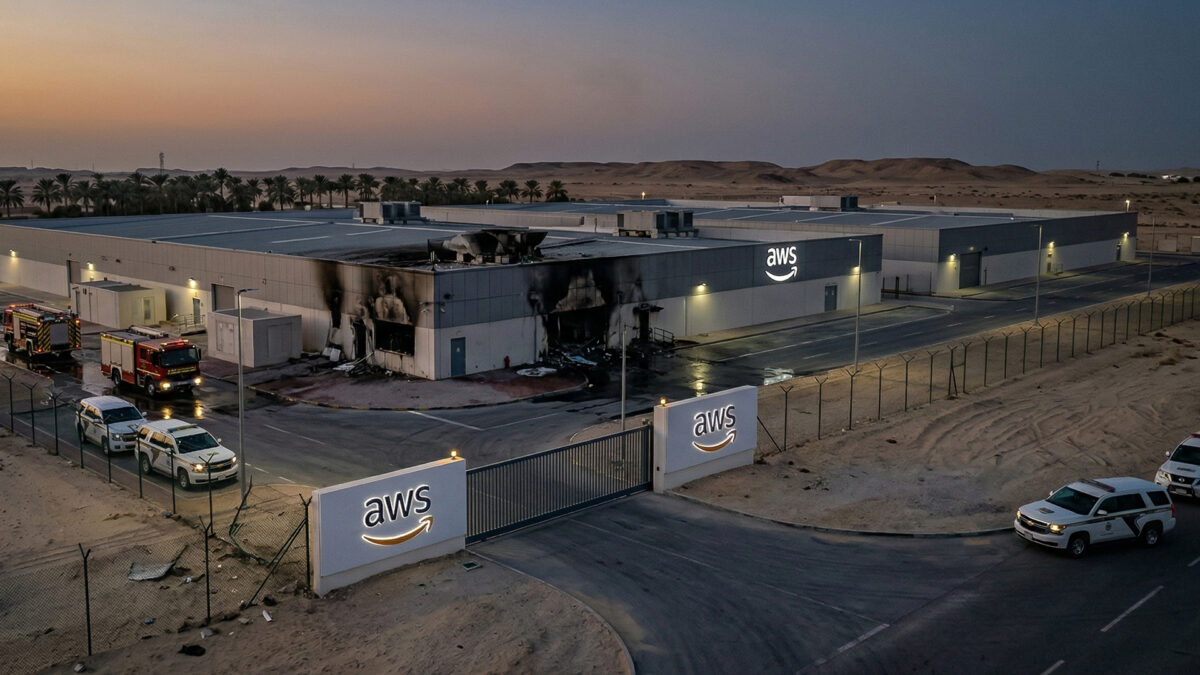
Amazon Cloud facility damaged in Bahrain strike

Amazon’s cloud services infrastructure in Bahrain has reportedly suffered damage following a suspected strike linked to Iran, signalling how geopolitical conflicts are increasingly affecting critical technology systems.

The incident is believed to have impacted facilities run by Amazon Web Services (AWS), a major global provider of cloud computing services. While the full extent of the damage has not been officially disclosed, sources indicate that the disruption could affect services relying on AWS’s Bahrain region.

Authorities in Bahrain confirmed that emergency teams were deployed to handle a fire at a company facility. Officials attributed the incident to external aggression but stopped short of directly naming Amazon in their initial statements.

This development comes amid heightened tensions between Iran and Western allies, with reports suggesting that infrastructure linked to U.S. companies has become a potential target. Analysts believe such actions may be intended not only to cause disruption but also to send a strategic message about the vulnerability of foreign investments in the region.

AWS plays a crucial role in supporting digital operations for businesses, governments, and online platforms worldwide. Any disruption to its infrastructure can have ripple effects across sectors, including banking, e-commerce, and communication services that depend on stable cloud access.

This is not the first time Amazon’s Bahrain operations have faced challenges in recent weeks, indicating a pattern of instability tied to the broader conflict. Experts warn that as modern warfare evolves, non-military targets such as data centres are increasingly at risk.

Also Read: SpaceX moves toward historic IPO

Categories
Corporate

SpaceX moves toward historic IPO

SpaceX has taken a major step toward going public by filing confidentially for an initial public offering (IPO), according to reports. The move could pave the way for one of the biggest stock market listings ever, highlighting the company’s rapid growth and global influence.

The Elon Musk-led company submitted draft documents to US regulators through a confidential process. This allows firms to prepare for an IPO and undergo regulatory review without immediately disclosing detailed financial information. A public listing could happen later this year, depending on market conditions.

Estimates suggest SpaceX could be valued at as much as $1.5 trillion or more, which would make it the most valuable company ever to go public. The IPO is expected to raise tens of billions of dollars, attracting strong interest from investors worldwide.

SpaceX has become a dominant force in the space industry, known for its reusable rockets and frequent satellite launches. Its Starlink satellite internet service has also seen rapid expansion, becoming a major source of revenue and helping connect remote regions across the globe.

The company’s growth strategy now extends beyond space technology. Its reported ties with Musk’s artificial intelligence venture have further increased its appeal, positioning it at the intersection of two high-growth sectors, space and AI.

The planned IPO comes at a time when several major technology firms are exploring public listings. However, SpaceX is expected to stand out due to its scale, innovation, and strong government and commercial partnerships.

Also Read: ChatGPT now available on Apple CarPlay

Categories
Technology

ChatGPT now available on Apple CarPlay

OpenAI has expanded the reach of its chatbot ChatGPT by bringing it to Apple CarPlay, allowing users to access AI while driving.

The feature comes with the latest iOS 26.4 update and enables iPhone users to interact with ChatGPT using voice commands. This means drivers can ask questions, get quick information, or even have simple conversations without needing to touch their phones.

To ensure safety, the CarPlay version is designed as a voice-only experience. Responses are spoken aloud, and no text is displayed on the screen, helping drivers stay focused on the road. This approach reduces distractions while still offering the benefits of AI assistance.

The move also signals a shift by Apple, which has traditionally relied on its own voice assistant, Siri, for in-car interactions. By allowing ChatGPT on CarPlay, Apple is opening its platform to third-party AI tools and giving users more flexibility in how they interact with technology.

However, the feature comes with some limitations. Users cannot activate ChatGPT with a wake phrase like “Hey Siri” and must open the app manually through the CarPlay interface. In addition, the chatbot cannot control vehicle functions or make changes to phone settings, as Apple continues to maintain strict control over system features for safety reasons.

Despite these restrictions, the integration is seen as a significant step forward. ChatGPT offers more natural and conversational responses compared to traditional voice assistants, making interactions feel smoother and more engaging.

Also Read: OpenAI raises $122 billion for AI expansion

Categories
Corporate

OpenAI raises $122 billion for AI expansion

In a landmark moment for the tech world, OpenAI has raised an unprecedented $122 billion in new funding, highlighting just how central artificial intelligence has become to the future of technology. The deal values the company at around $850 billion, placing it among the most valuable private firms globally.

The funding round drew support from some of the biggest names in tech and finance, reflecting strong confidence in OpenAI’s vision. With this fresh capital, the company plans to significantly expand its computing infrastructure and continue developing more advanced AI systems.

At its core, OpenAI says the goal is simple: make AI more useful and accessible for everyone. Whether it’s individuals using tools like ChatGPT for everyday tasks, developers building applications, or businesses integrating AI into their operations, the company wants its technology to be widely adopted and easy to use.

This new phase will also see OpenAI doubling down on its most successful products. Instead of spreading resources across too many experimental ideas, the company is focusing on refining what people already use the most, like conversational AI and coding assistants. The aim is to create a more seamless, all-in-one experience where different AI capabilities work together smoothly.

Despite its rapid rise, challenges remain. Building and running advanced AI systems requires enormous investment, especially in data centers and computing power. While OpenAI is already generating substantial revenue, turning consistent profits will take time.

Competition is also heating up, with other tech giants racing to develop their own AI platforms. At the same time, questions around the ethical use and long-term impact of AI continue to grow.

Also Read: India waives import duty on 40+ petrochemicals

Categories
Beyond

India waives import duty on 40+ petrochemicals

In a bid to shield domestic industries from rising costs and supply disruptions, the Indian government has temporarily removed customs duty on several key petrochemical products. The exemption will remain in effect until June 30, 2026.

The decision comes at a time when global supply chains are under stress due to ongoing tensions in West Asia, particularly involving Iran. These disruptions have led to higher shipping costs and increased prices of essential raw materials, impacting multiple industries in India.

The duty waiver covers more than 40 petrochemical products, many of which are critical inputs for sectors such as plastics, textiles, pharmaceuticals, packaging, and automobiles. By removing import duties, the government aims to ensure steady supply and reduce the cost burden on manufacturers who rely heavily on these materials.

Some of the key chemicals included in the exemption list are methanol, styrene, vinyl chloride monomer (VCM), monoethylene glycol (MEG), phenol, and toluene. These are widely used in producing everyday goods ranging from plastic products to synthetic fibres and industrial components.

Officials say the move is intended as a short-term measure to stabilise the domestic market. Lower import costs are expected to help companies manage rising input prices and avoid passing on the full burden to consumers. This could also help keep inflation in check in sectors dependent on petrochemical products.

The decision follows a series of steps taken by the government to manage the impact of global disruptions. India, which relies significantly on imports for petrochemical needs, has been particularly vulnerable to price fluctuations and supply shortages triggered by geopolitical developments.

Industry experts have welcomed the move, saying it will provide immediate relief and support production across key sectors. However, they also note that the situation remains uncertain, and much will depend on how global tensions evolve in the coming weeks.

Also Read: Gold jumps to ₹1.52 lakh, Silver rises to ₹2.55 lakh

Categories
Corporate

Sensex falls 1,500 points, Nifty slips below 22,250

Indian stock markets remained highly volatile over recent sessions, witnessing a sharp reversal after a strong rally, as global uncertainties and rising oil prices dampened investor sentiment.

In the previous session, benchmark indices surged significantly, with the Sensex jumping over 1,700 points and the Nifty rising around 2.3%. The rally was largely driven by easing concerns around geopolitical tensions and a decline in crude oil prices. Improved global cues and a drop in market volatility, reflected in a lower India VIX, also boosted investor confidence, leading to broad-based buying across sectors.

However, the positive momentum did not sustain. On April 2, markets opened sharply lower, with the Sensex plunging more than 1,500 points in early trade, while the Nifty slipped below the 22,250 mark. The sudden downturn came amid renewed geopolitical concerns after fresh signals from the United States indicated that tensions involving Iran could persist, reducing hopes of a quick resolution.

A key factor weighing on markets was the sharp rise in crude oil prices, which climbed above $106 per barrel. Higher oil prices are a concern for India as they can increase inflation and widen the trade deficit, impacting overall economic stability. This triggered widespread selling across sectors such as banking, auto, and pharmaceuticals, reflecting a clear risk-off sentiment among investors.

Foreign institutional investors (FIIs) also continued to sell Indian equities, adding further pressure on the indices. Weakness in global markets contributed to the negative sentiment, while some global brokerages turned cautious on Indian equities due to concerns over rising energy costs and their potential impact on corporate earnings.

Despite the sharp equity sell-off, the Indian rupee showed resilience and strengthened against the US dollar, supported by measures from the Reserve Bank of India aimed at curbing speculative activity.

Categories
1 Minute-Read

Oracle lays off 12,000 employees in India

US tech giant Oracle has laid off around 12,000 employees in India, delivering shocking early morning emails to staff. The cuts affect roles across levels, from mid-level professionals to senior executives, and are part of a global restructuring plan as Oracle shifts focus to cloud computing and AI services.

Reports indicate more layoffs may follow as the company realigns teams and priorities. Employees are now exploring opportunities in India’s IT sector, while analysts note the move reflects broader challenges in adapting to market changes and competition from firms like Microsoft and Amazon Web Services.

Categories
Corporate

Stock market trading rules changes

A set of new stock market trading rules took effect in India on April 1, aimed at strengthening market stability and tightening regulations for traders, investment firms, and listed companies. The changes range from higher trading costs on certain segments to curbs on algorithmic strategies and adjustments in buyback taxation.

One of the most notable changes is the increase in Securities Transaction Tax (STT) on equity derivatives. STT is a levy paid on trades of futures and options (F&O) and is intended to discourage excessive speculative trading. The revised rates will raise costs for traders active in the derivatives market and could temper short‑term, high‑frequency trading strategies.

In addition, the Securities and Exchange Board of India (SEBI) has introduced new norms to rein in algorithmic and high‑frequency trading (HFT) practices. While algorithmic trading can improve market efficiency, regulators believe unchecked automated strategies may contribute to sharp price swings and volatility. The new rules will tighten eligibility, risk controls and monitoring for algo participants, aiming to strike a balance between innovation and market safety.

Listed companies will also face changes, particularly related to share buybacks. A revised tax structure will be applicable to buybacks, where firms repurchase their own shares from investors. The updated framework could affect how companies plan capital returns, dividend policies, and shareholder value strategies.

Other changes include enhanced disclosure requirements and stricter action on misuse of APIs (Application Programming Interfaces) used by brokers and algorithmic traders. Regulators are also focusing on improving surveillance and risk management to reduce market manipulation and protect retail investors.

Market participants, including traders, brokers and analysts, say the new rules are part of a broader shift toward more cautious, transparent market operations. While some traders expressed concerns about higher transaction costs and tighter controls on sophisticated strategies, long‑term investors and regulators argue the changes could lead to healthier market behaviour.

Investors are advised to stay updated and review how the new norms affect their trading patterns, costs and portfolio strategies.

Also Read: Cosmic PV Power plans ₹640 crore IPO