Categories
Beyond

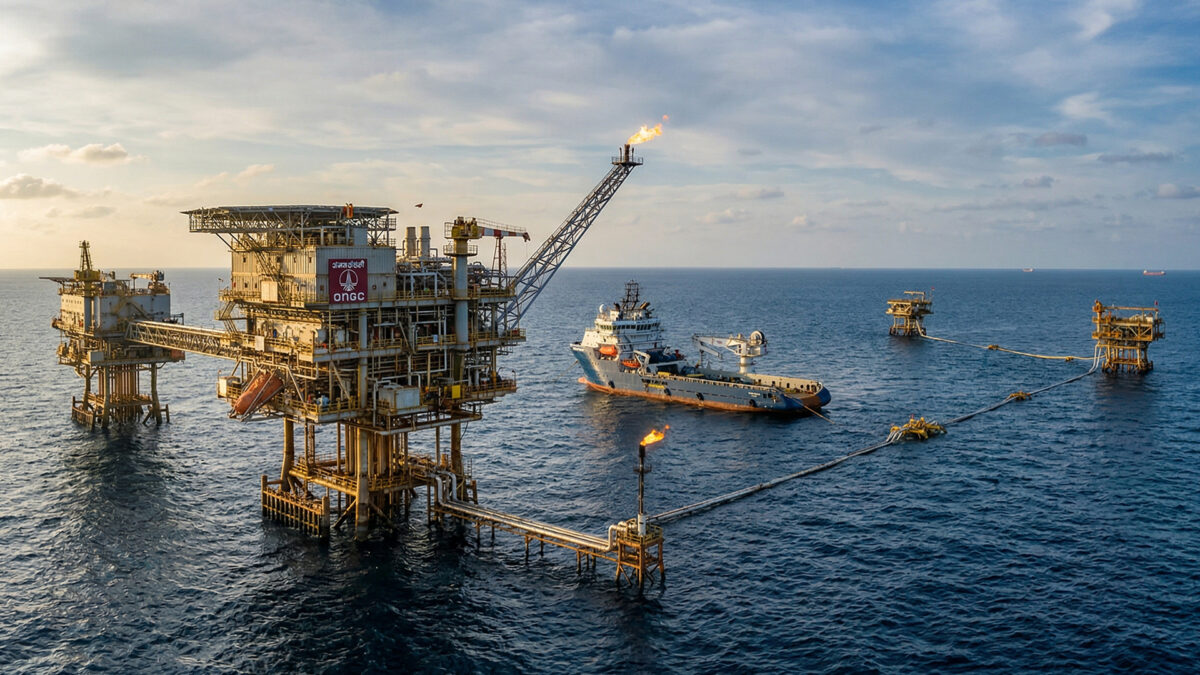
ONGC starts gas output from $1 bn Daman project

Oil and Natural Gas Corporation (ONGC) has started gas monetisation from its Daman Upside Development Project, marking a significant step in increasing India’s domestic natural gas production.

The company commenced gas flow from the offshore B-12-24P platform on March 29. The extracted gas is being transported to the Hazira plant in Gujarat, where it will be processed before being supplied to consumers.

Located in the Arabian Sea, the Daman project lies about 180 km off the Mumbai coast. It is part of ONGC’s broader strategy to enhance output from its western offshore assets and reduce reliance on energy imports.

Developed at an estimated cost of around $1 billion, the project has been completed in a relatively short time frame of under two years. ONGC attributed this to improved drilling methods and efficient project execution, including the use of advanced techniques to speed up development.

The start of gas monetisation signals the beginning of commercial production from the field. Output is expected to increase gradually as additional wells are brought into operation in phases over the coming months.

At peak levels, the project is expected to produce around 5 million standard cubic metres of gas per day. Overall, it is estimated to contribute significantly to India’s gas output over its lifecycle.

The development comes at a time when India is focusing on boosting domestic energy production to meet rising demand and reduce dependence on imports. Natural gas is seen as a key transition fuel in the country’s energy mix, supporting cleaner energy goals.

Also Read: Airtel raises $1 bn for Nxtra

Categories
Technology

iOS 26.5 Beta 1 adds RCS security, maps ad

Apple has released the first developer beta of iOS 26.5, offering new privacy features and laying the foundation for upcoming services. The update comes soon after iOS 26.4 and is currently available only for registered developers.

One major change is the reintroduction of end-to-end encryption for RCS messaging. This ensures that messages sent between iPhones and Android devices remain private and secure. The feature is enabled by default and represents a significant step toward safer cross-platform communication.

Another highlight is the groundwork for ads in Apple Maps. A new “Suggested Places” feature recommends nearby locations based on user activity and trends. While no ads are visible yet, Apple is preparing to allow businesses to promote listings within Maps search results later this year.

The beta also improves compatibility with third-party devices. Apple is testing features that allow non-Apple wearables, such as smartwatches and earbuds, to sync notifications and Live Activities with iPhones more smoothly. These updates are partly aimed at meeting European Union regulations and expanding device interoperability.

Despite these improvements, iOS 26.5 Beta 1 does not include any upgrades to Siri. Users hoping for AI enhancements will need to wait for a future release, likely iOS 27.

Also Read: New tax rules from April 1

Categories
Beyond

New tax rules from April 1

Starting April 1, 2026, new income tax rules will come into force, bringing several changes that directly impact salaried employees. The updated provisions aim to modernise the tax system, revise employee benefits and improve transparency in tax reporting.

One of the key changes relates to House Rent Allowance (HRA). The government has expanded the list of cities eligible for higher HRA exemption. Employees living in cities such as Bengaluru, Hyderabad, Pune and Ahmedabad can now claim up to 50% of their salary as exempt under HRA, compared to 40% for other locations. However, this benefit remains applicable only under the old tax regime, meaning those opting for the new regime will not be able to claim it.

Meal-related benefits have also been revised. Salaried individuals receiving meal vouchers, cards or coupons can continue to enjoy tax exemptions on these perks, with a standard limit of ₹200 per meal. A significant change is that this benefit will now also be allowed under the new tax regime, making it more attractive for employees who previously missed out on such exemptions.

The rules further update how perquisites, or employee benefits, are valued. This includes employer-provided facilities such as company cars, concessional loans and other allowances. The revised valuation method is designed to better reflect current market conditions, ensuring a more accurate calculation of taxable income.

Additionally, the new framework introduces stricter disclosure requirements. For example, employees claiming HRA may need to provide details about their landlord, including whether there is any relationship. This step is intended to reduce misuse of exemptions and improve compliance.

Also Read: Spire Global sends 10 satellites into orbit

Categories
Leaders

Air Canada CEO to step down after language row

Air Canada CEO Michael Rousseau has announced he will retire later this year following strong criticism over his response to a deadly plane crash in New York.

The incident occurred at LaGuardia Airport in March 2026, when an Air Canada Express aircraft collided with a fire truck on the runway. The crash killed two pilots and left several others injured, drawing international attention.

Soon after the accident, Rousseau released a video message expressing sympathy for the victims and their families. However, the message was delivered almost entirely in English, with little use of French. This triggered backlash, especially in Quebec, where French is the dominant language.

Many critics said the CEO failed to respect Canada’s bilingual identity during a sensitive moment. Political leaders also joined the criticism, arguing that a national airline must communicate equally in both official languages. The issue quickly became a broader debate about language, identity, and leadership responsibility in Canada.

Rousseau later issued an apology, admitting that his limited French had taken attention away from the seriousness of the tragedy. Despite the apology, pressure continued to build from both the public and political circles, with calls for his resignation.

Air Canada confirmed that Rousseau, 68, will step down by the end of the third quarter of 2026. The company stated that the decision is part of a transition plan, and a global search is underway for his successor. Reports suggest that being fluent in both English and French will be an important requirement for the next CEO.

The controversy also brought renewed attention to Rousseau’s past comments about not learning French despite living in Montreal for many years. Critics say this further added to public dissatisfaction.

Also Read: CMPDI debuts 7% below issue price

Categories
Corporate

CMPDI debuts 7% below issue price

Shares of Central Mine Planning and Design Institute (CMPDI) made a subdued debut on the stock exchanges, listing at a discount of about 7% compared to its IPO price.

The stock opened at around ₹160 on the BSE and about ₹162.8 on the NSE, lower than its issue price of ₹172 per share. The weak listing reflects cautious investor sentiment and limited enthusiasm for the public issue.

The ₹1,842 crore initial public offering was entirely an offer for sale, with no fresh equity issued. This means the proceeds from the IPO went to the parent, Coal India, and other shareholders, rather than being used for the company’s expansion or operations.

During the subscription period, the IPO saw modest demand, with overall subscription just crossing one time. Market signals such as the grey market premium also indicated a lukewarm response, suggesting limited expectations of strong listing gains.

Analysts said the weak debut was influenced by broader market conditions, which have remained volatile in recent weeks. Investors have been cautious about new listings, especially those without immediate growth triggers or strong short-term catalysts.

CMPDI plays an important role as the consulting and planning arm of Coal India. It provides services such as mine planning, exploration, and project management, mainly supporting coal and mining operations across the country.

Also Read: Airtel raises $1 bn for Nxtra

Categories
Beyond

Aluminium stocks rises 5% on Middle East tensions

Aluminium stocks in India climbed up to 5% in the latest trading session, supported by a sharp rise in global metal prices amid escalating tensions in the Middle East.

Shares of key players such as Hindalco Industries, National Aluminium Company, and Vedanta Ltd posted strong gains. The rally came even as the broader stock market showed weakness, highlighting sector-specific momentum in metal stocks.

The primary trigger for the surge was a significant jump in aluminium prices in global markets. Prices rose nearly 6%, nearing multi-year highs, as concerns grew over potential supply disruptions.

The spike follows reports of attacks affecting key aluminium production facilities in the Middle East. The region accounts for a notable share of global aluminium output, and any disruption to production has a direct impact on international prices.

Additionally, concerns over the safety of major shipping routes, including the Strait of Hormuz, have added to market uncertainty. This route is crucial for global commodity trade, and any disruption could further strain supply chains.

In India, the rise in aluminium stocks stood out against a subdued broader market. The metal sector showed resilience as investors reacted to improving global price trends and expectations of better earnings for producers.

Higher aluminium prices generally support margins for companies, particularly those with strong export businesses. As a result, Indian producers are seen as potential beneficiaries of the current global situation.

Also Read: Eli Lilly inks $2 bn AI drug development deal

Categories
Beyond

Gold rises to ₹1,48,270, silver falls to ₹2,44,900

Gold prices in India witnessed a marginal rise on March 31, while silver prices declined slightly, indicating a mixed trend in the domestic bullion market amid ongoing volatility.

According to market data, the price of 24-carat gold increased by ₹10, taking it to around ₹1,48,270 per 10 grams. Meanwhile, silver prices slipped by ₹100, with the metal trading near ₹2,44,900 per kilogram.

The movement reflects a cautious market environment, where prices are showing only minor fluctuations after a period of sharp swings earlier in March. Analysts note that such small changes suggest a phase of consolidation, as investors remain uncertain about the direction of global economic indicators and interest rates.

Across major cities, gold rates continue to vary slightly depending on local taxes and demand. Prices for both 22-carat and 24-carat gold remain broadly aligned across metropolitan centres like Delhi and Mumbai, with only marginal differences.

The recent trend follows a turbulent month for precious metals. Gold and silver have experienced significant corrections in March, with both metals witnessing notable declines before attempting a mild recovery.

Market experts attribute the volatility to multiple global factors, including shifting expectations around interest rates, geopolitical tensions, and fluctuations in the US dollar. Higher interest rates typically reduce the appeal of non-yielding assets like gold, while geopolitical uncertainty tends to support safe-haven demand.

Despite the recent dip, demand for gold in India remains steady, particularly from retail buyers and jewellers. Seasonal factors such as the upcoming wedding period and expectations of future price increases continue to support buying interest.

Also Read: Rupee breaches 95 against dollar

Categories
Corporate

Eli Lilly inks $2 bn AI drug development deal

US-based pharmaceutical major Eli Lilly has entered into a major agreement with Hong Kong biotech firm Insilico Medicine to develop new drugs using artificial intelligence, in a deal valued at up to $2 billion.

The partnership will focus on using Insilico’s AI technology to identify and develop promising drug candidates, especially oral medicines for various diseases. Under the agreement, Eli Lilly will gain exclusive global rights to further develop, manufacture, and commercialise any successful drugs emerging from the collaboration.

As part of the deal, Insilico Medicine will receive an upfront payment of around $115 million. In addition, the company is eligible for milestone payments linked to research progress, regulatory approvals, and commercial success. These could significantly increase the total value of the agreement over time.

This collaboration builds on an earlier partnership between the two companies and reflects a deeper commitment to AI-driven drug discovery. Both firms aim to combine Insilico’s advanced machine learning platforms with Eli Lilly’s experience in clinical development and global distribution.

Reports suggest that the agreement may include the development of a potential oral treatment for conditions such as diabetes, an area with high global demand. However, the broader focus remains on leveraging AI to streamline and speed up the drug discovery process.

Artificial intelligence is playing an increasingly important role in the pharmaceutical industry. By analysing large volumes of data and predicting how compounds will behave, AI can help identify viable drug candidates much faster than traditional research methods. This can reduce both the time and cost required to bring new medicines to market.

Also Read: Rupee breaches 95 against dollar


Categories
Beyond

Rupee breaches 95 against dollar

Rupee came under fresh pressure on March 30, 2026, slipping past the 95-per-dollar mark for the first time as rising tensions in West Asia rattled global markets and pushed up crude oil prices.

The sharp fall reflects growing nervousness among investors as the conflict in the Middle East shows no signs of easing. Higher crude prices have added to the strain, with India, one of the world’s largest oil importers, facing increased demand for dollars to pay for energy imports. This has put the rupee on the back foot.

The currency, however, recovered slightly later in the day, aided by intervention measures and market adjustments. Still, traders say volatility remains high and sentiment fragile.

Another factor weighing on the rupee is the steady outflow of foreign funds from Indian equities. As global investors turn cautious, capital has been moving out of emerging markets like India, further weakening the local currency.

The Reserve Bank of India has stepped in with measures to stabilise the forex market, including tightening rules around banks’ currency positions. While these steps offered temporary relief, their impact has been limited as global pressures continue to dominate.

Amid the turbulence, Finance Minister Nirmala Sitharaman sought to calm concerns, saying the Indian economy is on a “firm footing.” She noted that the rupee’s movement is in line with global trends and that it has held up better than several other Asian currencies facing similar challenges.

Also Read: Airlines must give 60% seats free from April 20

Categories
Corporate

EPL and Indovida to merge in $2 bn packaging deal

In a major move in the packaging industry, EPL Limited and Indovida India Private Limited announced a merger deal worth around $2 billion, aiming to create one of the largest consumer packaging companies serving emerging markets. The boards of both companies approved the transaction on March 29, 2026, though the deal still requires final regulatory and shareholder approvals.

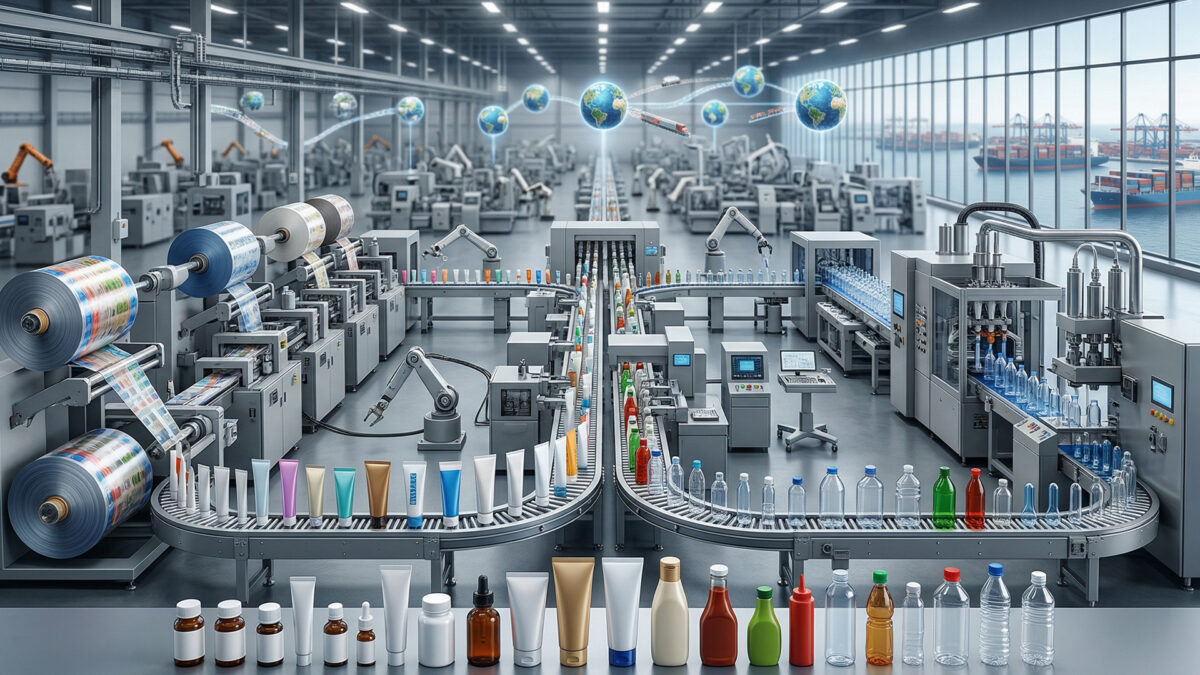
The merger will combine EPL’s flexible packaging expertise, including laminated tubes, with Indovida’s strength in rigid PET (polyethylene terephthalate) packaging. The unified company is expected to generate roughly $1 billion in annual revenue, serving sectors such as food, consumer goods, pharmaceuticals, and personal care. The move will allow the combined firm to broaden its product portfolio and market reach, strengthening its position in India and other emerging markets.

Under the terms of the merger, EPL is valued at approximately $1.2 billion and Indovida at about $0.7 billion. Indorama Ventures, the Thailand-based parent company of Indovida, will hold a majority stake of around 51.8 %, while Blackstone, which currently holds the largest stake in EPL, will retain a significant minority share of 16–17 %. The share swap structure also gives EPL shareholders a 70 % premium over EPL’s pre-merger market value, reflecting investor confidence in the company’s growth and strategic fit.

Management of the merged company will see EPL’s Hemant Bakshi, Managing Director and Group CEO, leading the overall organization, while Indovida’s CEO, Sunil Marwah, will continue to run Indovida’s operations and report to Bakshi.

Executives from both companies emphasized that the merger will deliver operational efficiencies, product and technology synergies, and a stronger platform to compete against global packaging rivals.

Also Read: DeepSeek AI suffers longest outage