Categories
Beyond

Rupee falls 9 paise, hits record low of ₹90.41

The Indian rupee slipped further on Friday, closing at a record low of ₹90.41 against the US dollar, down 9 paise from the previous session. This marks another milestone in the rupee’s ongoing depreciation trend.

Traders said the fall was mainly due to high demand for dollars from importers who needed to pay for overseas goods and services. At the same time, foreign investors have been pulling money out of Indian stocks and bonds, adding to pressure on the currency.

Global factors also played a role. A stronger dollar abroad and uncertainty in financial markets made investors cautious, keeping the rupee under stress. Analysts said that while the Reserve Bank of India can step in to stabilize the currency, its ability to stop the decline is limited when import demand and capital outflows are high.

The rupee’s slide reflects wider economic challenges, including a trade gap, where India imports more than it exports, increasing the need for foreign currency. Experts expect the rupee to face continued pressure in the coming weeks as global market volatility and domestic economic factors play out.

Despite the fall, some believe the rupee may find temporary support if global dollar strength eases or if capital inflows improve. For now, businesses and consumers may feel the pinch as imports become more expensive and foreign travel or overseas education costs rise.

Also Read: IndiGo moves court for ₹900 crore refund

Categories
1 Minute-Read

boAt financial gaps raise concerns before IPO

Auditors of consumer electronics brand boAt have highlighted differences between the company’s financial statements submitted to lenders and its internal records for 2023–2025.

The review also noted possible misuse of short-term funds for long-term purposes in subsidiaries and some unreported overseas transactions. boAt has begun addressing these issues by revising its filings and improving disclosures.

The findings come as the company prepares for a proposed IPO, planning to raise around ₹1,500 crore. While the discrepancies have drawn regulatory attention, boAt aims to resolve them before entering the market, ensuring investor confidence.

Categories
Beyond

IndiGo moves court for ₹900 crore refund
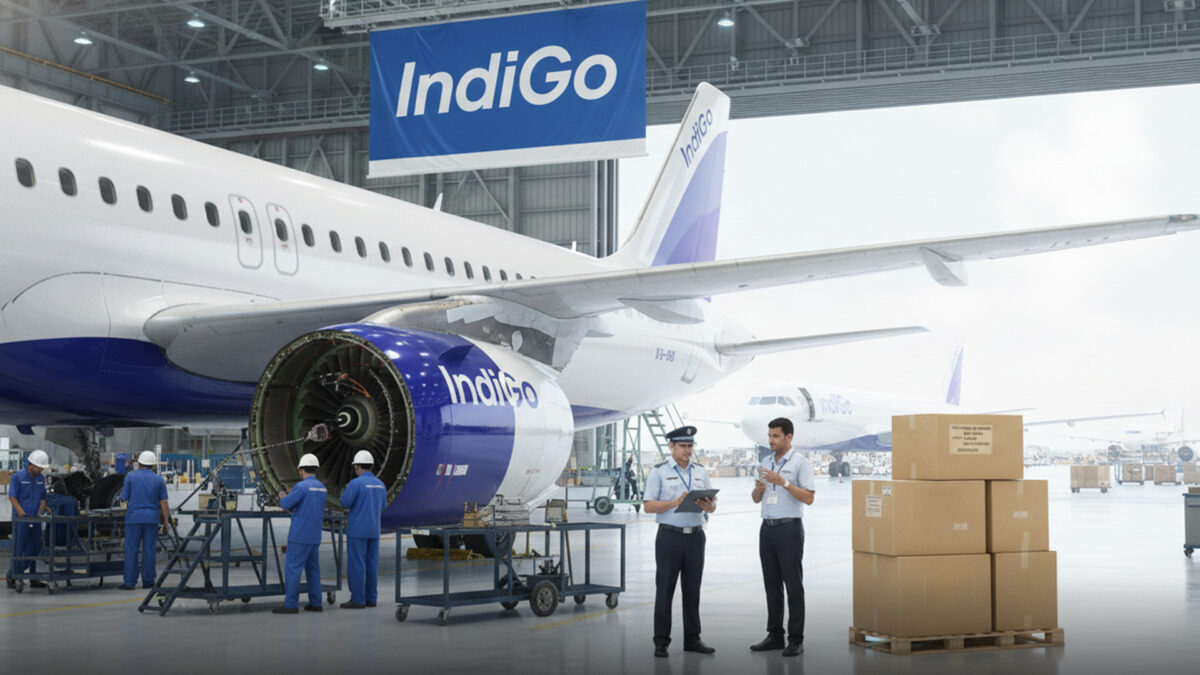
IndiGo has launched a legal challenge seeking over ₹900 crore in customs duty refunds, claiming the government’s taxation on aircraft parts returned from overseas repairs is unfair. The airline says it faces double taxation, paying GST on repairs abroad while being charged customs duty again when the same parts are re‑imported into India.

The airline explained that sending parts overseas for repair qualifies as a service, which is taxed under GST. IndiGo paid the tax under the reverse charge mechanism. However, when the repaired parts returned to India, customs authorities treated them as fresh imports, demanding additional duty. The airline argues this approach is unjust, effectively taxing the same transaction twice – first as a service, then as an import of goods.

The case was initially listed before a Delhi High Court bench of Justices Prathiba M Singh and Shail Jain. However, Justice Jain recused herself, citing a conflict of interest, as her son is employed as a pilot with IndiGo. The matter will now be heard by a different bench.

IndiGo stated that it had paid the disputed customs duties “under protest” to avoid delays in returning critical aircraft parts to service. The airline also pointed to previous tribunal and court rulings suggesting that re‑imported parts should not face double levies once GST has been discharged. Customs authorities, however, rejected refund claims, asking the airline to reassess each bill of entry, a process IndiGo says is impractical.

Alongside this case, IndiGo is contesting a GST demand of ₹58.75 crore for the financial year 2020–21. The airline has clarified that these disputes are unlikely to affect operations materially.

This case could have wide implications for the aviation sector and other businesses dealing with imported goods and overseas repairs. The Delhi High Court’s ruling may set an important precedent on how GST and customs duty interact for re‑imported parts, potentially shaping tax practices for years to come.

Also Read: Disney and OpenAI deal brings iconic characters to Sora

Categories
Corporate

NITI Aayog targets corporate bond growth

NITI Aayog has proposed a comprehensive plan to strengthen India’s corporate bond market, aiming to make it a key source of long-term capital for the economy. The move comes as the corporate bond market in India remains small compared to countries like South Korea and China, with limited participation from retail investors, who account for less than 2 per cent of total investments.

To attract more individual investors, the think-tank has recommended the creation of Corporate Bond Savings Accounts (CBSAs), which would offer tax benefits under Section 80C, similar to equity-linked savings schemes. The proposal also suggests simplifying access to corporate bonds by enabling trading through demat accounts, mobile apps, and internet banking, lowering minimum investment thresholds, and facilitating small-ticket purchases through UPI.

NITI Aayog has further proposed several tax incentives. These include extending existing tax benefits to corporate bonds, aligning long-term capital gains taxes with equities and other instruments, reducing withholding taxes for foreign investors, and offering tax credits for first-time retail investors. Such measures are aimed at leveling the playing field between bonds, equities, and bank deposits as investment options.

In addition to tax and account reforms, the report emphasizes the need for stronger market infrastructure. This includes transparent pricing tools, standardised disclosures, and digital marketplaces to make bond trading easier and more efficient. The think-tank also recommends introducing new products like covered bonds backed by high-quality assets and fractional bond funds, allowing small investors to access diversified portfolios.

The proposals are designed to expand the corporate bond market from its current size of around 15–16 per cent of GDP to ₹100–120 lakh crore by 2030. If implemented, the reforms could broaden the investor base, improve liquidity, and position corporate bonds as a vital tool for long-term financing in India’s growing economy.

By making corporate bonds more accessible and rewarding for investors, NITI Aayog hopes to strengthen India’s financial system and support sustainable economic growth.

Also Read: 42 US states warn tech giants on unsafe AI chatbots

Categories
Corporate

Sensex jumps 300 Points, Nifty moves above 25,950

Indian stock markets opened strong on Friday. The Sensex gained over 300 points, and the Nifty moved above 25,950, showing improved sentiment after a weak start to the week.

The rally was led by big gainers such as Larsen & Toubro (L&T), ICICI Bank, Bharti Airtel, HDFC Bank, and Reliance Industries. These stocks saw good buying interest and helped lift the overall market.

On the other hand, a few sectors saw pressure. IT stocks, FMCG companies, and some pharma shares were among the early losers, with mild profit-booking dragging them down.

Global cues also supported the market. Positive trends in US and Asian markets, along with improved optimism after the US Federal Reserve’s interest rate cut, boosted investor confidence. This encouraged buying in banks, capital goods, and telecom stocks.

Investors are now watching for India’s inflation data, expected later in the day, which could influence market direction.

Overall, the markets recovered well, with strong gainers in banking and engineering stocks outweighing minor losses in IT, FMCG, and pharma sectors.

Also Read: Sensex up 427 points, Nifty near 25,900

Categories
Beyond

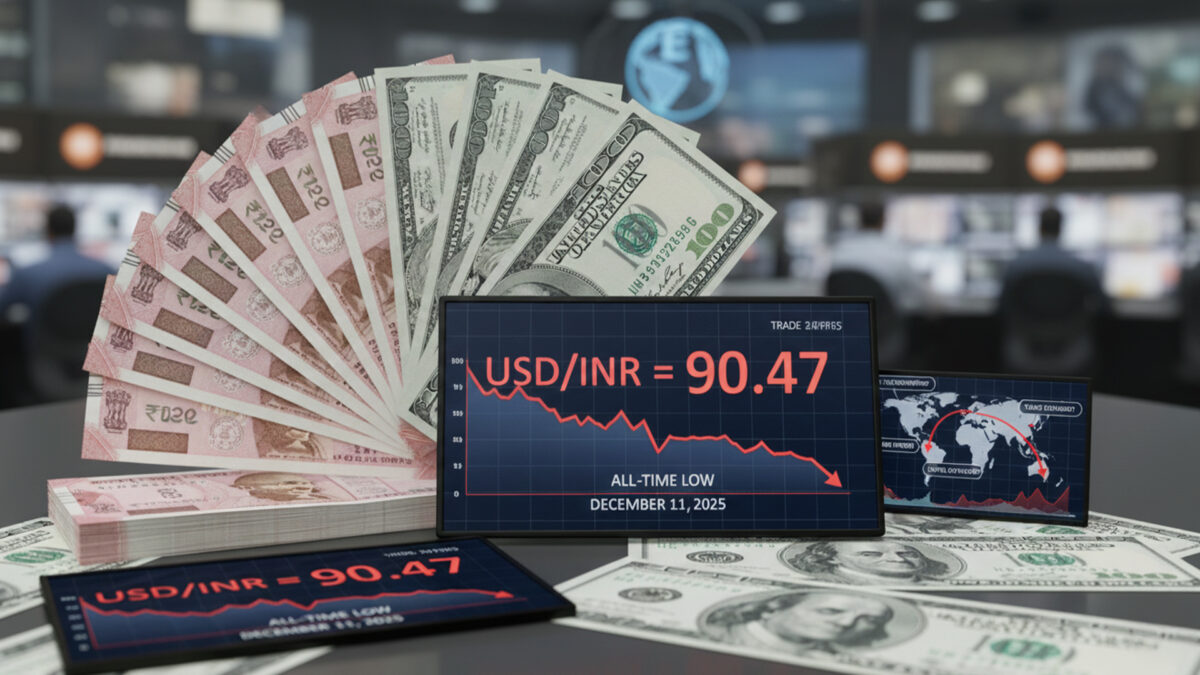
Indian Rupee hits historic low of ₹90.46 against US Dollar

The Indian rupee weakened further on Thursday, December 11, 2025, touching a historic low of ₹90.46 against the US dollar. This marks the steepest level the rupee has reached in its history, continuing the depreciation trend seen over the past few months.

Several factors contributed to the sharp fall. Ongoing global uncertainties and slow progress in trade negotiations with the United States have rattled investor confidence. At the same time, domestic demand for US dollars from companies making international payments increased pressure on the rupee. Additionally, foreign investors have been pulling funds from Indian markets, adding to the volatility.

This year, the rupee has fallen by over 5 per cent, making it one of the worst-performing Asian currencies in 2025. Analysts say the currency’s decline has been influenced by rising global crude oil prices, high import bills, and widening trade deficits, which have further strained India’s foreign exchange reserves.

In response to the slide, the Reserve Bank of India (RBI) reportedly intervened in the forex market, buying and selling dollars to stabilize the rupee. Such measures are intended to reduce sharp fluctuations and maintain market confidence.

Economists warn that the rupee may continue to face pressure in the near term unless there is progress in trade negotiations, improved foreign investment inflows, and easing of global market uncertainties.

Investors and businesses are closely monitoring the currency movements, as the fall in rupee value impacts import costs, inflation, and international trade. With the year-end approaching, all eyes are on the RBI’s interventions and global market trends to determine if the currency can recover.

Also Read: IndiGo offers Rs 10,000 vouchers to passengers

Categories
1 Minute-Read

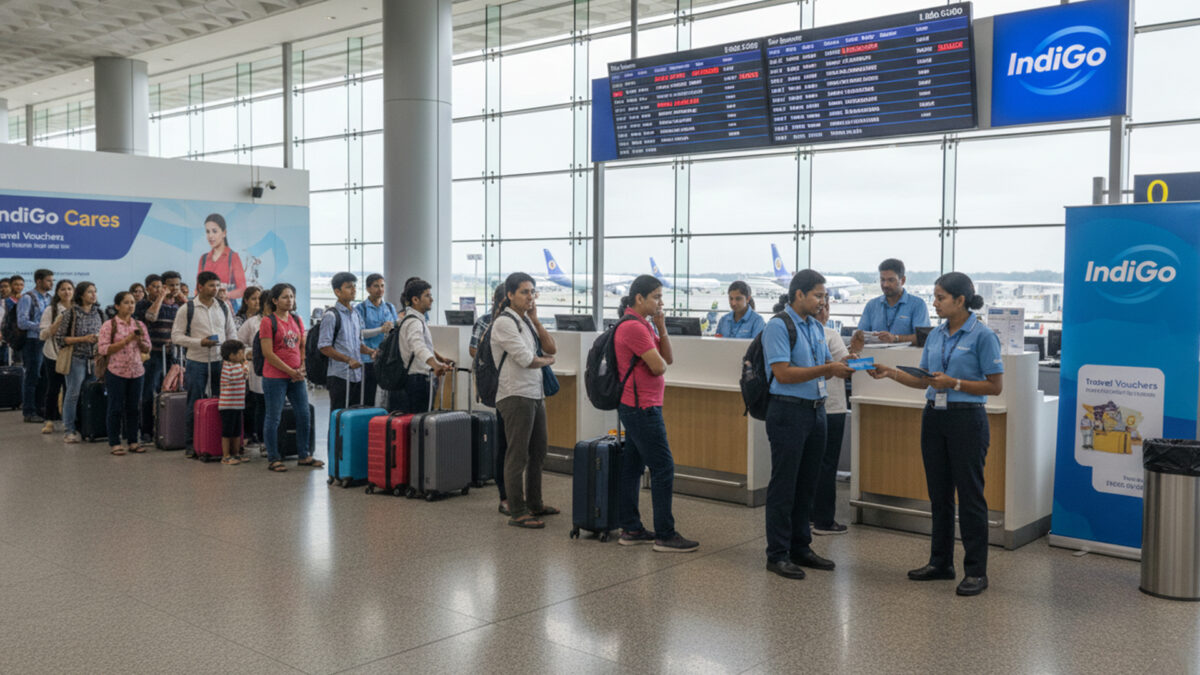
IndiGo offers Rs 10,000 vouchers to passengers

IndiGo will issue Rs 10,000 travel vouchers to passengers severely affected by flight delays and cancellations between December 3 and 5.

The vouchers, valid for 12 months, can be used on any IndiGo flight. This offer is in addition to government-mandated compensation, which ranges from Rs 5,000 to Rs 10,000 for cancellations made less than 24 hours before departure.

Refunds for most cancelled flights have already been processed. IndiGo has gradually restored normal flight operations and said the vouchers are intended to rebuild trust and compensate customers impacted by the disruptions.

Categories
Corporate

Sensex up 427 points, Nifty near 25,900

Indian stock markets ended higher on Thursday, breaking a three-day losing streak. The Sensex rose 426.86 points to settle at 84,818.13, while the Nifty advanced 140.55 points to close just below 25,900. Positive global cues and renewed buying across major sectors supported the rebound.

Key sector indices including auto, IT, pharma, telecom, banking and metals finished in the green, signalling broad-based participation. Improved sentiment in global markets further boosted domestic investor confidence.

Stocks that drove the recovery included Kotak Mahindra Bank, Eternal, Jio Financial, Tata Steel and Grasim Industries. Their strong performance played a major role in lifting benchmark indices.

A few frontline stocks lagged behind despite the broader market strength. Bharti Airtel, Asian Paints, SBI Life Insurance, Bajaj Finance and Axis Bank were among the notable losers.

Midcap and smallcap segments also outperformed, reflecting continued investor appetite beyond large-cap counters. This wider market strength added momentum to the day’s upmove.

However, the rupee weakened further, closing near its record low against the U.S. dollar due to consistent foreign outflows. Currency pressure remains a concern for near-term market stability.

Analysts note that global market trends, foreign fund activity and currency movements will continue to guide sentiment in the sessions ahead.

Also Read: Sensex advances 100 points, Nifty edges above 25,800

Categories
Leaders

Nestlé India eyes faster organic growth

Nestlé India’s newly appointed MD, Manish Tiwary, has laid out a strategy to accelerate growth through organic expansion rather than acquisitions. The company plans to focus on increasing household penetration and promoting healthier, high-quality variants within its existing product categories.

The company will increase advertising spending and introduce more items from its global portfolio to the Indian market, aiming to reach the Rs 20,000 crore revenue milestone faster. Tiwary noted that the current brand portfolio has “immense depth and potential,” so adding new brands is not an immediate priority.

Profit margins are expected to stay in the 22–24 percent range despite inflation, with a focus on digitisation across supply chain, sales, and consumer engagement to improve efficiency. While rural India contributes around 17–18 percent of sales, the company plans growth in both urban and rural markets with tailored strategies.

Tiwary emphasised that organic growth, technology investment, consumer-first agility, and enhanced advertising are central to the plan. He expects volume-led growth, supported by strong distribution, quick-commerce partnerships, and evolving consumer preferences for premium and healthier products.

Also Read: Instagram introduces “Your Algorithm” for personalized reels

Categories
Corporate

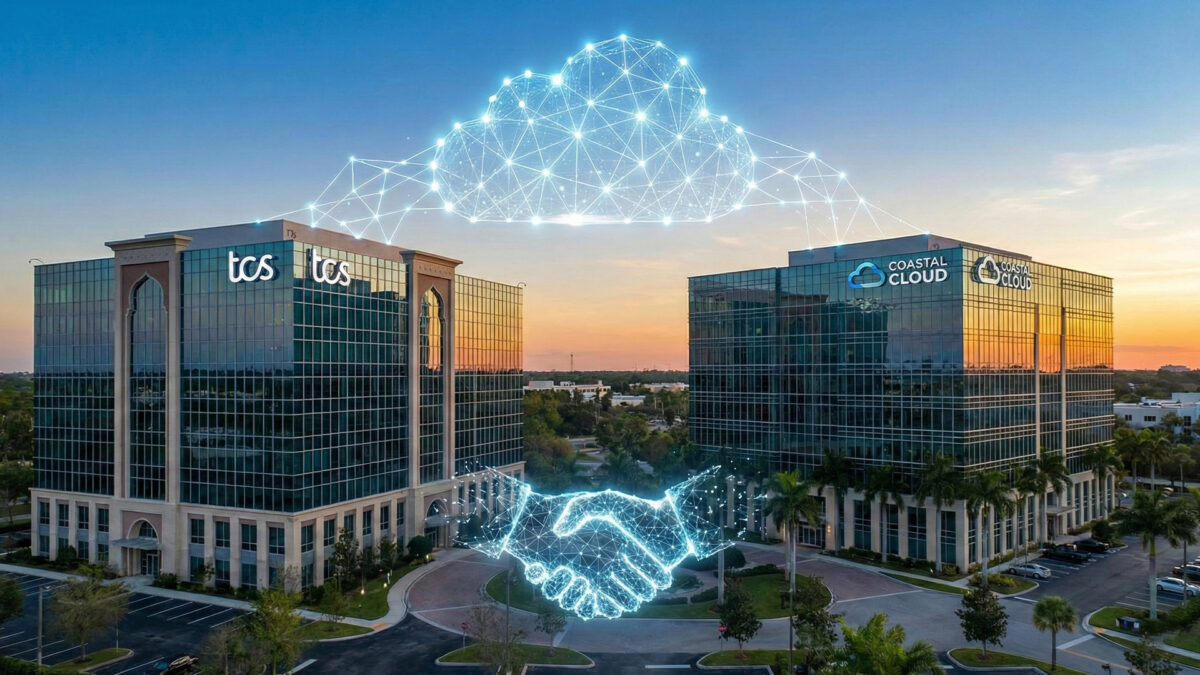
TCS to buy US firm Coastal Cloud for $700 million

Tata Consultancy Services (TCS), India’s largest IT services company, will acquire Coastal Cloud, a US-based Salesforce consulting and AI advisory firm, for $700 million in an all-cash deal. The deal is expected to close by January 31, 2026, after receiving the necessary regulatory approvals.

Coastal Cloud, founded in 2012, specializes in Salesforce consulting, multi-cloud integration, and AI-driven digital transformation. The firm employs around 400 Salesforce experts and recorded revenues of $132 million in 2024, growing to $141 million in the year ending September 2025. Coastal Cloud helps businesses across industries implement Salesforce solutions, improve customer experiences, and leverage AI for smarter decision-making.

This acquisition is part of TCS’s plan to expand its Salesforce and cloud services globally. The addition of Coastal Cloud will strengthen TCS’s position among the top five global Salesforce consulting firms and enable the company to serve both mid-market and enterprise clients more effectively.

TCS Chief Operating Officer Aarthi Subramanian said the deal supports the company’s “AI-led transformation strategy” and enhances its Salesforce expertise. Coastal Cloud CEO Eric Berridge said joining TCS will allow the combined team to deliver better solutions at a larger scale.

The deal follows TCS’s recent acquisition of ListEngage, a US-based AI advisory firm, in October 2025. Together, these moves highlight TCS’s focus on cloud, AI, and digital transformation services, reinforcing its position in the global consulting market.

The acquisition also brings TCS new industry experience and expands its client base in the US, a key market for Salesforce consulting. Analysts expect the move to accelerate TCS’s growth in digital solutions and strengthen its competitive position in the fast-evolving IT services sector.

Also Read: Adani Enterprises’ ₹25,000 cr rights issue exceeds expectations