Categories
Beyond

Rupee falls 9 paise to 95.17 against dollar

The Indian rupee weakened in early trade on Thursday, falling 9 paise to ₹95.17 against the US dollar as a firm greenback and continued foreign investor selling put pressure on the currency.

The rupee opened at ₹95.13 against the dollar in the interbank foreign exchange market before slipping further to ₹95.17. It had closed at ₹95.08 on Wednesday, marking a nine-paise decline in early trading on Thursday.

The movement came after the rupee had staged a strong recovery in the previous session. On Wednesday, the currency gained 26 paise and ended at ₹95.11 against the dollar in another market reading, supported by softer crude oil prices and improved sentiment in global markets.

The rupee’s latest weakness shows how quickly sentiment in the foreign exchange market can change. While lower oil prices are helping India’s import bill, the currency continues to face pressure from dollar demand, foreign portfolio outflows and uncertainty in global markets.

Crude oil prices remain an important factor for the Indian currency. India imports a large portion of its crude requirements, which means a rise in oil prices increases demand for dollars and can put additional pressure on the rupee.

Brent crude was trading around $79.29 a barrel in early trade, down 0.20%. The recent decline in oil prices has offered some relief to oil-importing economies such as India and has helped the rupee recover from its recent lows.

However, the benefit from cheaper crude has been partly offset by a stronger US dollar. The dollar index, which measures the greenback against six major currencies, was up 0.05% at 99.72.

A stronger dollar tends to weigh on emerging-market currencies because investors often move towards dollar-denominated assets when global uncertainty rises. This can increase demand for the US currency and make it harder for the rupee to strengthen.

Foreign investor activity is another pressure point. Foreign institutional investors sold Indian equities worth ₹943.42 crore on a net basis on Wednesday, according to exchange data. Such capital outflows can add to dollar demand as overseas investors convert their rupee proceeds into foreign currency.

The currency movement also came despite a positive start for Indian equities. The Sensex rose more than 200 points in early trade, while the Nifty 50 also opened higher. The mixed performance of stocks and the rupee reflects the competing factors currently influencing domestic financial markets.

Global geopolitical developments remain another major variable. Investors are closely watching developments in the Middle East, particularly the situation around the Strait of Hormuz. Any improvement in diplomatic efforts could keep crude oil prices under control and support the rupee. However, a fresh escalation could push oil higher and increase demand for safe-haven assets such as the US dollar.

The Reserve Bank of India also remains an important player in the currency market. The central bank has been closely monitoring movements in the rupee, inflation and capital flows. Its policy decisions and foreign exchange management can influence market expectations and help limit excessive volatility.

For the Indian economy, the rupee’s performance matters beyond the currency market. A weaker rupee can raise the cost of imported crude, electronics, machinery and other goods. It can also make overseas education and foreign travel more expensive for Indian consumers.

Exporters, however, can benefit from a weaker domestic currency because foreign earnings translate into a larger rupee value. Companies with substantial dollar revenues may therefore see some advantage when the rupee declines.

The currency has shown some signs of stabilisation after coming under pressure earlier this year. The rupee had strengthened sharply in the previous session and briefly moved below the ₹95 level, helped by lower crude prices and improved foreign exchange conditions.

Still, analysts remain cautious about a sustained recovery. The currency has lost significant ground against the dollar this year, and global factors continue to dominate near-term trading.

For now, traders are likely to keep a close watch on crude oil, the dollar index, foreign fund flows and geopolitical developments. Any sharp change in these factors could quickly influence the rupee’s direction.

The immediate focus remains on whether the currency can hold around the ₹95-per-dollar level. A sustained move below that mark could improve sentiment, while renewed dollar demand and geopolitical stress could push the rupee towards weaker levels.

The latest fall therefore appears less like a major reversal and more like a reminder of the fragile balance facing the Indian currency. With global markets still navigating uncertainty, the rupee is likely to remain sensitive to every major shift in oil prices, capital flows and dollar sentiment.

Categories
Beyond

Rupee drops 14 paise, closes at 96.44

The Indian rupee extended its losing streak on Tuesday, slipping to a nearly two-month low as rising global crude oil prices and persistent demand for the US dollar overshadowed support from the Reserve Bank of India (RBI). The domestic currency ended the day at 96.44 against the US dollar, reflecting growing concerns over the impact of higher energy costs on India’s economy.

The day’s trading remained volatile. The rupee opened on a weak note and continued to decline through the session before recovering slightly after state-run banks reportedly sold dollars in the market, a move widely viewed as RBI intervention.

Despite these efforts, the currency remained under pressure, highlighting how global developments are increasingly influencing India’s foreign exchange market.

The biggest trigger behind the rupee’s decline was the sharp rise in international crude oil prices. Brent crude climbed after renewed geopolitical tensions raised fears of tighter global oil supplies. As one of the world’s largest crude oil importers, India is particularly vulnerable to such price increases.

When crude becomes more expensive, Indian refiners and importers require larger amounts of US dollars to pay for oil purchases. This higher demand for dollars naturally weakens the rupee.

Adding to the pressure was the continued strength of the US dollar in global markets. Investors have increasingly shifted towards dollar-denominated assets amid expectations that the US Federal Reserve may maintain relatively high interest rates. This has strengthened the dollar against several global currencies, including the rupee.

Currency dealers said importer demand for dollars remained strong throughout the trading session. At the same time, exporter selling was limited, reducing the availability of dollars in the domestic forex market.

Although the RBI is believed to have intervened by selling dollars from its reserves, analysts said the central bank’s role is primarily to prevent sharp fluctuations rather than stop the rupee from adjusting to changing global conditions.

Experts noted that India’s macroeconomic fundamentals remain relatively strong despite the recent depreciation. The country’s substantial foreign exchange reserves, healthy banking system and steady economic growth provide an important cushion against external shocks.

Still, a weaker rupee brings several challenges. Higher import costs can increase inflation, particularly if elevated crude oil prices persist. This may affect transportation costs, manufacturing expenses and household budgets through higher fuel prices.

On the positive side, Indian exporters could benefit from a weaker currency. Companies earning revenue in dollars receive more rupees when converting their foreign income, improving profitability in sectors such as software services, pharmaceuticals, engineering goods and textiles.

Financial markets will now closely monitor upcoming global economic data, movements in crude oil prices and signals from major central banks. Any improvement in geopolitical conditions could reduce pressure on oil prices and provide some support to the rupee.

Analysts expect the currency to remain within a volatile range over the coming weeks. Continued RBI intervention may help prevent abrupt swings, but the overall direction will largely depend on international factors such as energy markets, capital flows and the performance of the US dollar.

For businesses importing goods, the weaker rupee means higher costs. For exporters, it offers a competitive advantage. For consumers, however, prolonged currency weakness could gradually feed into higher prices for imported products and overseas expenses.

As global uncertainties continue to shape financial markets, the rupee’s performance will remain closely tied to crude oil prices and investor sentiment. While the RBI is expected to remain vigilant, the path ahead for the Indian currency will depend largely on how international economic and geopolitical events unfold in the coming weeks.

Also Read: Gold at ₹142,890 while silver climbs to ₹221,330

Categories
Beyond

Rupee falls to record low of 92.35 against dollar

Rupee fell to a record low against the US dollar, touching 92.35 in recent trading sessions as global economic factors and rising crude oil prices put pressure on the currency.

In the interbank foreign exchange market, the rupee weakened sharply during the session and hit the new all-time low of 92.35 against the dollar. The fall reflects growing pressure on emerging market currencies amid global uncertainty.

One of the key reasons behind the rupee’s decline is the rise in international crude oil prices. India imports a large share of its crude oil requirements, and higher oil prices increase the country’s import bill. This leads to higher demand for dollars to pay for imports, which in turn weakens the rupee.

The strength of the US dollar in global markets has also contributed to the fall. Investors often move their funds to the dollar during periods of uncertainty, as it is considered a safer asset. As demand for the US currency rises, other currencies including the rupee tend to weaken.

Foreign fund outflows from Indian equity markets have further added to the pressure on the rupee. When foreign investors sell Indian assets and withdraw money from the market, demand for dollars increases, pushing the rupee lower.

Geopolitical tensions in West Asia have also influenced currency movements. Rising tensions in the region have led to volatility in global financial markets and a surge in crude oil prices, both of which affect the Indian currency.

However, the rupee showed a slight recovery in early trade on the following day. It opened stronger at around 92.11 against the US dollar, supported by some improvement in market sentiment.

Currency experts say the rupee may continue to remain volatile in the near term.

Also Read: Gold slips to ₹1.61 lakh, Silver falls to ₹2.79 lakh

Categories
Beyond

Dollar rises as Iran conflict pushes oil prices

The US dollar strengthened sharply against major currencies, while the euro and Japanese yen weakened, as ongoing Middle East tensions involving Iran, the US, and Israel sent shockwaves through global markets. Investors flocked to safe-haven assets like the dollar and Swiss franc, fearing a prolonged conflict could disrupt trade and supply chains.

Crude oil prices rose significantly, with Brent crude climbing over $90 per barrel, due to concerns that Iranian airstrikes and retaliatory actions could affect shipments through the Strait of Hormuz, a key route for global oil exports. Higher energy prices are expected to add inflationary pressure on Europe, Japan, and other energy-importing countries.

The euro dropped to multi-week lows against the dollar, while the yen weakened amid Japan’s heavy reliance on imported energy. The Swiss franc gained as investors sought safety in stable currencies. Rising oil costs also pressured European stock markets, which saw declines as traders assessed the economic impact of higher energy bills and geopolitical risk.

Analysts said the market reaction reflects the combined impact of geopolitical uncertainty and energy price volatility. If the Middle East conflict escalates, energy prices could remain elevated, sustaining global inflation and boosting demand for safe-haven currencies. Economies dependent on imported fuels are particularly exposed to higher costs, while energy-exporting countries like the US may benefit from rising crude prices.

Experts also noted that central banks could face added challenges.

Also Read: Amazon India cuts seller referral fees to boost growth

Categories
Beyond

Rupee rises 11 paise to ₹91.57 against dollar

Indian rupee showed a positive sign as it rose by 11 paise to ₹91.57 per US dollar in early trade on Wednesday. This came as the US dollar weakened slightly and optimism grew after India and the EU agreed on a new trade deal. The rupee opened around ₹91.60 and recovered a little to ₹91.57. Stock markets also reacted positively in early trade.

However, the rupee’s overall trend remains weak and unstable. In recent days, it has hit record lows near ₹91–₹92 per dollar because of global uncertainties and foreign investors pulling out money from India.

Trade tensions with the United States are adding pressure. Threats of tariffs have made investors cautious, leading them to prefer the US dollar over emerging market currencies like the rupee.

Foreign investment flows also play a big role. Continuous selling by foreign investors increases demand for dollars, which weakens the rupee. Analysts warn that unless more foreign money comes in or global conditions improve, the rupee may continue to struggle.

High demand for dollars for imports like oil and capital goods is another factor keeping the rupee under pressure. A slight weakening of the US dollar gives only short-term relief.

Investors are now watching key factors, such as global interest rates, foreign investments, and trade talks with the US, to see where the rupee will go next. The Reserve Bank of India is expected to step in if the currency becomes too volatile.

Also Read: Gold falls to ₹1,61,940, Silver rises to ₹3,70,100

Categories
Beyond

Rupee slides to ₹92, raising costs for imports

Rupee fell sharply to a record low of ₹92 per US dollar on January 23, 2026, before recovering slightly to ₹91.88. Experts attribute the slide to foreign investors pulling out funds and continued strong dollar demand from importers.

This depreciation affects both households and businesses. Imported goods, particularly crude oil, electronics, and machinery, are becoming more expensive. With India importing nearly 85% of its crude oil, fuel prices and inflation are expected to rise. Families face higher costs for overseas travel and education, while Non-Resident Indians (NRIs) benefit slightly as their remittances now convert into more rupees.

Exporters stand to gain from the weaker rupee, receiving more rupees for every dollar earned. However, companies that rely heavily on imported materials may see their benefits limited. Sectors such as textiles, which are less import-dependent, are likely to benefit the most.

Looking ahead, a Business Standard poll suggests the rupee could trade near ₹92.50 per dollar by the end of March 2026 if current trends persist and foreign outflows continue. Analysts point to delays in a US‑India trade deal and ongoing global uncertainties as key factors keeping the currency under pressure.

The Reserve Bank of India (RBI) has intervened at times to curb volatility, but broader global and domestic forces continue to influence the rupee. Policymakers face the challenge of balancing currency stability with inflation control and economic growth, as households, businesses, and exporters navigate the effects of a weaker rupee.

Also Read: ChatGPT cites Elon Musk’s Grokipedia in responses

Categories
Beyond

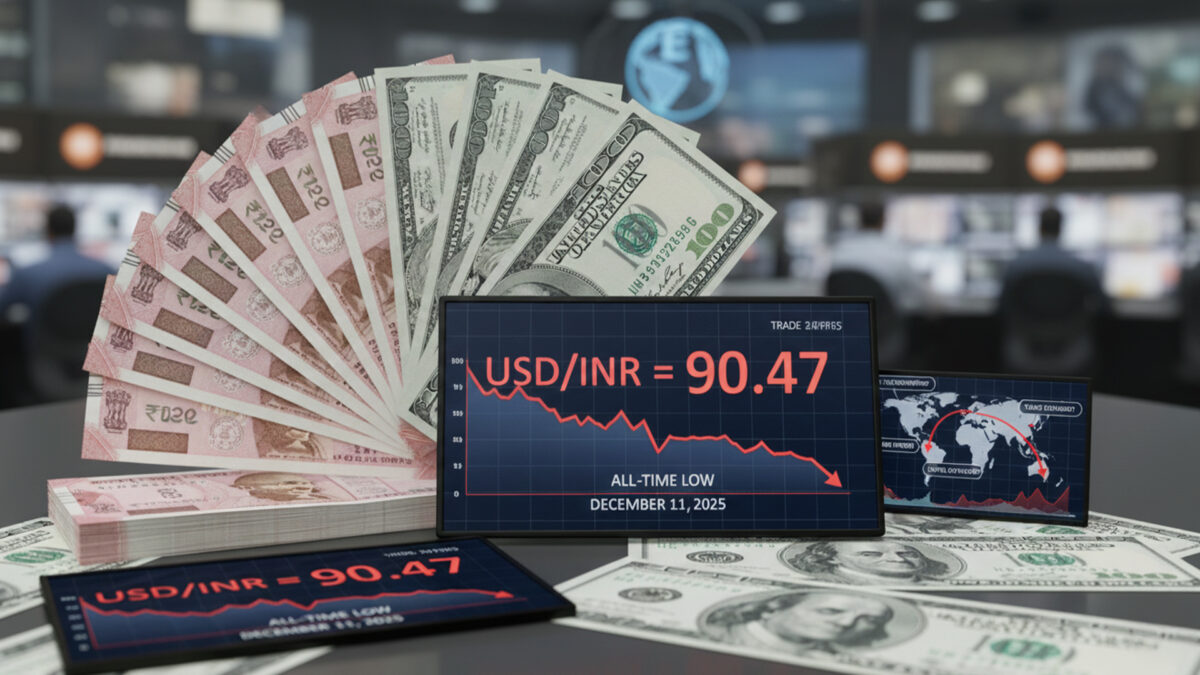
Indian Rupee hits historic low of ₹90.46 against US Dollar

The Indian rupee weakened further on Thursday, December 11, 2025, touching a historic low of ₹90.46 against the US dollar. This marks the steepest level the rupee has reached in its history, continuing the depreciation trend seen over the past few months.

Several factors contributed to the sharp fall. Ongoing global uncertainties and slow progress in trade negotiations with the United States have rattled investor confidence. At the same time, domestic demand for US dollars from companies making international payments increased pressure on the rupee. Additionally, foreign investors have been pulling funds from Indian markets, adding to the volatility.

This year, the rupee has fallen by over 5 per cent, making it one of the worst-performing Asian currencies in 2025. Analysts say the currency’s decline has been influenced by rising global crude oil prices, high import bills, and widening trade deficits, which have further strained India’s foreign exchange reserves.

In response to the slide, the Reserve Bank of India (RBI) reportedly intervened in the forex market, buying and selling dollars to stabilize the rupee. Such measures are intended to reduce sharp fluctuations and maintain market confidence.

Economists warn that the rupee may continue to face pressure in the near term unless there is progress in trade negotiations, improved foreign investment inflows, and easing of global market uncertainties.

Investors and businesses are closely monitoring the currency movements, as the fall in rupee value impacts import costs, inflation, and international trade. With the year-end approaching, all eyes are on the RBI’s interventions and global market trends to determine if the currency can recover.

Also Read: IndiGo offers Rs 10,000 vouchers to passengers