Categories
Corporate

Sensex jumps 3,000 points, Nifty nears 24,000

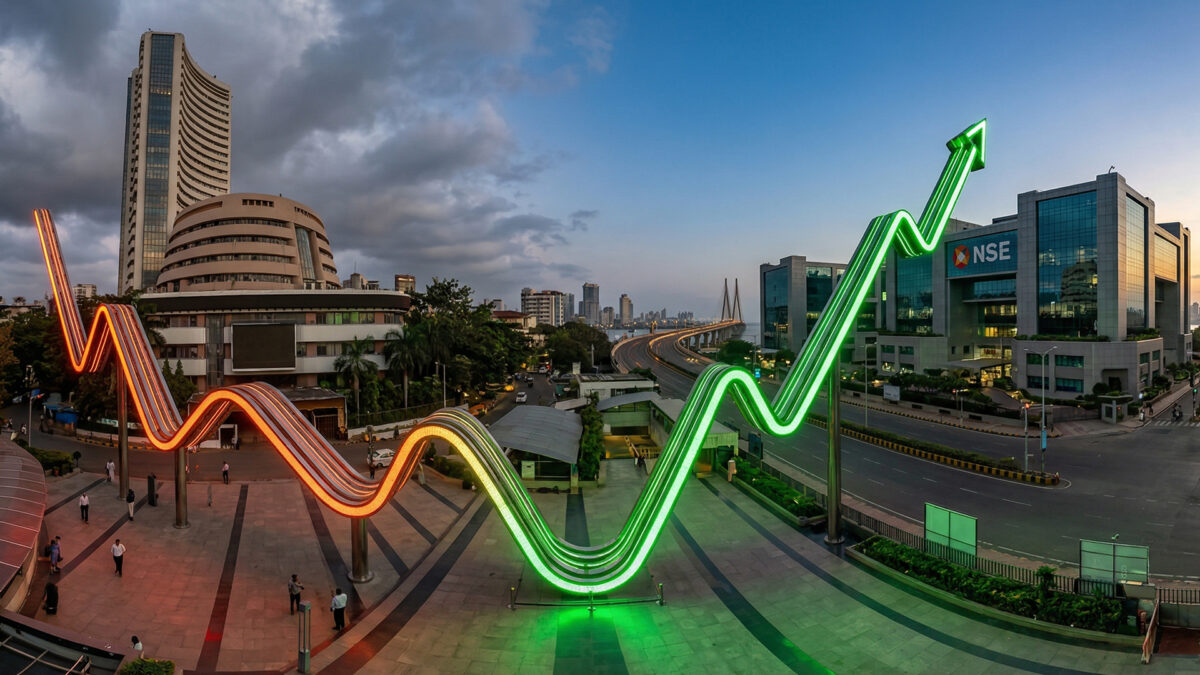
Indian stock markets rallied sharply on April 8, 2026, with benchmark indices posting strong gains amid positive global and domestic cues. The BSE Sensex surged nearly 3,000 points, while the NSE Nifty moved closer to the 24,000 level, reflecting a strong risk-on sentiment among investors.

The rally was driven largely by improving global conditions. A temporary ceasefire between the United States and Iran helped ease geopolitical concerns, lifting investor confidence across global markets. At the same time, crude oil prices declined significantly, dropping below $100 per barrel, which is a major positive for India as a net oil importer. Lower oil prices are expected to ease inflationary pressures and support economic growth.

Back home, the Reserve Bank of India’s decision to keep the repo rate unchanged at 5.25% and maintain a neutral stance further boosted sentiment. The central bank’s steady policy outlook reassured investors about macroeconomic stability and liquidity conditions.

Among individual stocks, Larsen & Toubro emerged as a top gainer, supported by optimism around its Middle East exposure and order pipeline. InterGlobe Aviation (IndiGo) also rallied sharply, benefiting from the drop in crude oil prices, which improves airline profitability.

On the flip side, some stocks witnessed mild selling pressure. Defensive names, particularly in the pharmaceutical space such as Dr Reddy’s Laboratories, underperformed. Select Adani group stocks, including Adani Enterprises and Adani Ports, also saw limited weakness amid profit booking.
Also Read: Tata Sons reviews Chandrasekaran’s leadership

Categories
Corporate

Sensex surges 500 points, Nifty crosses 23,100

After a turbulent start driven by geopolitical tensions and firm crude oil prices, Indian equity markets staged a strong recovery. The BSE Sensex closed up 509.7 points at 74,616, while the Nifty 50 ended 155.4 points higher at 23,123.65, marking the fourth consecutive session of gains. Both indices had plunged early in the day, with the Sensex touching an intraday low of 73,282 and Nifty dipping below 22,750, before recovering in late trade.

Markets opened lower as concerns over US–Iran tensions and elevated crude oil prices above $110 per barrel triggered risk-off sentiment. Profit-booking and selective selling in heavyweights weighed on the early session. However, a strengthening rupee, technical support at key levels, and optimism ahead of upcoming quarterly earnings fueled a turnaround.

Sectoral trends were mixed. The IT, metals, and realty sectors led the rally, posting gains of 1–3%, while PSU banks and consumer durables lagged. Broad buying in large-cap technology and metal stocks helped the benchmarks recover from early losses, with midcap stocks showing moderate gains and smallcaps ending mostly flat.

Among gainers, HCL Technologies led IT strength, rising about 4% from day’s lows. Tata Consultancy Services and Infosys jumped over 3%, while Bajaj Finserv, Bharti Airtel, and metals like Tata Steel and NTPC rose 2–3%, benefiting from strong sectoral buying.

On the losers side, Jubilant Foodworks fell more than 10% despite positive revenue growth due to profit-booking. Sun Pharma, Voltas, and several consumer durables counters saw weakness, while PSU banks underperformed, keeping overall market breadth cautious.

Market participants noted that while the session began with heightened volatility due to crude and geopolitical pressures, selective accumulation in large-cap stocks, optimism around corporate earnings, and technical support near key levels enabled a strong intraday recovery. Investors are keeping a close watch on macroeconomic cues, upcoming RBI policy announcements, and quarterly earnings to gauge near-term market direction.

Categories
Leaders

Tata Sons reviews Chandrasekaran’s leadership

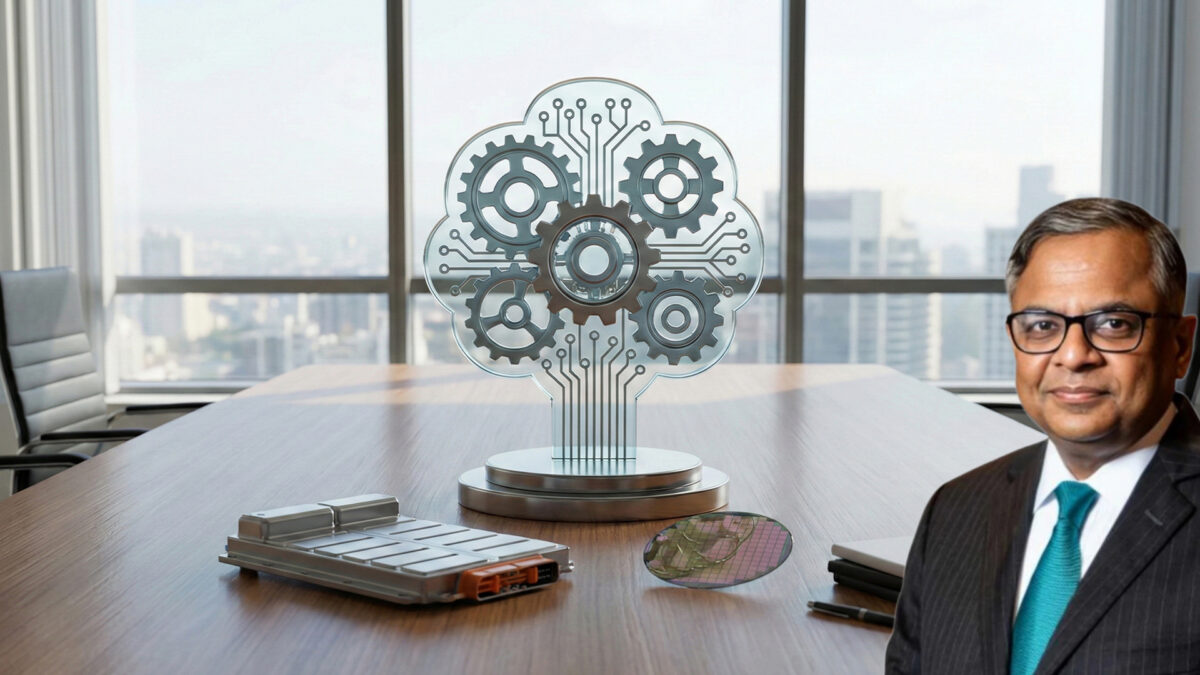
The future of Natarajan Chandrasekaran as chairman of Tata Sons is under review ahead of a crucial board meeting scheduled for June. The decision on his reappointment has been postponed earlier this year amid concerns over strategy, governance, and the performance of several group companies.

The issue first surfaced during a February board meeting, when the proposal to extend Chandrasekaran’s five-year term was deferred. Key members of the Tata Trusts, including Noel Tata, raised questions about the group’s decision-making, capital allocation, and the effectiveness of Chandrasekaran’s leadership in delivering results. Under Tata Sons’ rules, any extension requires the support of the majority of the Trusts’ nominees on the board — currently Noel Tata and Venu Srinivasan. Without their approval, the reappointment cannot proceed.

One major factor prompting the review is the perceived need for a more updated business strategy. Some trustees consider Chandrasekaran’s 2025 plan outdated, particularly in light of widening losses in the group’s newer ventures. Companies such as Air India, Tata Digital, Tata Electronics, and Tejas Networks are reportedly expected to post combined losses of up to ₹29,000 crore this financial year.

In response, Chandrasekaran is expected to present a revised strategy focusing on profitability, clearer timelines for returns, and stronger execution plans for loss-making units. The Trusts are also seeking more transparency on how capital is deployed across high-risk ventures and the measures in place to ensure financial discipline.

This leadership review highlights the significant influence the Tata Trusts wield in the group’s governance. Recent tensions, including internal disputes and high-profile resignations, have added urgency to the evaluation.

Also Read: Oracle names Hilary Maxson as new CFO

Categories
Leaders

Oracle names Hilary Maxson as new CFO

Oracle has appointed Hilary Maxson as its new Chief Financial Officer, a move that comes just days after the company announced layoffs affecting thousands of employees. Maxson’s hiring is part of Oracle’s ongoing push into artificial intelligence (AI) and cloud infrastructure, areas the company sees as key to its future growth.

Maxson joins Oracle from Schneider Electric, where she served as Group CFO, bringing a wealth of experience in finance, global operations, and large-scale infrastructure projects. She has also held senior roles at AES Corporation earlier in her career, making her well-versed in managing complex financial and operational challenges. At Oracle, she will oversee the company’s worldwide finance operations and report directly to senior leadership.

She replaces Doug Kehring, who will transition into a different operational role within the company. Maxson’s appointment is effective immediately, signaling Oracle’s urgency in strengthening its finance leadership during a period of strategic transformation.

Her compensation package has drawn attention: Maxson will receive a base salary of $950,000, with potential performance bonuses up to $2.5 million. In addition, she has been granted stock options valued at around $26 million, aligning her interests with Oracle’s long-term growth.

The timing of her appointment, coming just after Oracle’s major workforce reductions, has sparked discussions in the industry. Analysts note that while the layoffs are aimed at controlling costs, the company is simultaneously investing in leadership to navigate ambitious AI and cloud expansion plans.

Oracle is currently prioritizing growth in AI and cloud services, planning significant investments in technology and infrastructure. By bringing in an experienced CFO, the company aims to maintain financial discipline, optimize resource allocation, and support high-value projects that could shape its competitive edge in the rapidly evolving tech landscape.

For Maxson, the new role represents both a challenge and an opportunity: steering Oracle’s finances during a time of workforce cuts and expansion simultaneously.

Also Read: ₹2.5 lakh crore credit scheme launched

Categories
Beyond

Saudi Arabia sets $19.50 oil premium

Saudi Arabia has raised its official selling price of crude oil for Asian buyers to a record premium of $19.50 per barrel, underscoring the growing impact of geopolitical tensions in the Middle East. The sharp increase comes as instability around the Strait of Hormuz fuels fears of supply disruptions in one of the world’s most vital oil transit routes.

The Strait of Hormuz is a crucial passage for global oil shipments, and any threat to its operations quickly affects energy markets. Ongoing tensions linked to Iran have heightened uncertainty over the safety of oil flows, prompting producers to add a significant risk premium to prices. As a result, crude markets have become highly volatile.

The increase in crude prices is expected to have wider economic consequences. Higher fuel costs typically lead to increased transportation and production expenses, which can drive up the prices of goods and services. This adds to inflationary pressures already affecting many economies.

Financial experts have warned about the broader risks. JPMorgan CEO Jamie Dimon noted that an extended conflict involving Iran could lead to sustained inflation and force central banks to keep interest rates higher for longer. This could slow economic growth and create further uncertainty in financial markets.

Also Read: Jamie Dimon flags Iran war risk to inflation

Categories
Leaders

Jamie Dimon flags Iran war risk to inflation

Jamie Dimon, the chief of JPMorgan Chase, has raised concerns that rising tensions involving Iran could have a direct impact on the global economy. In his latest annual letter to shareholders, he warned that a wider conflict could push inflation higher and keep interest rates elevated for longer.

Dimon explained that wars in key regions, especially in the Middle East, can disrupt the supply of oil and other important commodities. When supply is affected, prices tend to rise and that increase is often passed on to everyday goods and services. This can make life more expensive for people and businesses around the world.

He also pointed out that if inflation stays high, central banks such as the Federal Reserve may have no choice but to keep interest rates high. While higher rates are used to control inflation, they also make loans more expensive, which can slow spending and economic growth.

Another concern is the impact on global supply chains. Dimon noted that ongoing conflict could affect major shipping routes and trade flows, adding more pressure to an already uncertain economic environment. Markets, he suggested, may not be fully prepared for how long these effects could last.

Despite these risks, Dimon said the US economy is still holding up for now. However, he cautioned that much of this strength has been supported by government spending, and that support may not continue at the same level in the future.

He also warned that persistent inflation and high interest rates could affect financial markets, including stocks and bonds, making the outlook more unpredictable for investors.

Also Read: Army receives kamikaze drones in urgent deal

Categories
Beyond

Army receives kamikaze drones in urgent deal

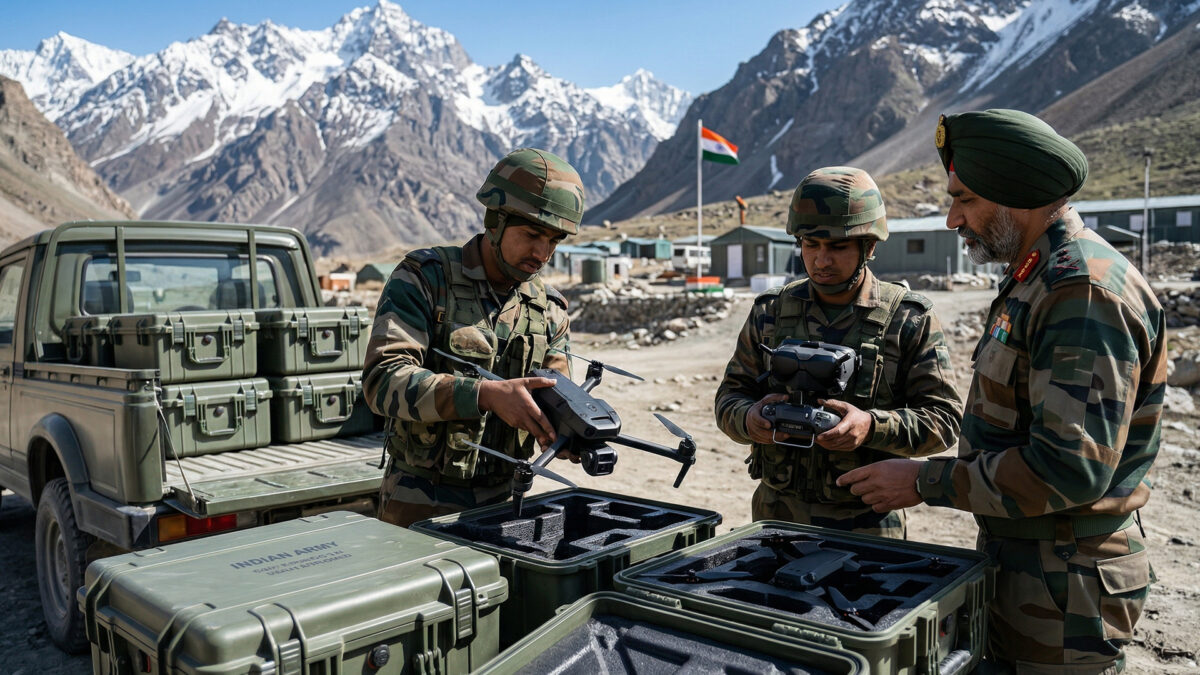
The Indian Army has added a new set of kamikaze drones to its arsenal, boosting its ability to carry out precise strikes during operations. These drones were bought under an emergency procurement deal worth ₹10 crore and have been supplied by a Gujarat-based company.

Officials confirmed that hundreds of these drones have already been delivered. Known as kamikaze or loitering drones, they are designed to hover over a target area and strike by crashing into the target, exploding on impact. This makes them highly effective in hitting enemy positions with accuracy.

These drones are expected to play an important role in modern warfare, especially in sensitive and high-risk zones. They can be used for targeted attacks without putting soldiers directly in harm’s way, making operations safer and more efficient.

One of the key advantages of these drones is their ability to operate in extreme conditions. They can function in very low temperatures, even down to -35 degrees Celsius, and can also work in areas where GPS signals are weak or unavailable. This makes them particularly useful in difficult terrains such as high-altitude border regions.

The purchase was made through the emergency route, which allows the armed forces to quickly acquire critical equipment when needed. The fast delivery shows how urgently the Army wanted to strengthen its capabilities.

Another important highlight is that these drones are made in India. This supports the government’s push for self-reliance in defence production and encourages local innovation in advanced military technology.

Defence experts say that drones are becoming a key part of modern combat, as they offer precision, speed, and reduced risk to human life. The addition of these kamikaze drones is expected to give the Indian Army an edge in future operations.

Also Read: India delays refinery shutdowns to boost supply

Categories
Leaders

Air India CEO Campbell Wilson steps down

Air India CEO Campbell Wilson has stepped down from his role, marking a significant leadership change at the Tata Group-owned airline as it continues its turnaround journey.

Wilson, who took over in 2022 following Air India’s return to the Tata Group, resigned before completing his term. According to reports, he will remain in the position for a short transition period until a successor is appointed.

His departure comes at a time when Air India is facing multiple challenges, including financial losses, operational disruptions, and supply constraints. The airline has also been dealing with delays in aircraft deliveries and rising costs, which have slowed its recovery plans.

During his tenure, Wilson led several key initiatives aimed at reviving the airline. These included restructuring operations, improving service quality, and placing large aircraft orders to modernise the fleet. Air India also worked on integrating its various businesses and strengthening its global network.

Despite these efforts, the turnaround has been complex and gradual, with external factors such as geopolitical tensions and airspace restrictions adding pressure on operations.

The Tata Group is now expected to begin the search for a new CEO to lead the next phase of Air India’s transformation. The focus will likely remain on improving efficiency, stabilising finances, and enhancing the customer experience.

Wilson’s exit comes at a crucial time for the airline, as it continues to rebuild its position in a highly competitive aviation market. The upcoming leadership transition is expected to play a key role in shaping Air India’s future direction.

Also Read: JSA boosts team with senior hires


Categories
Technology

Google Pixel 10a gets Japan-only blue edition

Google has introduced a special edition of its Pixel 10a smartphone, featuring a new “Isai Blue” color that will be sold exclusively in Japan. The launch is part of the company’s celebration of a decade of Pixel devices and reflects a growing focus on localized products.

The new variant stands out with its deep blue finish, offering a distinct alternative to the standard Pixel 10a color options available globally. While the hardware remains unchanged, the exclusive design is aimed at giving users a more unique and personalized device.

A key highlight of this edition is Google’s collaboration with Heralbony, a creative organization that works with artists with disabilities. Through this partnership, the phone includes specially designed wallpapers and visual elements that emphasize individuality and creativity. The name “Isai,” which suggests uniqueness, ties into this theme.

The customization extends into the user interface as well. Using Google’s Material You design system, the phone adapts its colors and appearance based on selected wallpapers, many of which are created as part of this collaboration. This allows users to experience a more expressive and personalized software design.

In addition to the device itself, Google is offering exclusive accessories with the Japan-only model. Buyers will receive themed stickers and a matching case, along with packaging that features custom artwork inspired by the collaboration.

The Pixel 10a “Isai Blue” edition will be available in limited quantities and comes with 256GB of storage. Pre-orders have already opened in Japan, with official sales set to begin in May.

Although there are no changes to the phone’s specifications, the special edition highlights Google’s strategy of creating region-specific experiences. It also suggests that similar exclusive variants could be introduced in other markets in the future.

Also Read: Gold nears ₹1.50 lakh, Silver slides over ₹1,500

Categories
Beyond

Gold nears ₹1.50 lakh, Silver slides over ₹1,500

Gold and silver prices saw a mild decline on Tuesday, as global uncertainties and rising crude oil prices kept investors on edge. On the Multi Commodity Exchange (MCX), gold futures slipped to around ₹1,49,600 per 10 grams, while silver prices dropped more sharply, falling by over ₹1,500 to hover near ₹2.31 lakh per kilogram.

The dip in bullion prices comes at a time when geopolitical tensions in the Middle East are intensifying, particularly involving Iran. Concerns around potential disruptions in oil supply have pushed crude prices above $110 per barrel. This has raised fears of inflation, especially for countries like India that depend heavily on oil imports.

Even though gold is typically considered a safe-haven asset during uncertain times, its upward movement has been limited. One key reason is the current global interest rate environment. Higher interest rates tend to reduce the appeal of gold, as it does not offer any fixed returns compared to interest-bearing assets.

In the domestic market, gold prices remained close to the ₹1.50 lakh mark per 10 grams across major cities, while silver traded in a broad range near ₹2.31–₹2.34 lakh per kilogram. Prices showed slight variations depending on local demand and taxes.

In India, the Reserve Bank of India’s upcoming policy stance is expected to influence bullion demand and price direction.

Also Read: Sensex falls 700 points, Nifty slips below 22,800