Categories
Technology

YouTube lets users turn off shorts

YouTube has introduced a new feature that allows users to effectively turn off Shorts through its time management settings. The update is designed for users who want to reduce distractions and spend less time watching short-form videos.

With the new option, users can set their daily Shorts viewing limit to zero minutes. Once activated, the Shorts feed stops appearing in the app and users see a message saying they have reached their limit.

Earlier, YouTube only allowed users to limit Shorts usage between 15 minutes and two hours. The addition of a zero-minute setting gives users much stronger control over how they use the platform.

To enable it, users need to open the YouTube app, go to Settings, tap Time Management, choose Shorts Feed Limit, and set it to 0 minutes.

The feature is rolling out for Android and iOS users. Some users may receive the update later as the rollout continues globally.

Also Read: 1,570 organisations hit by SystemBC malware

Categories
Corporate

1,570 organisations hit by SystemBC malware
A large cybercrime operation linked to the ransomware gang The Gentlemen has infected at least 1,570 organisations worldwide, according to new cybersecurity research. The discovery has raised fresh concerns over the growing scale of ransomware attacks targeting businesses.

Security researchers found that the infections were connected to a command-and-control server used by SystemBC, a malware tool commonly used to gain remote access to hacked systems. Once inside, attackers can move through networks, steal data and install ransomware or other malicious software.

Most of the identified victims are believed to be companies rather than individuals. The highest number of infections were reported in the United States, followed by the United Kingdom and Germany, showing that major business hubs were among the key targets.

Researchers linked the activity to an affiliate of The Gentlemen, a ransomware-as-a-service group that surfaced in 2025. Such groups provide ransomware tools to partners, who then carry out attacks in return for a share of ransom payments.

The gang has quickly gained attention for targeting multiple operating systems, including Windows, Linux, NAS storage devices and VMware ESXi servers. This allows attackers to hit a wide range of corporate environments, from office networks to data centres.

Experts say the group also uses double-extortion tactics. In these attacks, criminals first steal sensitive data before encrypting files, then demand payment to unlock systems and prevent the leaked release of stolen information.

Researchers warned that the actual number of victims could be much higher, as many organisations may not yet know they have been compromised or may choose not to report attacks publicly.

Also Read: Zen Tech jumps 11% on licence win

Categories
Beyond

Renewables meet global electricity demand in 2025

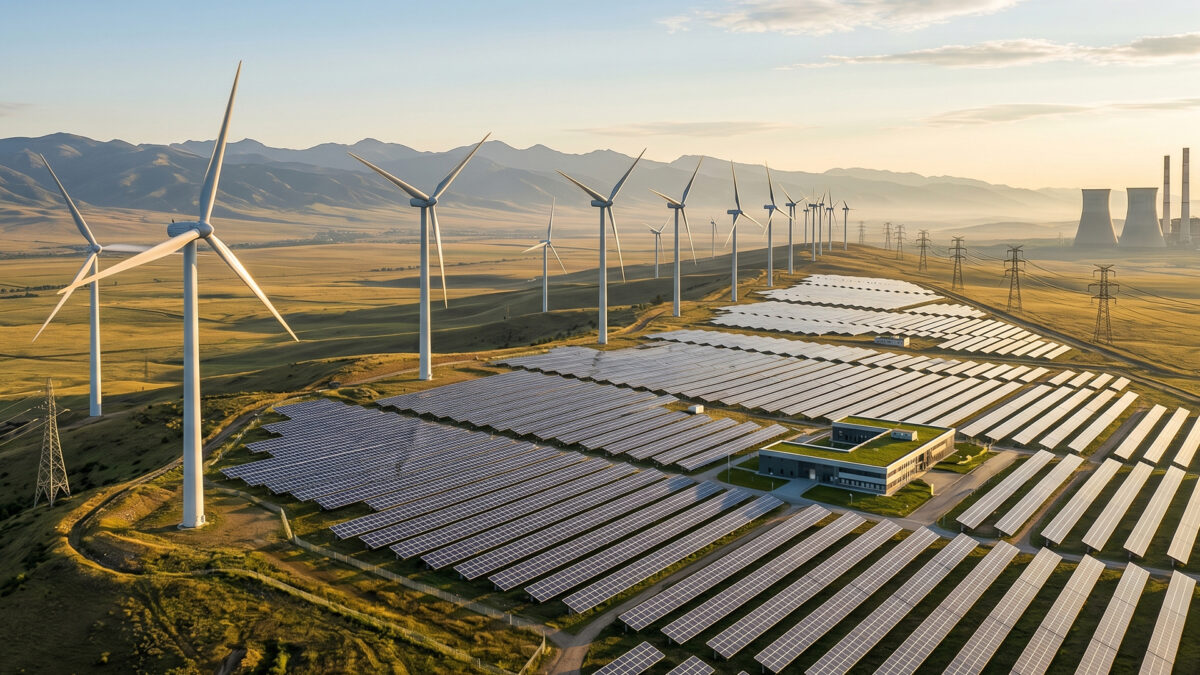
Global renewable energy has, for the first time, grown fast enough to meet all the increase in worldwide electricity demand in 2025, marking a major milestone in the shift toward cleaner power.

Strong expansion in solar and wind energy ensured that new electricity needs were fully covered by clean sources, limiting the need for additional fossil fuel generation. Solar power led the growth, contributing the largest share of new electricity output globally.

China remained the biggest driver of renewable expansion, adding large amounts of solar capacity. India also played a key role, with rapid growth in both solar and wind power. This helped reduce reliance on fossil fuels in its electricity mix.

Clean energy generation rose more than the increase in global electricity demand during the year. As a result, fossil fuel-based power generation stayed largely flat, a rare trend in recent decades. Coal’s share in global electricity also declined as renewables expanded.

In India, renewable generation grew faster than demand, leading to lower fossil fuel use in power production. Experts say this reflects a clear transition toward cleaner energy systems in major developing economies.

Also Read: Hyundai, TVS join hands for electric 3-wheelers

Categories
Corporate

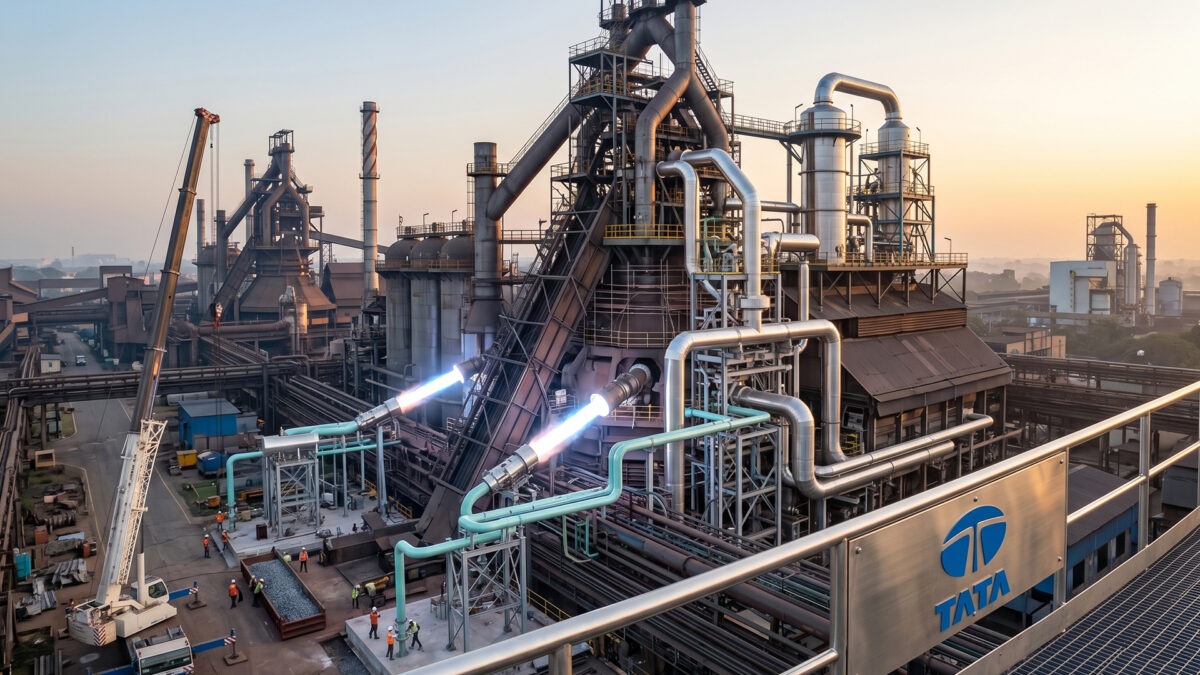
Tata Steel to deploy low-carbon technology at Jamshedpur plant

Tata Steel has announced a major step in its transition toward cleaner and low-carbon steel production by partnering with SMS Group to introduce advanced green steelmaking technology at its Jamshedpur plant.

The company has signed definitive agreements with Paul Wurth S.A., a subsidiary of SMS Group, to implement the world’s first EASyMelt technology. This system will be installed at Tata Steel’s “E” Blast Furnace in Jamshedpur as a pilot industrial demonstration project.

The new technology is designed to significantly reduce carbon emissions in the steelmaking process. According to the plan, it could cut CO₂ emissions by more than 50% compared to the current operations of the furnace. The system works by combining electrical assistance and syngas-based smelting, allowing existing blast furnace infrastructure to operate more efficiently and with lower environmental impact.

Tata Steel said the project represents an important milestone in its long-term sustainability journey. The company aims to achieve net-zero carbon emissions by 2045 and sees this collaboration as a key step toward that goal. Officials said the focus is on upgrading existing facilities rather than building entirely new systems, making the transition more practical and scalable.

The partnership follows earlier collaboration between Tata Steel and SMS Group, which began in 2023 with a memorandum of understanding to explore decarbonisation in ironmaking. After detailed studies, both companies agreed to move ahead with a phased implementation of the technology.

Tata Steel’s leadership said the shift toward low-carbon steelmaking will depend on innovation, strong partnerships, and modernisation of traditional production systems. SMS Group also highlighted that the project is a significant milestone in bringing next-generation steel technology into real industrial use.

The initiative is part of a broader global push in the steel industry to reduce emissions, as steel production is one of the largest industrial sources of carbon dioxide. By upgrading existing blast furnaces instead of replacing them entirely, Tata Steel aims to balance environmental goals with operational efficiency.

The Jamshedpur project is expected to serve as a model for future decarbonisation efforts across other plants, potentially influencing how steel is produced in India and globally in the coming years.

Also Read: RBI partially withdraws curbs on rupee trades

Categories
Corporate

Nestle India profit rises 27%, revenue grows 23%

Nestle India has reported a strong set of financial results for the quarter ending March 2026, with a sharp rise in profit and revenue driven by steady demand for its packaged food products.

The company’s consolidated net profit increased by 27% year-on-year to ₹1,111 crore, compared to ₹873 crore in the same period last year. Revenue from operations also grew significantly by 23%, reaching around ₹6,748 crore, up from ₹5,504 crore a year earlier. The results exceeded market expectations, reflecting strong performance across key product categories.

Nestle India said the growth was supported by higher consumer demand and increased sales volumes across its major brands, including chocolates, noodles, and beverages. The company also benefited from stronger market penetration and continued focus on premium products.

Along with the earnings, the company announced a final dividend of ₹5 per share for the financial year 2025–26. The record date for determining eligible shareholders has been set, and the payout reflects Nestle’s consistent approach to rewarding investors.

Management highlighted that the performance was driven by double-digit volume growth and increased investment in advertising and brand building. The company also reported healthy margins, supported by efficient cost management and disciplined execution.

In addition, Nestle India achieved its highest-ever domestic sales during the quarter, showing strong consumer demand in the Indian market. Growth was seen across all major product groups, indicating broad-based strength rather than reliance on a single segment.

Following the results, investor sentiment turned positive, with the stock reacting strongly in the market. Analysts noted that the earnings performance signals improving consumption trends and sustained strength in the fast-moving consumer goods (FMCG) sector.

Also Read: UltraTech crosses 200 MTPA capacity mark

Categories
Beyond

Gold falls to ₹1,55,280, Silver slips to ₹2,64,900

Gold and silver prices edged lower in the domestic market on April 22, 2026, as investors opted for profit booking after recent fluctuations in global bullion trends. The decline comes despite continued underlying uncertainty in international markets that has kept precious metals volatile.

Gold prices dropped by ₹10, with 22-carat gold quoted at ₹1,55,280 per 10 grams. Silver also saw a mild correction, falling ₹100 to trade at ₹2,64,900 per kilogram. The movement reflects cautious sentiment among traders who are locking in gains after recent swings in global commodity prices.

Market participants attributed the dip primarily to short-term profit-taking. In recent sessions, both gold and silver had experienced sharp price movements due to geopolitical developments and shifting expectations around global interest rates. After such volatility, mild corrections are common as traders rebalance positions.

Analysts noted that while gold continues to enjoy structural support from safe-haven demand, especially amid geopolitical tensions and macroeconomic uncertainty, near-term price action is being driven by technical adjustments and profit booking. Silver, which has both industrial and investment demand, showed a similar but slightly more volatile reaction.

On the global front, bullion prices remain influenced by movements in the US dollar and bond yields. A stronger dollar or rising yields typically weigh on precious metals, while geopolitical risks and inflation concerns provide support.

In the Indian market, domestic prices are also shaped by import costs, currency fluctuations, and local demand trends. Despite the current dip, overall sentiment in the bullion market remains broadly stable, with investors closely tracking global cues for further direction.

Also Read: Sensex drops nearly 300 points, Nifty slips below 24,500

Categories
Corporate

Sensex jumps 750 points, Nifty settles above 24,550

Indian stock markets closed sharply higher on Tuesday, extending gains for a third straight session, as improving global sentiment and lower crude oil prices boosted investor confidence.

The BSE Sensex jumped 753 points, or 0.96%, to close at 79,273.33, while the Nifty 50 rose 211 points, or 0.87%, to settle at 24,576.60. Both benchmark indices ended at their highest levels in several weeks.

The rally was mainly driven by optimism around possible peace talks between the United States and Iran, which helped ease concerns over geopolitical tensions in the Middle East. Falling crude oil prices also supported sentiment, especially for India, which depends heavily on oil imports.

Among the top gainers on the Sensex were ICICI Bank, Bajaj Finance, Nestle India, HUL and Axis Bank, which saw strong buying interest through the session. Nestle India gained after reporting better-than-expected quarterly earnings, while financial stocks benefited from renewed investor confidence.

On the losing side, HCL Tech, Infosys, TCS, Tech Mahindra and Wipro ended lower, as IT stocks remained under pressure due to concerns over global demand and cautious outlooks from the technology sector.

Broader markets also ended in positive territory. Midcap and smallcap indices advanced, indicating buying support across sectors beyond heavyweight stocks. More shares rose than fell on the BSE, reflecting healthy market breadth.

Also Read: Vedanta sets May 1 for demerger

Categories
Technology

iPhone 18 Pro may get variable aperture camera

Apple’s upcoming iPhone 18 Pro series is reportedly moving closer to production, with early leaks pointing to a major upgrade in its camera system. The biggest expected change is the introduction of a variable aperture lens, a feature commonly seen in professional DSLR cameras but never used in an iPhone before.

According to industry reports, Apple is working on integrating this system into the main 48MP rear camera of the iPhone 18 Pro models. A variable aperture allows the camera to adjust how much light enters the lens depending on the surrounding conditions. In low light, the aperture opens wider to capture more detail, while in bright environments it narrows to prevent overexposure.

This upgrade is expected to significantly improve photo quality, especially in challenging lighting conditions. It could also give users more control over depth of field, making background blur more natural in portrait shots.

Along with the camera changes, leaks suggest Apple is testing improvements in zoom performance and optical systems. These upgrades may help deliver clearer long-range photography, addressing one of the key areas where smartphone cameras still face limitations compared to dedicated cameras.

In addition to camera enhancements, Apple is also expected to refresh the colour lineup for the iPhone 18 Pro series. While exact shades are not confirmed, reports indicate that the company may introduce deeper and more premium-looking finishes compared to current models.

Also Read: India’s crude imports fall 17% amid Hormuz crisis

Categories
Corporate

India’s crude imports fall 17% amid Hormuz crisis

India’s crude oil imports fell sharply by nearly 17% in March compared to previous levels, as tensions in the Middle East and disruptions around the Strait of Hormuz continued to affect global energy flows. The decline reflects reduced shipments from key Gulf suppliers amid ongoing geopolitical uncertainty.

According to official and shipping data, the slowdown in crude inflows has been driven by instability in the region, where a large share of India’s energy imports originate. The Strait of Hormuz, one of the world’s most important oil shipping routes, has seen repeated interruptions due to the Iran conflict, forcing several tankers to reroute or wait for clearance.

The situation has also raised concerns over supplies of LPG and LNG, which are heavily dependent on the same route. Reports indicate that nearly 90% of India’s LPG imports and more than half of its LNG imports pass through the Strait of Hormuz, making them vulnerable to any blockade or conflict-related disruption.

The latest developments suggest that Iran has reportedly tightened control over the passage at different points during the ongoing conflict, leading to uncertainty for tankers carrying crude oil, cooking gas and industrial fuels bound for India. Several ships are said to be stuck in the region or operating under delayed schedules.

Despite these challenges, government sources have said that India’s fuel supply remains stable for now, with strategic reserves and diversified import sources helping cushion the impact. Refineries continue to operate at high capacity, and efforts are underway to secure alternative shipping routes and suppliers where possible.

However, analysts warn that prolonged disruption in the Strait of Hormuz could push global oil prices higher and increase India’s import bill, as the country depends on overseas supplies for most of its crude oil needs. Even small changes in supply flows from the Gulf can have a direct impact on domestic fuel prices and inflation.

Also Read: Tata Trusts to amend trustee rules

Categories
Corporate

Tata Trusts to amend trustee rules

Tata Trusts has decided to initiate formal proceedings to amend parts of the trust deed of the Bai Hirabai Jamsetji Tata Navsari Charitable Institution, focusing on rules that govern who can become a trustee. The move comes amid an ongoing dispute over eligibility criteria and recent challenges to board appointments.

The decision was taken after a review of the trust’s governance structure, where trustees agreed to approach the appropriate authority to modify certain restrictive clauses in the 1923 deed. These clauses have been under scrutiny for limiting trustee eligibility, including provisions that were earlier interpreted as excluding non-Zoroastrians.

The issue gained attention after objections were raised regarding the appointment of certain trustees, leading to a complaint before the Maharashtra Charity Commissioner. The complaint questioned whether the appointed members met the eligibility requirements laid out in the trust deed.

In response, Tata Trusts has maintained that its broader philosophy has always been inclusive and secular. It also noted that, based on past legal opinion, non-Zoroastrians have been associated with the trust since 2000. However, the existing wording of the deed has still led to legal and governance concerns.

The trust has clarified that the proposed changes are intended to correct inconsistencies in the old document and align governance rules with current values and practices. The amendment process will require approval from the relevant regulatory authority before any changes take effect.

Alongside this, Tata Trusts has expressed confidence in its leadership and administrative structure, including its CEO Siddharth Sharma, whose role has also been referenced in recent discussions around trust governance.

The development reflects a wider effort within the organisation to modernise legacy trust structures that were created nearly a century ago. It also highlights ongoing debates around how historical legal provisions should be interpreted in today’s governance framework.

Also Read: UAE seeks US financial lifeline