
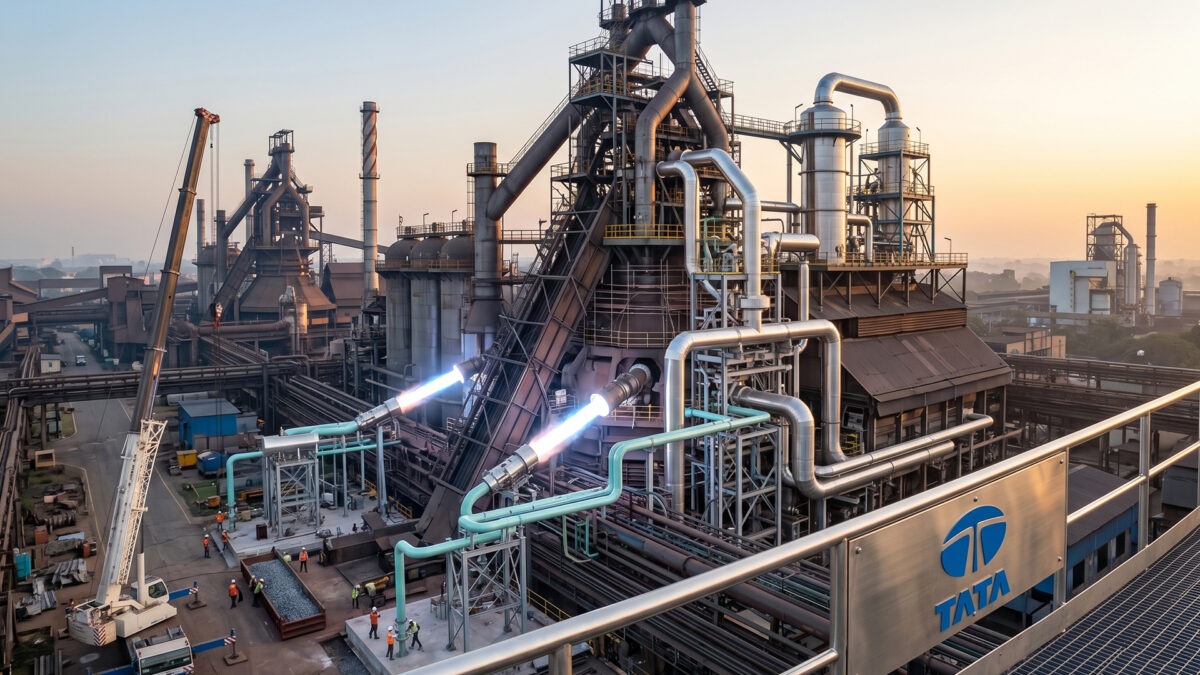
Tata Steel has announced a major step in its transition toward cleaner and low-carbon steel production by partnering with SMS Group to introduce advanced green steelmaking technology at its Jamshedpur plant.
The company has signed definitive agreements with Paul Wurth S.A., a subsidiary of SMS Group, to implement the world’s first EASyMelt technology. This system will be installed at Tata Steel’s “E” Blast Furnace in Jamshedpur as a pilot industrial demonstration project.
The new technology is designed to significantly reduce carbon emissions in the steelmaking process. According to the plan, it could cut CO₂ emissions by more than 50% compared to the current operations of the furnace. The system works by combining electrical assistance and syngas-based smelting, allowing existing blast furnace infrastructure to operate more efficiently and with lower environmental impact.
Tata Steel said the project represents an important milestone in its long-term sustainability journey. The company aims to achieve net-zero carbon emissions by 2045 and sees this collaboration as a key step toward that goal. Officials said the focus is on upgrading existing facilities rather than building entirely new systems, making the transition more practical and scalable.
The partnership follows earlier collaboration between Tata Steel and SMS Group, which began in 2023 with a memorandum of understanding to explore decarbonisation in ironmaking. After detailed studies, both companies agreed to move ahead with a phased implementation of the technology.
Tata Steel’s leadership said the shift toward low-carbon steelmaking will depend on innovation, strong partnerships, and modernisation of traditional production systems. SMS Group also highlighted that the project is a significant milestone in bringing next-generation steel technology into real industrial use.
The initiative is part of a broader global push in the steel industry to reduce emissions, as steel production is one of the largest industrial sources of carbon dioxide. By upgrading existing blast furnaces instead of replacing them entirely, Tata Steel aims to balance environmental goals with operational efficiency.
The Jamshedpur project is expected to serve as a model for future decarbonisation efforts across other plants, potentially influencing how steel is produced in India and globally in the coming years.