Categories
Leaders

Apollo split strategic, not family issue, says MD

Apollo Hospitals Enterprise’s planned demerger of its pharmacy and digital health businesses from its hospital operations is a strategic move to enhance shareholder value, Managing Director Suneeta Reddy said, dismissing rumours of family disagreements. The decision is part of a broader plan to allow each business segment to focus on its own growth.

Reddy clarified that separating Apollo 24/7, the group’s online pharmacy and digital healthcare platform, from the hospital chain was based on business and economic reasons, not personal or family matters. She emphasized her strong collaboration with her sister Shobana Kamineni, who will lead the new entity. “Decisions are made based on what is right for the business and shareholders, not from a family lens,” Reddy said.

The demerger reflects the different growth profiles and financial characteristics of the hospital business and the pharmacy-digital arm. Each operates in distinct markets with separate return expectations and workforce structures. Standalone entities will allow both businesses to pursue tailored strategies and unlock greater value for investors.

Apollo HealthCo, the holding company for the pharmacy and digital health operations, is expected to list separately by March 2027. Management expects Apollo HealthCo to grow around 20 percent annually over the next three years, compared with 18 percent for the hospital business.

Reddy also highlighted the company’s focus on preventive healthcare, expansion in major cities and Tier‑II towns, selective bed additions, asset-light growth models, and targeted acquisitions. These steps aim to meet India’s growing healthcare demand while maintaining operational efficiency.

On leadership succession, Reddy said the next generation is being trained across different business areas to ensure continuity and long-term growth. She added that the restructuring positions Apollo Hospitals for a clear, focused future, with each segment having distinct responsibilities and strategies, driven by business goals rather than internal dynamics.

Also Read: Gold at ₹1,42,160, Silver up ₹100 per kg
Categories
Beyond

India’s retail inflation hits 1.33% in December

India’s retail inflation rose to 1.33% in December 2025, the highest in three months, up from 0.71% in November. The increase was mainly due to slower falls in food prices and higher costs for items like vegetables, meat, eggs, pulses, spices, and personal care products.

Despite the rise, inflation remains well below the RBI’s target range of 4% ±2%, staying under the lower comfort limit of 2% for the eleventh month in a row. Food inflation, while still negative, eased compared with November, helping lift overall prices.

Both urban and rural areas saw rising prices, with urban inflation increasing faster. Some sectors, such as housing, education, and health, showed mixed trends, with housing costs slightly easing.

Economists say that even with this increase, inflation is still low by historical standards, and core inflation (excluding food and fuel) remains modest, indicating limited demand pressure.

The low inflation gives the RBI room to keep monetary policy accommodative. In 2025, the central bank cut interest rates, and with inflation below the comfort level, there is scope to support economic growth further. Policymakers will keep an eye on new data, especially with the upcoming revised CPI series using 2024 as the base year.

Also Read: Germany eases air transit rules for Indians

Categories
Beyond

Trump plans 10% credit card interest cap

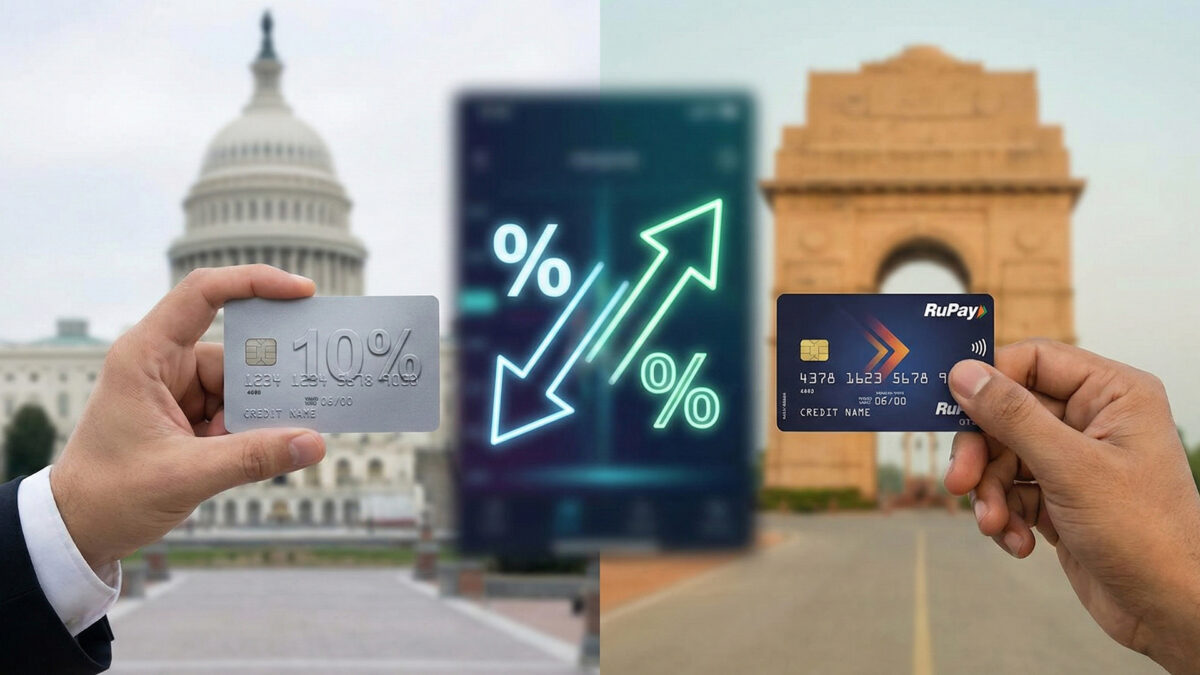
US President Donald Trump has suggested a plan to cap credit card interest rates at 10 per cent for one year, starting January 20, 2026. He says this is aimed at protecting consumers from high borrowing costs, as many credit cards charge 20–30 per cent or more in interest. Trump believes the cap would help Americans struggling to repay debt.

The proposal has sparked discussion in other countries, including India, where credit card interest rates are even higher. In India, cardholders can face rates of 36–48 per cent per year on unpaid balances. Some borrowers feel a lower interest cap, like Trump’s 10 per cent idea, could make repaying debt easier.

However, experts warn that strict limits on interest rates can also create problems. Banks and credit card companies might reduce lending to people with higher credit risks. They could also cut card benefits, like rewards or cashback, to make up for lost income. Some borrowers may turn to other options such as payday loans or buy-now-pay-later services, which can be costly.

The plan would need approval from the US Congress to become law. Similar attempts in the past have faced opposition from banks and financial groups. While the idea is intended to help consumers, economists say it could affect how easy it is to get credit.

In India, there is currently no official cap on credit card interest rates. A Supreme Court decision in 2024 allowed banks to charge more than 30 per cent per year, overturning an earlier limit. Experts say that while Trump’s plan may not directly affect India, it highlights a worldwide concern about the burden of high-interest debt on consumers.

Also Read: Rupee slips 5 Paise to 90.22 against US dollar

Categories
Beyond

Germany eases air transit rules for Indians

Germany has removed the requirement for Indian passport holders to obtain an airport transit visa when travelling through its major international airports. The move will allow Indian travellers to transit smoothly through German airports while flying to a third country, provided they remain within the international transit area and do not enter German territory.

The decision was announced during high-level discussions between India and Germany and is being seen as a step to strengthen people-to-people ties and improve mobility between the two countries. Until now, Indian nationals needed a separate airport transit visa, also known as a Schengen Type A visa, even if they were only changing flights at German airports such as Frankfurt or Munich. This often involved additional paperwork, costs, and processing time.

With the new rule, Indian travellers holding valid passports and onward tickets can transit through major German airports without applying for this visa. The change is expected to benefit passengers travelling to destinations in North America, Latin America, and other parts of Europe, for whom Germany is a key aviation hub.

However, the visa waiver applies strictly to airside transit. Indian travellers will still not be allowed to exit the airport or pass through immigration without a valid Schengen visa. Those planning to enter Germany for tourism, business, study, or work will continue to require the appropriate visa as per existing rules.

Indian authorities have welcomed the decision, calling it a positive development that will make international travel more convenient for Indian citizens. The move is also expected to boost the attractiveness of German airports as transit hubs for Indian passengers, potentially increasing air traffic and connectivity between India and Europe.

Aviation and travel industry experts say the change will save time and reduce uncertainty for travellers, especially those with short layovers. It may also encourage airlines to offer more India-Europe and India-US connections via Germany.

The new transit policy is effective immediately. Travellers are advised to check with airlines and airport authorities to ensure they meet all transit conditions, including valid travel documents and confirmed onward tickets, before planning their journey.

Also Read: Smartphone security rules under review in India

Categories
Corporate

Sensex volatile as Nifty hovers near 25,800

Markets traded volatile on Tuesday, January 13, 2026, as investors remained cautious amid mixed global cues and stock-specific action. The Sensex swung between gains and losses, while the Nifty 50 hovered near the 25,800 mark for most of the session.

After opening on a positive note, benchmark indices erased early gains due to selling pressure in IT and FMCG stocks. At the day’s low, the Sensex slipped over 200 points, while the Nifty briefly dipped below 25,750 before recovering partially.

Metal and energy stocks provided some support, helping limit deeper losses. Market participants remained selective ahead of key earnings announcements and continued to track global market trends.

Among the top gainers, Coal India, Hindalco Industries and Tata Steel rose on strong buying interest. Asian Paints and Trent also ended higher, supported by steady demand.

On the other hand, Eicher Motors, Titan Company and Bharat Electronics were among the major losers. Stocks such as Tata Motors Passenger Vehicles and Eternal also traded lower, dragged by profit-booking and weak sentiment in select sectors.

In the broader market, mid-cap and small-cap stocks showed mixed performance, with advances and declines evenly matched. Sectorally, metal and energy indices outperformed, while IT and FMCG indices underperformed.

Also Read: Sensex gains 302 points, Nifty crosses 25,750

Categories
1 Minute-Read

HCL Tech Q3 revenue, margin seen rising

HCL Technologies is set to report a strong Q3 for December, with analysts expecting about 12% year‑on‑year revenue growth, supported by seasonal demand, engineering services, and large deal ramp‑ups.

Profit after tax may rise around 5%, as margin recovery offsets wage hikes and restructuring costs. Sequential revenue and margin improvements are also anticipated.

Market focus will be on deal wins, management’s FY26 guidance, and trends in GenAI and discretionary IT spending. Strong performance could reinforce investor confidence in HCL’s growth and operational strategy.

Categories
Corporate

Sensex gains 302 points, Nifty crosses 25,750

Indian equity markets closed higher on Monday, as the BSE Sensex settled 302 points higher, while the NSE Nifty50 ended above the 25,750 mark, supported by late buying in metal and select consumer stocks.

Markets opened on a weak note and remained under pressure for most of the day. The Sensex had fallen over 700 points during intraday trade, and the Nifty slipped below 25,500, as investors stayed cautious amid mixed global cues and ongoing earnings announcements. However, sentiment improved sharply in the second half, helping benchmarks recover most of their losses by the close.

At the end of the session, the Sensex closed near 83,878, while the Nifty finished around 25,790. The rebound was driven largely by strength in metal stocks, which saw strong buying interest after recent corrections.

Among the top gainers, Coal India surged over 3 percent, emerging as the best-performing Nifty stock. Tata Steel and Asian Paints also gained nearly 3 percent each, supported by buying in commodities and expectations of stable demand. Other metal stocks such as JSW Steel and Hindalco Industries also ended higher, lifting the broader sector.

On the downside, IT and auto stocks faced selling pressure. Infosys slipped over 1 percent, reflecting continued caution around global technology spending. Tata Motors Passenger Vehicles, Bajaj Finance, Bajaj Auto, and Eicher Motors also ended lower, limiting the overall market upside.

Sectorally, metal and select consumer stocks outperformed, while IT, banking, and auto sectors showed mixed trends. Investors continued to assess quarterly earnings, including results from major IT companies, which remained a key focus during the session.

Global cues were mixed, with Asian markets trading unevenly and investors tracking developments related to international trade and macroeconomic data. The Indian rupee remained largely stable against the US dollar, offering little directional cue to equities.

Also Read: TCS Q3 steady as AI, IT spend rise

Categories
Corporate

TCS Q3 steady as AI, IT spend rise

Tata Consultancy Services (TCS), India’s largest IT services exporter, is expected to post a steady performance for the third quarter ended December 2025, with analysts forecasting modest growth in both revenue and profit. The slow growth reflects typical seasonal softness at year-end, cautious IT spending by clients, and global economic uncertainties.

According to estimates from brokerage firms, TCS’s dollar revenue is expected to increase only around 0.3% sequentially to $7.49 billion. In Indian rupee terms, revenue may rise about 1.4% to ₹66,715 crore, while net profit is seen growing roughly 1% to ₹13,035 crore. Operating margins could improve slightly due to favorable currency movements, even as fluctuations in the British pound, euro, and rupee against the dollar add some volatility to reported results.

While headline numbers are likely to be modest, investors are paying closer attention to TCS’s commentary on broader trends, particularly corporate IT spending and artificial intelligence (AI) adoption. With many companies prioritizing AI-led transformation projects, management insights on 2026 IT budgets and the strength of TCS’s order pipeline will be key indicators of future growth.

Peer companies such as HCL Technologies are also expected to show modest sequential revenue growth, supported by gains in their products and platforms segments. Analysts note that execution on AI solutions and gaining more share in existing clients’ IT budgets could become critical growth drivers for Indian IT firms, especially in a cautious spending environment.

Overall, TCS’s Q3 performance may appear steady rather than spectacular. However, the real focus for investors will be on the company’s strategic direction, AI initiatives, and the outlook for client spending, which together could set the tone for growth in the coming quarters.

Also Read: SBI revises ATM charges for savings, salary accounts

Categories
Corporate

SBI revises ATM charges for savings, salary accounts

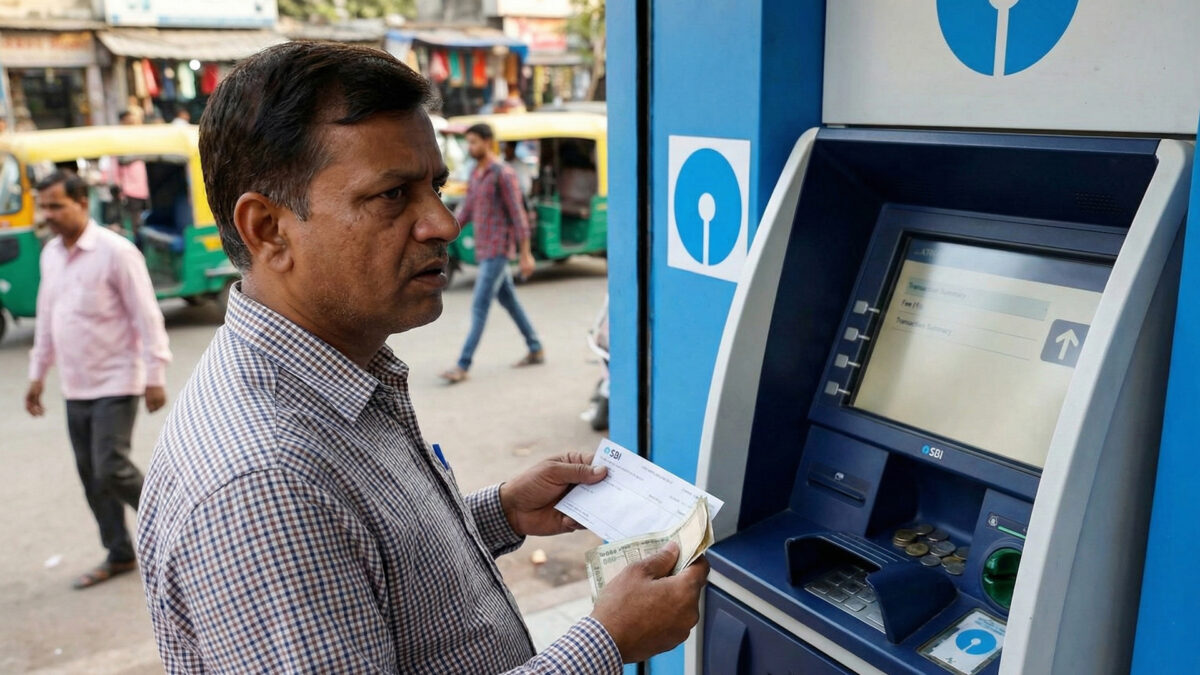
State Bank of India (SBI) has revised its ATM charges, impacting savings and salary account holders. The new fee structure, effective from December 1, 2025, primarily affects withdrawals and transactions at non‑SBI ATMs. The revision comes after an increase in interbank charges, the fees banks pay each other for ATM usage.

For regular savings account holders, the first five financial and non-financial transactions at non‑SBI ATMs remain free. Beyond this, cash withdrawals will attract ₹23 plus GST, up from ₹21, while non-financial transactions, such as balance inquiries or mini statements, will cost ₹11 plus GST, up from ₹10.

Salary account holders, who previously enjoyed unlimited free transactions, will now get 10 free transactions per month at all ATMs. Post-limit transactions will be charged the same rates as above.

Basic Savings Bank Deposit (BSBD) account holders will see no changes in ATM charges. Similarly, SBI debit cardholders using SBI ATMs and cardless cash withdrawals will continue to enjoy free and unlimited transactions.

SBI has advised customers to monitor their ATM usage carefully to avoid unexpected charges. The fee revision reflects rising costs in ATM operations and interbank transactions, aiming to balance service sustainability while encouraging responsible usage.

Also Read: FPIs sell ₹3,963 cr in Indian stocks

Categories
1 Minute-Read

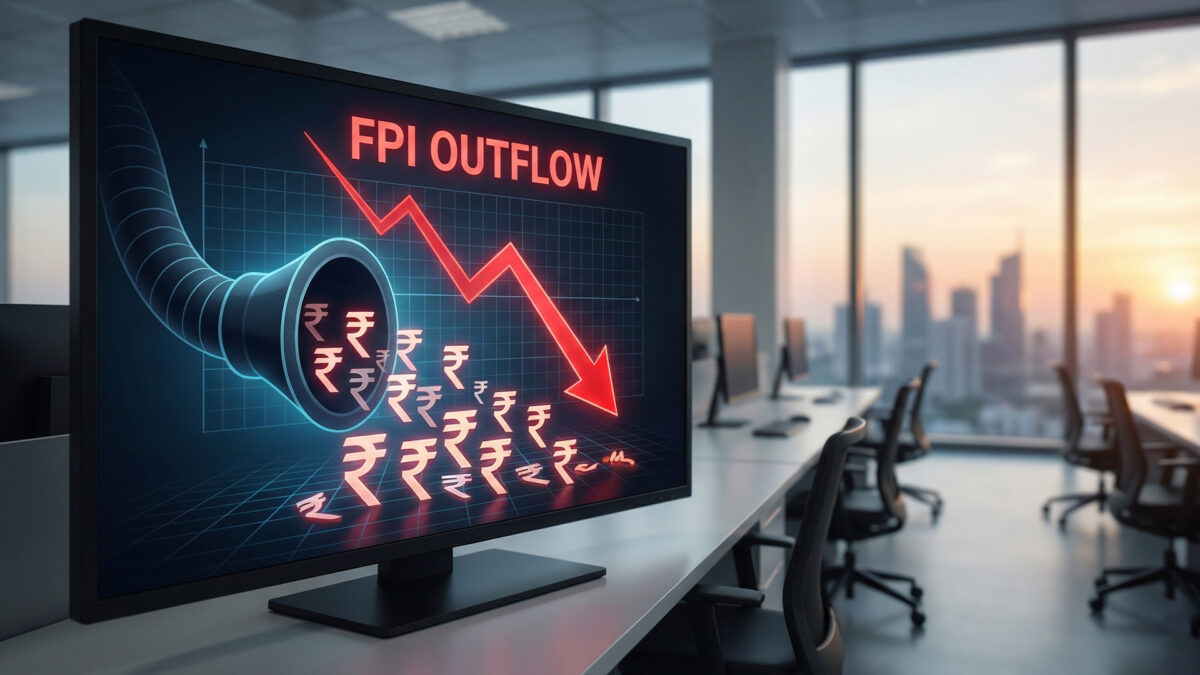
FPIs sell ₹3,963 cr in Indian stocks

Foreign Portfolio Investors (FPIs) remained net sellers in the Indian equity market, pulling out nearly ₹3,963 crore during the past week.

The continued outflow was driven by growing global trade uncertainties and geopolitical tensions, which have made overseas investors cautious about emerging markets, including India. Data from depositories showed that selling pressure intensified towards the end of the week, weighing on overall market sentiment.

Despite the foreign sell-off, domestic institutional investors provided some support, helping limit sharper declines. Market experts say FPI behaviour is likely to remain volatile in the near term, depending on global economic signals and trade-related developments.