
Categories
Corporate

Infosys takes Rs 1,289 crore labour code hit in Q3

Infosys Ltd reported a one-time financial hit of Rs 1,289 crore in the third quarter of FY26 due to provisions made under India’s new labour codes, impacting its quarterly profit despite steady revenue growth.

The country’s second-largest IT services company said the charge was linked to changes required after the government notified the new labour codes in November 2025. These codes combine several existing labour laws and require companies to reassess employee-related benefits such as gratuity and leave encashment. Infosys accounted for higher gratuity liabilities arising from past service costs and revised benefit obligations, resulting in the exceptional expense.

For the quarter ended December 31, 2025, Infosys reported a consolidated net profit of Rs 6,654 crore, down 2.2 per cent year-on-year. On a sequential basis, profit declined more sharply due to the one-off provision. However, revenue from operations rose 8.9 per cent year-on-year to Rs 45,479 crore, reflecting stable demand across key markets.

The company said its underlying business performance remained healthy. Infosys recorded strong large deal wins during the quarter, with total contract value of about $4.8 billion. Financial services, manufacturing, and energy and utilities were among the key sectors contributing to growth. Digital and artificial intelligence-led services continued to see traction as clients focused on efficiency and transformation.

Encouraged by better-than-expected execution and deal momentum, Infosys raised its revenue growth guidance for FY26. The company now expects constant currency revenue growth of 3.0–3.5 per cent for the full year, compared with its earlier forecast of 2.0–3.0 per cent.

Infosys said operating margins were impacted by the labour code provision but added that margins remain stable when the one-time cost is excluded. The company maintained its margin guidance for the year, supported by cost control measures and improved utilisation.

Management said it continues to invest in upskilling employees, especially in AI and digital technologies, to stay competitive in a changing business environment. The labour code impact is also being seen across the IT sector, as companies adjust their balance sheets to align with the new regulatory framework.

Infosys stated that the provision is a one-time adjustment and does not affect its long-term growth strategy or financial strength.

Also Read: Trump pushes Microsoft on data centre costs
Categories
Beyond

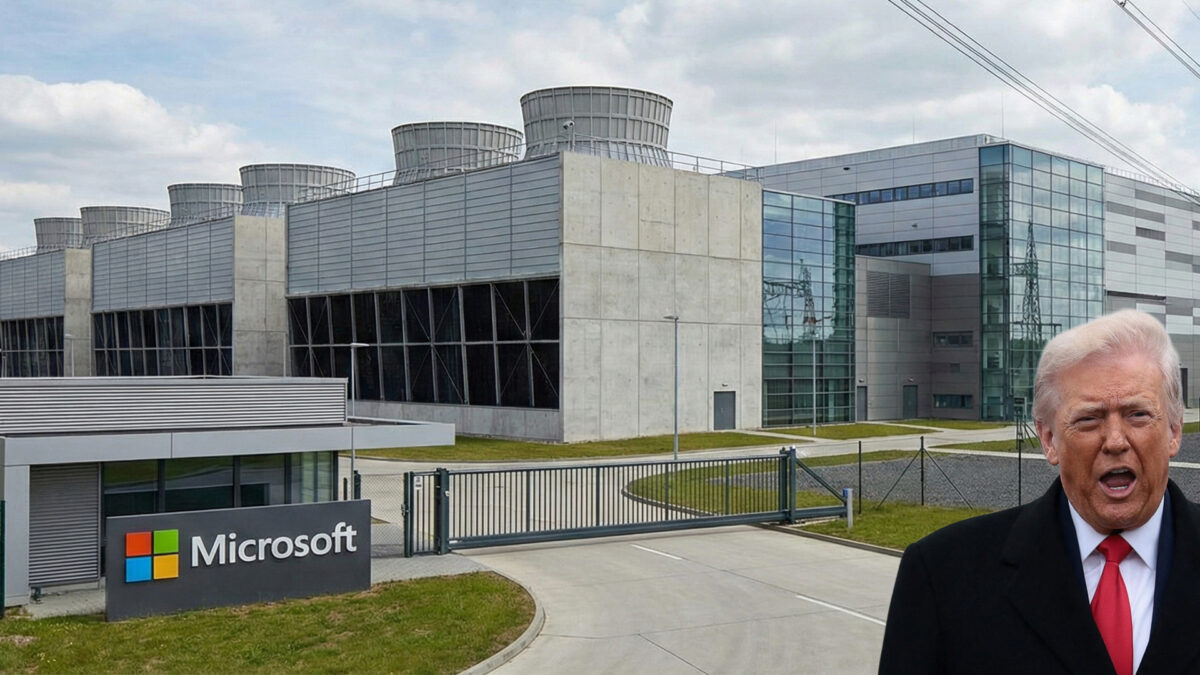
Trump pushes Microsoft on data centre costs

US President Donald Trump has directed Microsoft to ensure its rapidly expanding artificial intelligence (AI) data centres do not raise electricity costs for Americans. Speaking on January 13, 2026, Trump emphasized that large technology companies must bear their own energy expenses instead of passing them onto residential households. He called on Microsoft to take “major steps” to prevent utility price hikes linked to its operations.

In response, Microsoft announced its “Community‑First AI Infrastructure” initiative, designed to address energy, environmental, and community concerns related to its data facilities. The initiative includes several commitments: the company will pay full electricity costs, ensure water usage is minimized and replenished, hire locally for construction and operational jobs, pay full property taxes without seeking incentives, and invest in community AI education and training through schools, colleges, and libraries.

The announcement comes amid growing public and political scrutiny. Residents in several states have criticized data centre projects for driving up utility bills, consuming large amounts of water, and putting pressure on local infrastructure. Some projects, including a planned Microsoft facility in Wisconsin, were paused after local opposition and activist campaigns.

Microsoft also said it will coordinate with utility companies and state regulators to fund necessary grid upgrades through commercial rates, ensuring that residential customers are not affected. Officials stressed that the program is designed to provide economic, educational, and environmental benefits to host communities while supporting the company’s AI expansion.

Analysts say the move reflects broader concerns about balancing AI innovation with community and environmental protection. As data centres grow to meet the increasing demand for AI services, tech companies are under closer scrutiny to ensure they do not negatively impact local residents or ecosystems.

Trump’s intervention marks a rare public instance of a U.S. president directly influencing corporate operations in the tech sector. The announcement is seen as a signal to other tech firms that they may face similar accountability demands, particularly as AI technology expands rapidly and its infrastructure footprint grows.

Also Read: Tata Elxsi Q3 profit falls 45% amid labour code charges

Categories
Corporate

Sensex falls 245 pts, Nifty below 25,700

Markets ended lower on Wednesday, as selling pressure dominated trading amid cautious investor sentiment. The BSE Sensex fell 245 points to close at 86,150, while the Nifty 50 slipped 85 points to end at 25,666, extending the recent trend of volatility.

Sector-wise, IT and realty stocks were the biggest drag, with TCS and Asian Paints among the top losers, dropping nearly 2% each. Profit-booking and sector rotation contributed to the decline in these large-cap names. Other IT and real estate shares also underperformed, keeping the benchmarks under pressure throughout the session.

On the other hand, metal and PSU stocks outperformed, providing selective support to the indices. Tata Steel and Axis Bank were notable gainers, rising on domestic demand optimism and sector-specific interest. Energy and industrial shares also saw modest gains, partially offsetting losses in IT and realty.

Market analysts noted that foreign institutional selling added to the downward pressure, while firm crude oil prices and geopolitical concerns limited risk appetite. Investors appeared cautious ahead of upcoming corporate earnings and macroeconomic updates, keeping markets range-bound.

Trading activity showed a mixed picture, with defensive and industrial sectors attracting interest even as broader market sentiment remained subdued. Experts suggest that a sustained rebound may require clear triggers from earnings surprises or macroeconomic cues, particularly in IT, banking, and metals sectors.

Also Read: Sensex down 150 Points, Nifty below 25,700

Categories
1 Minute-Read

Tata Elxsi Q3 profit falls 45% amid labour code charges

Tata Elxsi reported a 45 percent year-on-year drop in consolidated net profit to ₹108.9 crore for Q3 FY26, down from ₹199 crore in the same period last year.

The decline was largely due to a one-time exceptional charge of ₹95.7 crore following India’s new labour codes, which increased employee benefit provisions. Despite this, the company’s revenue rose slightly by 1.5 percent to ₹953.5 crore, driven mainly by its transportation business segment.

Following the results, Tata Elxsi’s shares fell more than 3 percent. Analysts have noted the cautious outlook while keeping an eye on future growth prospects and cost management.

Categories
Beyond

World Bank sees 7.2% growth for India

The World Bank has projected that India’s economy will grow by 7.2 per cent in the fiscal year 2025‑26, keeping the country among the fastest-growing major economies in the world. This forecast, detailed in the Bank’s latest Global Economic Prospects report, highlights robust domestic demand and resilient economic activity as the main drivers of growth.

The report notes that private consumption is rising steadily, supported by higher rural household incomes and the positive effects of previous tax reforms. These factors, combined with strong performance in the services and merchandise export sectors, are helping India maintain economic momentum even amid global challenges.

The World Bank also pointed out that India’s growth is occurring despite external pressures such as trade tensions, slowing global growth, and higher US import tariffs, all of which have affected emerging markets. However, India’s strong internal demand and policy measures have cushioned the impact of these global headwinds.

Looking ahead, the Bank expects India’s growth to moderate to 6.5 per cent in FY2026‑27, before gradually rising to 6.6 per cent in FY2027‑28. This slowdown is attributed to a projected easing of domestic demand and global economic uncertainties, but overall, India’s economy is expected to remain resilient due to its diversified growth drivers and strong fundamentals.

The report emphasizes that continued investments in infrastructure, digital technology, and human capital, along with effective policy measures, will be key to sustaining growth over the medium term. India’s performance contrasts with other emerging economies, many of which are struggling with slower growth, inflationary pressures, and declining exports.

Overall, the World Bank’s forecast reflects optimism about India’s ability to maintain high growth rates, driven by domestic consumption, export resilience, and structural reforms. Policymakers are encouraged to continue focusing on inclusive growth, employment generation, and reforms to support long-term economic stability.

Also Read: Bharat Coking Coal IPO subscribed 147 times on last day

Categories
Corporate

Bharat Coking Coal IPO subscribed 147 times on last day

The initial public offering (IPO) of Bharat Coking Coal Limited (BCCL), a subsidiary of state-owned Coal India Limited, received an overwhelming response from investors, with the issue being subscribed 146.81 times on the final day of bidding on Tuesday.

According to stock exchange data, the IPO attracted bids for more than 5,095 crore shares, against 34.7 crore shares on offer. The strong demand came from all investor categories, led by institutional buyers.

The Qualified Institutional Buyers (QIBs) segment was subscribed over 300 times, reflecting strong interest from domestic and foreign institutions. The Non-Institutional Investors (NIIs) category also saw heavy participation, with subscriptions exceeding 250 times, while Retail Individual Investors (RIIs) subscribed the issue nearly 49 times. Employee and shareholder portions were also fully subscribed.

The IPO, priced in the range of Rs 21 to Rs 23 per share, was entirely an offer for sale (OFS) by Coal India. As a result, the company itself will not receive any fresh capital from the issue, and the proceeds will go to the parent company. At the upper end of the price band, the IPO values Bharat Coking Coal at over Rs 10,700 crore.

Ahead of the public issue, the company had raised around Rs 273 crore from anchor investors, signalling early confidence in the offering. Market participants said the anchor book and the company’s strong position in the coking coal segment helped boost investor sentiment.

Bharat Coking Coal is one of India’s key producers of coking coal, which is an essential raw material for the steel industry. The company’s mining operations are largely concentrated in Jharkhand and West Bengal, regions known for high-quality coking coal reserves.

Analysts attributed the exceptional subscription to multiple factors, including the company’s strategic importance, steady demand from the steel sector, reasonable valuation, and expectations of listing gains. Reports suggest the IPO received applications from over 90 lakh investors, making it one of the most subscribed public sector offerings in recent years.

Also Read: Sergey Brin becomes World’s No. 3 richest

Categories
Leaders

Sergey Brin becomes World’s No. 3 richest

Google cofounder Sergey Brin has become the world’s third-richest person after a sharp rise in Alphabet’s share price pushed the company’s market value beyond $4 trillion. According to the Forbes Real-Time Billionaires List, Brin has overtaken Amazon founder Jeff Bezos and Oracle cofounder Larry Ellison in global wealth rankings.

The jump in Brin’s wealth comes as Alphabet, the parent company of Google, gained strong investor confidence due to its rapid progress in artificial intelligence. Alphabet recently joined an elite group of companies to cross the $4-trillion market capitalisation mark, reflecting strong demand for its AI products and services.

Alphabet shares rose about 1.3 per cent in the latest trading session, adding to a strong rally seen over the past year. In contrast, shares of Amazon and Oracle slipped during the same period, contributing to the change in billionaire rankings.

A major boost for Alphabet came from a new partnership with Apple. Apple announced that it will use Google’s Gemini artificial intelligence models to power future versions of its digital assistant Siri and other AI-driven features. This deal strengthened Alphabet’s position as a key player in the global AI race and reassured investors about its long-term growth.

In 2025, Alphabet stock rose nearly 65 per cent, marking its best annual performance in over a decade. Investors have shown growing interest in the company’s AI offerings, including advanced Gemini models and custom-built AI chips, which are expected to drive future revenue.

Sergey Brin’s net worth is now estimated at around $255 billion. He is ranked behind only Elon Musk and his Google cofounder Larry Page, who remains the second-richest person in the world. Jeff Bezos has slipped to fourth place with an estimated fortune of about $253 billion, while Larry Ellison follows close behind.

Although Brin stepped back from daily management at Alphabet, he remains actively involved in major technology decisions. He is also known for donating large portions of his wealth to charitable causes, including medical research.

The latest reshuffle among the world’s richest highlights how artificial intelligence and big tech partnerships are reshaping global wealth and corporate power.

Also Read: Apple launches Creator Studio with new AI tools

Categories
Technology

Apple launches Creator Studio with new AI tools

Apple has introduced Creator Studio, a new all-in-one subscription aimed at content creators, as it looks to expand its fast-growing services segment. The launch comes at a time when Apple is focusing more on software and subscriptions to balance slower growth in hardware sales.

Creator Studio combines Apple’s professional creative applications into a single monthly plan. The service will go live on January 28, 2026, and will cost $12.99 per month or $129 annually, with discounted pricing for students. It will be available on both Mac and iPad.

The subscription includes powerful tools such as Final Cut Pro, Logic Pro and Pixelmator Pro, covering video editing, music creation and image design. Mac users also gain access to apps like Motion and Compressor, while iPad users can take advantage of improved touch controls and Apple Pencil support.

Apple is placing strong emphasis on AI-driven features to attract users. In video editing, new tools allow creators to search clips using spoken words, identify visuals automatically and sync edits with music beats. Music creators can use AI to recognise chords and generate sounds, reducing the time needed to produce tracks.

Beyond creative apps, Apple is adding AI upgrades to everyday tools such as Pages, Numbers and Keynote, helping users create content faster and more efficiently. Additional AI updates for Freeform, Apple’s digital collaboration app, are expected later this year.

Although Apple will continue to sell its apps separately, Creator Studio offers exclusive AI tools and premium features that are not available with one-time purchases. This strategy reflects Apple’s growing focus on subscriptions and predictable revenue.

With Creator Studio, Apple is positioning itself as a strong alternative to established creative software platforms, while deepening engagement within its ecosystem and reinforcing its long-term services strategy.

Also Read: China’s trade surplus soars to $1.2 trillion in 2025

Categories
Beyond Corporate

Gold at ₹1.42 lakh, Silver at ₹2.75 lakh after fresh rise

Gold and silver prices edged higher in early trade on Wednesday, staying close to record levels amid firm global cues and steady domestic demand.

24-carat gold rose by ₹10 to trade at ₹1,42,540 per 10 grams in Mumbai and Kolkata. In Delhi, gold was priced at ₹1,42,690, while Chennai saw higher rates at ₹1,43,690 per 10 grams. 22-carat gold was quoted at around ₹1,30,660 per 10 grams across major markets.

Silver prices also increased by ₹100, trading at ₹2,75,100 per kilogram in Delhi, Mumbai, and Kolkata. Chennai continued to command a premium, with silver priced at around ₹2,92,100 per kg.

Market experts said bullion prices are being supported by positive global trends, including expectations of lower interest rates and sustained safe-haven demand. Seasonal buying and investor interest have also contributed to the firmness in domestic prices.

Both gold and silver are currently hovering near their recent highs, with further movement likely to depend on global economic cues and currency trends.

Also Read: Sensex down 150 Points, Nifty below 25,700

Categories
Corporate

Sensex down 150 Points, Nifty below 25,700

Indian stock markets opened on a weak note on Wednesday, where the BSE Sensex fell over 100 points in early trade, while the Nifty50 slipped below the 25,700 level. Signals from GIFT Nifty had already suggested a muted start for the domestic markets.

Global markets provided limited support, with Asian stocks trading mixed to weak. This, along with continued selling by foreign institutional investors (FIIs), kept pressure on Indian equities. However, buying by domestic institutional investors (DIIs) helped prevent a sharper decline.

Among key stocks, Infosys traded lower as investors remained cautious ahead of its quarterly results. Shares of HDFC AMC and Groww were also among the early losers due to stock-specific concerns.

On the positive side, ICICI Lombard gained in early trade, supported by buying interest after recent business updates. Waaree Renewable also saw some buying interest, bucking the broader weak trend.

Market analysts said the Nifty is facing resistance at higher levels and may remain volatile in the short term. They advised investors to stay cautious and focus on stock-specific opportunities rather than broad market buying.

Also Read: Bajaj Housing raises ₹509 cr via bonds