Categories
Corporate

₹56,000 cr value wiped out as Infosys shares slide

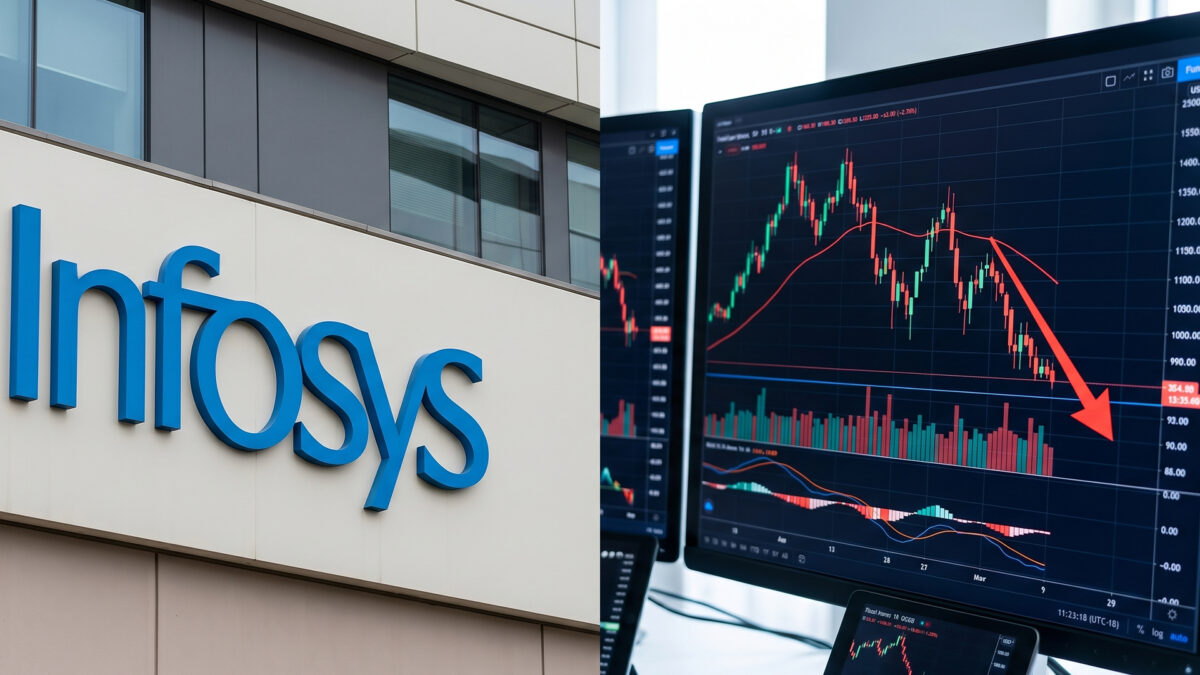
Infosys shares saw a sharp fall on Friday, wiping out nearly ₹56,000 crore in market value, after investors reacted negatively to the company’s cautious growth outlook for the next financial year.

Despite reporting healthy quarterly earnings, the IT major came under heavy selling pressure as the market focused on future concerns rather than past performance. The stock dropped around 6–7 per cent during the session, making Infosys one of the biggest losers on Dalal Street.

Infosys reported a strong March quarter, with consolidated net profit rising around 21 per cent year-on-year to ₹8,501 crore. Revenue also posted steady growth, showing resilience in a challenging global business environment.

However, investors were disappointed by the company’s FY27 revenue growth guidance of 1.5 per cent to 3.5 per cent in constant currency terms. Analysts said the forecast suggests that global demand remains weak and clients are still cautious about spending on technology projects.

The company said business decisions by clients continue to be slower because of macroeconomic uncertainty and geopolitical tensions. While demand for artificial intelligence and digital transformation services remains encouraging, overall market visibility is still mixed.

The fall in Infosys shares also dragged the broader IT sector lower. Other technology stocks came under pressure as investors worried that slower growth could continue across the industry. The Nifty IT index has already seen losses this week after mixed earnings and cautious commentary from several companies.

Brokerages gave mixed reactions after the results. Some maintained confidence in Infosys’ long-term strengths, citing its strong balance sheet, global client base and leadership in digital services. Others turned more cautious, warning that near-term growth may remain under pressure.

Also Read: Infosys gives ₹51.75 cr stock grant to CEO Salil Parekh

Categories
Leaders

Infosys gives ₹51.75 cr stock grant to CEO Salil Parekh

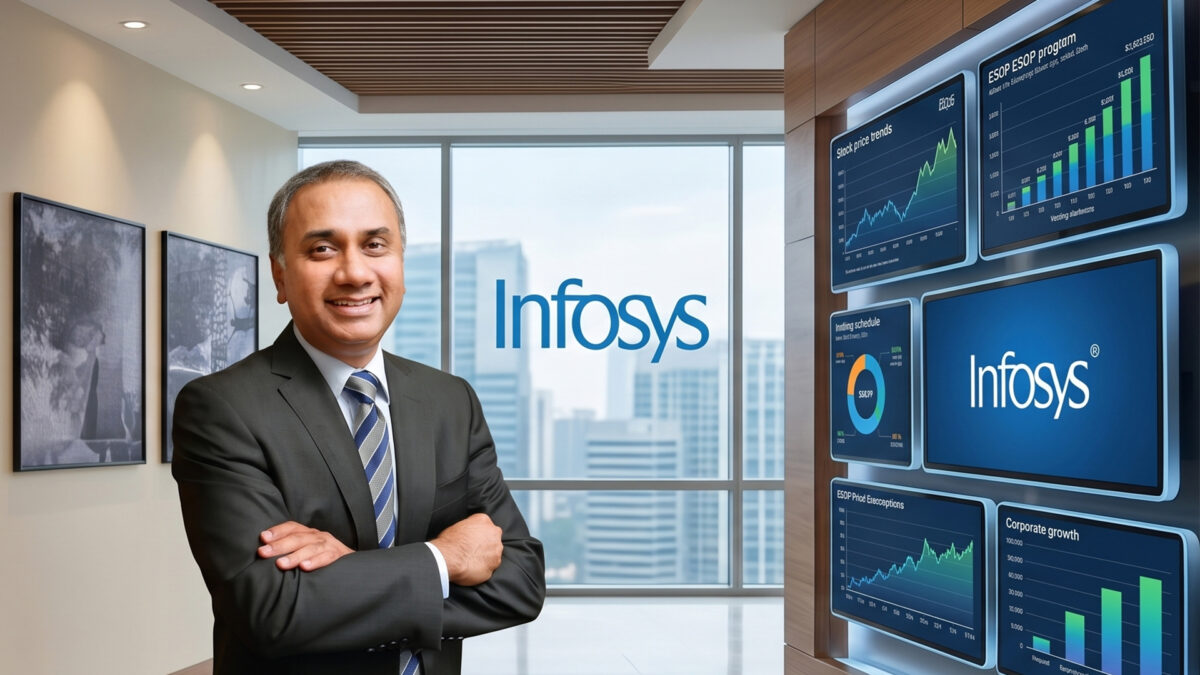
Infosys has approved stock-based incentives worth ₹51.75 crore for its CEO and Managing Director Salil Parekh, even as the company is yet to take a call on annual salary hikes for employees.

The decision was cleared by the company’s board after recommendations from its Nomination and Remuneration Committee. The grant will be made through employee stock options and restricted stock units under existing company plans, with effect from May 2, 2026.

The compensation package is linked to performance and long-term business goals. Out of the total grant, ₹34.75 crore is tied to annual performance targets, ₹5 crore is linked to shareholder returns, ₹2 crore depends on ESG goals, and ₹10 crore comes under the company’s Expanded Stock Ownership Program. Most of these benefits will vest over time and depend on meeting set conditions.

The announcement came with Infosys’ latest quarterly results, where the IT major posted a strong rise in profit. Consolidated net profit for the March quarter increased 20.9 per cent to ₹8,501 crore, while revenue also recorded healthy growth.

Infosys said it remains cautiously optimistic about the year ahead and expects revenue growth of 1.5 per cent to 3.5 per cent in constant currency terms for FY27. The company also plans to hire around 20,000 freshers during the financial year, signalling continued investment in talent despite global uncertainty.

However, there is still no clarity on salary hikes for the wider workforce. Chief Financial Officer Jayesh Sanghrajka said the company has not yet decided when wage revisions will happen or how much the hikes will be.

The development has drawn attention because while senior leadership compensation has been finalised, thousands of employees are still waiting for updates on their annual pay revisions. Wage hikes in the IT sector have slowed in recent years as companies deal with weak global demand and cautious client spending.

Also Read: Finance Minister flags AI threat to banks

Categories
Corporate

Infosys, Harness team up for AI delivery

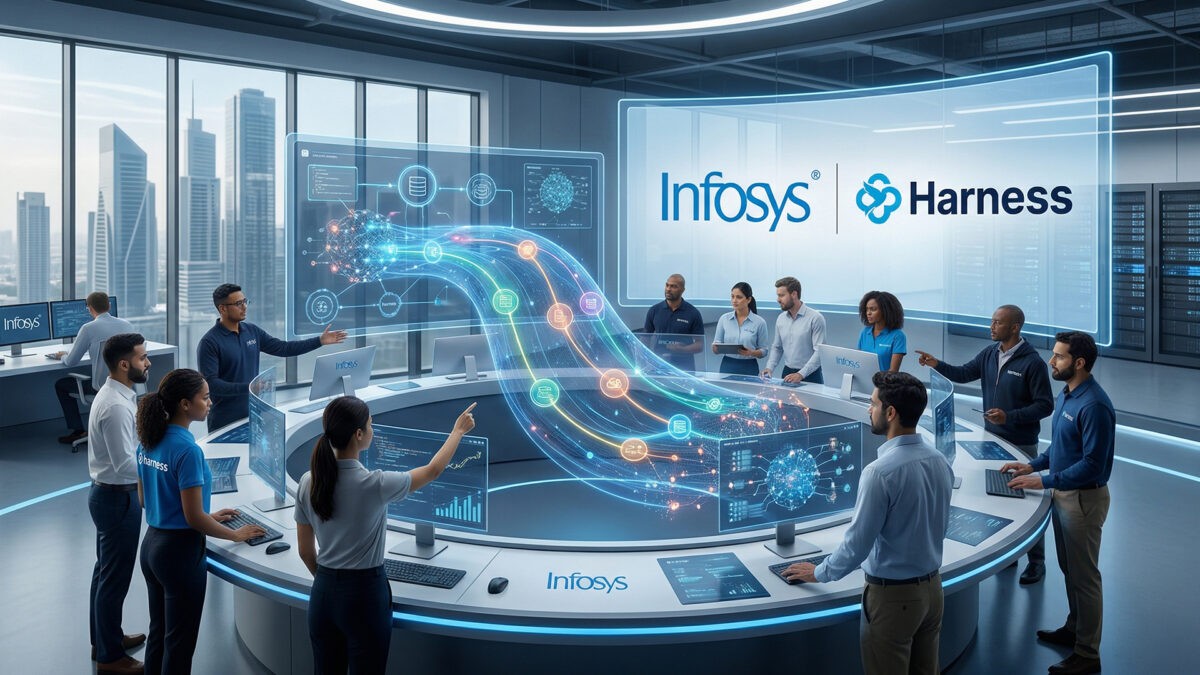
Infosys has partnered with Harness to improve how enterprises build and deliver software using artificial intelligence. The collaboration focuses on fixing inefficiencies that arise after code is written, especially in testing, deployment and operations.

While AI tools have significantly accelerated coding, companies still face delays and risks in the later stages of software delivery. These include manual processes, security checks and performance monitoring, which often slow down releases. Infosys and Harness aim to close this gap by introducing AI-driven automation across the entire software lifecycle.

As part of the partnership, Infosys will integrate its AI-led platforms, including Topaz and its cloud capabilities, with Harness’ software delivery solutions. This will enable businesses to automate key processes such as continuous integration, testing, deployment and monitoring, making software releases faster and more reliable.

The companies said the collaboration will help reduce manual intervention, improve productivity and ensure better governance. This is particularly important as enterprises scale up AI adoption and need stronger control over how applications are deployed and managed.

Another key benefit is expected in cost and efficiency. By automating repetitive tasks, engineering teams can spend less time on maintenance and more time on innovation. This can lead to quicker product launches and improved customer experience.

The partnership is also aimed at supporting large digital transformation and modernisation programmes, especially in industries where reliability and compliance are critical. Faster deployment cycles combined with improved system stability are expected to be major outcomes.

Industry observers note that the move reflects a broader shift in the technology sector. Companies are no longer focusing only on AI-assisted coding but are increasingly looking at end-to-end AI-driven software delivery.

Also Read: Beacon Group names Dr Rajesh Patel as CEO


Categories
Corporate

Infosys to buy Optimum Healthcare IT for $465 mn

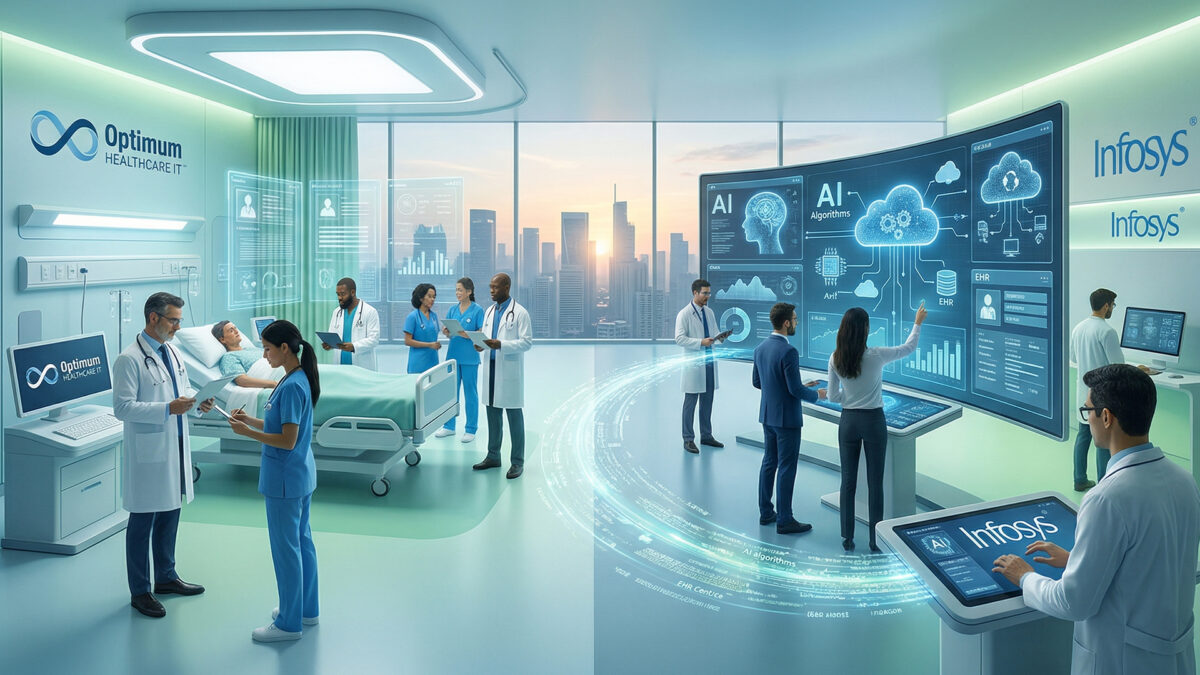
Infosys is making a big move to expand its footprint in the US healthcare sector, announcing that it will acquire Optimum Healthcare IT for up to $465 million.

The deal is part of Infosys’ strategy to grow in high-demand areas like healthcare technology, where hospitals and providers are increasingly turning to digital solutions to improve services. Optimum Healthcare IT specialises in helping healthcare organisations upgrade their systems, manage data, and adopt modern technologies like cloud computing.

By bringing Optimum into its fold, Infosys aims to combine its own strengths in artificial intelligence and digital platforms with Optimum’s deep understanding of the healthcare industry. The goal is to offer more complete, end-to-end solutions, helping hospitals run more efficiently while also improving patient care.

Company leaders believe the acquisition will also open doors to new clients in the US, one of the world’s largest healthcare markets. It gives Infosys access to established relationships with healthcare providers, which could lead to more long-term projects and partnerships.

Alongside this, Infosys is also acquiring another US-based firm, Stratus, in a separate deal. Together, the two acquisitions are valued at around $560 million, showing the company’s strong push to build expertise in specialised sectors rather than just general IT services.

The deals are expected to close by early next financial year, subject to approvals. Once completed, Infosys plans to integrate both companies into its operations to scale up its healthcare and insurance offerings.

Also Read: Iran keeps Strait of Hormuz open for India

Categories
Leaders

Narayana Murthy urges youth to master AI

Narayana Murthy, co-founder of Infosys, has cautioned young Indians against fearing artificial intelligence and instead encouraged them to learn and use it effectively.

Speaking about the rapid growth of AI tools, Murthy said the technology is transforming the workplace across industries. However, he stressed that AI should be seen as an opportunity rather than a threat. According to him, those who understand how to use AI wisely will improve their productivity and remain valuable in the job market.

Murthy pointed out that while automation may change certain routine tasks, it will not replace human intelligence, creativity or critical thinking. He said individuals who combine strong thinking skills with knowledge of AI tools will have an advantage. “A smarter mind using AI will produce better results,” he suggested, highlighting the importance of both intelligence and effort.

The veteran industry leader also underlined the need for continuous learning. He said young professionals must stay curious, disciplined and willing to upgrade their skills as technology evolves. Simply relying on existing qualifications may not be enough in a fast-changing environment shaped by AI.

Murthy compared the current AI shift to earlier technological revolutions such as the arrival of computers and the internet. While those developments initially raised concerns about job losses, they eventually created new industries and employment opportunities. He believes AI will follow a similar path.

His remarks come at a time when many students and young professionals are anxious about automation reducing job opportunities, especially in sectors like information technology and services. Murthy’s message is clear: instead of resisting change, young Indians should prepare themselves to work alongside AI.

Also Read: Historic East India brand in London shuts again

Categories
1 Minute-Read

Infosys climbs 3% after AI deal with Anthropic

Shares of Infosys advanced nearly 3% after the company unveiled a strategic partnership with Anthropic to deliver next-generation artificial intelligence solutions for global clients.

The collaboration will combine Anthropic’s Claude models with Infosys’ Topaz platform and establish a specialised Centre of Excellence to build sector-focused AI applications, initially targeting telecom and later expanding into other industries.

Chief executive Salil Parekh said the move will help enterprises modernise systems, automate complex processes and adopt responsible AI at scale. The announcement strengthened investor confidence and pushed the stock among the day’s key gainers in the IT pack.

Categories
Corporate

Infosys to recruit 20,000 freshers in FY27

Bengaluru-based IT major Infosys is gearing up for one of its largest campus recruitment drives, planning to hire 20,000 fresh graduates in the financial year 2027 (FY27). CEO Salil Parekh announced the initiative during the World Economic Forum (WEF) in Davos, emphasizing the growing demand for talent in artificial intelligence (AI)–driven services and digital transformation projects.

The company’s recruitment drive, covering April 2026 to March 2027, comes amid global tech layoffs and uncertainty in the IT sector. Despite this, Infosys has maintained strong hiring momentum, with around 18,000 freshers onboarded in the first nine months of FY26. The total fresher intake for the current fiscal is expected to reach 20,000.

Parekh explained that the surge in AI adoption by clients is creating new work opportunities, even as some traditional IT services face pressure. Companies are increasingly deploying AI agents and foundation models at scale, particularly in financial services, where Infosys is emerging as a preferred partner. “We are working on real, scalable AI projects with 15 of our 25 largest financial services clients,” Parekh noted.

He added that pricing models for AI-driven projects are still evolving, as clients balance human and AI resources. However, clearer frameworks are expected as adoption grows. Economic signals, especially from the US, are also encouraging cautious optimism for tech spending.

Infosys’s planned FY27 hiring reflects its strategy to align workforce expansion with AI-led demand, ensuring it remains competitive despite global headcount reductions in the IT industry. This move underscores the company’s focus on modernizing services and capturing opportunities in emerging technology areas.

The recruitment drive also signals confidence in India’s talent pool, with the company aiming to equip fresh graduates with AI skills and integrate them into projects that support digital transformation across sectors.

Also Read: Arijit Basu named part‑time chairman of IndusInd Bank

Categories
Corporate

Infosys takes Rs 1,289 crore labour code hit in Q3

Infosys Ltd reported a one-time financial hit of Rs 1,289 crore in the third quarter of FY26 due to provisions made under India’s new labour codes, impacting its quarterly profit despite steady revenue growth.

The country’s second-largest IT services company said the charge was linked to changes required after the government notified the new labour codes in November 2025. These codes combine several existing labour laws and require companies to reassess employee-related benefits such as gratuity and leave encashment. Infosys accounted for higher gratuity liabilities arising from past service costs and revised benefit obligations, resulting in the exceptional expense.

For the quarter ended December 31, 2025, Infosys reported a consolidated net profit of Rs 6,654 crore, down 2.2 per cent year-on-year. On a sequential basis, profit declined more sharply due to the one-off provision. However, revenue from operations rose 8.9 per cent year-on-year to Rs 45,479 crore, reflecting stable demand across key markets.

The company said its underlying business performance remained healthy. Infosys recorded strong large deal wins during the quarter, with total contract value of about $4.8 billion. Financial services, manufacturing, and energy and utilities were among the key sectors contributing to growth. Digital and artificial intelligence-led services continued to see traction as clients focused on efficiency and transformation.

Encouraged by better-than-expected execution and deal momentum, Infosys raised its revenue growth guidance for FY26. The company now expects constant currency revenue growth of 3.0–3.5 per cent for the full year, compared with its earlier forecast of 2.0–3.0 per cent.

Infosys said operating margins were impacted by the labour code provision but added that margins remain stable when the one-time cost is excluded. The company maintained its margin guidance for the year, supported by cost control measures and improved utilisation.

Management said it continues to invest in upskilling employees, especially in AI and digital technologies, to stay competitive in a changing business environment. The labour code impact is also being seen across the IT sector, as companies adjust their balance sheets to align with the new regulatory framework.

Infosys stated that the provision is a one-time adjustment and does not affect its long-term growth strategy or financial strength.

Also Read: Trump pushes Microsoft on data centre costs

Categories
Corporate

Infosys hikes fresher pay up to Rs 21 lakh

Infosys has significantly increased entry-level salaries for fresh graduates, offering packages of up to Rs 21 lakh per annum for specialised technology roles. The move is part of the company’s strategy to attract top talent in advanced digital and AI-related fields and positions it as a market leader in entry-level IT pay.

The company’s new salary structure is tiered to reward expertise in high-demand digital domains. Specialist Programmer L3 (Trainee) roles now offer Rs 21 lakh, L2 roles offer Rs 16 lakh, L1 roles Rs 11 lakh, and Digital Specialist Engineer positions start at Rs 7 lakh per annum. These packages are aimed at graduates from BE, BTech, ME, MTech, MCA, and integrated MSc programmes in computer science, IT, electronics, and related engineering streams.

Shaji Mathew, Infosys Group Chief Human Resources Officer, said the revised packages reflect the company’s commitment to building a workforce capable of delivering cutting-edge digital and AI solutions. “We are expanding our campus and off-campus hiring drives to bring in digitally skilled graduates under the specialist track, aligning talent acquisition with our AI-First strategy,” he added.

This revision marks a significant departure from the traditionally flat starting salaries in India’s IT sector, which often failed to keep pace with inflation or the rising demand for digital expertise. By offering differentiated pay for specialised roles, Infosys aims to attract graduates with the skills required to support its growing focus on artificial intelligence, cloud computing, and other emerging technologies.

The pay hike comes amid steady hiring momentum at Infosys, which onboarded around 12,000 freshers in the first half of fiscal 2025–26 and is targeting 20,000 graduates for the year. Other IT peers, including Tata Consultancy Services and HCLTech, have also introduced specialised pay tracks, but their top-tier offers remain below Infosys’s new benchmarks.

Also Read: North Korea reveals first nuclear submarine

Categories
Corporate

Infosys opens ₹18,000 crore share buyback on Nov 20

Infosys is launching its biggest-ever share buyback worth ₹18,000 crore. The company will start buying back its shares from November 20, and the window will stay open till November 26.

Infosys will buy up to 10 crore shares at a fixed price of ₹1,800 per share. This is higher than the current market price, so some investors may choose to sell their shares back to the company.

Shareholders who held Infosys shares on the record date, November 14, are eligible to take part. Small shareholders (those holding shares worth up to ₹2 lakh) have a separate reserved quota.

To participate, investors must tender their shares through their broker on NSE or BSE. Those holding physical share certificates must send the required documents to the registrar, KFin Technologies, before the deadline.

Infosys says the buyback is part of its plan to return extra cash to shareholders. Promoters, including Nandan Nilekani and Sudha Murty, will not sell their shares in this buyback.

The company will complete payments to those whose shares are accepted by December 3.

Also Read: Bitcoin drops below $90,000, rebounds fast