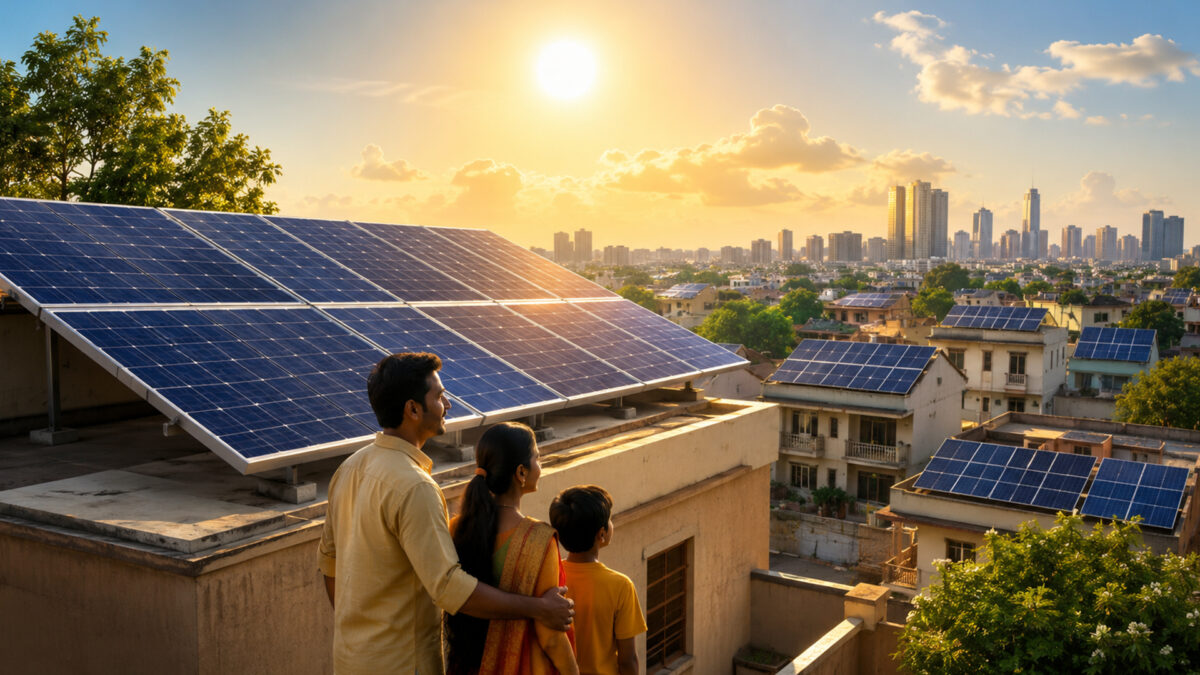
The World Bank Group has approved $890 million (around ₹7,400 crore) to support India’s PM Surya Ghar: Muft Bijli Yojana, giving a major boost to the country’s efforts to expand rooftop solar power and accelerate the transition to clean energy.
The funding package is expected to help millions of households install rooftop solar systems while strengthening the infrastructure needed to support distributed renewable energy across the country. It will also improve access to affordable electricity, reduce dependence on conventional power sources and contribute to India’s climate goals.
Launched by the Centre earlier this year, the PM Surya Ghar scheme aims to provide rooftop solar installations to one crore households, enabling families to generate their own electricity and lower their monthly power bills. Eligible households receive financial assistance to install solar panels, with many expected to benefit from free or significantly reduced electricity consumption.
According to the World Bank, the programme has the potential to transform India’s residential energy sector by encouraging clean power generation at the household level. The initiative is also expected to create large-scale employment opportunities in manufacturing, installation, maintenance and other solar-related services.
Apart from supporting rooftop installations, the funding will help strengthen power distribution systems, improve grid integration and enhance the capacity of financial institutions involved in financing rooftop solar projects. These measures are expected to make the programme more efficient and ensure faster adoption across urban and rural areas.
Officials said the investment reflects growing international confidence in India’s renewable energy ambitions. The country has set ambitious targets to expand non-fossil fuel energy capacity and achieve net-zero emissions by 2070, with rooftop solar expected to play a key role in meeting future electricity demand sustainably.
The World Bank also highlighted the programme’s broader social benefits, noting that wider adoption of rooftop solar can reduce household energy costs, improve energy security and lower carbon emissions. Increased participation by women-led households, small businesses and local entrepreneurs is also expected to generate inclusive economic growth.