Categories
Corporate

Angel One Q3 profit dips to ₹269 crore

Angel One, one of India’s leading retail brokerage firms, reported a decline in net profit for the third quarter ending December 31, 2025. The company’s consolidated profit after tax (PAT) fell 4.5 per cent to ₹269 crore, compared with ₹281.5 crore in the same period last year. The drop was mainly due to rising operating costs, including higher employee expenses and charges from employee stock ownership plans (ESOPs).

Despite the dip in profit, Angel One posted growth in its overall revenue. Total income for the quarter rose about 5.8 per cent to ₹1,338 crore from ₹1,264 crore a year earlier. The revenue increase was driven by higher interest income as well as fees and commission earnings from its brokerage and related services.

Sequentially, the company showed strong performance. Compared with the previous quarter, PAT rose by around 27 per cent, reflecting improved operational efficiency and better cost management. Earnings before depreciation, amortisation, and taxes (EBDAT) also increased to ₹405 crore, signalling the company’s underlying business strength.

In addition to the quarterly results, the board approved key measures aimed at benefiting shareholders. Angel One announced an interim dividend of ₹23 per share. It also sanctioned a stock split in a 1:10 ratio, meaning each existing equity share of ₹10 face value will be divided into ten shares of ₹1 each. These steps are intended to make shares more affordable and improve liquidity, helping attract a wider base of investors.

Following the announcements, Angel One’s stock saw positive movement in the market, as investors welcomed the combination of revenue growth, sequential profit improvement, and shareholder-friendly corporate actions.

The company continues to expand its client base while strengthening its non-broking businesses, which are expected to support long-term growth. Analysts say Angel One’s efforts to diversify its services, combined with strong market presence, could help the firm navigate challenges in India’s financial markets and maintain steady growth in the coming quarters.

Also Read: Oil drops 3% after Trump remarks on Iran

Categories
Beyond

Oil drops 3% after Trump remarks on Iran
Global oil prices dropped by about 3 per cent on Thursday after US President Donald Trump’s remarks suggested a reduced risk of military conflict with Iran. The fall came after oil had risen in recent days due to concerns that unrest in Iran could threaten regional oil exports.

Brent crude, the international benchmark, slipped roughly 2.9 per cent to $64.5 per barrel, while West Texas Intermediate (WTI), the US benchmark, declined to around $60 per barrel. The decline reversed the previous day’s gains, which had been driven by fears that escalating tensions in Iran might disrupt global oil supply.

Trump said that reports indicated the killings of protesters in Iran had stopped and that plans for mass executions were no longer moving forward. Speaking from the White House, he added that he would “watch and see” before taking any further action, signaling a cautious approach rather than immediate military involvement. Market participants saw this as a sign that the risk of a major conflict affecting oil supply had lessened.

Analysts said that the president’s comments removed part of the “risk premium” built into oil prices due to geopolitical uncertainty. Rising crude inventories in the United States and potential increases in Venezuelan oil exports also added downward pressure on prices.

Iran produces a significant share of the world’s crude oil, so any disruption there can sharply influence market sentiment. With tensions easing temporarily, even slightly, investors quickly adjusted their expectations, triggering the drop in prices.

While geopolitical risks in the Middle East remain complex, Thursday’s market reaction highlighted how political statements can strongly impact oil prices. Traders continue to monitor developments in Iran and other key oil-producing regions, aware that shifts in risk perception can quickly move global crude markets.

Also Read: Windows 10 & 11 users alerted to security flaw

Categories
Technology

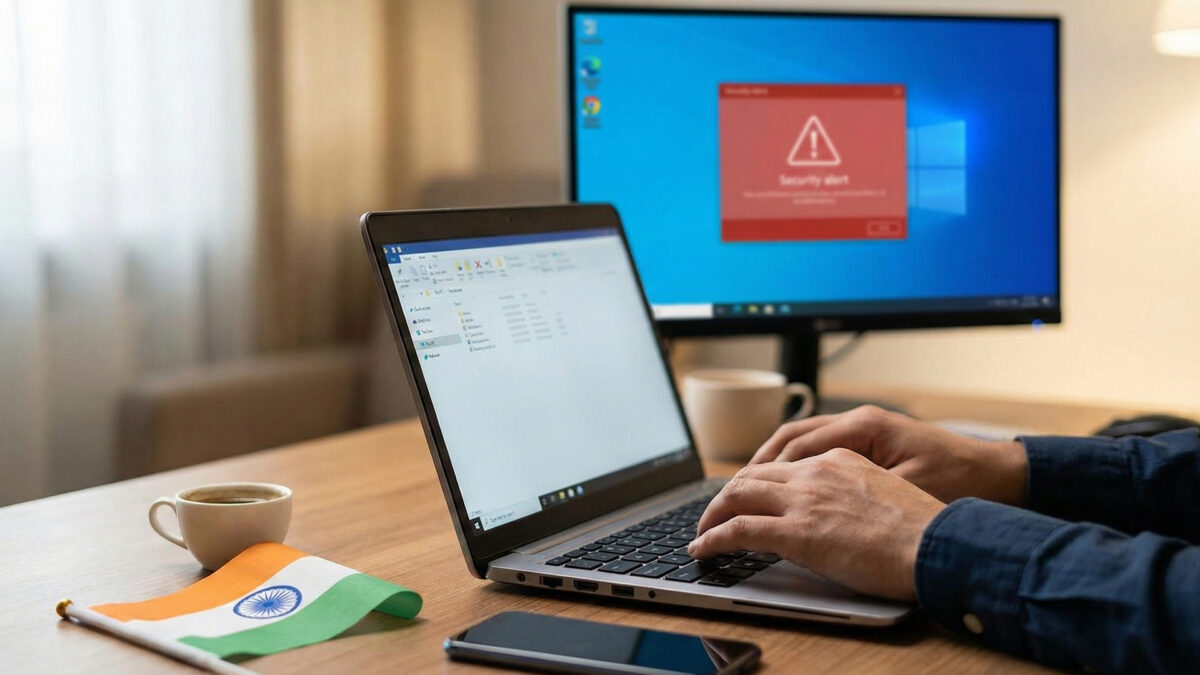
Windows 10 & 11 users alerted to security flaw

The Indian government has raised an alert for Windows 10 and 11 users following the discovery of a security vulnerability that could compromise sensitive system information. CERT‑In, the national cybersecurity agency, has flagged the issue as a potential risk even for devices with standard security settings.

The flaw is located in the Desktop Window Manager (DWM), the component responsible for managing the Windows graphical interface. CERT‑In has identified that improper memory handling in this module may allow a local attacker with minimal access to retrieve sensitive system information. While the vulnerability does not directly allow remote hacking, it could be exploited in combination with other techniques to escalate attacks.

Affected systems include multiple Windows 10 versions (1607, 1809, 21H2, 22H2) and Windows 11 editions (23H2, 24H2, 25H2), along with several Windows Server versions from 2012 through 2025. CERT‑In has rated the risk medium, highlighting that exposure of memory data could bypass security protections like Address Space Layout Randomisation (ASLR).

The advisory emphasizes that users should install the latest Microsoft security updates immediately via Windows Update. Enterprises and individual users are urged to maintain proper system hygiene, avoid untrusted software, and use accounts with limited privileges where possible.

Although no major exploit of this vulnerability has been reported yet, CERT‑In stresses that prompt patching is critical to protect data and maintain system security. Ignoring the update could leave systems vulnerable to future attacks, especially in enterprise environments where sensitive data is processed daily.

Also Read: Gold at ₹1.43 lakh , Silver rises ₹2.95 lakh

Categories
Beyond

Gold at ₹1.43 lakh , Silver rises ₹2.95 lakh

Gold and silver prices showed mixed movement in the domestic market on Friday, with gold edging lower and silver recording a small gain in early trade.

The price of 24-carat gold slipped by ₹10 to ₹1,43,610 per 10 grams. Similarly, 22-carat gold declined by ₹10 and was quoted at ₹1,31,640 per 10 grams. Prices remained largely stable across major Indian cities, with only minor variations. In Delhi, 24-carat gold was priced at around ₹1,43,760 per 10 grams, while Chennai saw slightly higher rates at close to ₹1,44,990.

Silver prices, however, moved in the opposite direction. The white metal gained ₹100 to trade at ₹2,95,100 per kilogram in major markets such as Mumbai, Delhi, and Kolkata. Chennai continued to quote higher silver prices at around ₹3,10,100 per kilogram.

Market analysts said the mild fall in gold prices was largely due to profit booking after recent record levels. The strength of the US dollar and strong economic data from the United States also weighed on sentiment. These factors have lowered expectations of an early interest rate cut by the US Federal Reserve, making gold less attractive in the short term.

In the international market, spot gold prices eased slightly in early Asian trade but continued to stay near recent highs. Silver prices overseas remained volatile but held firm after strong gains earlier in the week, supported by industrial demand and safe-haven buying.

Other precious metals also saw some pressure. Platinum prices declined by nearly 2 per cent, while palladium slipped by about 1 per cent, indicating a broader correction in metal prices.

Looking ahead, experts expect gold and silver prices to remain range-bound in the near term. Global economic data, movements in the US dollar, and signals from central banks will continue to influence the direction of precious metal prices.

Also Read: Sensex surges over 700 points, Nifty tops 25,850

Categories
1 Minute-Read

Shadowfax technologies IPO to raise ₹1,907 crore

Shadowfax Technologies, a major Indian logistics and delivery platform, is set to launch its IPO on January 20, closing on January 22, 2026.

The price band is ₹118–₹124 per share, aiming to raise around ₹1,907 crore through a mix of fresh issue and offer-for-sale shares. The company recently turned profitable and has seen significant revenue growth.

Proceeds will fund network expansion, marketing, lease payments, and strategic initiatives. Share allotment is expected by January 23, with BSE and NSE listings planned for January 28.

Categories
Leaders

Zuckerberg–Wang rift surfaces at Meta

Meta Platforms’ ambitious artificial intelligence push is facing internal strain, with reports of growing differences between CEO Mark Zuckerberg and the company’s top AI executive, Alexandr Wang. The friction comes barely months after Meta made one of its biggest bets in the sector, investing over $14 billion to acquire a 49 percent stake in Scale AI and bringing its founder Wang on board as Meta’s Chief AI Officer.

According to reports, the disagreement centres on leadership style, decision-making control, and the long-term direction of Meta’s AI investments. Wang is said to be unhappy with Zuckerberg’s close involvement in day-to-day AI decisions, viewing it as excessive micromanagement that limits autonomy and slows innovation. Zuckerberg, however, is known for taking direct charge of strategic priorities, especially in areas he sees as existential to Meta’s future.

At the heart of the dispute is a difference in vision. Wang and parts of the AI research team reportedly want Meta to focus on building cutting-edge “foundation models” that can compete directly with leading AI developers such as OpenAI and Google. This approach prioritises long-term breakthroughs over immediate commercial returns. In contrast, several long-serving Meta executives prefer a faster rollout of AI tools across products like Facebook, Instagram, and WhatsApp to strengthen advertising and user engagement.

These contrasting priorities have reportedly created an “us versus them” atmosphere inside Meta’s AI division. Some senior leaders are said to question whether Wang, despite his technical credentials, has sufficient experience managing AI initiatives at Meta’s massive scale, where investments are estimated to run into hundreds of billions of dollars over the coming years.

In response to the internal tensions, Zuckerberg has moved to tighten oversight of Meta’s AI operations. A recent organisational reshuffle placed key AI infrastructure and compute resources under direct reporting lines closer to the CEO. While not officially framed as a response to the disagreement, the change effectively reduces Wang’s independent control over critical parts of the AI stack.

The developments come at a crucial time for Meta, which has positioned AI as central to its future growth after years of heavy spending on the metaverse. Industry observers say the situation highlights a broader challenge faced by big tech companies: balancing visionary founders, high-value external hires, and the pressure to deliver both innovation and near-term business results in an intensely competitive AI race.

Also Read: RBI approves Japan’s SMBC India Bank subsidiary

Categories
Technology

Humanoid robot learns to lip-sync

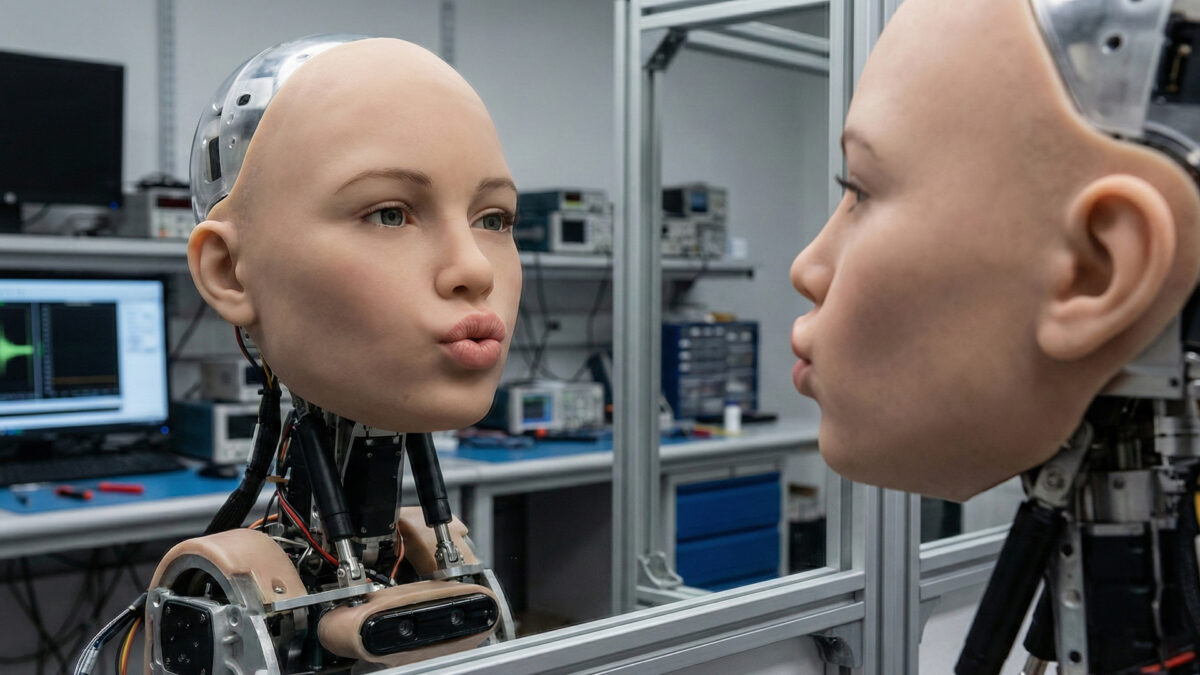
Researchers have developed a humanoid robot that can accurately lip-sync with spoken words and sounds, marking a major advance in human-robot communication. The breakthrough comes from scientists at Columbia University, who trained the robot to move its lips and facial muscles in sync with speech using artificial intelligence rather than fixed programming.

Unlike traditional robots that rely on pre-set rules for facial movement, this robot learns by observing and experimenting. It first studied its own face in a mirror, making thousands of random expressions to understand how its facial motors work. Once it learned the basics, it watched hours of videos showing people talking, allowing it to copy natural lip movements linked to specific sounds.

The robot’s face contains more than two dozen motors that control lips, jaw, cheeks, and other features. Using machine learning, the system connects audio signals directly to these motors, enabling the robot to produce realistic mouth movements for speech and even singing. The model can adapt to different languages because it learns sound-to-movement patterns instead of memorising words.

Scientists say realistic lip-syncing is crucial for making robots appear more natural and trustworthy. Poorly matched speech and facial movements often make humanoid robots seem unsettling to humans. By improving this synchronisation, the new system helps reduce that effect.

The technology could be useful in education, entertainment, healthcare, and customer service, where robots may need to speak clearly and expressively. While the robot still struggles with some complex sounds, researchers believe the work brings machines a step closer to natural, human-like interaction.

Also Read: RBI approves Japan’s SMBC India Bank subsidiary

Categories
Beyond

RBI approves Japan’s SMBC India Bank subsidiary

The Reserve Bank of India (RBI) has given in-principle approval to Sumitomo Mitsui Banking Corporation (SMBC) of Japan to set up a wholly-owned subsidiary (WOS) in India. The move marks a significant expansion of SMBC’s footprint in the country and underlines India’s growing importance in global banking and finance.

At present, SMBC operates in India through branch offices in Mumbai, New Delhi, Chennai and Bengaluru. With the RBI’s approval, these branches will be converted into a locally incorporated subsidiary. Once the bank fulfils all regulatory conditions laid down by the central bank, it will receive a formal licence under the Banking Regulation Act, 1949 to begin operations as an Indian entity.

A wholly-owned subsidiary structure offers several advantages over the branch model. As a locally incorporated bank, SMBC will be able to expand its branch network more freely, offer a wider range of services and operate on terms similar to domestic banks. The subsidiary will have its own capital base and governance framework, with its finances ring-fenced from the parent bank in Japan. This structure also gives the RBI stronger regulatory oversight and helps enhance financial stability.

The approval is especially significant in the context of SMBC’s investment in Yes Bank. In 2025, the Japanese lender acquired about 24.22 per cent stake in Yes Bank, becoming its largest shareholder. While the new subsidiary will operate independently, the development is expected to strengthen SMBC’s ability to support Indian corporates, multinational companies and cross-border business, potentially benefiting partnerships and collaborations within the Indian banking system.

SMBC is one of Japan’s largest financial institutions and has been active in India for over a decade, focusing mainly on corporate banking, project finance and trade finance. The new subsidiary is expected to deepen its engagement with India’s fast-growing economy, particularly in infrastructure, manufacturing, clean energy and international trade.

The RBI’s decision reflects its broader policy of allowing foreign banks to choose between branch operations and wholly-owned subsidiaries, while ensuring strong regulation and local accountability. As India’s banking sector continues to expand, the move is likely to encourage more long-term foreign investment and competition, strengthening the overall financial ecosystem.

Also Read: Citigroup CEO Fraser signals more job cuts

Categories
Leaders

Citigroup CEO Fraser signals more job cuts

Citigroup CEO Jane Fraser has warned employees that further job cuts are likely as the bank presses ahead with a wide-ranging restructuring aimed at improving performance and cutting costs. In a recent internal message to staff, Fraser said the time had come to move away from “old, bad habits” and focus sharply on measurable results rather than effort alone.

Citigroup, one of the world’s largest banks, is already in the middle of a multiyear overhaul that includes reducing management layers, simplifying operations and investing heavily in technology. As part of this plan, the bank aims to cut around 20,000 jobs globally by the end of 2026, which would reduce its workforce by roughly 8 percent. About 1,000 roles are expected to be eliminated in the latest round, adding to the thousands of positions already cut over the past year.

Fraser told employees that 2026 will be a decisive year for the bank. She stressed that while hard work is important, the organisation will be judged on outcomes. According to her, Citigroup must become faster, more disciplined and more competitive, especially as rivals move ahead in areas such as digital banking and automation.

A major factor behind the job reductions is the growing use of automation and artificial intelligence. Fraser acknowledged that new technologies are changing how work is done across the bank, making some roles unnecessary while increasing the need for specialised skills in other areas. Citigroup is upgrading its systems and processes as part of a broader “transformation” programme designed to modernise the bank and reduce long-term costs. The programme is expected to deliver billions of dollars in savings once fully implemented.

Despite the overall headcount reduction, Citigroup plans to continue hiring selectively in priority businesses, including investment banking and areas that support growth. Senior management believes the restructuring will help the bank improve returns, strengthen controls and meet regulatory expectations more effectively.

Fraser’s message signals a tougher stance on performance and accountability as Citigroup enters the next phase of its turnaround. While the changes are expected to be challenging for employees, the leadership argues they are necessary to position the bank for sustainable growth in an increasingly competitive and technology-driven global financial sector.

Also Read: IHG targets 400+ hotels in India in 5 years

Categories
Corporate

IHG targets 400+ hotels in India in 5 years

IHG Hotels & Resorts has announced an ambitious plan to significantly scale up its presence in India, targeting more than 400 hotels that are open or under development within the next five years. The move highlights the company’s strong confidence in India as one of its most important growth markets globally.

At present, IHG operates over 50 hotels in India and has around 80 properties in the pipeline, together accounting for nearly 12,000 rooms. The proposed expansion will more than triple its existing footprint, driven by rising domestic travel, growing demand for branded accommodation, and increasing interest from hotel owners and developers.

IHG currently operates eight brands in India, covering the luxury, premium and mid-scale segments. These include Six Senses, InterContinental, Crowne Plaza, voco, Holiday Inn, Holiday Inn Express, Garner and Staybridge Suites. As part of its next growth phase, the company plans to introduce its Vignette Collection, a luxury and lifestyle brand, in India in early 2026.

Elie Maalouf, Global Chief Executive Officer of IHG Hotels & Resorts, said India continues to be a key growth driver for the group. He pointed to strong economic fundamentals, favourable demographics and robust domestic travel demand as factors supporting long-term expansion. According to the company, hotel owners in India are increasingly confident in globally recognised brands that offer strong distribution systems and loyalty programmes.

Sudeep Jain, Managing Director for South West Asia at IHG, noted that India remains an under-penetrated market for branded hotels, creating significant opportunities across both business and leisure destinations. He added that Holiday Inn and Holiday Inn Express together make up more than 70 per cent of IHG’s current and planned hotels in India, reflecting strong demand in the mid-scale segment.

In recent developments, IHG opened Crowne Plaza Lucknow in May 2025, marking its 50th operational hotel in the country. The group has also signed several new properties under its Garner mid-scale brand in states such as Uttar Pradesh, Jammu & Kashmir, Gujarat and Rajasthan. Expansion of the InterContinental brand is underway in key urban and leisure locations, including Bengaluru, Hyderabad, Mahabalipuram, Kasauli and Kodaikanal.

Also Read: Infosys takes Rs 1,289 crore labour code hit in Q3