Categories
Leaders

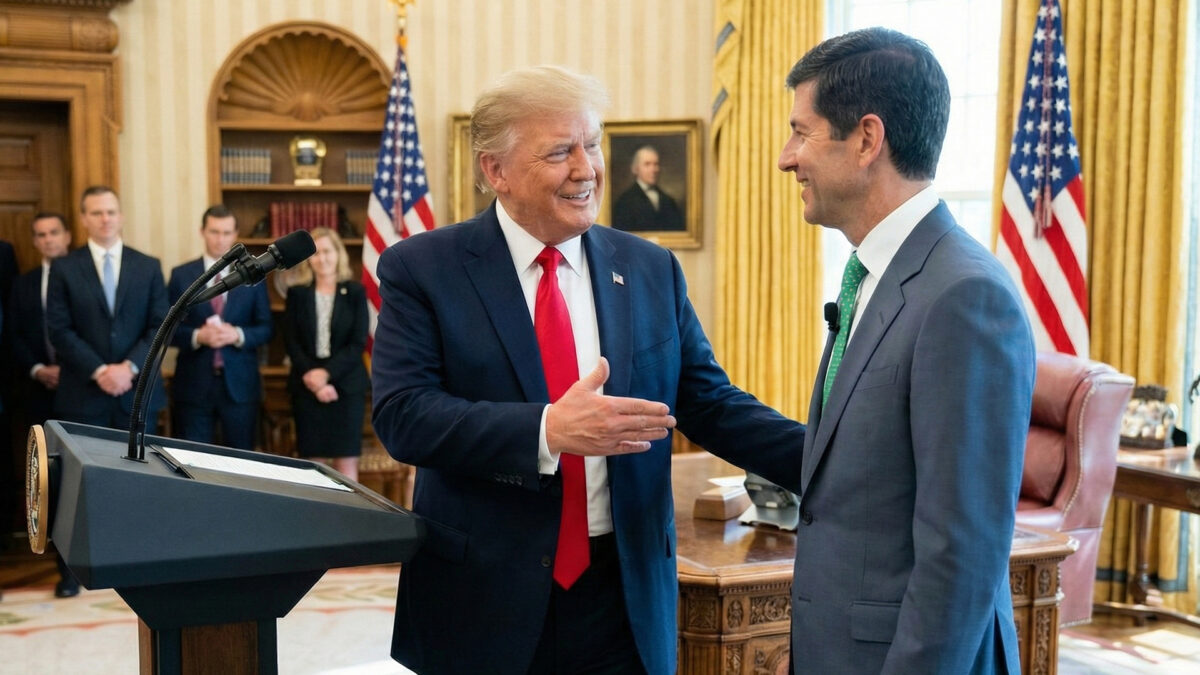
Trump to nominate Kevin Warsh as Federal chair

US President Donald Trump is expected to name Kevin Warsh as the next chair of the Federal Reserve, a move that could shape the future direction of America’s central bank. While the White House has not yet made a formal announcement, reports suggest the decision is imminent.

Kevin Warsh is not a new face in Washington or on Wall Street. He served as a Federal Reserve governor in the past and has long been seen as a serious contender for the top job. Known for his deep understanding of financial markets and monetary policy, Warsh has been close to the centre of economic decision-making during periods of crisis and recovery.

Trump has repeatedly expressed dissatisfaction with the current Fed chair, Jerome Powell, mainly over interest rate policy. The president has argued that rates should be cut faster to support economic growth. Powell’s term is set to end later this year, opening the door for new leadership at the central bank.

If confirmed, Warsh would step into the role at a sensitive time for the US economy. Inflation concerns have eased compared to previous years, but questions remain over growth, borrowing costs and global uncertainty. Investors and economists are closely watching how the next Fed chair might balance inflation control with the need to support jobs and expansion.

Financial markets reacted cautiously to reports of Warsh’s likely nomination. The US dollar strengthened slightly and bond yields moved higher, reflecting expectations that Warsh may take a more traditional and disciplined approach to monetary policy compared to some other potential candidates.

Supporters believe Warsh’s experience could bring stability and predictability to the Federal Reserve. They see him as someone who understands both government policymaking and market realities, which could help restore confidence during uncertain times.

However, the expected nomination has also revived concerns about political pressure on the central bank. Critics worry that Trump’s open criticism of the Fed could threaten its independence, a principle seen as crucial for maintaining long-term economic stability.

Warsh will need approval from the US Senate before taking charge. His confirmation hearings are likely to be closely followed, as lawmakers question him on interest rates, inflation, and the Fed’s independence.

Also Read: Tata Motors Q3 profit ₹705 cr, down 48%

Categories
Corporate

Tata Motors Q3 profit ₹705 cr, down 48%
Tata Motors’ consolidated net profit for the third quarter (October–December 2025) fell sharply by 48% year-on-year, coming in at ₹705 crore, compared with ₹1,355 crore in the same quarter last year. The decline was mainly due to one-time exceptional expenses, rather than a slowdown in the company’s core business operations.

Revenue from operations, however, showed strong growth, rising 16% to ₹21,847 crore, up from ₹18,819 crore in Q3 FY25. This reflects continued demand in the commercial vehicle segment and steady sales momentum across its businesses.

The quarter’s results were impacted by exceptional charges totaling around ₹1,600 crore, including ₹962 crore for stamp duty and other costs linked to the ongoing demerger process, ₹603 crore related to the implementation of the new labour code, and ₹82 crore for acquisition-related expenses.

Despite the one-off charges, Tata Motors’ underlying operations remained healthy. EBITDA margins improved, indicating effective cost management and operational efficiency.

Domestic commercial vehicle sales continued to perform well, supported by fleet replacement incentives and government tax benefits. Wholesales rose during the quarter, and the company’s market share in key commercial vehicle categories improved sequentially.

Management stated that although exceptional items affected net profit this quarter, the business fundamentals remain strong. Demand is expected to stay robust in the fourth quarter of FY26, backed by infrastructure spending and steady demand across sectors.

Also Read: Swiggy Q3 loss widens to ₹1,065 cr despite 54% revenue growth

Categories
Corporate

Swiggy Q3 loss widens to ₹1,065 cr despite 54% revenue growth

Food delivery and quick-commerce platform Swiggy reported a consolidated net loss of ₹1,065 crore in the third quarter (Q3) of FY26, up 33% from ₹799 crore in the same period last year. The widening losses reflect heavy spending on expansion, marketing, and operational costs, even as the company’s revenue showed strong growth.

Swiggy’s revenue from operations jumped 54% year-on-year to ₹6,148 crore, compared with ₹3,993 crore in Q3 FY25. Sequentially, revenue also increased from ₹5,561 crore in the previous quarter, signaling robust demand across its services.

The food delivery business remained the main revenue driver. Its gross order value (GOV) grew 20.5% YoY to ₹8,959 crore, marking the fastest growth for this segment in three years. Monthly transacting users rose 22% to 18.1 million, showing sustained consumer adoption. Margins improved modestly, with adjusted EBITDA for food delivery reaching about 3% of GOV, the highest in two years.

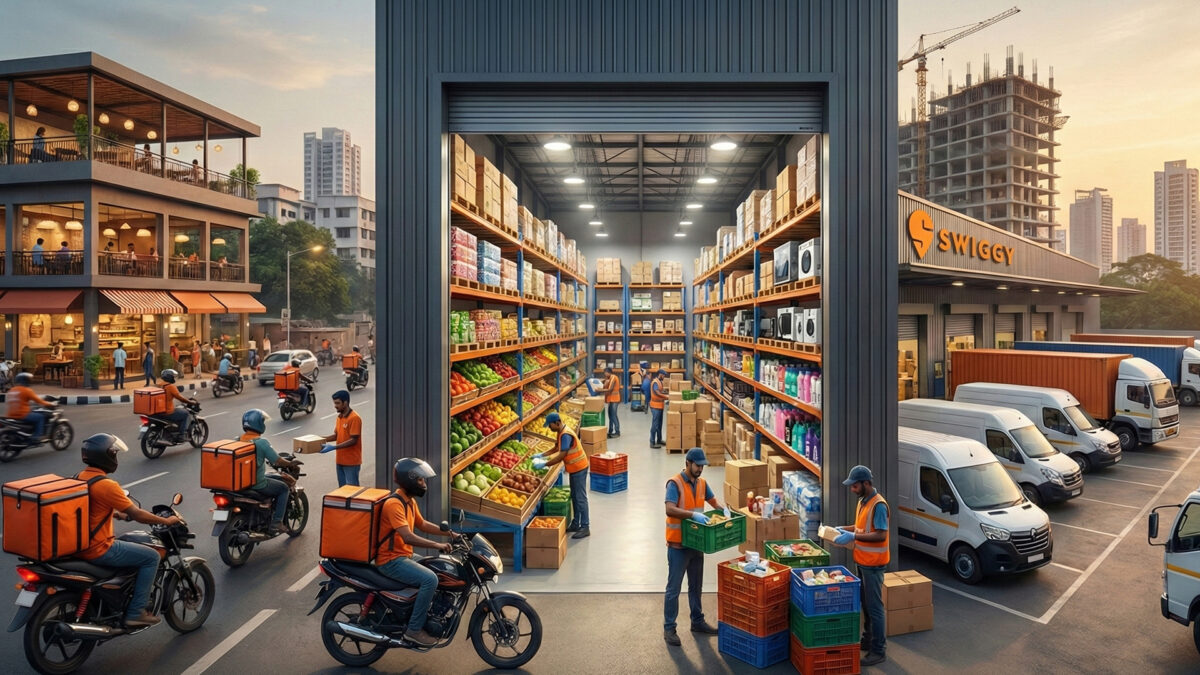
Swiggy’s Instamart quick-commerce division also posted strong growth, with GOV more than doubling to ₹7,938 crore. The network expanded to 1,136 dark stores across 131 cities, adding 34 new stores in the quarter. Average order value increased 40% YoY to ₹746, driven by higher demand for groceries and other essentials. However, Instamart continues to operate at a loss, contributing to the overall widening net loss.

Also Read: Apple earnings soar as iPhone sales jump in China

Categories
Corporate

Sun Pharma Q3 profit seen up 8% at ₹2,400 cr

Sun Pharmaceutical Industries Ltd is expected to report Q3 FY26 revenue of around ₹13,500 crore, up 8–10% year-on-year, while net profit is estimated at nearly ₹2,400 crore, reflecting an 8% annual increase, according to analyst estimates. EBITDA margins are likely to remain stable at 28–30%, supported by steady domestic growth and a favourable product mix.

Growth in the December quarter is expected to be led by Sun Pharma’s India formulations business, which continues to benefit from strong demand for chronic therapies and periodic price hikes. Analysts expect the domestic market to remain a key earnings driver, contributing consistently to both revenue growth and margin stability.

The company’s specialty drugs portfolio, including products such as Ilumya and Cequa, is expected to deliver stable sales during the quarter. However, higher spending on marketing and research and development is likely to limit margin expansion. While the specialty business remains strategically important for long-term growth, analysts believe profitability from this segment will take time to scale up.

In contrast, Sun Pharma’s US generics business is expected to remain largely flat, weighed down by persistent pricing pressure and intense competition. Limited new product launches and ongoing price erosion are likely to restrict growth in the US market, which has been a key headwind for Indian drugmakers in recent years.

Other international markets are expected to report modest performance, broadly in line with previous quarters. Cost controls and a stable operating environment are likely to help the company protect margins despite challenges in select geographies.

On the profitability front, earnings are expected to closely track operating performance, with no major one-off items anticipated during the quarter. Analysts will closely monitor management commentary on the outlook for the US generics business, progress in the specialty portfolio, and the pace of investment in research and development.

Also Read: Gold at ₹1.78 lakh, Silver above ₹4.10 lakh

Categories
Beyond

Gold at ₹1.78 lakh, Silver above ₹4.10 lakh

Gold and silver prices recorded marginal gains on Friday, reflecting steady demand for precious metals amid ongoing global uncertainties. According to market data, the price of 24-carat gold increased by ₹10 per 10 grams, taking it to ₹1,78,860 in major cities such as Mumbai and Kolkata. In the national capital, Delhi, 24-carat gold was quoted slightly higher at ₹1,79,010 per 10 grams.

Prices of 22-carat gold, which is commonly used for jewellery, also moved up by ₹10 per 10 grams. The yellow metal was priced at ₹1,63,960 per 10 grams in Mumbai, Kolkata, Bengaluru and Hyderabad. In Delhi, 22-carat gold was selling at ₹1,64,110 per 10 grams, while Chennai continued to command a premium, with prices hovering around ₹1,68,010 per 10 grams.

Silver prices followed a similar trend, rising by ₹100 per kilogram during early trade. One kilogram of silver was priced at ₹4,10,100 in key markets including Delhi, Mumbai and Kolkata. Chennai once again saw higher rates, with silver trading at around ₹4,25,100 per kilogram, reflecting regional demand patterns.

Market participants attribute the firm trend in bullion prices to sustained investor interest in safe-haven assets. Precious metals have remained in focus globally as investors seek protection against economic uncertainty, inflation concerns and geopolitical tensions. Recent movements in international gold and silver prices, along with fluctuations in the rupee against the US dollar, have also influenced domestic rates.

Despite the modest daily increase, gold and silver prices remain at elevated levels compared to historical averages. Analysts note that short-term price movements are likely to stay volatile, driven by global cues such as interest rate expectations, central bank policies and developments in international markets.

Also Read: Sensex slides 350 points, Nifty slips below 25,300

Categories
1 Minute-Read

Turtlemint files ₹2,000 Cr IPO, eyeing April listing

Turtlemint Fintech Solutions, an insurtech platform founded in 2015, has filed an updated draft prospectus with SEBI for a proposed ₹2,000 crore IPO, targeting a listing by April.

The public offering will include both new shares and an offer-for-sale by existing investors. The company plans to use the proceeds to strengthen technology, expand infrastructure, and support business growth.

Early investors, including Nexus Venture Partners and Peak XV Partners, are expected to sell part of their holdings in the listing.

Categories
Corporate

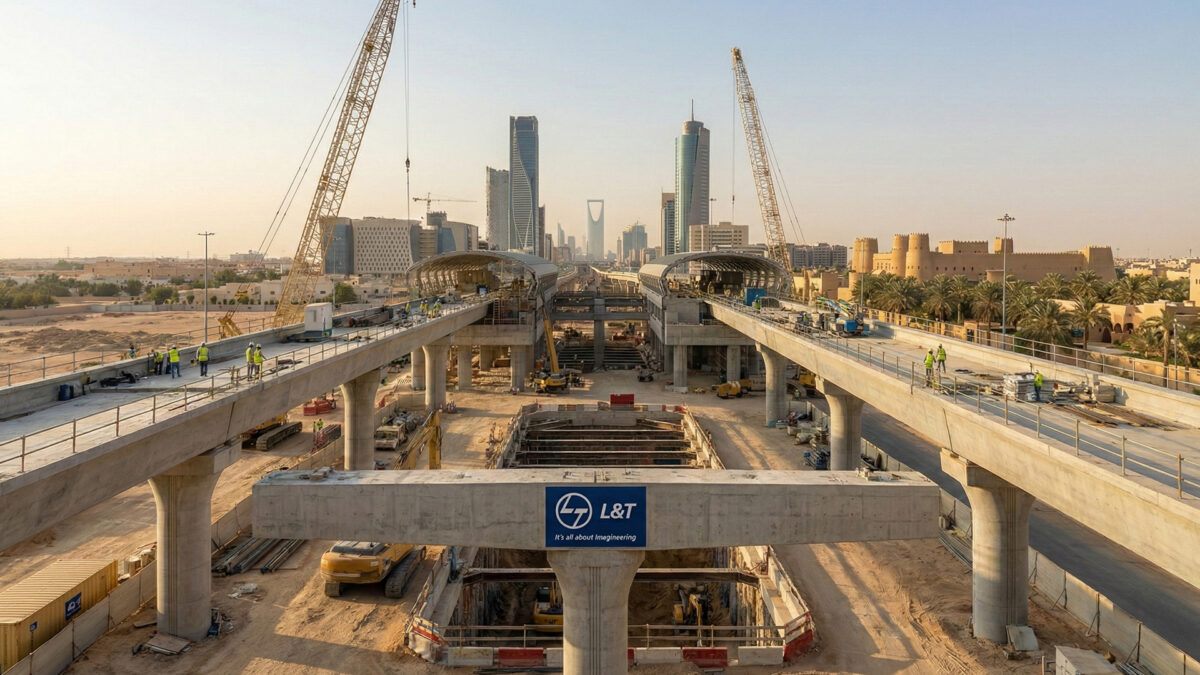
L&T bags ₹5,000–10,000 cr Riyadh metro extension order

Larsen & Toubro (L&T) has secured a major international infrastructure contract worth between ₹5,000 crore and ₹10,000 crore for the extension of the Riyadh Metro in Saudi Arabia. The project has been awarded by the Royal Commission for Riyadh City and marks another significant overseas win for the Indian engineering and construction major.

The order relates to the extension of the Red Line of the Riyadh Metro and will be executed by L&T’s Heavy Civil Infrastructure business. Under the contract, L&T will be responsible for the design and turnkey construction of the new metro corridor. The project will be carried out as part of a global consortium that includes international and regional partners.

The metro extension will span 8.4 kilometres and include a combination of underground and elevated sections. The project will also feature five new metro stations, aimed at improving public transport access and easing traffic congestion in the rapidly growing Saudi capital. Once completed, the extension is expected to enhance connectivity across key parts of Riyadh and support the city’s long-term urban mobility plans.

The Riyadh Metro is one of the largest public transport projects in the Middle East and forms a core part of Saudi Arabia’s efforts to modernise its infrastructure under its broader economic diversification strategy. The Red Line is a crucial corridor in the network, and the extension will further strengthen the system’s reach and efficiency.

L&T has a strong track record in executing large metro and rail infrastructure projects both in India and overseas. The company’s growing presence in the Middle East has helped it secure several high-value contracts in recent years, contributing significantly to its international order book.

Following the announcement, L&T shares moved higher in early trade, reflecting positive investor sentiment around the company’s robust project pipeline and continued global expansion. The order also comes at a time when the company is preparing to announce its quarterly financial results, with analysts expecting steady performance driven by strong infrastructure demand.

Also Read: Maruti Suzuki Q3 net profit up 4% at ₹3,879 cr

Categories
Corporate

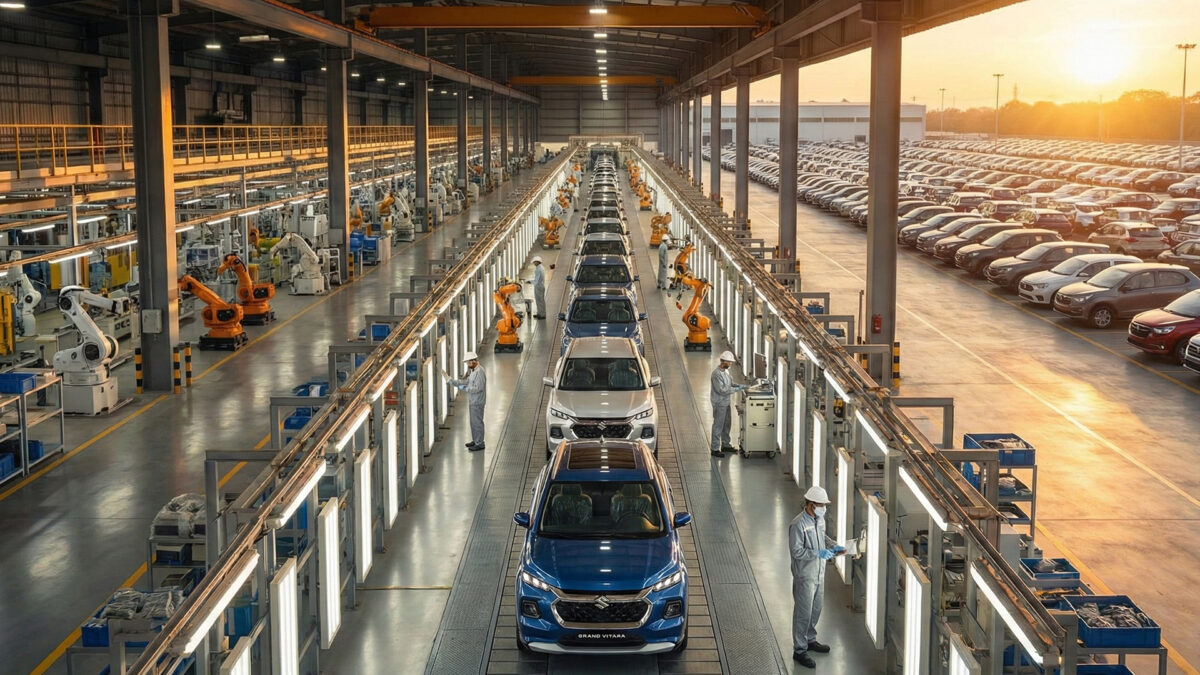
Maruti Suzuki Q3 net profit up 4% at ₹3,879 cr

Maruti Suzuki India Ltd, the country’s largest passenger car maker, reported a 4 per cent rise in net profit for the third quarter of FY26, reaching ₹3,879 crore, up from ₹3,726.9 crore in the same period last year. The company’s standalone profit was ₹3,794 crore, reflecting steady growth despite a one-time exceptional charge of ₹594 crore related to the implementation of new labour codes.

The company’s revenue from operations jumped 29 per cent to around ₹49,900 crore, driven by strong domestic demand and a rebound in consumer sentiment. Maruti Suzuki recorded its highest-ever quarterly domestic sales, with 564,669 units sold, up sharply from 466,993 units a year ago. Including exports, total sales reached 667,769 units, supported by continued demand across different car segments and overseas shipments.

The small car segment contributed significantly to growth, benefiting from the lower 18 per cent Goods and Services Tax (GST) rate. Operating performance remained healthy, with EBITDA rising around 10 per cent, although higher commodity costs and employee expenses slightly compressed margins.

Despite the positive top-line and volume growth, Maruti Suzuki’s shares saw a dip after the results, as investors considered the impact of the one-time labour code provision and ongoing cost pressures.

Also Read: Meta to spend $135 bn on AI in 2026

Categories
Beyond

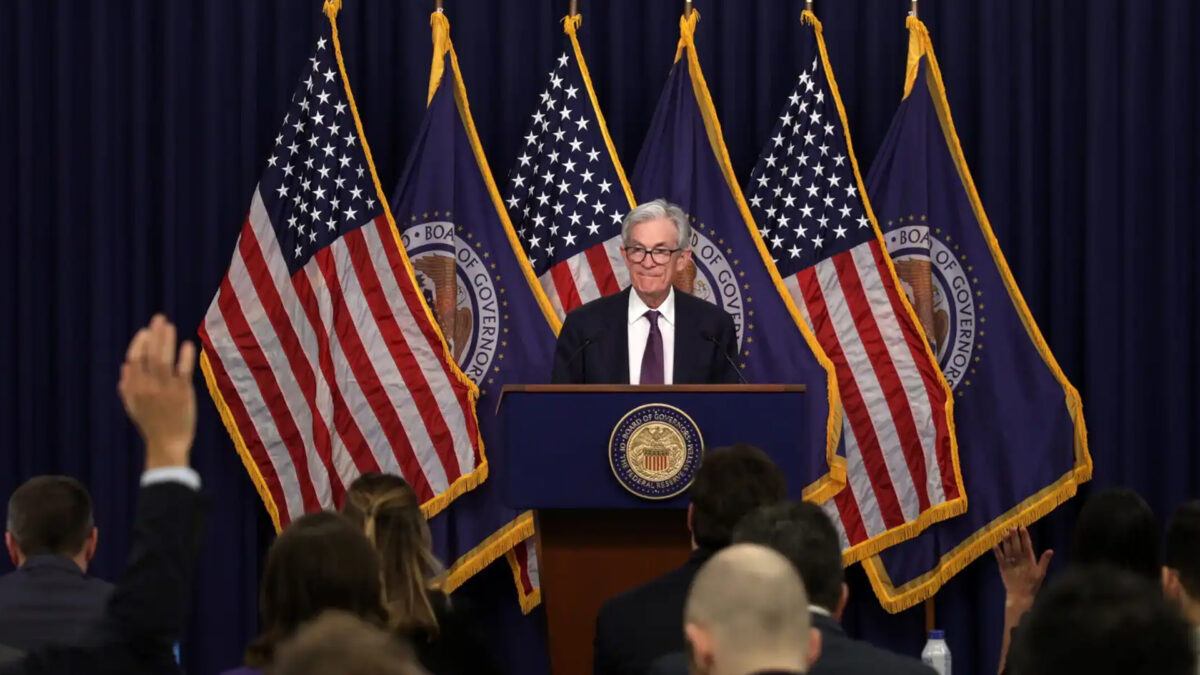
Fed holds rates steady despite Trump pressure

The Federal Reserve has decided to keep interest rates unchanged, even as President Donald Trump urges rate cuts. The move shows the Fed is focused on controlling inflation while supporting economic growth.

The Fed’s main policy group, the Federal Open Market Committee, voted to keep rates at their current level after months of increases meant to slow rising prices. Officials said inflation has eased but is still above the Fed’s 2 percent target and cutting rates too soon could make prices rise again.

“Keeping rates steady gives us time to watch the economy and keep inflation under control,” a Fed spokesperson said Economists say the decision helps prevent market surprises and shows the central bank is acting based on data, not politics.

Trump has repeatedly called for lower rates, arguing that high borrowing costs hurt businesses and consumers. His comments have sparked debate about the Fed’s independence but officials insist decisions are guided by economic conditions rather than political pressure.

Some investors welcomed the steady rates while others hoped for cuts to boost growth. Stock prices moved slightly after the announcement as traders weighed the Fed’s outlook.

By keeping rates steady, the Federal Reserve signals caution and a focus on long-term stability. The central bank also said it will keep watching economic trends and adjust policy if needed to support growth and protect financial stability.

Economists say the decision balances the need to keep the economy growing with the need to control inflation. Consumer spending and jobs are holding up, but global market changes and political tensions could create challenges.

Also Read: India’s industrial growth rockets 7.8% in December

Categories
Beyond

Gold at ₹1,67,090, Silver trades at ₹3,80,100

Gold and silver prices in India registered marginal gains in early trade, reflecting stable demand and firm trends in global markets. According to market data, the price of 24-carat gold rose by ₹10 to trade at ₹1,67,090 per 10 grams. 22-carat gold also saw a similar increase and was priced at ₹1,53,160 per 10 grams.

Silver prices moved up slightly as well. The metal gained ₹100, taking the rate to ₹3,80,100 per kilogram in major Indian markets. The modest rise comes after recent volatility in precious metal prices, driven by global economic concerns and fluctuations in currency markets.

Market experts say gold and silver continue to attract investor interest as safe-haven assets amid uncertainty around global growth, interest rate outlooks, and geopolitical developments. Internationally, gold prices have remained near elevated levels, supported by steady demand from investors and central banks, while silver has also benefited from industrial demand alongside its role as a hedge asset.

Despite the gains, analysts note that price movements remain cautious, with traders closely tracking cues from global markets, including US economic data and movements in the dollar. Any sharp changes in interest rate expectations or global risk sentiment could influence prices in the near term.

In India, gold prices also factor in import duties, taxes, and local demand, which can cause variations across cities. Silver prices similarly vary based on industrial demand and global supply conditions.

Also Read: Sensex down 400 points, Nifty under 25,250